

“Looks like this batch of ‘elixir’ is almost ready!”
You clicked in,
thinking what follows is about
the art of “cultivating immortality”?
No,No,No
In recent years, it has become
an unspoken bit of insider slang in AI.
Training an AI model
takes time and effort,
and the outcome is uncertain,
much like a Taoist alchemist refining elixirs of old.
Hence the name “alchemy.”
Enthusiasts and practitioners devoted to the craft
call themselves“alchemists.”
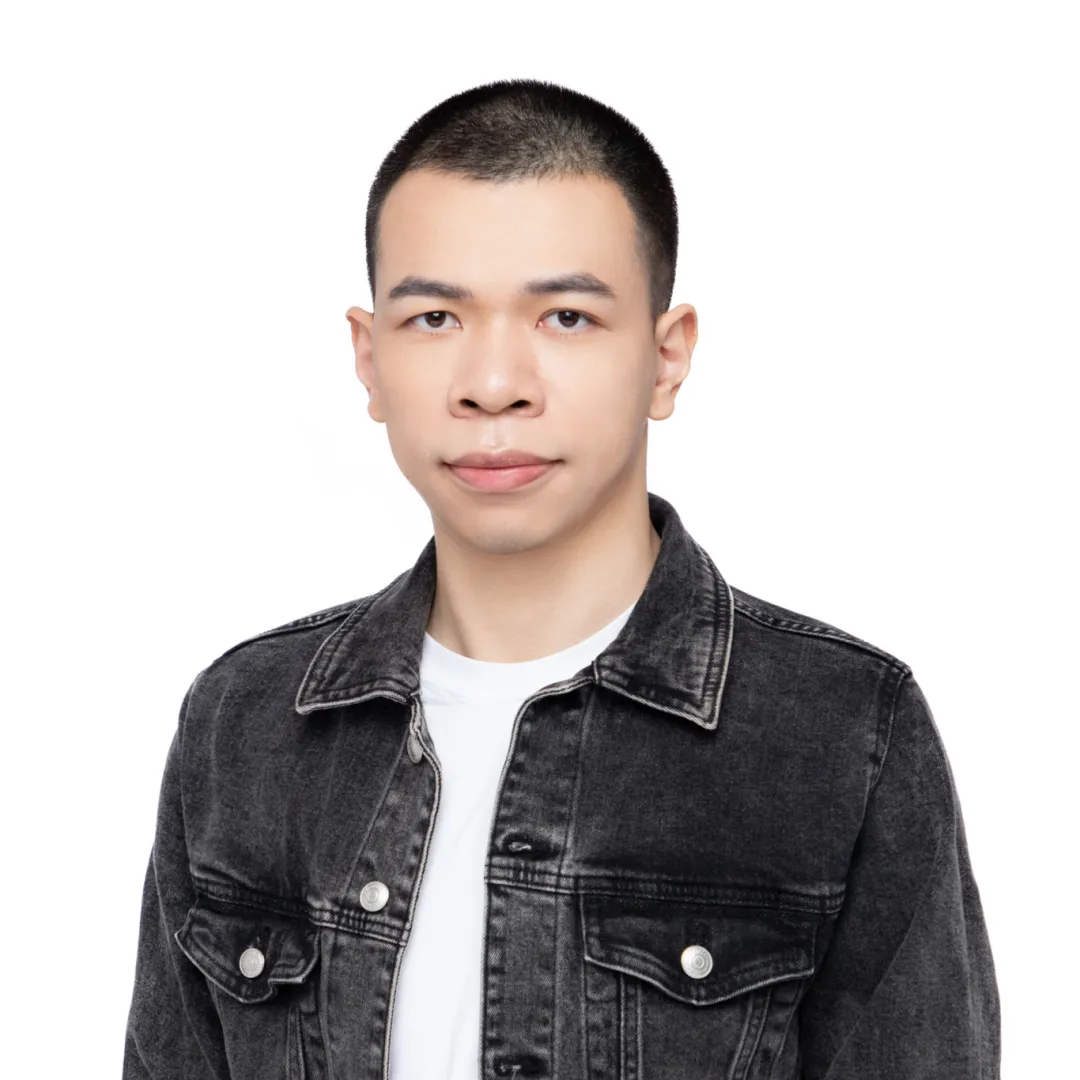
Huang Zhongzhong
Zhongzhong is Huang Zhongzhong, a native of Fujian. He studied visual arts in his youth and spent more than a decade honing his craft in UI design. Living in Shenzhen as the AI wave arrived, he left the safe path and founded Liandan AI Studio at Galaxy Moli Valley in Longgang. The studio is small—ten full-time staff and twenty-odd interns—light but grounded, small but resilient. Come take a look at how this workshop turns craft into a business.
A Turning Point: Lighting the Furnace
At Galaxy Moli Valley in Bantian, Longgang, Shenzhen, the office of Shenzhen Alchemy Technology Co., Ltd. (Liandan AI Studio) is small, and so is the team. According to Huang Zhongzhong, the company has only 10 full-time employees, and many of them work from home. Most of their working day is spent at the computer with AI models and video workflows.
This lightweight, efficient, single-leader way of running a startup is exactly the“One Person Company” (OPC)model now taking off in Shenzhen. An OPC isn't literally a one-person company. It is usually led by one core person, supported by AI agents, a few staff and outsourced collaborators.
Liandan AI Studio at the Global AI Visual Competition (VACAT Awards)
Huang Zhongzhong's startup journey began with an “unexpected” career turn.
In late 2022, Huang Zhongzhong was laid off, yet he felt a sense of relief, as if fate had once again made the call for his next chapter.
When he graduated, Huang Zhongzhong, an art major, missed out in campus recruitment because he “couldn't draw illustrations.” He then shut himself away for three months to polish his portfolio and became a UI designer. The internet company he joined focused on B2B design: if you order at a restaurant, the ordering system at the counter or a company's back-office interface may well have been their work.
Huang Zhongzhong didn't mind the job. In between placing buttons and stacking input fields, he taught himself Figma and learned to build UI frameworks systematically, and an open-source mindset began to take root.
In early 2023, AIGC technology led by Stable Diffusion took off, and Huang Zhongzhong sensed that visual design work that used to take hours could be dramatically compressed with AI.
“Sticking to the old craft isn't enough. You have to move with the technology.” Huang Zhongzhong realized traditional design experience could be deeply combined with AI to build new professional strengths and services. He decided to turn his UI experience into an edge in AI development and dove into model training.
In October 2023, ChatGPT-3.5 burst onto the scene, and an AI-generated red envelope image in his WeChat Moments made Huang Zhongzhong even surer of his direction: “A red envelope like that used to take a whole day. Now it takes minutes.” When his RMB 80K severance arrived, he invested all of it in himself without hesitation.
He says he has always believed two things:first, when there's a problem, solve it; second, pick the right direction and build your skills, and it will pay off.
The track Huang Zhongzhong chose was training 3D icon models. 3D icon assets are scarce, and many need a specific style, such as a “truck” for a logistics company or a “data cloud” for an internet company. He wanted to build an AI tool for B2B UI designers, BDicon, to solve a common pain point—designers who are “good at logical layout but not pure visual creation”—and skip the tedious steps of 3D modeling and manual lighting.
Then came the hard part: Huang Zhongzhong couldn't code. “I'm a designer, not a programmer.” For a stretch he wrestled with code—configuring models, running training, validating inference. Every time he hit a bug, he asked ChatGPT line by line, and when online tutorials still didn't help, he paid engineer friends out of his own pocket.
“I imagined every day that I was the hero of a novel, and I was convinced I was meant to pull it off.” That stubbornness carried him through countless late nights.
Following His Calling: Building a Business
In late 2023, Huang Zhongzhong officially registered Liandan AI Studio. The name “Liandan” (alchemy) also stands for refining again and again, tempering over time and always striving for better.
What truly made Huang Zhongzhong feel he had gone from “going it alone” to “building the industry together” was helping organize the first AI Visual Creativity Contest (VACAT Awards). He led the AI model training sub-venue. The event's success, and its 50M+ views across platforms, made him realize that what he was doing had become part of the industry's growth.
The early days were not smooth. From 2023 to 2024, the company invested millions of RMB in R&D and model exploration. The turning point for commercialization came at the end of 2024, when the team took on AI visual generation for China Media Group's “Exploring China Through Idioms,” using AI to create moving images for classic idiom stories such as “The Foolish Old Man Moves the Mountains” and “Jingwei Fills the Sea.”
Liandan AI Studio's work on “Exploring China Through Idioms”
With solid expertise, Huang Zhongzhong has also served Huawei as an industry expert, advising on AI model training, and has steadily shifted his model training know-how toward AI video ads and creative content with stronger commercial value.
Huang Zhongzhong advising Huawei on AI model training
Setting Up the “Furnace”: Putting Down Roots in Longgang
In June 2025, Huang Zhongzhong moved the company to Galaxy Moli Valley in Bantian, Longgang.
“Besides being convenient for working with clients, the Longgang government is genuinely attentive.” Asked why he chose Longgang, Huang Zhongzhong put it plainly.
Behind what looks like a simple choice of location lies a mix of industry needs, policy support and business environment. On one hand, Liandan AI Studio works closely with Huawei on AI technology consulting and needs frequent, efficient in-person meetings, and the location of Galaxy Moli Valley fits the company's core business perfectly. On the other hand, Longgang's proactive support for AI companies and asset-light startups let him feel the district's warmth.
Galaxy World campus, home to Galaxy Moli Valley
“When we came to Longgang, the government reached out first and followed through the whole way, helping us shortlist parks and match resources.” This business climate, where “you're pushed forward,” became a key reason Huang Zhongzhong put down roots in Longgang.
As a typical example of a Longgang OPC, Liandan AI Studio benefits greatly from Longgang's inclusive ecosystem for the AI industry, lean startups and individual innovation. Today Huang Zhongzhong's work and life are fully rooted in Longgang, and an efficient 15-minute neighborhood lets him focus on creating and R&D. “I live in Galaxy Valley, work at Galaxy Moli Valley and eat at Bantian Galaxy COCO Park,” he sums up with a grin.
For Huang Zhongzhong, Longgang's appeal lies not only in tangible support like rent reductions and easy company registration, but in how the district understands and respects new business models—no limits on entrepreneurs, no barriers to innovation, so even small, focused teams have plenty of room to grow.
Refining as a Craft: A Small Studio with a Sharp Edge
“Model training, put simply, is ‘alchemy.’”
A fan of xianxia fantasy novels, Huang Zhongzhong often likens himself to a modern alchemist of the digital age. His social media avatar, drawn with AI, shows him in a golden crown with a medicine gourd at his waist and an elixir floating between his palms, with his own UI design sensibility hidden in the details.
“Alchemist” Huang Zhongzhong
Huang Zhongzhong's own “alchemy furnace” is a computer with a high-performance RTX 4090 graphics card. His rare herbs are datasets of tens of thousands of high-resolution images and icons he has gathered and hand-curated over time. Every model iteration and style tweak is slow, steady refining over a low flame, day and night.
Liandan AI Studio's “Exploring Longgang: An Intangible Heritage Scroll”
The way of alchemy begins with gathering herbs.
“Whether what you refine is any good depends on the quality of your ingredients,” Huang Zhongzhong says. In training his in-house BDicon icon model, getting the AI to reliably master a blue frosted-glass cloud icon takes at least 200 reference images with a consistent style, complete details and clear image quality.
But in reality, precisely matched niche material is always scarce; it's hard to have enough training data for every type of element and every style. Yet even with limited data, AI's remarkable ability to learn showed him endless possibilities. The model had only learned cloud elements with a blue frosted-glass texture and had never seen vehicles in that style, yet it transferred the style on its own and generated frosted crystal vehicles with a matching texture and color tone.
“It had never seen one, but it guessed right.” This was Huang Zhongzhong's moment of insight: AI's core strength isn't rigid, exact calculation. Like a painter, it draws on vast learned experience to make reasonable inferences and generate what is most likely, creating new content that fits both aesthetics and logic.
This “guess-based generation” is the core logic of today's AI generation models: starting from chaotic black-and-white noise, the model draws on the aesthetics and patterns learned in training, iterating and rendering layer by layer to move step by step toward the ideal result. Every generation is a fresh take on beauty and possibility.
In visual design, this ability to transfer styles and produce at scale brings a transformative productivity dividend. Mass-producing icons, unifying style in one click, expanding freely across categories—needs that were hard to meet in the era of hand drawing and 3D modeling are now easy with AI “alchemy.”
Work by Liandan AI Studio
With solid model training experience, Huang Zhongzhong became one of the few early freelance “alchemists” in Shenzhen and a frequent speaker at major AI design forums, sharing hands-on experience in style training, deploying AI tools and human-AI co-creation.
In his metaphor, machine learning is full of alchemical wisdom:the learning rate is the heat, the optimizer is the furnace technique, and the loss function is the touchstone. Each link depends on the next, and the slightest difference changes the elixir that comes out.
There are no shortcuts in alchemy. Once a model starts training, the computer often runs at full load for a dozen hours or more, with no way to step in or adjust midway.
“All you can do is wait,” Huang Zhongzhong admits. The uncertainty and waiting are no different from a Taoist alchemist in seclusion: until the furnace door opens, no one knows how the elixir turned out.
He describes AI “alchemy” in plain, practical terms: prepare quality material, get the heat just right, be patient through the long wait, review and improve promptly. That is the whole discipline of an “alchemist.”
Work by Liandan AI Studio
While many designers in the industry still worry about being replaced by AI and struggle with the shock of changing tools, Huang Zhongzhong has stepped out of that spiral. Batch after batch, he keeps training new models, building new features and exploring new tracks. He firmly believes a creator's core value lies in using technology to convey ideas and using work to carry emotion—something no tool can replace.
“First and foremost, I'm always a creator,” Huang Zhongzhong stresses. AI can quickly generate images, videos and proposals, but it can't give work real insight, warmth and values. Much AIGC content today looks the same, not because the technology falls short, but because creators neglect aesthetics, storytelling and emotional expression. The recent viral AI short “Paper Phone” succeeded not just on cutting-edge technology, but because the writing, aesthetics and execution all came together.
Based on this view, Liandan AI Studio is gradually moving from pure model training and visual generation toward AI creative content with stronger storytelling, ideas and reach.
As an industry mentor at Xi'an University of Technology and Shenzhen University, Huang Zhongzhong often shares this conviction with young creators:“Don't get lost in the technology rat race, and don't lean on tools and coast. Human thinking, taste, experience and expression will always be the core of creation.”
One furnace, a low flame, endless forms refined;
one small room, a sharp edge honed.
The fire of one furnace lights up an industry's renewal;
one modest workshop bears witness to the power of makers.
On Longgang's open, innovative
and sun-facing ground,
we believe this new generation of “digital alchemists”
will refine many more fine works
and go much further.
Source: Longgang Media Center (Reporter: Ye Huiling)
Editor in charge: Longgang Media Center (Editor: Pei Tong)
Proofreading: Xu Haiyan
Review: Shi Li
Supervising producer: Ai Li
Some images and videos from the original story are not included here; their captions have been kept.
Source: Shenzhen Longgang Release / Longgang Media Center · Apr 2026
View original article ↗