
Sample demo
Check direction before you place the order
- From 15 seconds
- AI-automated and hand-refined versions
- Fully credited toward the project once you sign
Liandan AI Studio produces AI commercials, brand films, product videos, public-sector and cultural tourism promos, and animated micro-dramas.
We move from brief to delivery in 9 steps, and only proceed after you sign off on each one. Pricing is based on runtime and production tier, with every cost listed up front before you commit.
Read this section to see how working with us works.
We hand each step to you for sign-off before moving on. The big decisions are locked at the script, style and storyboard stages, so there are no major overhauls at the video stage.
About 1 day
1–2 business days
Work starts once payment arrives
About one week to first cut
About another week
From 15 seconds, to check story and style direction.
About a week to first cut, then another week or so of revisions to final. Longer if there are many approval layers.
Scheduled by shot count at signing; multiple teams can work in parallel.
Rush production is available; timeline and price are agreed case by case.
For the same minute, differences in visual difficulty and revisions can multiply the time it takes. So we first set the tier by visual difficulty, and move up a tier for projects with many approval layers and high revision demands. We give a firm price once we see the specific brief.
Check direction before you place the order
Finished work with simple visuals and few revisions
Most promotional and product films
Character performance, continuous storylines, complex action, precise product reproduction
Brand and product launch films with many approval layers and high revision demands
| Visual difficulty | Normal revision needs | Many approval layers, high revision demands |
|---|---|---|
| Simple visuals | Light | Up to Standard |
| Typical visuals | Standard | Up to Premium |
| Difficult visuals | Premium | Premium (Multi-Layer Approval) |
Government, city promotion, cultural tourism and engineering explainer projects usually have contacts who can make decisions and a stable style, so revision needs are generally modest.If we're unsure about difficulty, we'll first test the one or two hardest shots in-house, then set the tier and quote.
| Final runtime | Billed as | Example |
|---|---|---|
| Under 1 minute | 1 minute | 43 sec billed as 1 min |
| Up to 20 sec over a whole minute | No extra charge | 1 min 10 sec billed as 1 min |
| 21–40 sec over | Add half a minute | 1 min 30 sec billed as 1.5 min |
| 41 sec or more over | Next whole minute | 1 min 51 sec billed as 2 min |
The quote states a maximum runtime. If you extend the film partway through, the extra is billed by the rules above.
Our prices are fixed. If your budget is tight, we'll suggest a lower tier, a shorter runtime or fewer difficult shots, rather than cutting production quality within the same tier. Quotes are valid for 1 month.
Take “Geek Ideas,” the second film in the Longgang Robot Street promo series: the client provided a first-draft script, and we refined the script, built assets, made storyboards, generated the video and delivered a 4K final cut. We describe only the final version here, not the back-and-forth along the way.
The street provided scripts for a promo series, and “Geek Ideas” was one of them: young entrepreneur Chen Yan wants to build a wheel-legged robot. On Robot Street he buys parts, prints components, gets expert feedback, road-tests it, and finally lands investment.
The script was a shot table listing the timing, visuals, dialogue and motion-graphics cues for each segment. Locations to feature included the Parts Supermarket, the AI 6S Store, the Vanke Xinghuo International Robotics Industrial Park, Robot Avenue and the Twin Towers. The client also supplied real photos of the street, its brand plan and the entrance logo files.
Every location the street wanted to show stayed in. What we changed was how they connect and how people talk:
The film has more than 40 shots, and the lead moves between a rented apartment, a showroom, outdoors and night scenes. So before production we turned everything that recurs into fixed reference sheets:
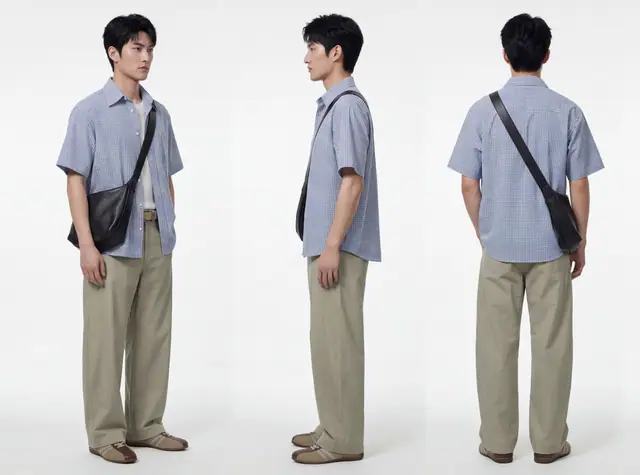
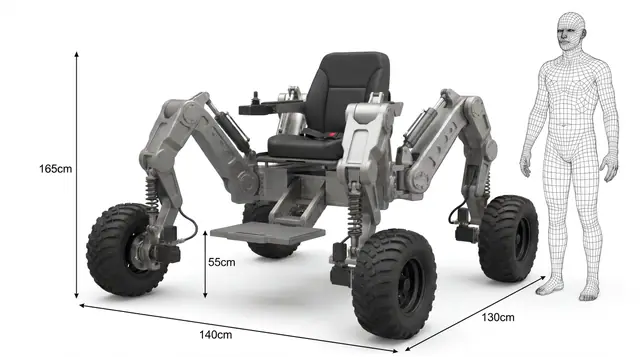
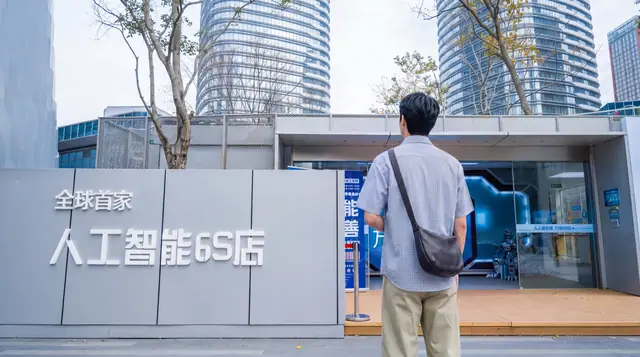
Each shot started as a 4K still storyboard frame, using the reference sheets above for characters, robot and locations; once the frames were approved, we generated the video. Then came per-character voiceover and lip sync, editing and music, with subtitles switched to commercially licensed fonts.
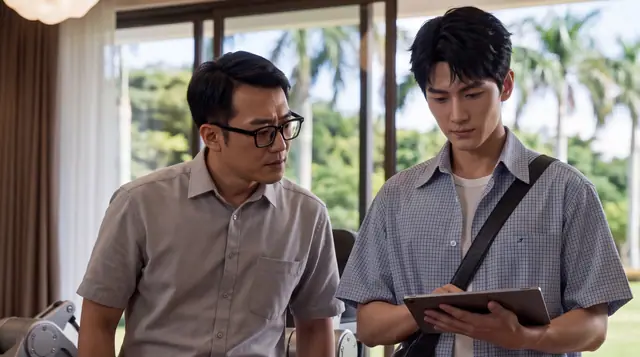
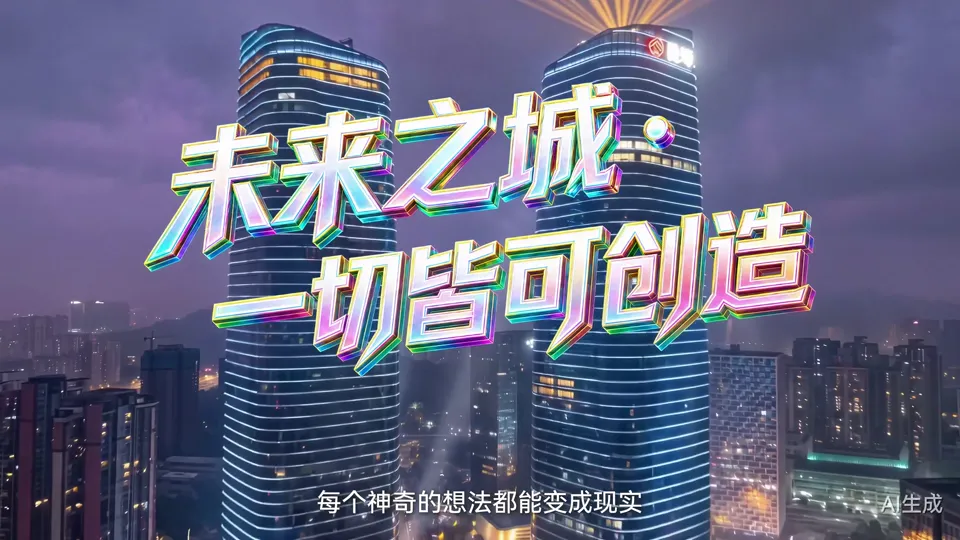
We delivered a 2 min 41 sec, 16:9 4K film. All three films in the Robot Street series share the same “City of the Future” ending, so they also play as one piece back to back.
Throughout, we got sign-off step by step—script → style and assets → storyboard frames → first cut → revised cut → final—matching the process above. The next section uses this same film to show how revisions and restarts are handled.
Revisions are signed off stage by stage. Objective errors are fixed free at any time; taste-based feedback is handled within the included rounds; anything out of scope is quoted first, and we only start after you confirm.
Each step counts as approved once you reply “Confirmed” by email or chat. Later revisions don't change anything already approved; if they do, that counts as a restart.
| Stage | Light | Standard | Premium |
|---|---|---|---|
| Style & Assets | One version, objective errors only | Refined to your satisfaction within one round of feedback | Refined to your satisfaction within one round of feedback, with 2 style directions offered first |
| Storyboard Frames | Objective errors only | One round of consolidated feedback | One round of consolidated feedback |
| First cut (A copy) | One round, changing no more than 20% of the film's shots | One round, changing no more than half of the film's shots | One round, changing no more than half of the film's shots |
| Revised Cut (B copy) | One round of fine-tuning | One round of fine-tuning | One round of fine-tuning |
Fine-tuning means swapping a few shots, adjusting subtitles, changing a few voiceover lines, and adjusting volume and pacing.
This is the table above: one round of revisions on the first cut, one round of fine-tuning on the revised cut. Suited to projects on a normal schedule.
For projects with a fixed release date and a schedule of about two weeks or less, we revise as many times as needed within the window, and on the deadline we deliver the best version at that point.
There's a cap on total revisions: Whether by rounds or by deadline, cumulative revisions across the project can't exceed the work of making the whole film once, roughly the same as redoing half its shots. For core changes such as the lead's look or the hero product, the amount of change is counted by how many shots they appear in.
Restarts carry a surcharge based on the stage reached—the later, the higher—with the rate for each stage set out in the quote. A single restart is charged under one item only, not stacked; a partial restart is prorated by the share of the film's runtime it affects. After a restart, the schedule is reset.
The first-version stills, video and rough cut had all been delivered. Then the street restructured the series: from four films to three. “Geek Ideas” grew from about 1 minute to 2 minutes, adding frontage shots of the Parts Supermarket and the AI 6S Store, a discussion in the industrial park, and a “months later” segment with robots mass-produced and out on the streets.
| Already done | Under the new script | Under the rules on this page |
|---|---|---|
| Reference sheets for lead Chen Yan and the wheel-legged robot | Reused as is | Not affected |
| Shots the new script didn't change: the rented apartment, the street entrance, Robot Avenue, etc. | Original storyboard frames and video reused directly | No charge |
| Parts Supermarket and AI 6S Store locations | Had to match the real shopfronts, so all location images were replaced and the related shots regenerated | Counts as reversing approved content: surcharge at the rate for the storyboard-frame stage, prorated by these segments' share of the film's runtime |
| New segments: shopfronts, industrial park discussion, mass-produced robots on the streets, etc. | Made new | The film got longer, so billing is topped up by billable runtime |
That's why it matters to lock down elements that run through the whole film, like the characters and the robot, early on: however the script shifts, they can still be reused, and only the affected segments are reversed.
One note came up in review: Chen Yan flies on the robot without any protection, which looks unsafe. A fair point, but not a small fix. The shots of the lead riding the robot are concentrated in the last third of the film, so it meant revising 20 final frames, regenerating 11 video clips, and making sure the black five-point harness matched from the front, side and back.
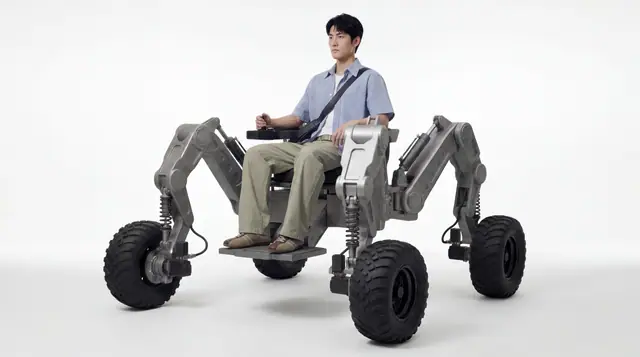
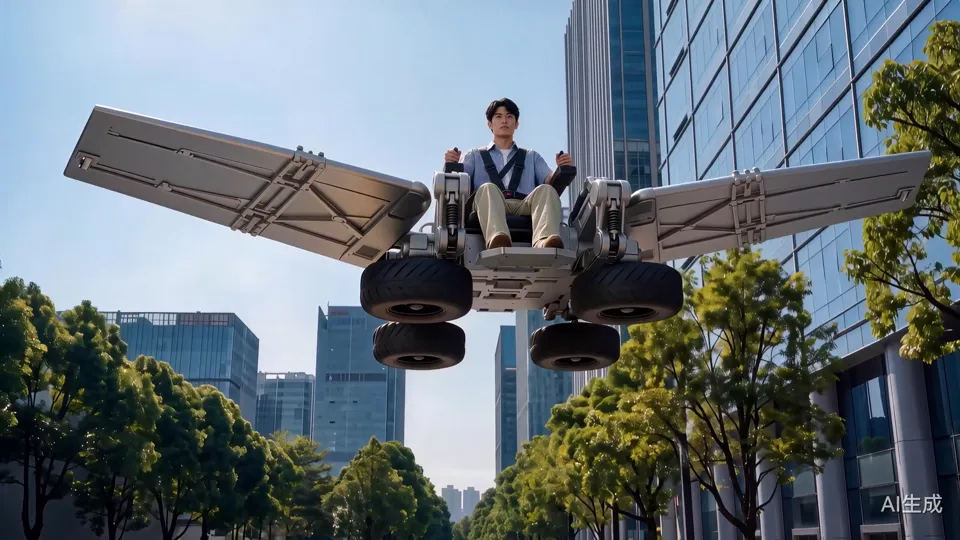
Under the rules on this page:Core content changes are measured by the number of shots they appear in. This change touched 11 shots, about a quarter of the film. In the Standard tier, this one item alone uses up about half of the first-cut round's allowance of “changing no more than half of the film's shots.” It looks like “adding one thing,” but it actually meant revising a quarter of the film.
Most projects are fully custom films. If you're unsure about the result, start with a sample. If you already have an overall plan and only need the AI part, we can produce just those visuals and segments.
From a one-line brief or an existing script, we handle everything—script, visuals, editing, voiceover and music—through to the finished film.
Before placing a full order, we make a sample from 15 seconds to check story, style and visual quality. Once you sign, the sample fee is fully credited toward the total.
Episode one sets up the characters, locations and style; later episodes reuse them, so each costs less than the first. New characters and locations are billed to the episode that introduces them.
For ad agencies, production companies and TV programs that already have an overall plan and only need AI visuals or AI effects segments, priced by shot count or segment length.
Ad agencies, resellers and overseas partners can hand the AI production to us, run with the same process, tiers and revision rules.
We teach companies and academic teams the complete AI video workflow and can guide participants from zero to a finished promo film. Priced by number of course days.
Custom work from our lab: interface design for apps, mini programs, websites, admin systems and data walls, plus custom industry tools, WorkBuddy AI agents and websites. Designers set the direction and rules, Claude writes the code fast, and you get editable design files and full source code; UI design costs about a third of the traditional approach.
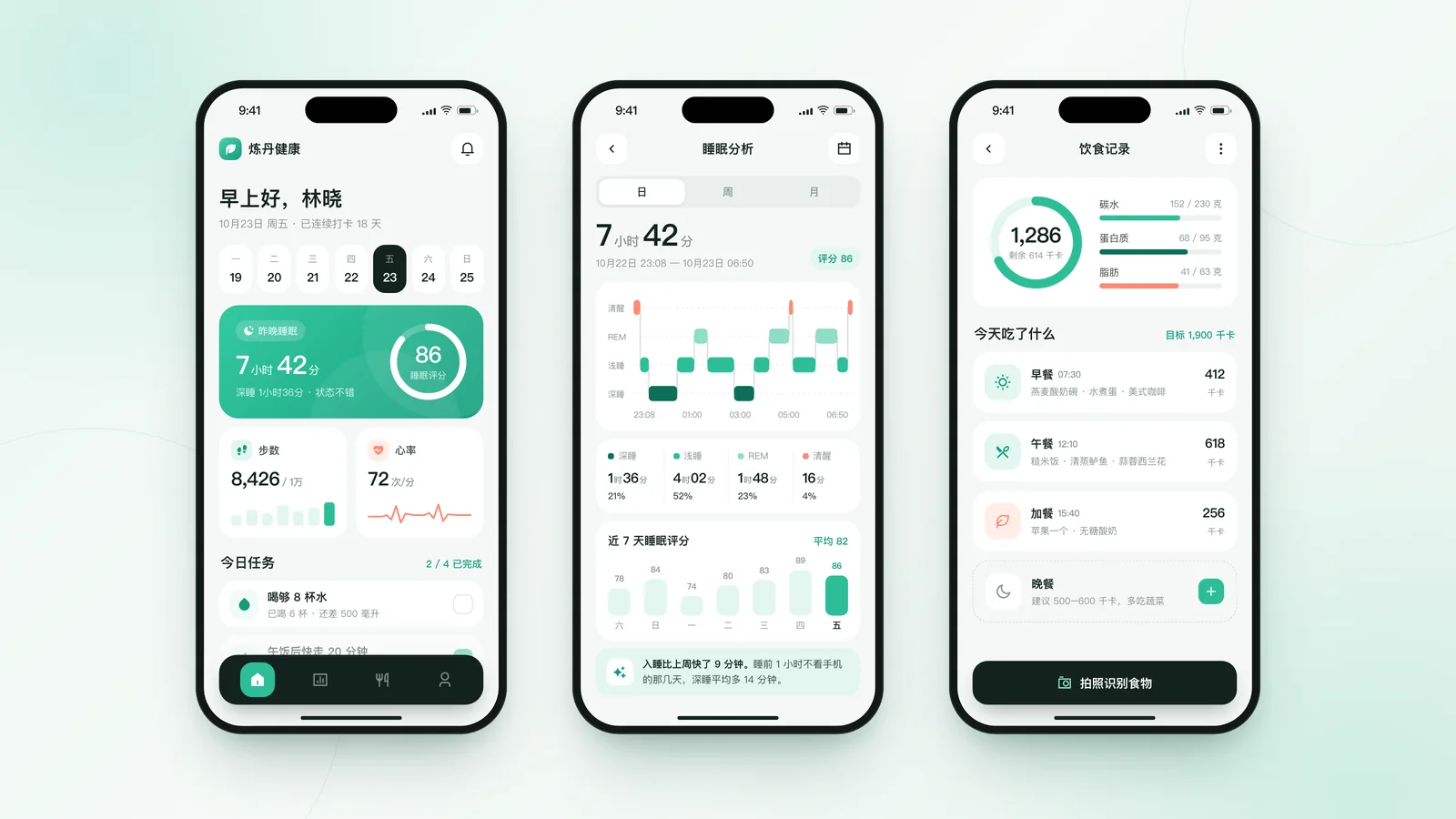 Concept design · Liandan Health App
Half upfront to start, the balance after final; full copyright transfer once paid in full. All our tools are paid commercial platforms, and we can provide proof of compliance.
The questions we hear most before a project starts, grouped by topic. If you can't find your answer, just get in touch.
AI commercials, brand films, corporate films, product concept films, public-sector and cultural tourism promos, event openers and large-screen showcase films, AI shorts and music videos, and animated micro-dramas. We can also produce just the AI visuals and AI effects segments within your film.
Live-action shoots, film-grade VFX and long-form drama series are assessed separately.
Scripts, AI images, AI video, editing, AI voiceover and music are all done by our own team. When a project needs 3D rendering or human voiceover, we use long-term subcontracting partners, pass their fees on to you at cost and take no margin. If you have your own 3D assets or a better-suited subcontractor, we can work with them directly.
Yes. Send us a one-line brief or a story outline and we can start. Turning an outline into a shooting script is already included in the production fee. If you need us to create an original story from scratch, or the concept needs several rounds of development, the original script is billed separately and stated in the quote.
Full answer: Can you make an AI video if I only have an idea and no script?
No. Turning the brief into a production-ready shooting script is already included in the production fee; most of the work is in the visuals and video. We'll adapt the writing to what AI renders best, which usually gives a better result. If your script has parts that are hard for AI, we'll suggest changes at no extra charge.
Yes. For ad agencies, production companies and TV programs that already have an overall plan, we can produce just the AI visuals, AI story segments or effects shots, priced by shot count or segment length and delivered to your editing specs.
Yes. The process, tiers and revision rules are the same as working with us directly. We handle production, you handle the client. When needed, we can show our collaboration records with the end client to prove we actually produced the project.
Yes. We design apps, mini programs, websites, admin systems and data walls, and also build custom industry tools and AI agents: designers set the direction, Claude writes the code fast, and you get editable design files and full source code, with UI design at about a third of the traditional cost. See UI Design & Custom Tools.
Highlights include the AI visuals for CCTV's “Exploring China Through Idioms,” the NDRC's 24 Solar Terms and New Year greetings videos, a video summarizing achievements of the 14th Five-Year Plan, and many city promos and brand projects, with over 400M total views. See full case studies in Work, where each project comes with a case study.
We take on projects from a few thousand to several hundred thousand yuan. For the price range and typical project types, see How much does AI video production cost?.
By runtime and production tier, billed in whole minutes; anything under 1 minute is billed as 1 minute. Up to 20 seconds over a whole minute is free, 21–40 seconds counts as half a minute, and 41 seconds or more rounds up to the next whole minute.
Tiers are Light, Standard, Premium and Premium (Multi-Layer Approval). Standard is the default, and we give a firm price once we see the specific brief; if materials are incomplete, we start with a price range.
Cost comes down to two things: visual difficulty and the amount of revision. A minute of a simple film with few changes takes dozens of hours; a minute with lots of character acting, a continuous story and many revisions can take several times longer. So we first set the tier by visual difficulty, and move up a tier for projects with many approval layers and high revision demands.
Everything from brief to finished film: script development, style and character/scene assets, storyboards, AI video (including compute), editing, AI voiceover (including lip sync and tone adjustment), music and sound effects, subtitles, plus a per-minute allowance for paid fonts, stock footage, sound effects and other asset costs.
It doesn't include live-action shooting, actors, complex After Effects VFX or 3D production; these are quoted separately if truly needed.
Only in the following cases, all itemized in the quote:
Adding a logo or swapping a location within the normal revision scope costs nothing extra.
We don't discount the rate, but we can adjust the approach. If the visuals are simple and you need few revisions, we can work in the Light tier—still a finished, professional piece, with only objective errors fixed (say, a prop from the wrong era, or a horse missing a leg in an AI shot) and no changes for feedback like “a different style would look better.” You can also shorten the runtime, or cut shots such as multiple characters in frame, dialogue lip sync and difficult action, bringing the film down to a lower tier.
Full answer: How can you make an AI video on a limited budget?
Yes. Sample demos start from 15 seconds, in an AI-automated version or a hand-refined version, delivered as soon as the same day. Once you sign, the sample fee is fully credited toward the total; if you start with a sample, you can pay the deposit once you're happy with it.
Full answer: Why make a sample demo before placing the full order?
Episode one is at the normal price, and the character and location assets are built there. Later episodes that reuse those assets in the same style are priced at a discount per episode. New characters and locations are billed to the episode that introduces them.
Quotes are valid for 1 month.
For a 1–2 minute film, the first cut usually takes about a week and revisions to final another week or so, so if all goes smoothly it's about two weeks from brief to delivery. A sample demo can be ready as soon as the same day. For projects with many approval layers or longer films, we schedule by shot count at signing. Rush production is available; timeline and price are agreed case by case.
Full answer: How long does it take to make an AI promo video?
A one-line brief or story outline, the use and distribution channels, 2–3 style references, runtime and aspect ratio, the delivery date, and whether you want AI or human voiceover and in what language. If you don't have everything yet, we can still talk, and we'll help you fill the gaps.
Full answer: What does a client need to prepare before commissioning an AI video?
When quoting, we agree with you on 1–2 benchmark works; matching their level counts as meeting the standard. Whether a given effect is achievable is judged against those benchmarks and comparable work at the same price on the market, within what AI can currently do.
Yes. We first build the lead, recurring supporting characters and main locations as fixed character and location assets; once you approve them, every shot is generated from those assets. If a character's face changes or a location doesn't match in the film, that's an objective error and is fixed free before final.
Full answer: Can AI video keep characters consistent from shot to shot?
Please send consolidated feedback within 2 business days. If we don't hear back in time, the delivery date moves back accordingly. If no feedback is raised within 7 days of final delivery, the work is deemed accepted.
After the first cut, you consolidate your feedback and we make one round of revisions; after the revised cut, there's one more round of fine-tuning. Before that, the script, style assets and storyboards are all approved by you first, so the big decisions are locked early. Objective errors—continuity slips, typos, mismatches with approved content—are fixed free any time before final and don't count toward your rounds.
Full answer: How many revisions does an AI video include, and how are big changes handled?
Either works—choose one at signing. Longer projects go by rounds. For projects with a fixed release date and a short schedule (usually about two weeks or less), we recommend going by deadline: say you send the brief on October 15 and need it for a conference on the 30th—we give it our all for those two weeks without counting rounds, and on the deadline we deliver the best version at that point.
Going by deadline assumes: feedback stays within the original brief, approved content isn't reversed, and total revisions across the project don't exceed the work of making the whole film once.
It depends on how many shots it touches. A character who appears in only one or two shots is easy to change; changing a lead who appears in most shots is like changing most of the film. The hardest to change is the core product—change the product and the whole film has to be reworked.
Cumulative revisions across the project can't exceed the work of making the whole film once—roughly redoing half its shots. We'll let you know in advance when you're close to the limit.
Changing the storyline, product or style after the script, style or storyboards are approved counts as reversing approved content. It carries a surcharge based on the stage reached—the later, the higher—with rates set out in the quote. Minor adjustments count as normal revisions. A partial restart is prorated by the share of the film's runtime it affects.
For concrete examples, see Revisions & Restarts above: the two changes on Robot Street's “Geek Ideas.” Reference sheets already made were reused, untouched shots were kept, and only the changed segments were billed proportionally.
It depends on whether you're changing something already approved. Feedback within the current step—say, “try a different angle for this shot” at the storyboard stage—is a normal revision. Going back to change something approved earlier—rewriting the script or changing the art style after all the storyboards are done—is a restart. That's why we ask for written sign-off at every step, so changes after approval are on record.
Approved storyboard frames will always be followed in the video. If we fall short, that's on us, and we'll fix it free until it matches. For shots approved only in text, we send them to you during generation; if AI can't do a certain action, we offer an alternative on the spot and only continue once you agree, so there are no surprises at delivery.
Per person-day. Before starting, we tell you in writing how much extra it costs and how many days it takes, and only make the changes once you confirm—never charging after the fact.
Yes. Changes after final are billed per person-day, and restarts carry a stage-based surcharge. If a project is paused for more than 15 days, it's settled by completed stage and rescheduled when it restarts.
Production starts after a 50% deposit on signing, and the remaining 50% is due within one month of final approval. We issue Chinese VAT invoices and can also accept payments from outside China.
By completed stage: script approved, storyboard frames approved, first cut delivered, final. The settlement percentage for each stage is set out in the contract. Payments already made aren't refunded, and any shortfall is paid up.
Once paid in full, all our rights in the finished film, original script, project files and delivered assets are transferred to you, worldwide and in perpetuity, including translation, localization and adaptation.
After you release it publicly, we'll show excerpts in our portfolio in ways that don't affect your interests.
Full answer: Who owns the copyright in an AI video, and can it be used commercially?
Yes. If the project can't be shown at all, please tell us at signing, as this affects the quote. If it only needs to stay confidential until release, a standard NDA is enough.
Only closed-source commercial platforms and models such as Kling, Lovart and LibTV, all on paid accounts; no open-source models. These platforms' user agreements allow commercial use. Whether purely AI-generated images can be registered for copyright on their own in some countries depends on local law; what we guarantee is no infringement of third-party rights, and transfer of all our rights to you.
Full answer: Which tools are used to make AI videos, and are they licensed and compliant?
We can provide: a list of platforms and models used, invoices or purchase records for paid subscriptions, links to the platforms' user agreements, and time-stamped screenshots of generation records (showing which platform and model was used).
Full answer: Which tools are used to make AI videos, and are they licensed and compliant?
They're generated on paid accounts, and the platforms' terms allow commercial use. If you want a specific commercial song or a human voiceover, licenses are purchased separately at cost, with your prior approval.
The final MP4, separate voiceover and music stems, the image and video assets used, and editing project files—CapCut, After Effects or Premiere Pro, depending on the project.
Yes. We deliver via Google Drive or a platform of your choice, written communication in English is no problem, and we can accept payments from outside China. For live meetings in English, we'll need help with interpretation from your side.
Full answer: How do overseas clients work with an AI video team in China?
Shenzhen Alchemy Technology Co., Ltd., Room 201-5, Level 2, Tower F, Galaxy WORLD, No. 1 Yabao Road, Bantian, Longgang District, Shenzhen (near Yabao Station on Metro Line 10). You can book an in-person meeting, or we can meet online.
Questions not covered above, each answered on its own page with real cases we’ve made; questions above marked “Full answer” have their own pages too. All 22 are in the AI Video Guide.
Tell us where the film will be used, the feel you want and when you need it. Within 1–2 business days we'll send recommendations and a quote; if you're unsure about the result, we can start with a sample.
This page was last updated on 2026-10-13. The quote and contract signed by both parties take precedence.
Ideal for brand launches · public-sector communications · cultural-tourism campaigns · IP transformation · event openers · earnings visualization · social campaigns · AI workflow development