A family letter asks a question across time, and today's life in Zhejiang and its children answer it.
Project Type
Public Service
Client
“Zai Zheli” themed micro-drama project
Year
2026
Our role
Script, AI visuals & video generation, editing
Original format
1920 × 1080 · 02:21
Film02:21 · Film
01 / Background
How one family letter connects past and present
This red-culture short was made for the “In Zhejiang, Anything Is Possible” creative campaign, and it had to connect historical material with the lives of young viewers today. “Southwest Zhejiang in Family Letters” is built around a letter Liu Ying wrote to his wife: a museum guide introduces it, the film shows the night it was written, and today's images give the answer.
The story moves back and forth between the memorial hall, the historical figures and present-day Zhejiang. The ideals Liu Ying set down in his letter are answered by Ding Kuimei's memories and words of comfort in “Remembering Comrade Liu Ying”; Liangzhu culture, the tech district, the countryside and the children answer with images from today. That gives the tour of Zhejiang's places an emotional reason to be there.
02 / Creative Highlights
Letting emotion travel through objects and actions
01
From the exhibits into history
The film opens with a guide and a livestream-style intro that bring viewers into today's memorial hall, then turns their eyes to photos, display cases and digital archives. When the letter-writing scene ends, the camera follows the letter back into the exhibition hall, where the guide introduces the answer written years later. Viewers always know who is speaking and which era they are in.
02
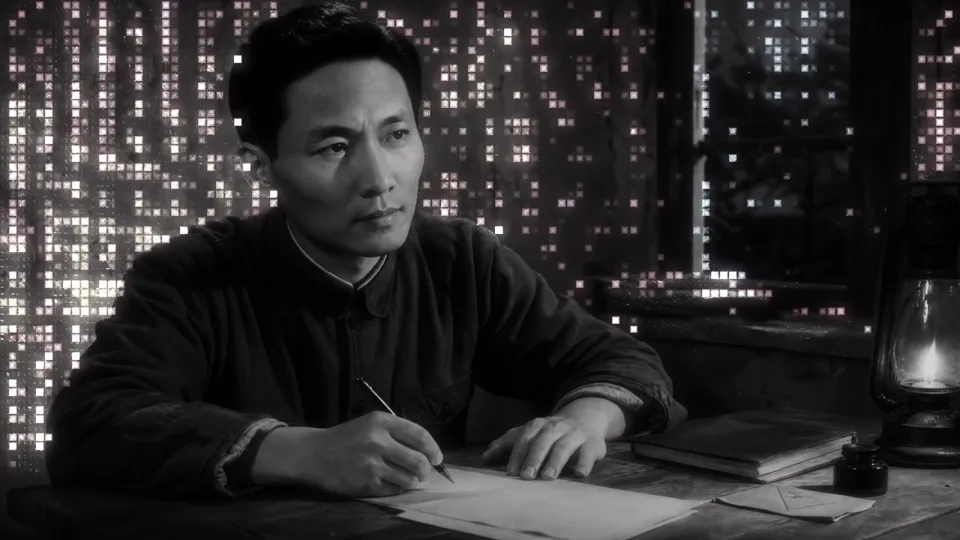
Writing at a desk, writing private feelings
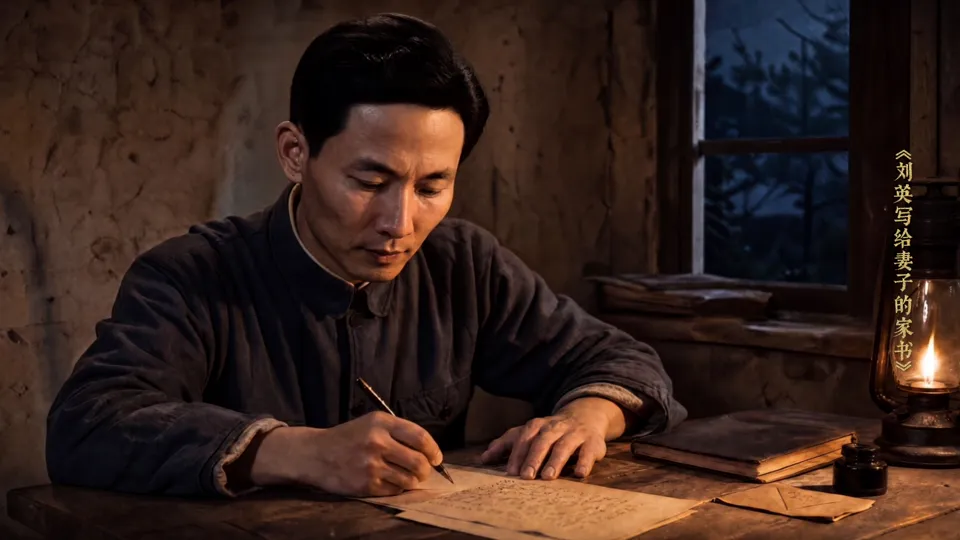
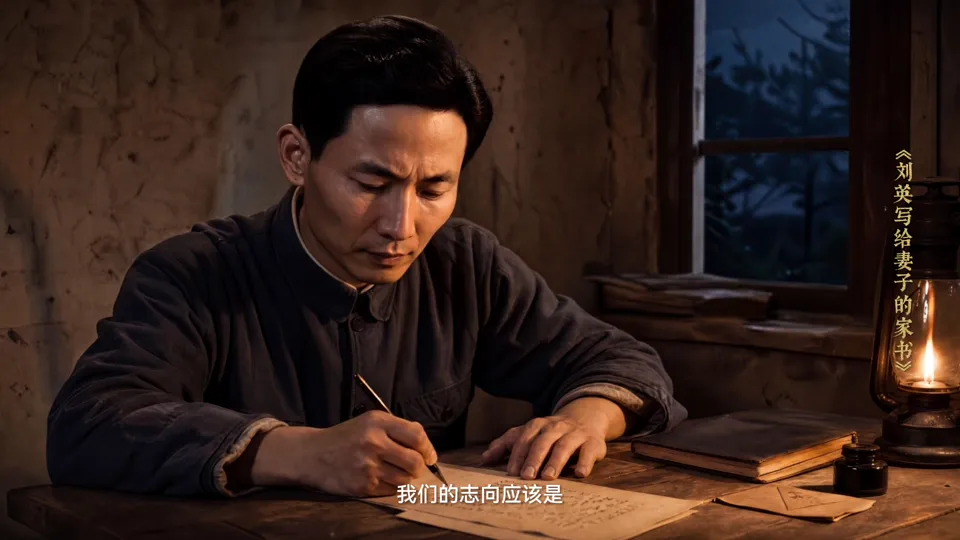
The letter is solemn in tone, so the film pairs the reading with a lamplit desk, paper, a pen tip and the writer's profile. The act of writing turns the words into a private moment happening before our eyes, and his convictions come through in concrete actions.
03
Today's images answer the same question
The later part moves from the archaeological site and tech scenes to children and Young Pioneers, then back to the idea of passing things on. The images of urban growth and the children's future are not a new topic; they answer the ideals the letter left for those who came after.
04
A jade cong carries ancient patterns into the tech scenes
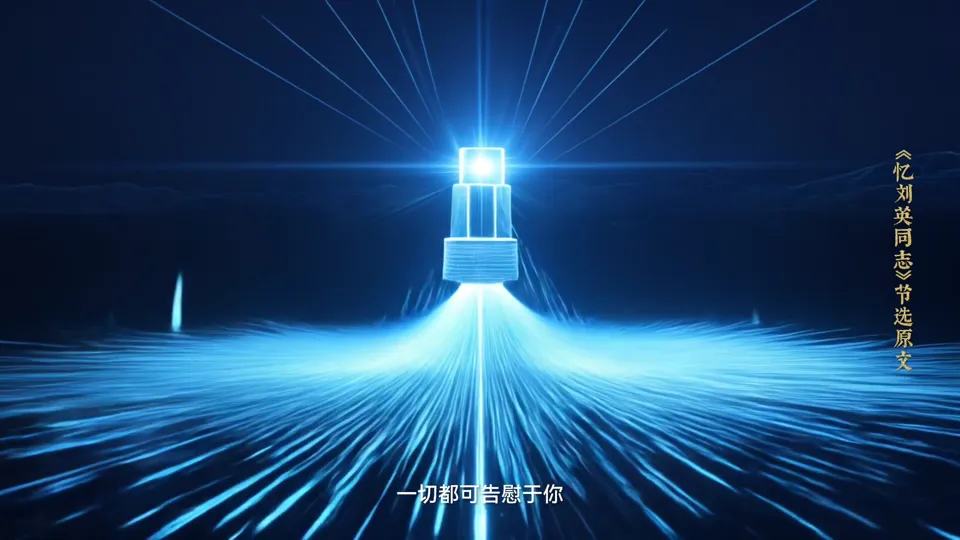
Liangzhu and Future Sci-Tech City are two separate pieces of content, and simply placing them side by side easily turns into a list of place names. In the film, the jade cong in the display case becomes a blue digital outline, its patterns spread into a network of light lines and grow into a city, followed by the real city and its labs. The cong becomes a concrete transition prop, and ancient civilization flows naturally into today's innovation on screen.
03 / Scene Breakdown
From a letter in the memorial hall to today's answer
Film · 00:00–00:27
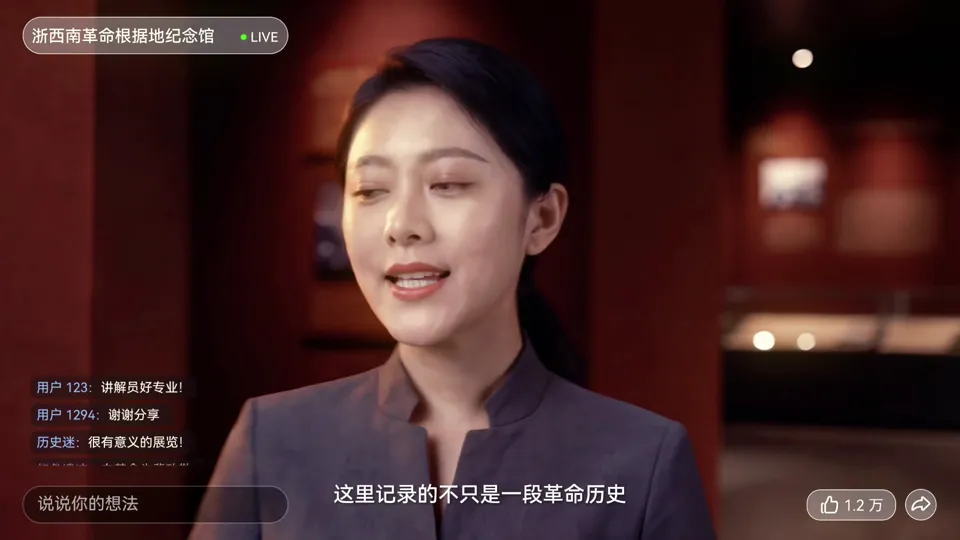
A memorial hall on livestream
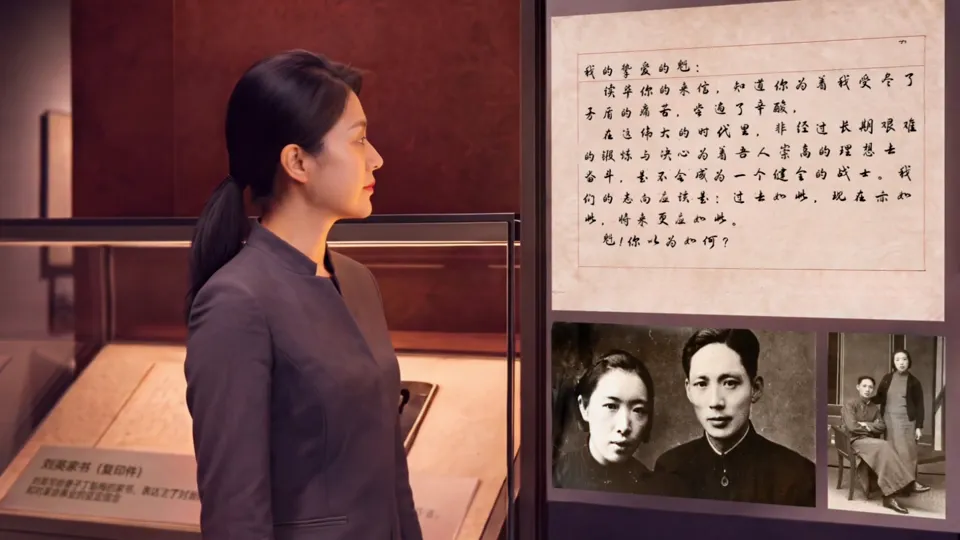
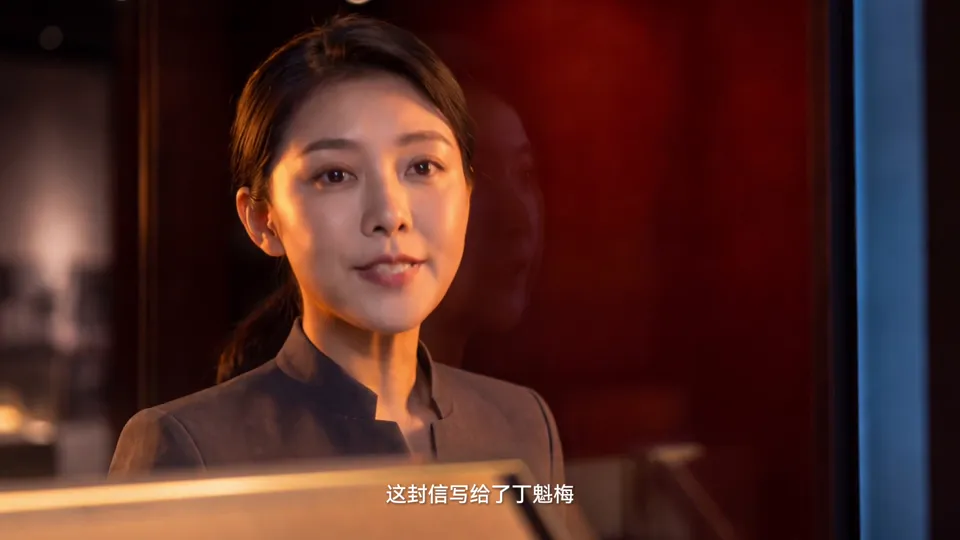
The film opens with a livestream inside the hall: a guide talks to her phone, then walks to the display case with Liu Ying's letter and the digital archive screen and says, “Today, let's read it again together.”
Clip · 00:00–00:06
Livestream opening
Facing her phone, the guide says, “What's recorded here is more than a chapter of revolutionary history,” with bullet comments and like counts along the edge of the screen, just like an ordinary livestream from the hall.
Clip · 00:09–00:17
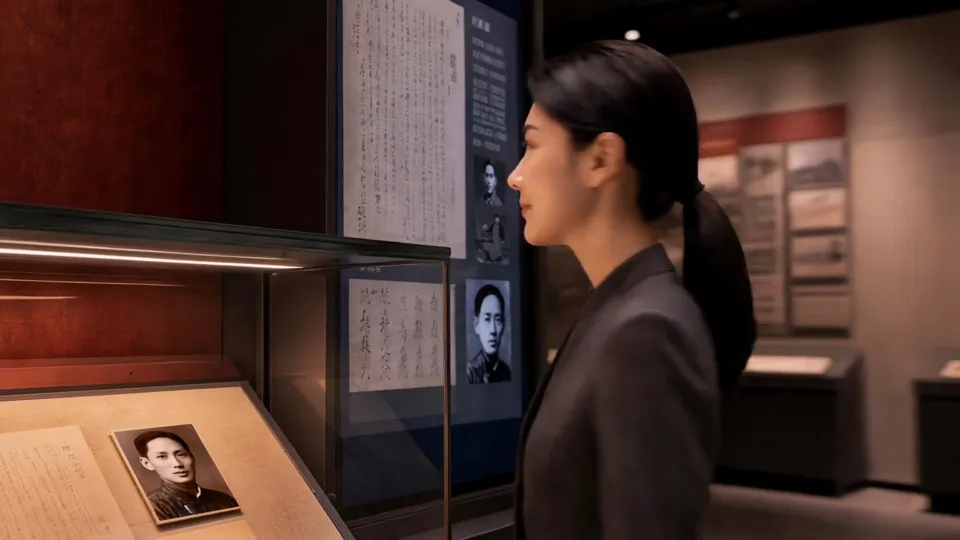
Walking to the letter's display case
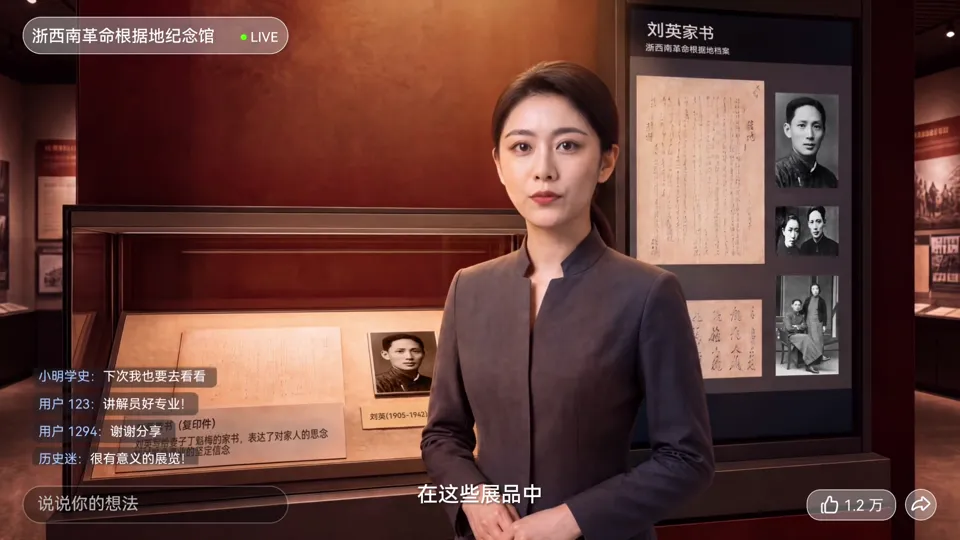
The guide turns and walks to a display case holding Liu Ying's photo and a copy of the letter; a caption explains that it is a letter from Liu Ying to his wife, Ding Kuimei.
Clip · 00:21–00:27
A hand on the digital archive screen
She places her hand on the digital screen beside the case, which shows the full letter and photos of Liu Ying and Ding Kuimei; this is where the letter is “opened.”
Film · 00:27–01:07
1940: writing by lamplight
We go back to that time: an oil lamp, a wooden table, night outside the window. Liu Ying bends over his letter as a narrator reads it line by line.
Clip · 00:27–00:33
From black and white to warm color
He first appears in black and white with the grain of an old photo, and over a few seconds warm color returns as he writes with his head bowed.
Clip · 00:42–00:48
Writing, then pausing
As the narrator reads “in this great era,” he writes a few strokes, stops to look up and think, then lowers his head and writes on.
Clip · 00:54–01:00
Writing the key line
Captions appear one after another: “Our aspiration should be,” “so it was in the past,” “so it is now.” He finishes the last stroke and puts down his pen.
Clip · 01:00–01:07
The letter glows, back to the exhibition hall
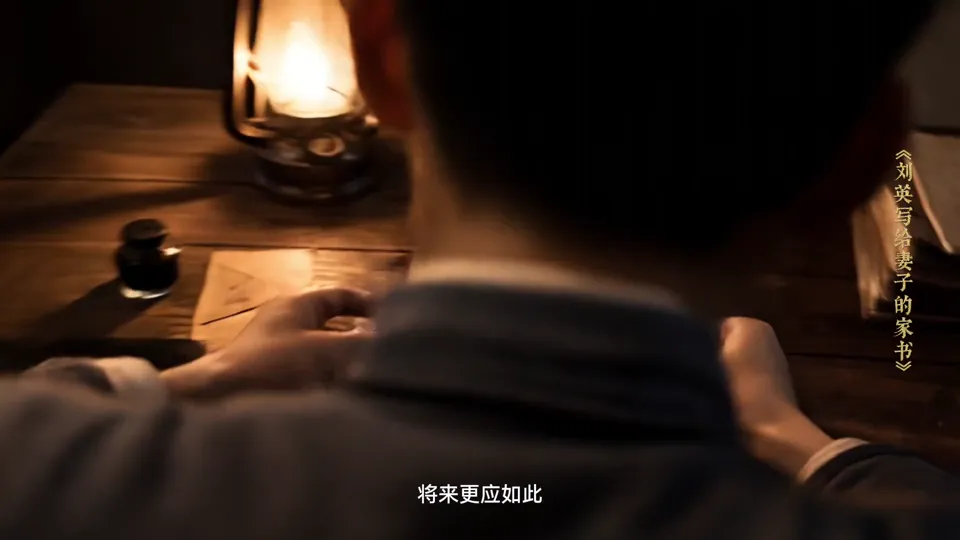
The camera circles behind him and pushes in on the filled page; after “Kui! What do you think?” the paper lights up with a warm glow that spreads out and brings us back to the memorial hall.
Film · 01:07–01:24
The answer, years later
The guide picks up the story and introduces “Remembering Comrade Liu Ying,” written by Ding Kuimei many years later; the camera rises from the hall, flies over the mountains and lands at the former site of the CPC Zhejiang Provincial Committee.
Clip · 01:07–01:14
The guide picks up the story
Standing in front of the digital screen, the guide turns and says, “Many years later, Ding Kuimei wrote her answer.”
Clip · 01:14–01:20
Tilting up into the mountains
The camera tilts up into the mountains of southwest Zhejiang rising from a sea of clouds, then comes down to the statue and courtyard in front of the former site.
Clip · 01:20–01:24
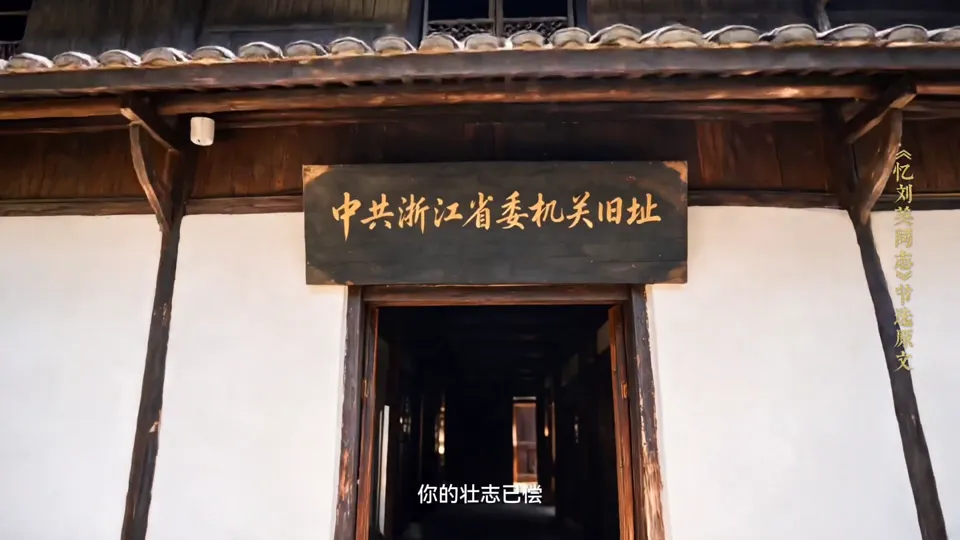
The plaque at the former site
The camera pushes in on the plaque reading “Former Site of the CPC Zhejiang Provincial Committee” as a caption reads the reply: “The motherland and people you loved so dearly…”
Film · 01:24–01:51
From Liangzhu to Future Sci-Tech City
The next line of the reply is matched with today's Zhejiang: the Liangzhu archaeological site and museum, a jade cong that turns into a digital wireframe and grows into Future Sci-Tech City, then a push into a lab.
Clip · 01:24–01:30
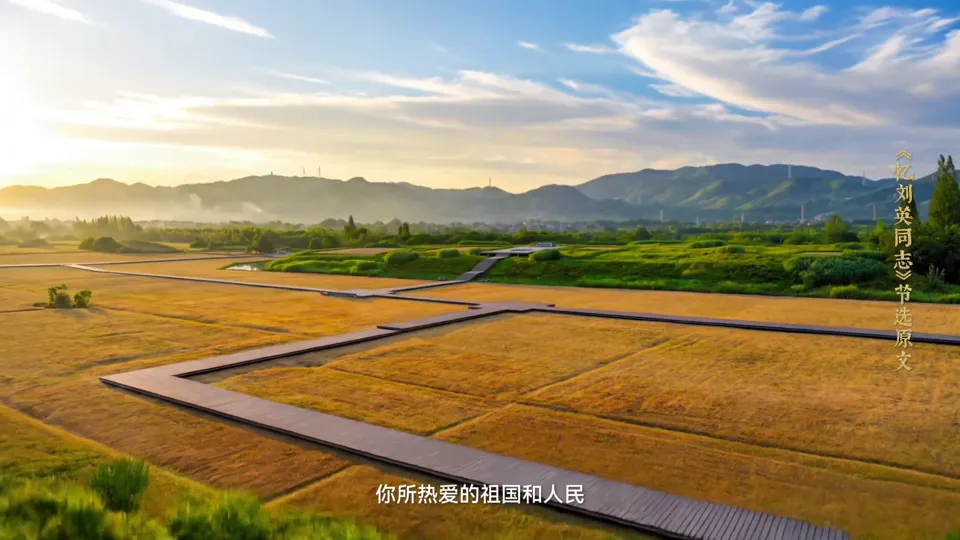
Liangzhu's fields and museum
An aerial view of the rice paddies and boardwalks at the Liangzhu site, then into the museum, where a large model of the ancient city covers the floor; the caption reads, “now stand tall in the East like a giant.”
Clip · 01:31–01:38
The jade cong becomes a blue wireframe
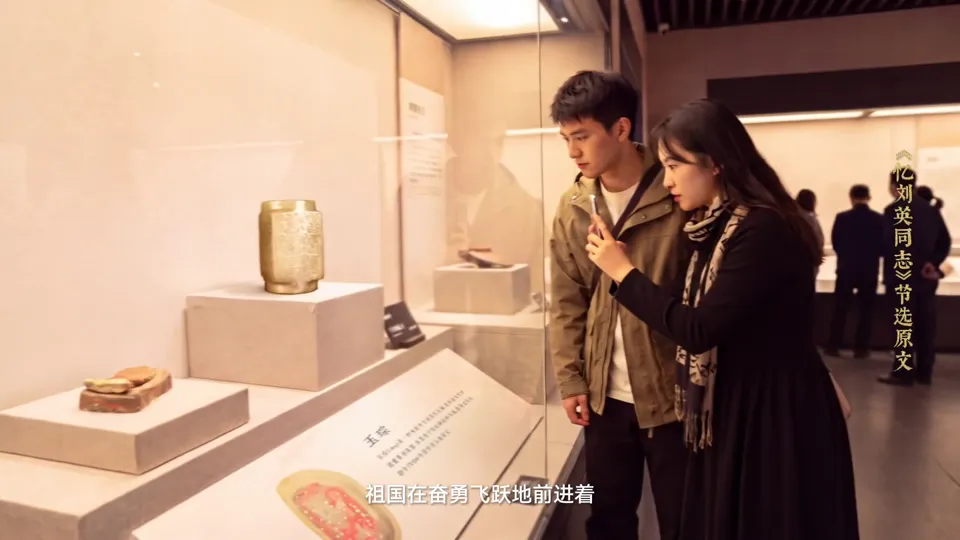
A young couple looks at a jade cong in a display case; the camera pushes in and the cong turns into a glowing blue digital outline.
Clip · 01:38–01:44
Patterns grow into a city
The patterns spread outward as lines of light and grow into a blue wireframe city, which then fills in with buildings and roads and becomes a real urban district.
Clip · 01:44–01:51
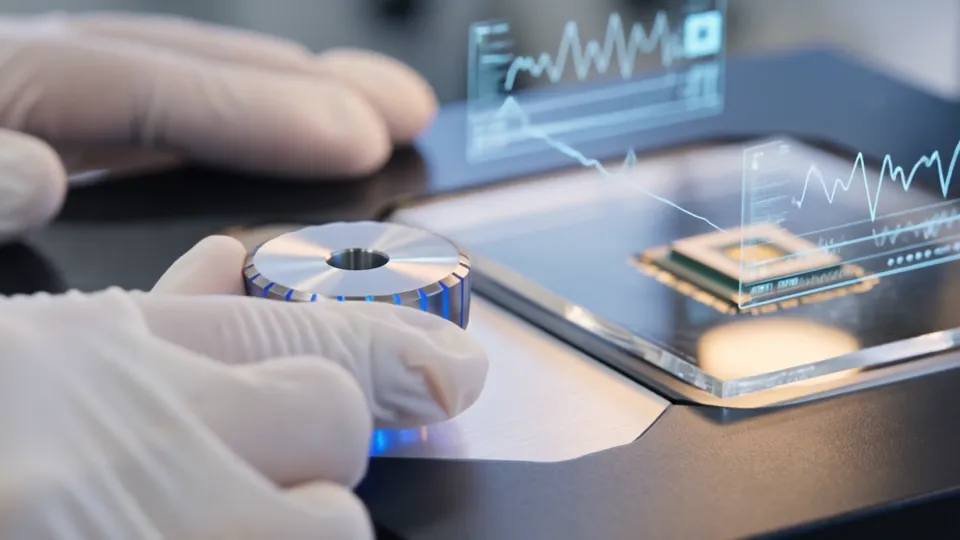
Chips in the lab
Researchers calibrate equipment, a robotic arm lines up with a chip, a group of young people discuss a floating chip model, and finally the camera pulls back to a panorama of the city above the clouds.
Film · 01:51–02:21
The children write the answer
The reply says, “the children are growing up healthy.” The film returns to the countryside and its children, then to the memorial hall, where the guide hands the question to the audience and Young Pioneers answer in front of the hall.
Clip · 01:51–01:58
Everyday life in the village
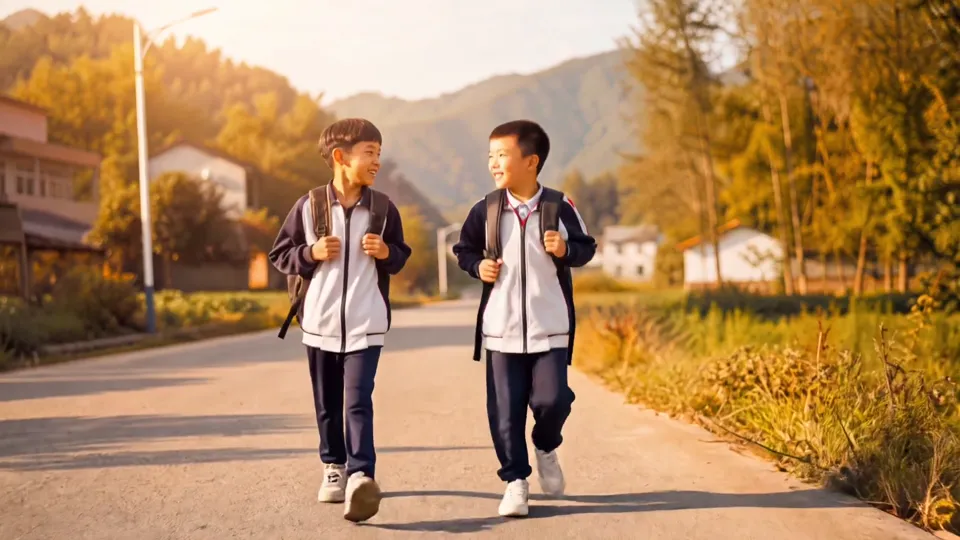
Two children walk down a village road with school bags, a teenager shoots a basket, an elderly woman turns sweet potato slices drying in the sun, a courier delivers a medicine kit to an elderly man's door, and a child laughs holding up a pinwheel.
Clip · 01:58–02:02
A hand on the reply
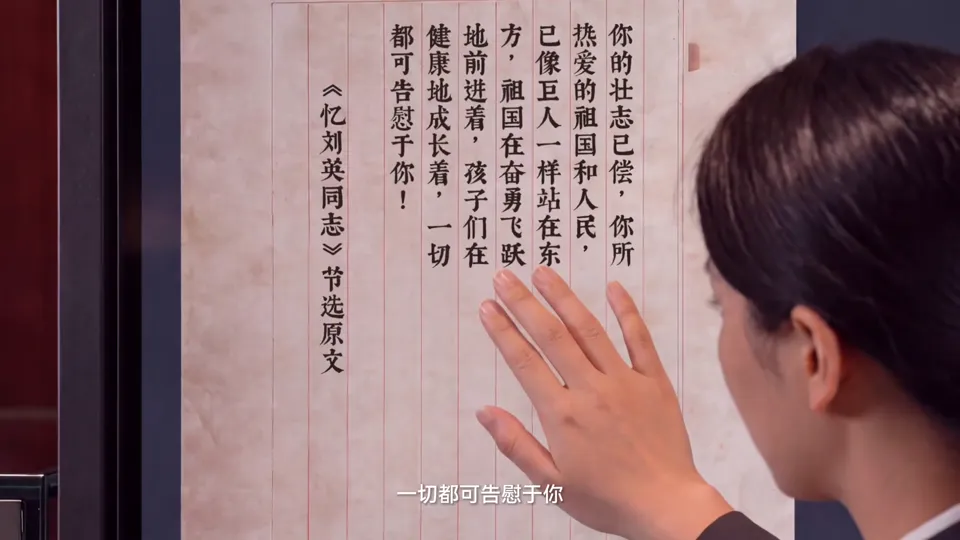
The pinwheel sweeps past the camera and we return to the memorial hall. The guide places her hand on an excerpt from “Remembering Comrade Liu Ying” on the screen and reads, “All of this can be a comfort to you!”
Clip · 02:02–02:09
Handing the question to the audience
She looks into the camera and says, “This letter was written to Ding Kuimei. But the question was also left to those of us who came after.”
Clip · 02:10–02:17
Young Pioneers in front of the hall
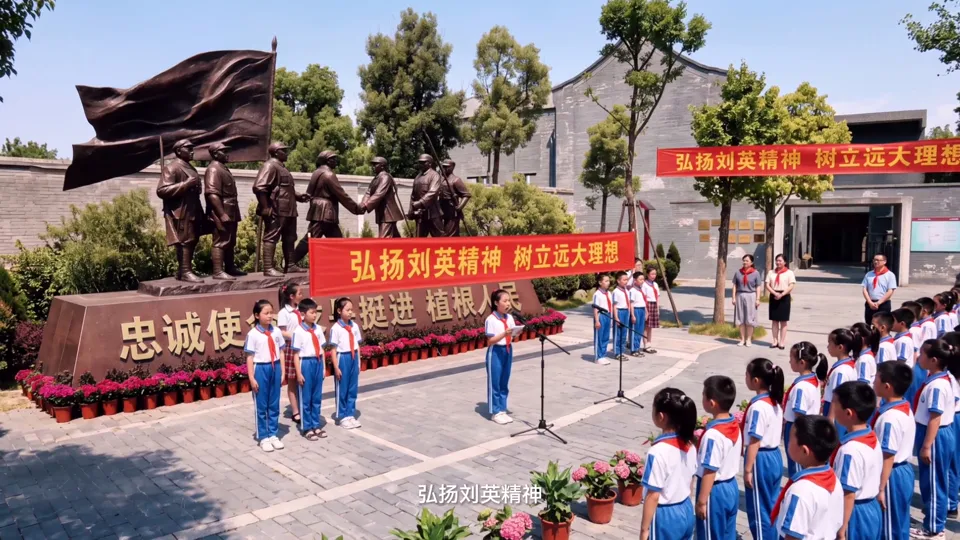
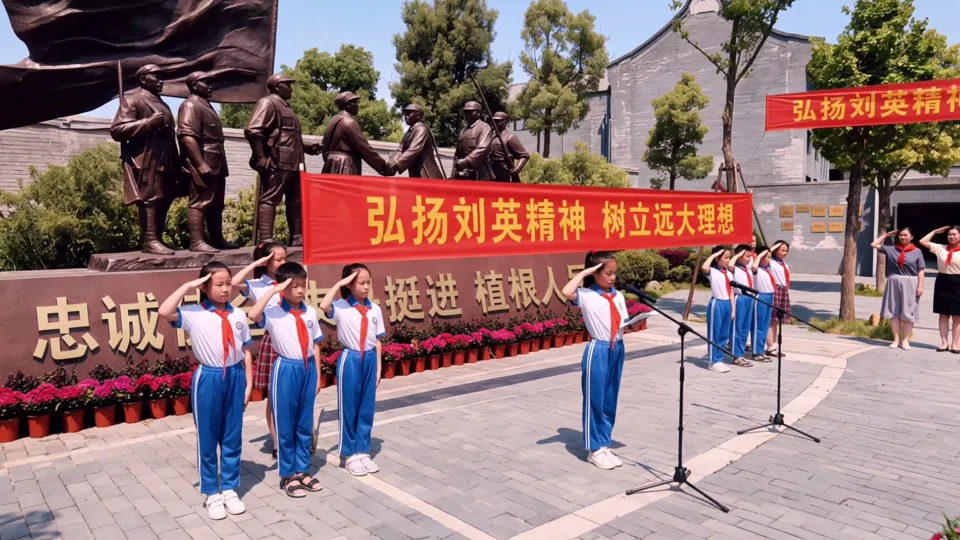
On the square in front of the memorial hall, Young Pioneers stand in formation under a banner reading “Carry Forward the Spirit of Liu Ying, Set Lofty Ideals,” and one of them reads aloud at a microphone.
Clip · 02:17–02:21
Freeze on a salute
A girl raises her hand in a salute, and the frame holds on her determined gaze as the narrator says, “And we are writing the answer.”
04 / Storyboards & Final Frames
Every shot, from script to final frame.
Shown in the order of the finished film: for each shot we first note what it shows, then the final frame used in the film (the video's first or last frame).
01
A memorial hall on livestream
In the film · 00:00–00:27
Shot 1.1
Livestream opening
The guide speaks to her phone, with the hall's red pillars and display cases behind her. Soft, warm light comes from the left, and her expression is relaxed and natural.
Livestream opening · Final 1
Shot 1.2
Walking to the letter's display case
The guide stops beside the display case with Liu Ying's letter and begins introducing it in her own words. The case label gives Liu Ying's years of birth and death (1905–1942).
Walking to the letter's display case · Final 1
Shot 1.3
Looking at Liu Ying's photo
The guide looks down at Liu Ying's photo in the display case and says, “Today, let's read it again together.”
Looking at Liu Ying's photo · Final 1
Shot 1.4
A hand on the digital archive screen
The guide places her hand on the digital screen; the camera pushes in on the letter on screen, and the writing dissolves into ink wash, taking us into the era when it was written.
A hand on the digital archive screen · Final 1
02
1940: writing by lamplight
In the film · 00:27–01:06
Shot 2.1
Pen to paper
At a wooden table under an oil lamp, Liu Ying writes with his head bowed, now and then looking up to think.
Pen to paper · Final 1
Shot 2.2
Bent over the letter
The pen tip moves across the paper as the narrator reads the original text of the letter.
Bent over the letter · Final 1
Shot 2.3
Picking up the letter
After writing the last line, he puts down his pen and lifts the letter with both hands as the camera circles behind him.
Picking up the letter · Final 1
Shot 2.4
Close-up of the letter
The paper carries the letter's original text, from “My dearest Kui” to “Kui! What do you think?” The words on the page are exactly what the narrator is reading.
Close-up of the letter · Final 1
03
The answer, years later
In the film · 01:06–01:24
Shot 3.1
Back to the exhibition hall
The glow of the letter spreads and we return to the memorial hall, where the guide turns and says, “Many years later.”
Back to the exhibition hall · Final 1
Shot 3.2
Ding Kuimei's answer
Facing the camera, the guide says, “Ding Kuimei wrote her answer,” and the camera quickly tilts up.
Ding Kuimei's answer · Final 1
Shot 3.3
The mountains of southwest Zhejiang
The camera passes through the clouds: mountains rising from a sea of clouds and a tower on a peak.
The mountains of southwest Zhejiang · Final 1
Shot 3.4
Exterior of the former site
The camera pushes forward to the courtyard gate of the former site of the CPC Zhejiang Provincial Committee.
Exterior of the former site · Final 1
Shot 3.5
Plaque at the former site
The plaque reads “Former Site of the CPC Zhejiang Provincial Committee”; the camera passes through the gateway and flies out over the fields.
Plaque at the former site · Final 1
04
From Liangzhu to Future Sci-Tech City
In the film · 01:24–01:51
Shot 4.1
Liangzhu's fields
An aerial view of the rice paddies and boardwalks at the Liangzhu site; the camera flies from the fields into the museum.
Liangzhu's fields · Final 1
Shot 4.2
The Liangzhu museum
A large model of the ancient city sits at the center of the museum, and the camera whips left to a display case.
The Liangzhu museum · Final 1
Shot 4.3
Young people looking at the jade cong
A young couple looks at a jade cong in the display case; the digital transformation that follows starts from this piece.
Young people looking at the jade cong · Final 1
Shot 4.4
The jade cong turns into data
The jade cong becomes a transparent blue wireframe, and its patterns begin to spread outward.
The jade cong turns into data · Final 1
Shot 4.5
A city of data
The patterns cover the ground and grow upward into a blue wireframe city.
A city of data · Final 1
Shot 4.6
Future Sci-Tech City
The wireframe fills in with glass curtain walls, roads and traffic, becoming a real urban district.
Future Sci-Tech City · Final 1
Shot 4.7
Lab
The camera pushes into a lab inside a building, where a researcher works at a microscope.
Lab · Final 1
Shot 4.8
Chip inspection
Gloved hands adjust inspection equipment as a chip floats above the platform.
Chip inspection · Final 1
Shot 4.9
The robotic arm moves into place
The robotic arm's probe lines up with the chip, and a scanning light falls on its center.
The robotic arm moves into place · Final 1
Shot 4.10
Teamwork
Five young researchers discuss a floating chip model.
Teamwork · Final 1
Shot 4.11
City panorama
The city and a lake above the mist; from here the camera flies toward a mountain village.
City panorama · Final 1
05
The children write the answer
In the film · 01:51–02:21
Shot 5.1
On the way home from school
Two children walk down a village road with school bags; one catches up with the other and they smile at each other.
On the way home from school · Final 1
Shot 5.2
The village basketball court
A teenager jumps for a shot, and the ball goes in.
The village basketball court · Final 1
Shot 5.3
Drying sweet potato slices
A silver-haired elderly woman bends over a bamboo tray, turning sweet potato slices, with afternoon sunlight on her hands.
Drying sweet potato slices · Final 1
Shot 5.4
A medicine kit delivered to the door
A courier hands a medicine kit and a parcel to an elderly man standing at his courtyard gate.
A medicine kit delivered to the door · Final 1
Shot 5.5
A child with a pinwheel
A child laughs holding up a pinwheel; the pinwheel sweeps past the camera and the scene returns to the memorial hall.
A child with a pinwheel · Final 1
Shot 5.6
A hand on the reply
The guide places her hand on the screen, which shows an excerpt from “Remembering Comrade Liu Ying.”
A hand on the reply · Final 1
Shot 5.7
Handing the question to the audience
The guide looks into the camera and says, “But the question was also left to those of us who came after.”
Handing the question to the audience · Final 1
Shot 5.8
Young Pioneers in front of the hall
On the square in front of the memorial hall, Young Pioneers stand in formation as one of them reads aloud in front of a banner.
Young Pioneers in front of the hall · Final 1
Shot 5.9
Freeze on a salute
A girl salutes, her hair stirring in the breeze, and the frame holds on her gaze.
Freeze on a salute · Final 1
05 / Script Excerpts
Beyond the picture.
Liu Ying
Our aspiration should be: so it was in the past, so it is now, and so it must be all the more in the future.Script
Museum guide
This letter was written to Ding Kuimei. But the question was also left to those of us who came after.Script
06 / Results
A complete red-culture short film
Delivered a red-culture short film of about 2 min 21 sec in 16:9.
Case Study
A 1940 family letter, answered by today's Zhejiang
In 1940, Liu Ying wrote to his wife, Ding Kuimei, by the light of an oil lamp. At the end of the letter he asked: “Kui! What do you think?”
More than eighty years later, we used AI to turn that letter into a 2 min 21 sec red-culture micro-drama.
The film was made for the “In Zhejiang, Anything Is Possible” creative campaign: it had to tell the story of a red family letter while also bringing in Liangzhu, Future Sci-Tech City and today's rural Zhejiang.
Our approach: let the letter ask the question, and let Ding Kuimei's memories years later and today's images answer it.
Client
“In Zhejiang, Anything Is Possible” micro-drama creative project
Project Type
AI red-culture micro-drama · AI promo film
Timeline
Jul–Sep 2026
Deliverables
A 2 min 21 sec film, 16:9, 1920 × 1080, plus covers in 16:9 and 3:4
Distribution
Released on short-video platforms under the hashtags #ZhejiangGlimmersEveryoneCreates and #EveryoneMakeAMicroDrama
Produced by
Shenzhen Alchemy Technology Co., Ltd. (Liandan AI Studio)
01
One brief, with a red family letter as well as Liangzhu and the tech city
The campaign's theme was “In Zhejiang, Anything Is Possible.” One direction was “carrying on Zhejiang's red heritage,” and the brief also asked for more on-screen presence for locations in Yuhang, Hangzhou, such as Liangzhu and Future Sci-Tech City.
The difficulty: the letter is a private letter from 1940, Liangzhu is a 5,000-year-old archaeological site, and the tech city is today's buildings and labs. Put the three side by side and it easily becomes a list of place names.
The thread was in the letter itself. Liu Ying wrote: “Our aspiration should be: so it was in the past, so it is now, and so it must be all the more in the future. Kui! What do you think?” This was a question left for the future.
Years later, Ding Kuimei wrote “Remembering Comrade Liu Ying,” and one passage reads almost like a reply: “The motherland and people you loved so dearly now stand tall in the East like a giant. The motherland is surging forward, the children are growing up healthy, and all of this can be a comfort to you!”
That set the structure: Liu Ying asks, Ding Kuimei answers, and today's Zhejiang gives the answer its images. Liangzhu, the tech city, the countryside and the children each pick up a line from the reply.
Liu Ying finishes the letter and picks it upThe answer, years later: an excerpt from “Remembering Comrade Liu Ying”
02
No invented lines: the letters' own words
The script went through several drafts before we settled on one rule: we don't write our own dialogue. Liu Ying's part uses only the original text of his letter, and the answer uses only the original text of “Remembering Comrade Liu Ying.” A real letter carries more weight than any written line.
The original text is solemn, and read straight to people scrolling short videos, it can feel distant. So the opening is set in a livestream inside the hall: a guide talks to her phone, with bullet comments and likes along the edge of the screen. The first thing viewers see is people and a venue of today.
The client wanted the guide to speak in her own voice throughout, so we removed the bullet-comment questions that had been cut in and had her introduce the letter herself. The client also pointed out that artifacts in a memorial hall can't simply be touched, so instead the guide taps the digital archive screen beside the case, and the letter “opens” from the screen. We also completed Liu Ying's years of birth and death on the case label from the records and regenerated the image.
First draft: Liu Ying's years of birth and death incomplete on the labelFinal: label completed with “1905–1942” and the image regenerated
Clip · 00:21–00:27
A hand on the digital archive screen
The guide says, “Today, let's read it again together,” and puts her hand on the digital screen, where the letter opens.
03
Not reading the letter to camera, but watching him write it
In early versions, Liu Ying read his own letter to the camera. The client suggested showing him writing it instead, which would feel more real.
We rebuilt the whole section around him writing at his desk: an oil lamp, a wooden table, night outside the window. Liu Ying writes a few strokes with his head bowed, stops to look up and think, then writes on. The narrator reads the letter, and captions follow line by line.
He first appears in black and white with the grain of an old photo, and over a few seconds warm color returns. We avoided any “bringing him back to life” effect; it is as if the man in the photo has returned to the night he wrote the letter.
Clip · 00:27–00:33
From black and white to warm color
Liu Ying slowly regains color from a black-and-white image as he writes under the oil lamp.
The close-up of the letter was also revised. In the first draft the handwriting was illegible; in the final, we used the letter's original text, so whatever line the audience hears is on the page.
First draft: the handwriting on the letter was illegibleFinal: the original text of the letter, matching the narration
All the readings before and after use a single voice. For the reply, we cast a separate, older female voice with deeper feeling, distinct from the guide, so you can hear that this is another person speaking many years later.
04
From 1940 back to today: first the hall, then out into the world
After the letter-writing scene, the film has to return from 1940 to the present. In early versions, the letter cut straight to a wide shot of today, and viewers couldn't tell where they were.
The client didn't want the story to jump, so we had the letter light up with a warm glow under the lamp; when the light spreads, we first return to the memorial hall. The guide stands in front of the digital screen and says, “Many years later, Ding Kuimei wrote her answer.”
Clip · 01:00–01:07
The letter glows, back to the exhibition hall
The letter lights up with a warm glow; as the light spreads, the scene moves from the 1940 desk back to today's memorial hall.
Then the camera tilts up into the mountains of southwest Zhejiang rising from a sea of clouds, and comes down in front of the courtyard and plaque of the former site of the CPC Zhejiang Provincial Committee. Viewers always follow the guide's thread: as she speaks, the images go with her.
The mountains of southwest Zhejiang in a sea of cloudsFormer Site of the CPC Zhejiang Provincial Committee
05
One jade cong links Liangzhu to Future Sci-Tech City
Getting from Liangzhu to the tech city was the hardest transition in the film. In early versions, the camera cut from a museum visitor's eyes to the next scene, and the artifact in the display case had nothing to do with what followed; the client felt the shift was abrupt.
We replaced the artifact in the case with a jade cong, Liangzhu's most iconic object, and made it the transition prop.
First draft: a pottery piece in the display caseFinal: replaced with a jade cong, where the digital transformation begins
In the final film, the jade cong first becomes a blue digital wireframe; its patterns spread outward as lines of light, cover the ground and grow into a wireframe city, which then fills in with glass curtain walls, roads and traffic to become the real Future Sci-Tech City. The camera then pushes into a lab inside a building, and when generating the images we kept a symmetrical pattern evolved from the Liangzhu motifs at the center of the chip.
Clip · 01:31–01:38
The jade cong becomes a blue wireframe
A young couple looks at the jade cong in the display case; the camera pushes in and the cong turns into a glowing digital outline.
At this point the caption reads, “The motherland is surging forward.” Ancient civilization and today's innovation grow out of each other on screen rather than being two segments stitched together.
06
Finally, handing the question back to the audience
The reply includes the line, “the children are growing up healthy.” We didn't answer it with the city alone, but went back to the countryside: children walking home from school along a village road, a teenager shooting a basket, an elderly woman turning sweet potato slices, a courier delivering a medicine kit to the door, a child laughing with a pinwheel.
On the way home from schoolAn elderly woman turning sweet potato slicesA medicine kit delivered to the door
The pinwheel sweeps past the camera and we are back in the memorial hall. The guide finishes reading “All of this can be a comfort to you!” and says to the camera, “This letter was written to Ding Kuimei. But the question was also left to those of us who came after.”
The last scene is on the square in front of the memorial hall: Young Pioneers in formation read aloud “Carry Forward the Spirit of Liu Ying, Set Lofty Ideals,” a girl's salute freezes on screen, and the narration closes with, “And we are writing the answer.”
Clip · 02:17–02:21
Freeze on a salute
A girl salutes as the narrator says, “And we are writing the answer.”
07
What this project achieved
The project delivered a 2 min 21 sec, 16:9, 1920 × 1080 red-culture micro-drama, with covers and release copy, published under the hashtags “#ZhejiangGlimmersEveryoneCreates #EveryoneMakeAMicroDrama.”
We think this film got one thing right: it didn't split the red story and the city's landscape into two halves. Instead, a family letter asks a question, and today's Zhejiang answers it.
The letter is real, the words are original, and the figures and the case label were checked against the records. What AI did was put a 1940 oil lamp, a Liangzhu jade cong and today's labs into one continuous sequence of shots; how each transition connects, and whether it flows, came down to round after round of choices and revisions.
FAQ
FAQ
How do you keep the museum guide looking like the same person throughout an AI micro-drama?
We first made reference sheets for the guide, including a front close-up and front, side and back full-body views. Every shot's first and last frames were generated and retouched from these references, and the video was then generated from those frames; shots with wrong lighting or expressions were adjusted frame by frame and regenerated.
How do you check the historical facts in an AI short on red history?
All the dialogue in this film comes from the original text of Liu Ying's letter and Ding Kuimei's “Remembering Comrade Liu Ying,” with nothing invented. Liu Ying's likeness is based on real photos; his years of birth and death on the case label were completed from the records; and the guide doesn't open the artifact case but taps the digital archive screen beside it.
How do you link historical scenes with today's images without abrupt jumps?
We use concrete objects as transitions: the glowing letter first returns us to the memorial hall; the jade cong in the Liangzhu case becomes a digital wireframe and then grows into Future Sci-Tech City; the pinwheel in a child's hand sweeps past the camera and brings us back to the guide. At every transition, viewers know where they came from and where they are.
How long did a film like this take from brief to delivery?
We started writing the script in mid-July 2026, delivered a first cut in mid-August, revised it per the client's feedback and locked the final at the end of August, then completed the covers and release copy in early September, about a month and a half in total.
Approach
Handling the writing, the reading and the shifts across time
Working from biographical materials and venue references, we first designed the guide, Liu Ying's appearance, the display case and the room where he writes, then set the letter up as the question and the excerpt from “Remembering Comrade Liu Ying” as the memory and answer years later. The script marks the nature and source of both texts and uses “many years later” to introduce the memory, keeping a clear line between historical material and dramatized scenes.
The historical section focuses on him writing at his desk, with the narrator reading the letter, and the character's emotions shown through putting pen to paper, pausing, looking up and lifting the letter; the voice stays consistent throughout. After the letter, we return to the memorial hall before entering present-day scenes, with the guide always the link between eras.
The Liangzhu section uses the jade cong as the transition: the digital patterns unfold in turn into a road network, a city outline and real buildings, then the camera pushes into a lab. The later section comes back to the countryside: children on their way home from school, an elderly woman turning sweet potato slices, a courier delivering medicine to the door and a smiling child with a pinwheel, before returning to the guide and the Young Pioneers on the square. The view keeps opening up, then closes on specific people and their actions.