Six Mid-Autumn verses set the scenes of snowy mountains, star trails, water towns and moonlight. In about 39 seconds of vertical video, vast landscapes and longing for home and reunion share a single night.
Project Type
Public Service
Client
National Development and Reform Commission (NDRC)
Year
2025
Our role
Poem selection & script, AI visuals & video, editing
Original format
1080 × 1920 · 00:39
Film00:39 · Film
01 / Background
How a Greeting Watched on Phones Holds Both Landscapes and Homesickness
This Mid-Autumn greeting was made for WeChat Channels, so it needed 9:16 images suited to phones, along with a solemn, expansive sense of China's landscapes. We chose a realistic Chinese-style landscape look, fixed the visual style first, then storyboarded around the classical verses: scenery spanning north, south, east and west all serves the themes of longing for home and reunion, with moonlight as the emotional thread running through the film.
Poetry can't come from simply laying text over scenery. The script weighed the emotional turns in the verses, the passage of time from dusk into night, and the visual flow between different landforms. The final cut gives each of the six verses a pair of landscapes, starting from snowy peaks and star trails, passing through Danxia hills, water towns, lakes and reeds, and ending on lit pavilions and moonlight over a sea of clouds.
02 / Creative Highlights
Letting the Poetry Decide Shot Size and Moonlight
01
Scenes Chosen by the Verse, So Every Cut Has a Reason
“Gazing northwest toward home” lands on the textured earth of Danxia hills, while “seeing the moon in the southeast” turns to a riverside water town. “The pale moon shares its glow” shows sky and lake mirroring each other, and “its radiance wets the dew” cuts from the shadows of trees on the shore to reeds at blue hour. The space moves from the grand to the detailed, so the changes in shot size viewers see are the changes in the verses' imagery.
02
Moonlight Runs Through the Film, but Not Every Shot Has a Moon
Too many moons get repetitive, so shots with and without the moon alternate, and the night scenes lean cool. In the finished film, the Danxia hills, the star trails over the rooftop and the reeds have no prominent full moon; they alternate with shots of the moon and its reflection, so the theme holds while the images vary, and the moon carries more weight each time it returns.
03
Subtle Movement Keeps the Rhythm of Reading the Verses
Turning star trails, swaying reed tassels, glints on the water and shifting clouds keep the images alive, while buildings, shorelines and mountains hold the composition steady. The film cuts directly between landscapes, and each verse gets its own shot length; the verse text and its author and source sit on either side of the frame, leaving the middle for the scenery.
04
From a Clear, Cold Night to the Lights of Home
A deep blue starry sky, mirror-still lakes and snowy mountains establish a clear moonlit night; warm windows under rooftops, water-town streets and lit pavilions add the warmth of people living their lives. Vast scenery alternates with nearby lights, so the greeting has the scale of mountains and rivers while still landing on the personal feelings of homesickness and reunion.
03 / Scene Breakdown
Six Mid-Autumn verses, twelve shots.
Film · 00:00–00:05
As evening clouds clear, a pure chill spills over; the Milky Way silently turns the jade disc
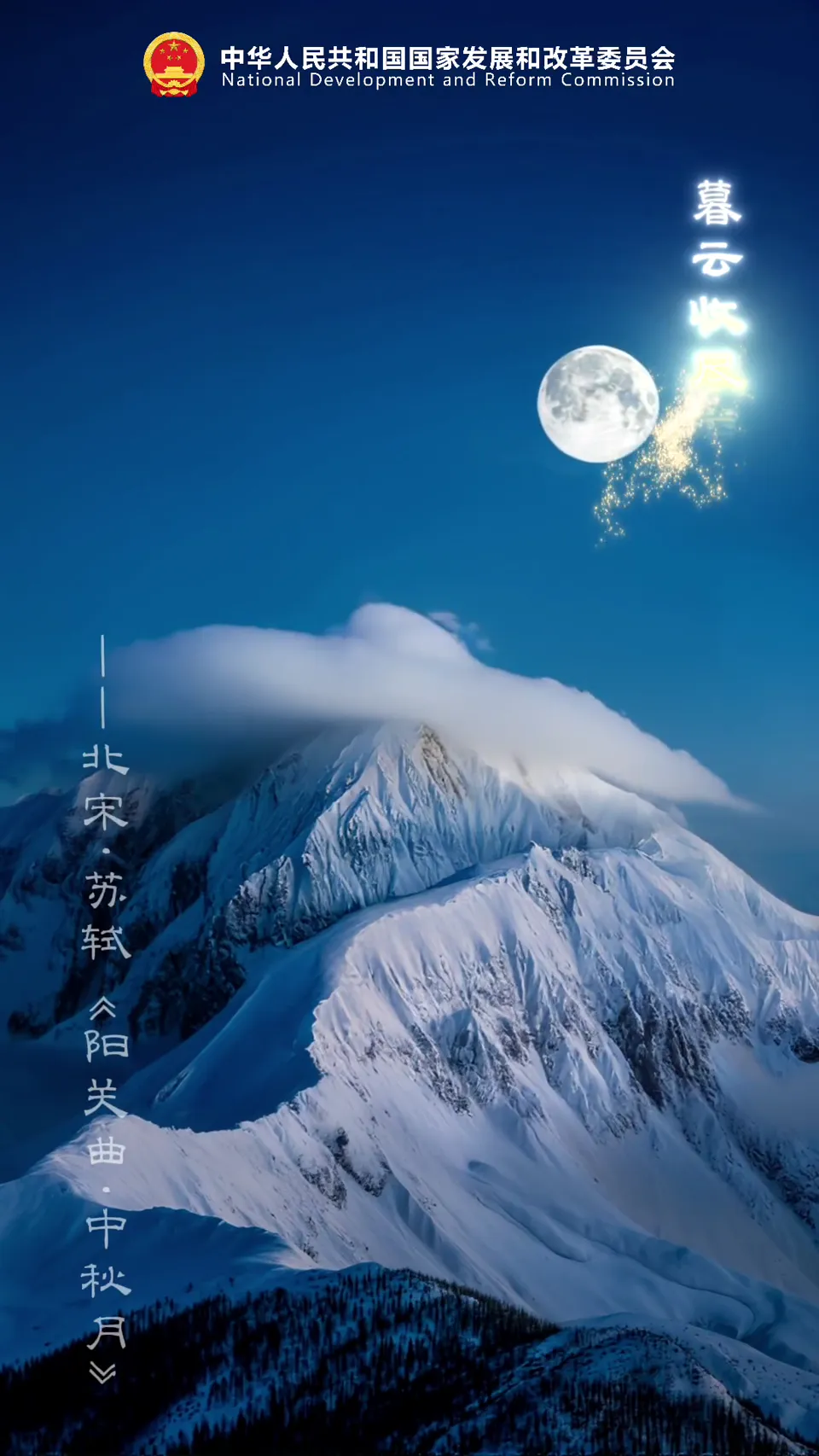
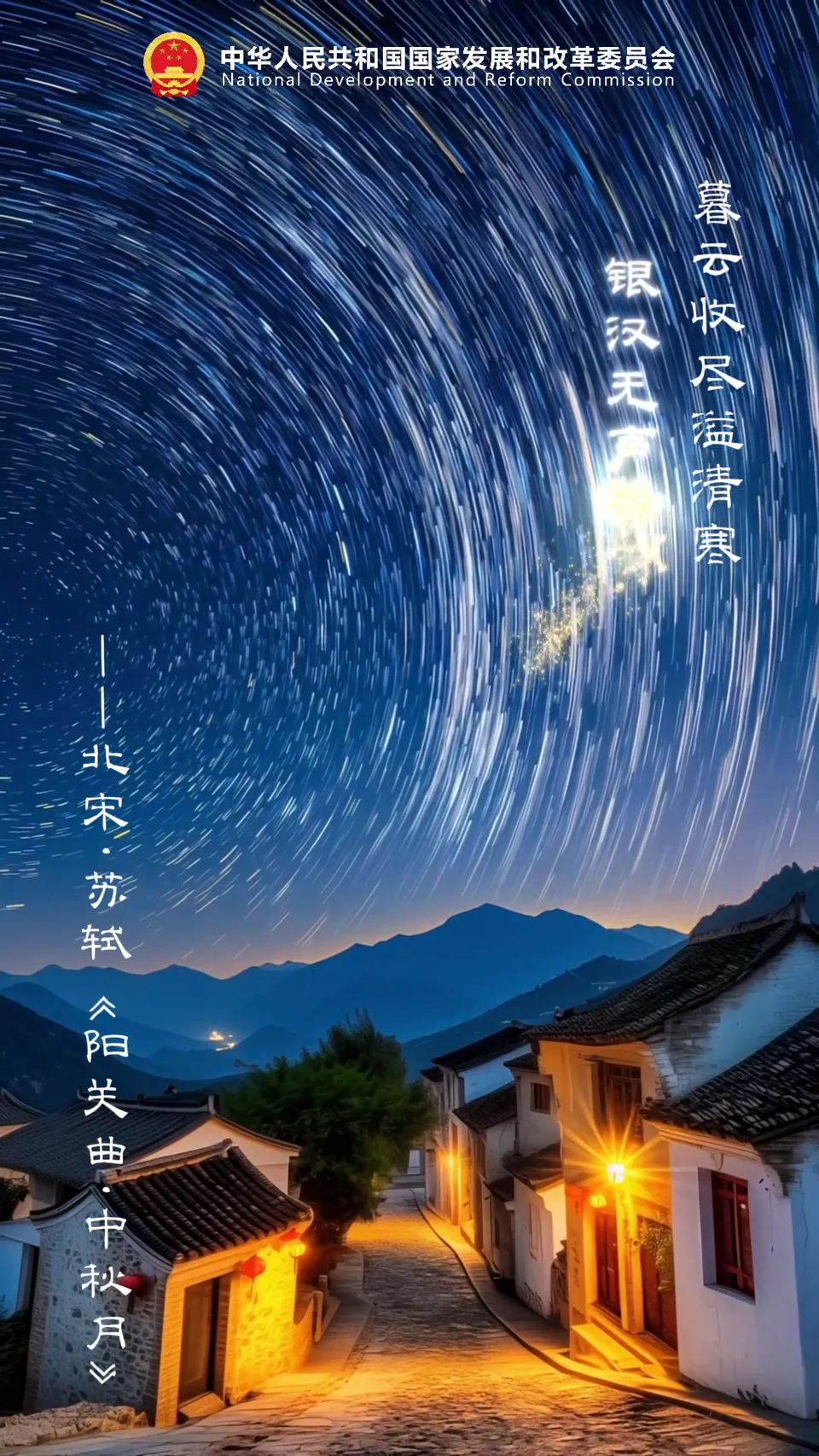
The first verse comes from Su Shi's “Yangguan Song: Written at Mid-Autumn.” Two shots move from the cold glow of a snowy mountain to homes under the stars, as a string of light points writes the verse character by character on the right.
Clip · 00:00–00:02
The Clouds Part and the Moon Rises
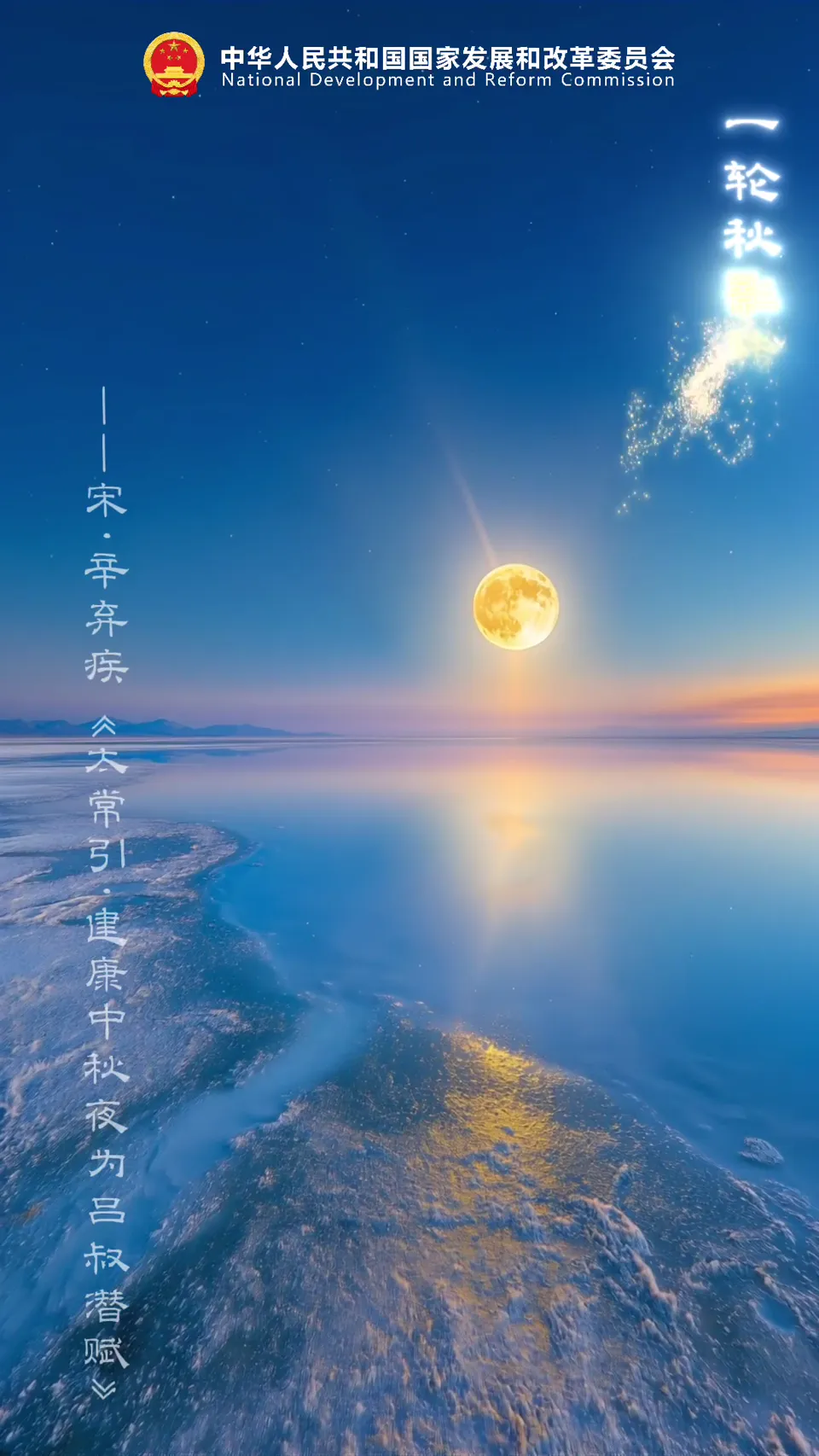
The clouds on the summit slowly part, and a full moon emerges at the upper right of the snowy peak, matching “as evening clouds clear.” The cold blue snowy mountain paints the “pure chill” directly.
Clip · 00:02–00:05
Star Trails Turn Above the Rooftop
Arcing star trails turn across a deep blue sky above the corner of a Huizhou-style roof and windows glowing with warm light. The stars wheel and the homes glow, matching “the Milky Way silently turns the jade disc.”
Film · 00:05–00:11
Gazing northwest toward home, where is it? In the southeast, how many times have I seen the moon grow full?
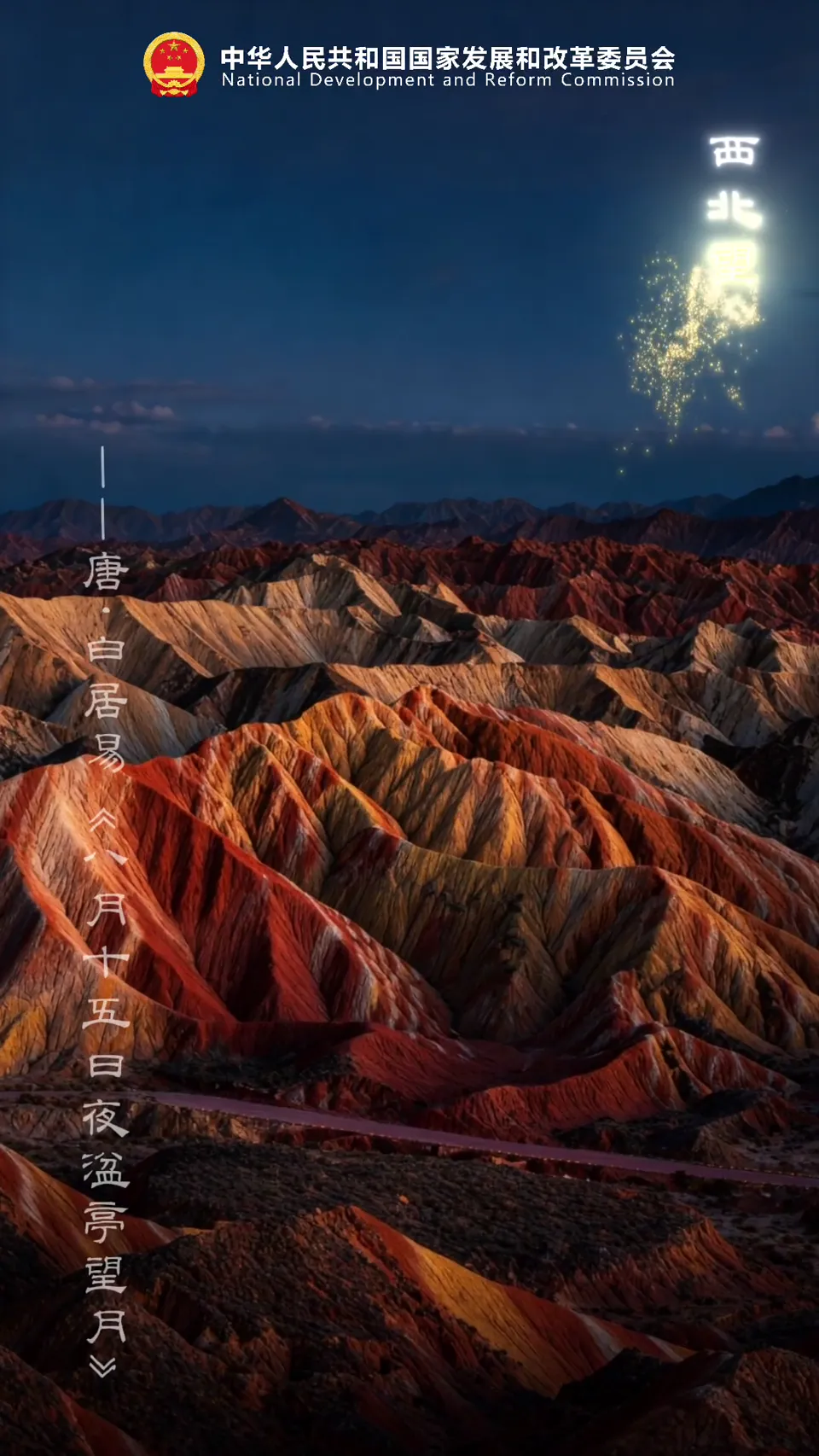
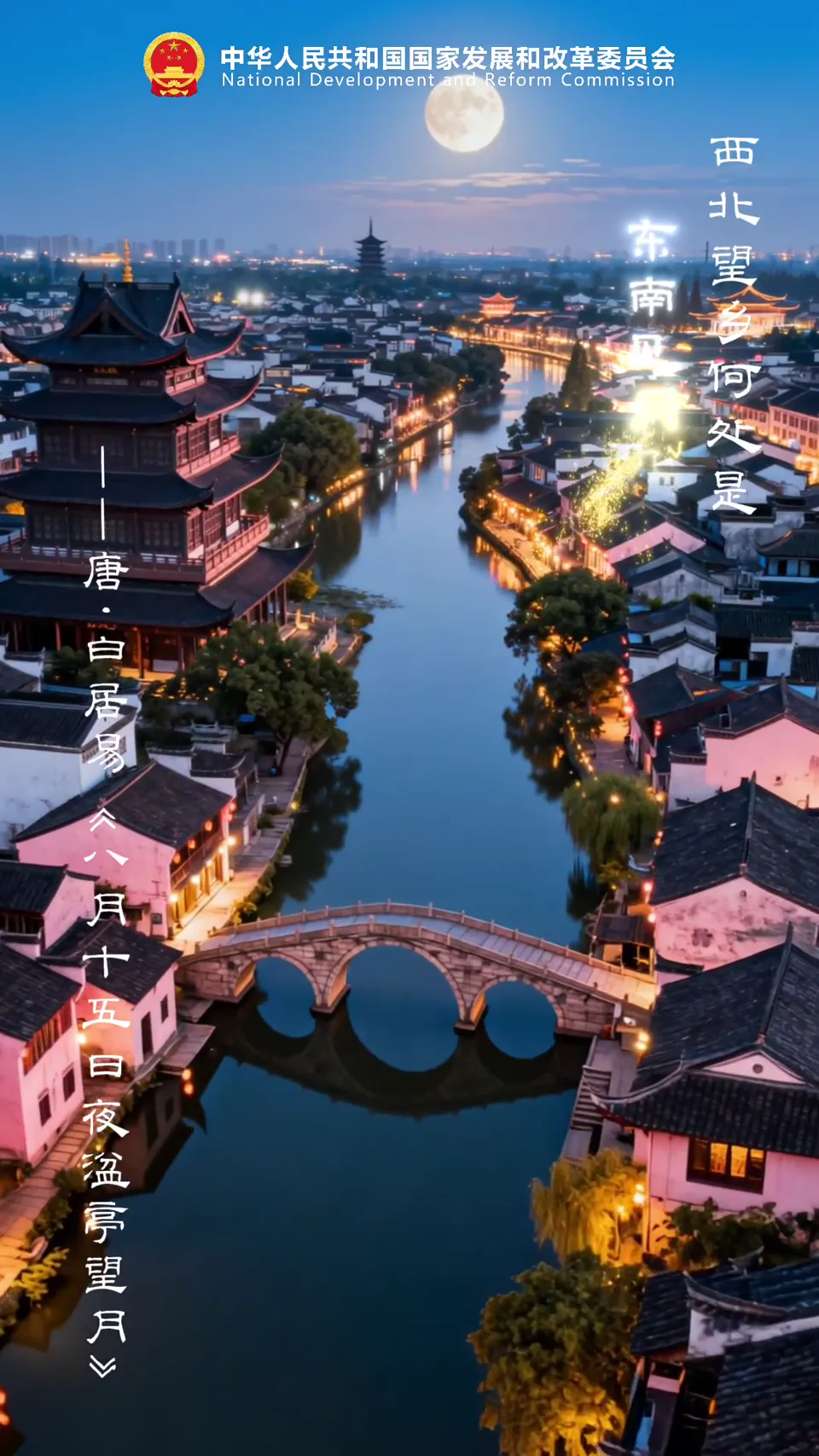
Bai Juyi's verse has a northwest and a southeast, so the images do too: first the Danxia hills of the far northwest, then a water town south of the Yangtze.
Clip · 00:05–00:08
Northwest: Danxia Hills at Night
Red Danxia ridges stretch layer upon layer under a deep blue night sky. This shot deliberately leaves out the moon, letting the texture of the land carry the vastness of “gazing toward home.”
Clip · 00:08–00:11
Southeast: The Moon Over a Water Town
An aerial shot pushes forward along the river, past lit white-walled, black-tiled houses on both banks and a stone arch bridge across the water, with the moon hanging on the distant horizon.
Film · 00:11–00:18
The autumn moon rolls out golden waves, a flying mirror polished anew
Xin Qiji's line likens moonlight to golden waves and the moon to a freshly polished mirror. Both shots use warm gold, in contrast to the cool blues before them.
Clip · 00:11–00:14
A Golden Moon Where Water Meets Sky
Lake and sky merge into one, a golden moon sits right on the line where they meet, and its light spreads across the water in a bright band: the “golden waves.”
Clip · 00:14–00:18
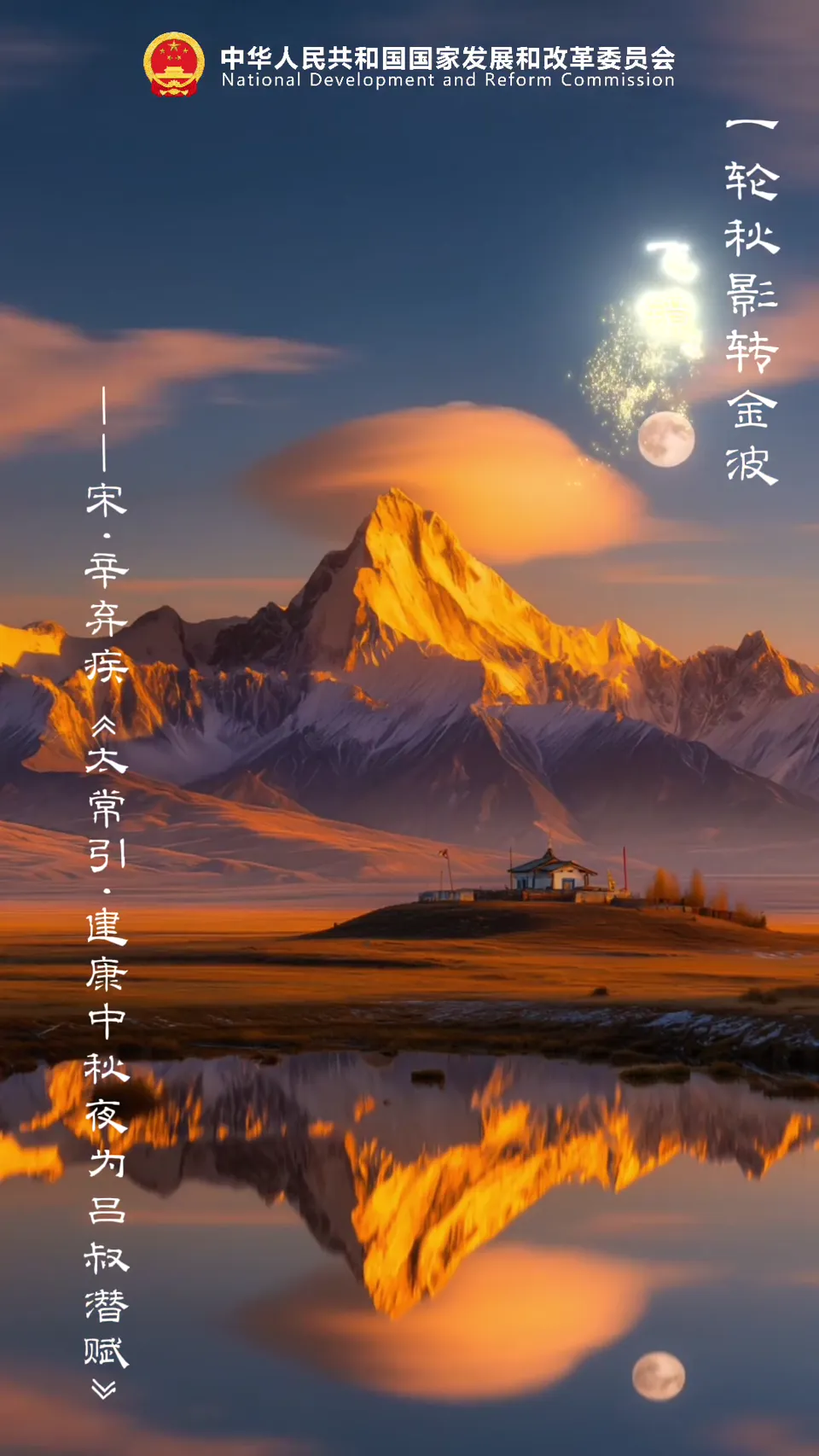
A Snowy Mountain Turned Gold
A snowy plateau mountain is lit by warm light, its reflection complete in the lake, and a small moon hangs at its upper right like a freshly polished mirror.
Film · 00:18–00:25
The pale moon shares its glow, the bright river casts its reflection, and all is clear inside and out
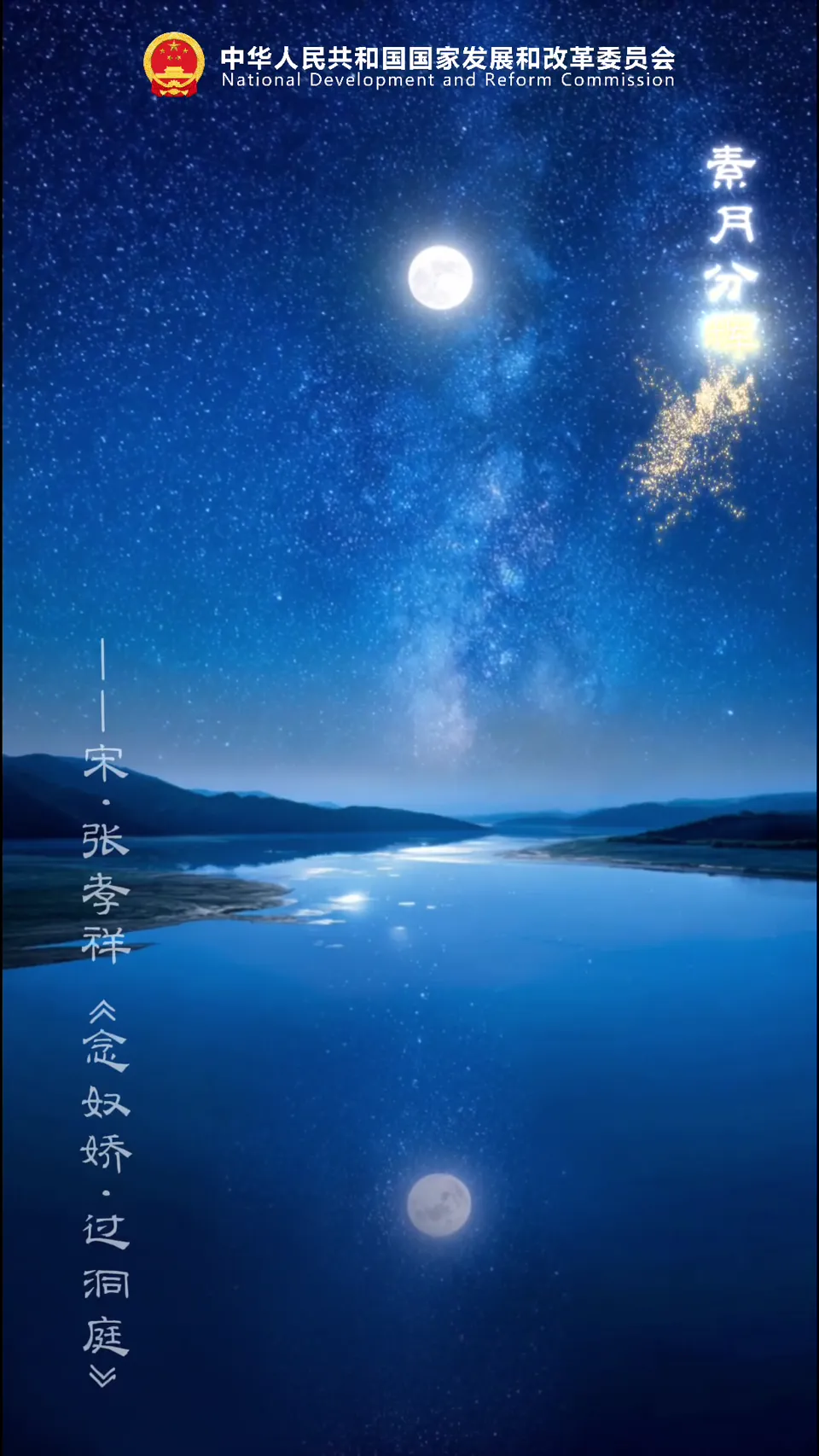
Zhang Xiaoxiang wrote of a moonlit night on Dongting Lake, where moonlight, the Milky Way and the lake form one clear, luminous whole from top to bottom. The images reference the real Dongting Lake, one shot with the moon and one without.
Clip · 00:18–00:21
The Milky Way, a Bright Moon and Their Reflection in the Lake
The Milky Way cuts diagonally across the night sky, the full moon faces its reflection above and below, and a ring of ripples slowly spreads from the middle of the lake.
Clip · 00:21–00:25
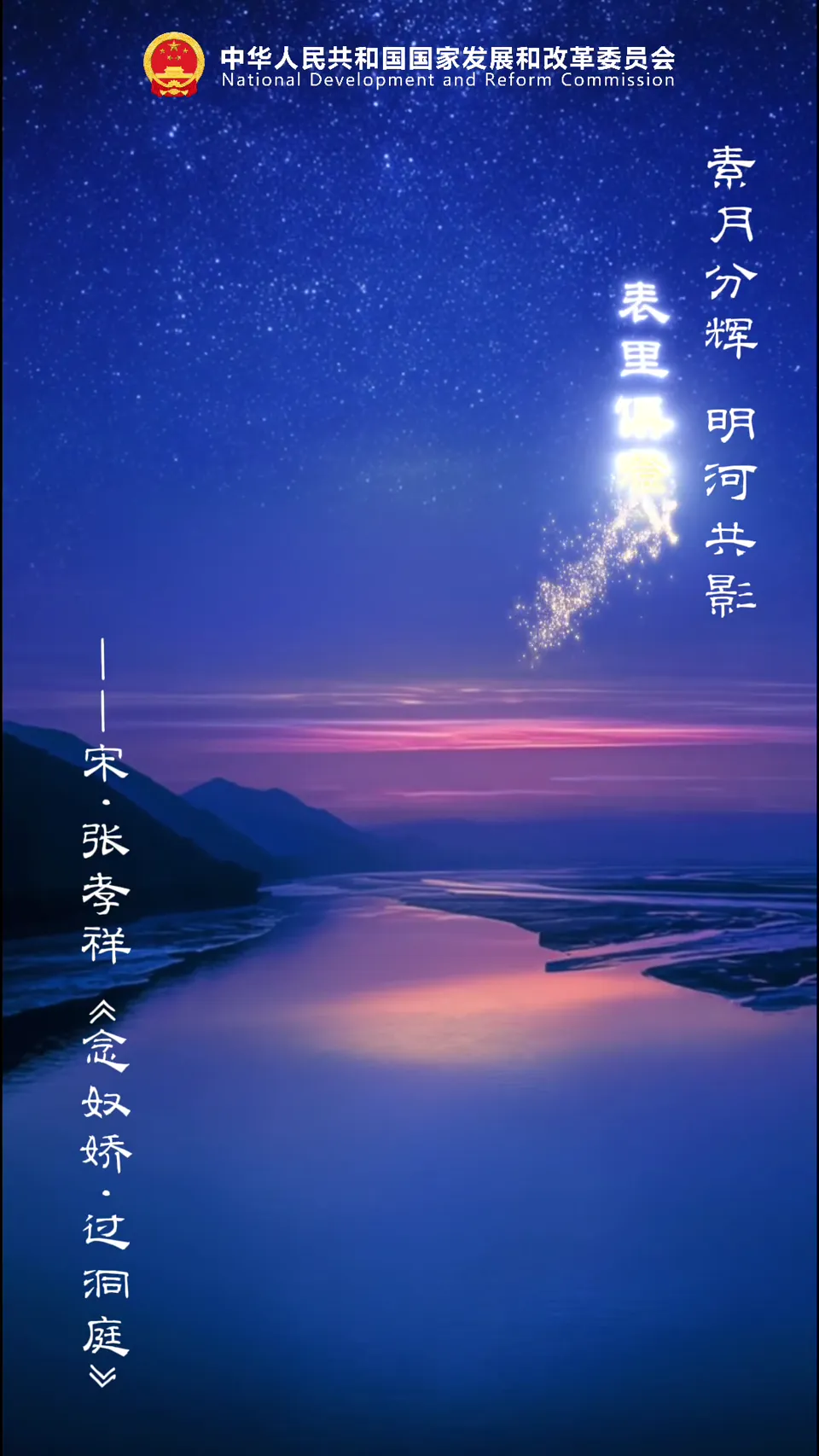
Sunset Glow on the Water
A streak of pink-purple sunset lingers on the horizon, reflected in a still river bend. This shot leaves out the moon, keeping only clean light to answer “all is clear inside and out.”
Film · 00:25–00:30
A bright moon hangs in the autumn sky; its radiance wets the dew
Meng Haoran's line moves from the bright moon in the sky to the dew close at hand, and the camera likewise draws in from a wide shot to a close-up.
Clip · 00:25–00:27
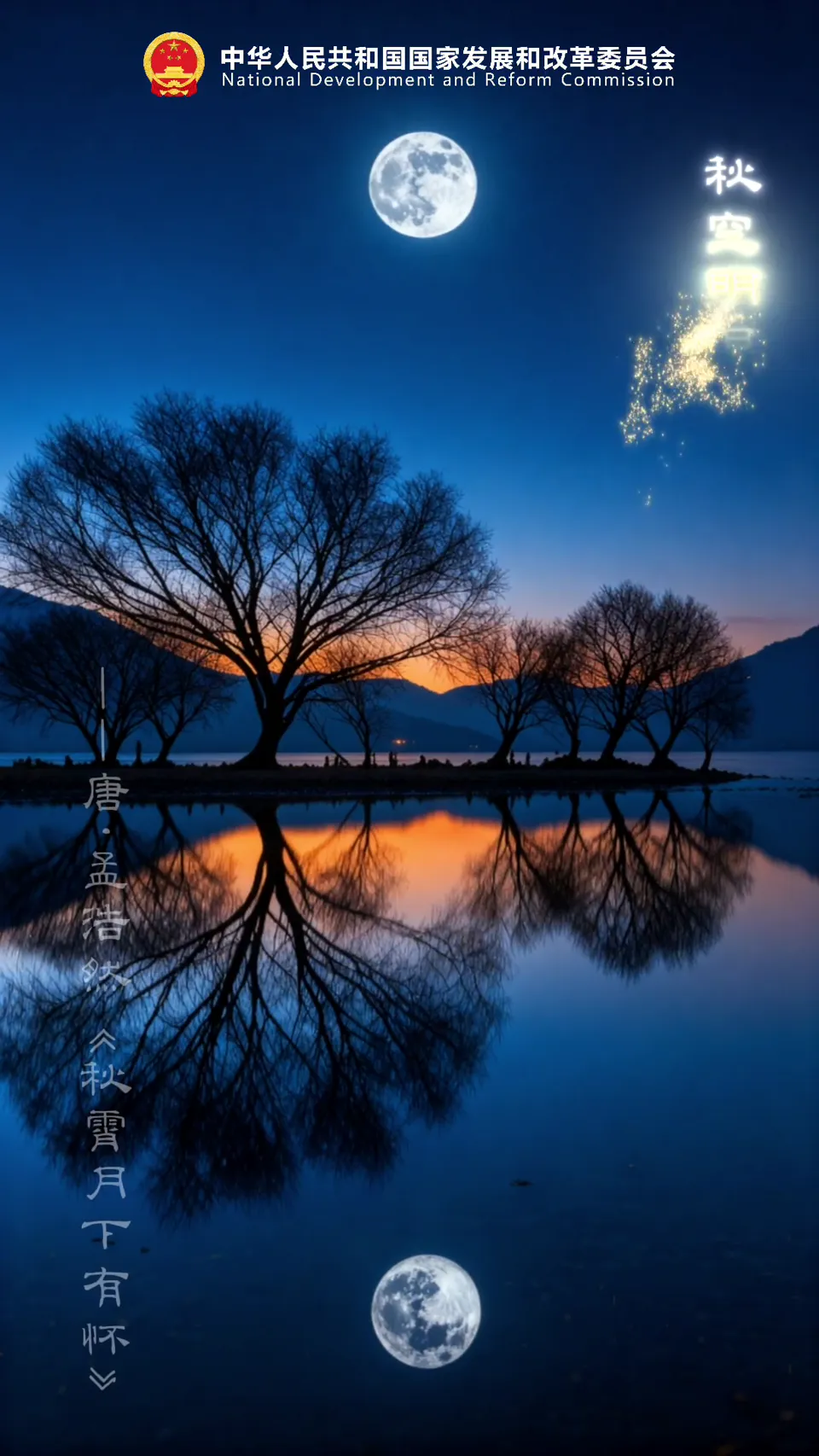
Autumn Trees, a Full Moon and Their Reflection
A few bare autumn trees stand on the lakeshore beneath a full moon, the trees and moon mirrored symmetrically in the water.
Clip · 00:27–00:30
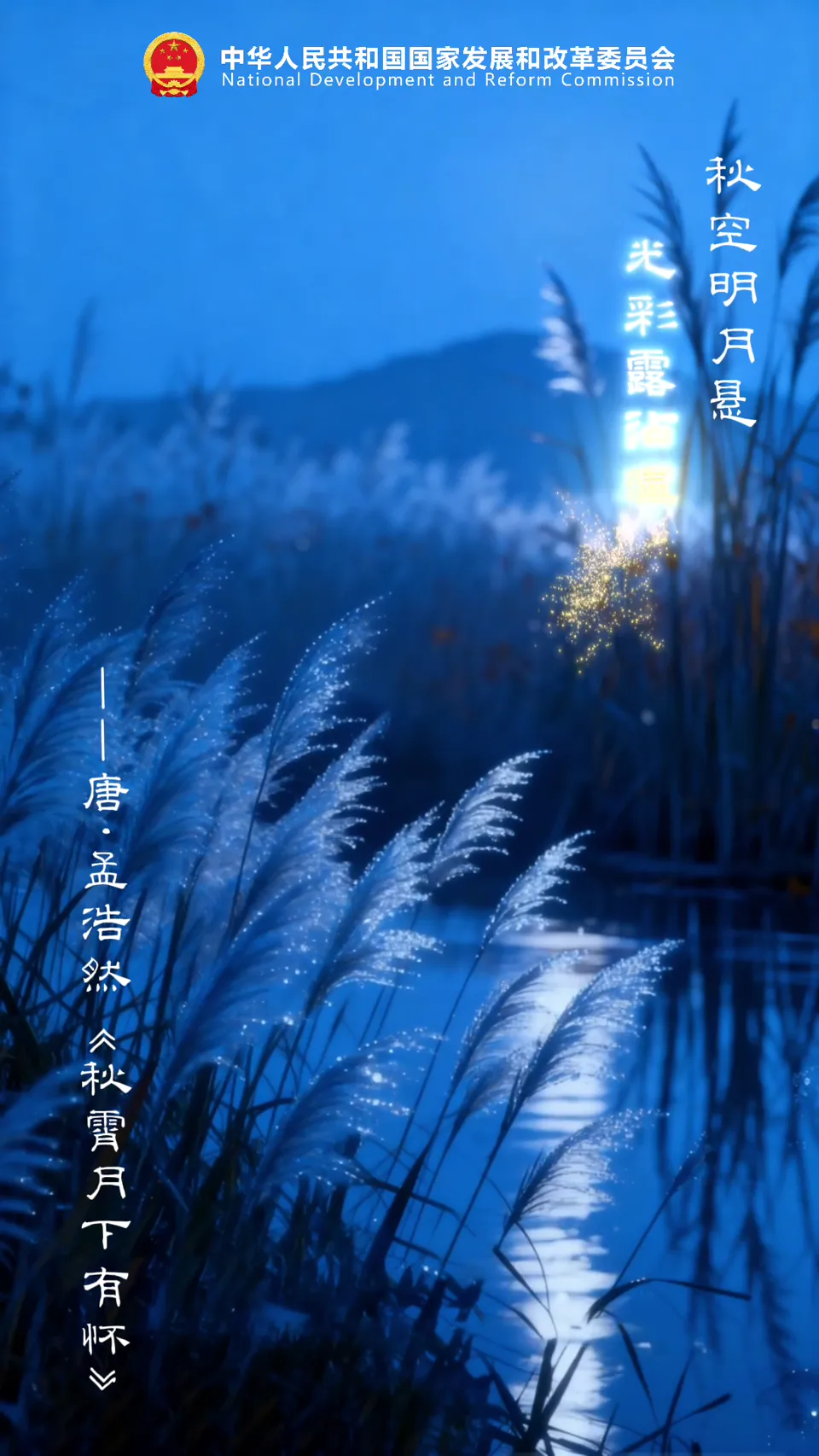
Dew-Covered Reeds
At the water's edge at blue hour, dew-beaded reed tassels sway gently in the wind, catching fine glints of light. “Its radiance wets the dew” turns from a line of poetry into a damp detail right in front of you.
Film · 00:30–00:39
Cloudless for ten thousand miles, the moon mirrors all the land; the night of fullest reunion is Mid-Autumn
The last verse is about reunion, so it comes at the end. First a world of lit homes, then the camera rises above a sea of clouds to close the film.
Clip · 00:30–00:34
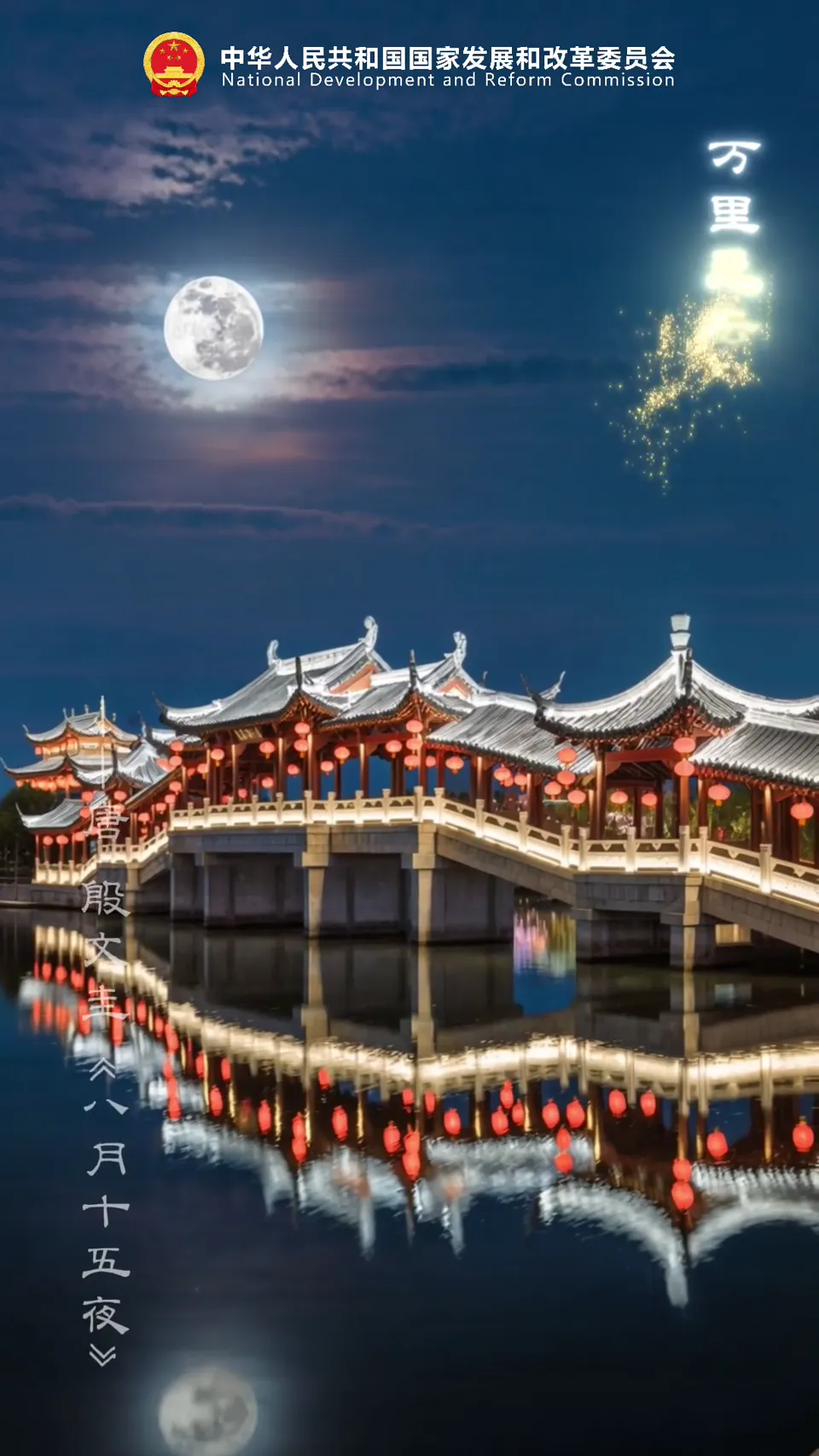
Lights of a Covered Bridge on the River
A covered bridge hung with lanterns spans the river, mirrored symmetrically in the water, with the moon at the upper left; this is where the bustle of everyday life appears.
Clip · 00:34–00:39
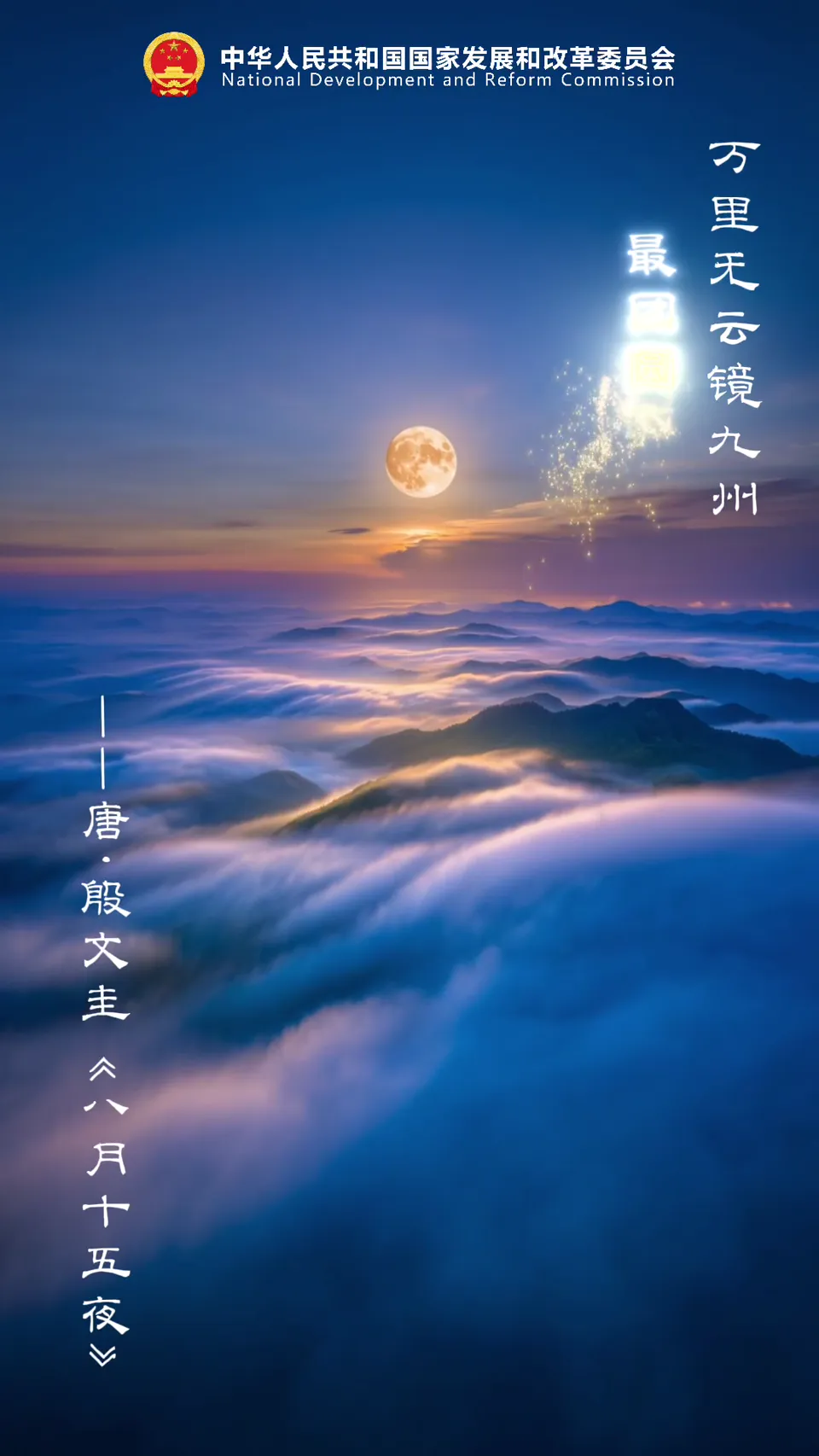
The Moon Over a Sea of Clouds
A sea of clouds rolls slowly between the mountains, the moon rests on the horizon, and the final line, “the night of fullest reunion is Mid-Autumn,” is written out character by character as the film closes.
04 / Storyboards & Final Frames
Six verses, twelve shots, and the approved frame for each.
Listed in the order of the finished film: each verse has two shots, with a note on what each shot shows and why, followed by the approved frame used in the film.
01
As evening clouds clear, a pure chill spills over; the Milky Way silently turns the jade disc
In the film · 00:00–00:05
Shot 1.1
Clouds Clear From a Snowy Peak as the Moon Rises
In the first frame, clouds sit among the mountains and on the summit with the moon half hidden behind them; in the last frame, the clouds have parted and the moon has risen. First and last frames were used to generate the clouds parting and the moon rising in between. The cold blue moonlight matches the “pure chill,” and the moon is drawn large and full.
Clouds Clear From a Snowy Peak as the Moon Rises · Final 1Clouds Clear From a Snowy Peak as the Moon Rises · Final 2
Shot 1.2
Star Trails and a Huizhou-Style Rooftop
Long-exposure arcing star trails fill the upper half of the frame, with a Huizhou-style rooftop and warm yellow window lights below. Pairing the cool night sky with warm lamplight makes the night clear and cold but not lonely.
Star Trails and a Huizhou-Style Rooftop · Final 1
02
Gazing northwest toward home, where is it? In the southeast, how many times have I seen the moon grow full?
In the film · 00:06–00:11
Shot 2.1
Danxia Hills of the Northwest
A very wide, low-angle view of the Danxia landforms under a bright deep blue night. This shot leaves out the moon and keeps only the texture of the land to carry the vastness of “gazing toward home.”
Danxia Hills of the Northwest · Final 1
Shot 2.2
Water Town of the Southeast
An ultra-wide aerial of a water town south of the Yangtze, the river running through it, lights dotting both banks and the moon on the distant horizon. The video pushes forward from above the lake.
Water Town of the Southeast · Final 1
03
The autumn moon rolls out golden waves, a flying mirror polished anew
In the film · 00:12–00:18
Shot 3.1
A Golden Moon Where Water Meets Sky
Lake and night sky blend into one at the horizon, with a golden full moon and its band of light on the water. In the video the moon rises slowly as the camera pushes in.
A Golden Moon Where Water Meets Sky · Final 1
Shot 3.2
A Snowy Mountain in Golden Light
A snowy plateau mountain lit by warm light, a small house at its foot, a complete, crisp reflection in the lake, and the moon at the upper right.
A Snowy Mountain in Golden Light · Final 1
04
The pale moon shares its glow, the bright river casts its reflection, and all is clear inside and out
In the film · 00:18–00:25
Shot 4.1
The Milky Way and the Moon's Reflection in the Lake
Based on the real Dongting Lake: the full moon and the Milky Way above, the lake and the moon's reflection below. In the video the stars twinkle and ripples spread from the middle of the lake.
The Milky Way and the Moon's Reflection in the Lake · Final 1
Shot 4.2
Sunset Glow on a River Bend
A streak of pink-purple sunset reflected in a river bend. This shot leaves out the moon, keeping the frame clean and giving the moonlit shots around it room to breathe.
Sunset Glow on a River Bend · Final 1
05
A bright moon hangs in the autumn sky; its radiance wets the dew
In the film · 00:25–00:30
Shot 5.1
Autumn Trees and a Full Moon
Looking down on the lakeshore: the branches of autumn trees are crisp, the full moon hangs high, and the mirror-like water reflects both trees and moon.
Autumn Trees and a Full Moon · Final 1
Shot 5.2
Dew-Covered Reeds
Close-up: reeds at the water's edge at blue hour, their tassels beaded with tiny drops of dew. In the video a gentle breeze moves the tassels and their reflections sway along.
Dew-Covered Reeds · Final 1
06
Cloudless for ten thousand miles, the moon mirrors all the land; the night of fullest reunion is Mid-Autumn
In the film · 00:30–00:39
Shot 6.1
Lantern-Lit Covered Bridge on the Qinhuai
A low-angle view of a covered bridge hung with lanterns, the lights reflected in the river, the moon at the upper left. The liveliest lights of everyday life in the film are placed here.
Lantern-Lit Covered Bridge on the Qinhuai · Final 1
Shot 6.2
A Bright Moon Over a Sea of Clouds
A sea of clouds rolls between the mountains, the moon half hidden behind them. A locked-off shot with a time-lapse effect gives viewers enough time to finish reading the last verse.
A Bright Moon Over a Sea of Clouds · Final 1
05 / Results
Released on Mid-Autumn Day, With More Than 3 Times Last Year's Shares and Saves
We completed a roughly 39-second, 9:16 vertical Mid-Autumn greeting short, released by the NDRC's official accounts on October 6, 2025, Mid-Autumn Day. Shares and saves were both more than 3 times those of the previous year's Mid-Autumn video; on Kuaishou it earned 34K+ likes and 1M+ views.
Case Study
Liandan AI Studio × NDRC | Six Mid-Autumn Verses, One Night of Mountains, Rivers and Moonlight
Most Mid-Autumn poems are about the moon.
But in a 39-second short, if every shot has a full moon hanging in it, viewers will tire of it by the third.
Our Mid-Autumn greeting strings together snowy mountains, Danxia hills, water towns, lakes, reeds and a sea of clouds with six classical verses: not every shot has a moon, but the whole film is bathed in moonlight.
The finished film was released on Mid-Autumn Day 2025. Compared with the previous year's Mid-Autumn video, its shares and saves both grew to more than 3 times.
Client
National Development and Reform Commission (NDRC)
Project Type
Mid-Autumn festival greeting short (24 Solar Terms series)
Timeline
Produced in September 2025, released on October 6, Mid-Autumn Day
Runtime & Specs
39 s · 9:16 vertical · 1080×1920
Distribution
NDRC official accounts (WeChat Channels, Kuaishou and more)
Results
Shares and saves both more than 3 times those of the previous year's Mid-Autumn video; 34K+ likes and 1M+ views on Kuaishou
Produced by
Shenzhen Alchemy Technology Co., Ltd. (Liandan AI Studio)
01
A Festive Greeting for Phones Starts With Deciding What It Should Look Like
This is the Mid-Autumn installment of the 24 Solar Terms series. It was distributed mainly on WeChat Channels and had to be made in 9:16 vertical.
The images had to look like the feature spreads in a landscape magazine: real, expansive and clean. All of it was generated with AI.
Style was the first hurdle. We tried five directions in turn: realistic, ink-wash illustration, hand-drawn illustration, classical Chinese-style illustration, and realistic Chinese-style cinematic. After comparing them one by one, we settled on realistic Chinese-style cinematic: scenery that looks truly photographed, with a touch of Eastern poetic mood.
With the style set, a dozen or so shots still had to look like they came from the same hand. We trained dedicated style parameters in Midjourney, found that night scenes tended to drift toward dusk colors, trained a separate set of night-scene parameters, and then used Photoshop to unify brightness, curves and hue.
A set of test images made with the night-scene style parameters: tone and clarity are already consistent
02
Two Shots per Verse, Covering North, South, East and West
There are many Mid-Autumn poems; we ended up choosing six verses, from Su Shi's “As evening clouds clear, a pure chill spills over” to Yin Wengui's “the night of fullest reunion is Mid-Autumn.”
Three things shaped the order: how the mood of the verses turns, how the sky moves from dusk into deep night, and how the landforms move from northwest to southeast. For Bai Juyi's “Gazing northwest toward home, where is it? In the southeast, how many times have I seen the moon grow full?”, for example, the images first show the Danxia hills of the far northwest, then cut to a water town south of the Yangtze.
We set one principle: as few shots as possible, only two per verse. With fewer shots, each one had time to be refined again and again. The verse that best captures the theme, “Cloudless for ten thousand miles, the moon mirrors all the land; the night of fullest reunion is Mid-Autumn,” comes last, closing the film with a bright moon over a sea of clouds.
03
Too Many Moons, and It Stops Feeling Like Mid-Autumn
In the first draft, almost every shot had a full moon. Each one looked good on its own, but together they were repetitive.
The Mid-Autumn moon should feel clear and cold, and it can't be everywhere. We went through shot by shot: the Danxia hills and the sunset river bend lost their moons, the moons in the other shots were shifted to cooler tones, and shots with and without the moon were alternated.
Sunset river bend · First draft: a full moon in the middleSunset river bend · Final: moon removed, leaving only the sunset glow and its reflection
With fewer moons, each appearance carries more weight. The star of the film shifted from “the moon” to “mountains and rivers under the moonlight.”
04
“As Evening Clouds Clear”: Parting the Clouds and Raising the Moon
The first shot matches “As evening clouds clear, a pure chill spills over.” The first draft was a snowy mountain dyed gold by the setting sun: beautiful, but with no “pure chill” and no “clouds clearing.”
We changed the tone to pale blue moonlight, made the moon larger and fuller, and added a layer of cloud, so viewers could watch the clouds part and the moon emerge.
Opening · First draft: the setting sun dyes the snowy mountain goldOpening · Final: cold blue moonlight, the moon larger and fuller
The hard part was getting the clouds to clear completely. With only a starting image, the generated video still had clouds clinging to the mountain at the end. So we took a frame where the clouds had already parted from one of our test videos, upscaled it and removed the leftover clouds in Photoshop to make the end frame, then used Kling AI's first-and-last-frame feature to generate the process in between.
First frame: clouds still there, moon half hiddenLast frame: clouds parted, moon risen
Clip · 00:00–00:02
Film opening: clouds part and the moon rises
In under 3 seconds, the clouds clear from the summit, the moon rises, and the first verse is written out along with it.
05
Adding a Close-Up: Bringing “Wets the Dew” Up Close
“Its radiance wets the dew” is about dew, which is hard to show in a wide shot. So we added a dedicated close-up: reeds at the water's edge at blue hour, tassels beaded with tiny drops of dew, swaying gently in the wind.
The verse layout was settled at the same time: the text runs vertically on the right, the author and source vertically on the left, and the whole middle is left for the scenery. Each verse is written out character by character by a string of light points, so the rhythm of reading matches the rhythm of the shots.
Clip · 00:27–00:30
Dew-Covered Reeds
The camera draws in from the previous moonlit wide shot to reed tassels up close, turning “wets the dew” into a visible detail.
06
What this project achieved
The 39-second film was released by the official accounts on October 6, 2025, Mid-Autumn Day. Shares and saves were both more than 3 times those of the previous year's Mid-Autumn video; on Kuaishou it earned 34K+ likes and 1M+ views.
For us, this film proved one thing: whether AI-generated scenery can move people doesn't depend on how beautiful any single image is, but on whether every image is telling its verse.
Two shots per verse, the moon appearing when it should and stepping back when it should, and in the end every image lands in the same night: the mountains and rivers are vast, and reunion is close.
FAQ
FAQ
How do you keep every shot in an AI-generated landscape film in the same style?
For this project we spent about a week comparing five styles and settled on realistic Chinese-style cinematic; then we trained dedicated style parameters in Midjourney, with a separate set for night scenes, and finally unified the grade in Photoshop. That kept the tone and clarity of all twelve shots consistent.
How long does a holiday greeting short take from brief to release?
For this Mid-Autumn short, style exploration began in mid-September, the film was finalized on September 29, and it was released on October 6, Mid-Autumn Day. By giving each verse only two shots and keeping the shot count down, we had time to refine every shot properly.
How do you get a specific action in an AI video, like “the clouds part and the moon rises”?
With only a starting image, the clouds often don't fully clear. We took a frame where the clouds had parted from a test video, retouched it in Photoshop into the end frame, then used Kling AI's first-and-last-frame feature to generate the process in between, completing the clouds-part, moon-rises moment in under 3 seconds at the opening.
How do you place classical poetry in a vertical short without blocking the picture?
This film sets the verse text vertically on the right and the author and source vertically on the left, leaving the middle of the frame for the scenery; each verse is written out character by character in points of light, and as one verse finishes, the film cuts to the next pair of shots.
Approach
From Aligning the Style to Refining Moon Position, Clouds and Text
Once the style was set, we storyboarded the verses. During production we tried many image versions with tools such as Midjourney and Kolors, and compared videos generated with tools such as Kling AI. When choosing, we looked at whether the landforms read clearly, whether the night was clear and clean, and whether the motion suited the poetry, and we didn't mix test images in different styles into the final film.
The first shot went through many rounds on the moon's size, position and color temperature and on the clouds: we adjusted the moon's position and the image colors in Photoshop, then compared the clouds-part, moon-rises effect made with a single frame versus first and last frames. The final film expresses the image with a steady shot and short, crisp movement; for clips like the moon's reflection in water and the sunset glow, we likewise chose usable images based on how they actually generated.
The length of each verse's shots was set by reading speed, and every verse is labeled with its author and source. The verses run vertically on both sides of the frame with the whole middle left for scenery, so viewers can read the poetry and take in the scenery without either getting in the way.