People's Daily | Remember History, Honor the Fallen
Two brothers from a black-and-white historical photo step into an image of a mother and child today, in a past-meets-present effects segment that links wartime memory with peaceful life.
Project Type
Public Service
Client
Kuaishou Kling AI (People’s Daily New Media film)
Year
2025
Our role
~11-second AI effects segment
Original format
1280 × 720 · 01:55
Full Published Film | Our Contribution: the Past-Meets-Present Effects Segment01:55 · Film
01 / Background
Where historical memory meets life today
Commissioned by Kuaishou Kling AI, we created a past-meets-present AI effects segment for “Remember History, Honor the Fallen,” a People's Daily New Media short film marking the 80th anniversary of victory in the War of Resistance Against Japanese Aggression; the end credits name Kuaishou Kling AI for technical support. The full film is made up of historical footage, interviews with veterans of the war and present-day scenes. Our segment makes the people in two photos from different eras interact: the brothers in the ruins walk over to meet a mother and child today, answering that history with today's peaceful life.
The key to this segment was getting the relationships and emotional tone right: the original historical photo had to be preserved, the children in the ruins could not be smiling cheerfully, and the steps of approaching, entering the present and looking up together had to be simple and clear. The video above is the full published film; our part is the brothers-and-mother-and-child segment at about 72–83 seconds. The filming, interviews and other effects in the film were not done by us.
02 / Creative Highlights
How the people in two photos come together
01
First, put both eras in one view
The black-and-white ruins are on the left, the present-day mother and child and the blue sky on the right; the colors, setting and clothing make it obvious these are two eras. With the two photos side by side, viewers first see clearly where the story comes from and where it's going, so when the figures walk to the right, the direction is unmistakable.
02
Linking past and present by having the figures walk across
The older brother stands up holding his younger brother and walks to the right as the mother turns to look at them. The meeting happens step by step as they approach, not by simply swapping the background. The older brother holds his little brother the whole way, and finally all four stand in the same frame; these concrete actions carry the emotional connection.
03
Keeping the historical figures' emotions restrained
The children's expressions, height and hands were all handled against the historical photo: standing on the ruins of their home, the children don't smile. The emotion starts from the gravity of history and only turns to looking up at the sky together once the figures have stepped into the present. The right tone for a commemorative theme rests on these expressions and gestures.
04
The present-day scene opens up to complete the transition
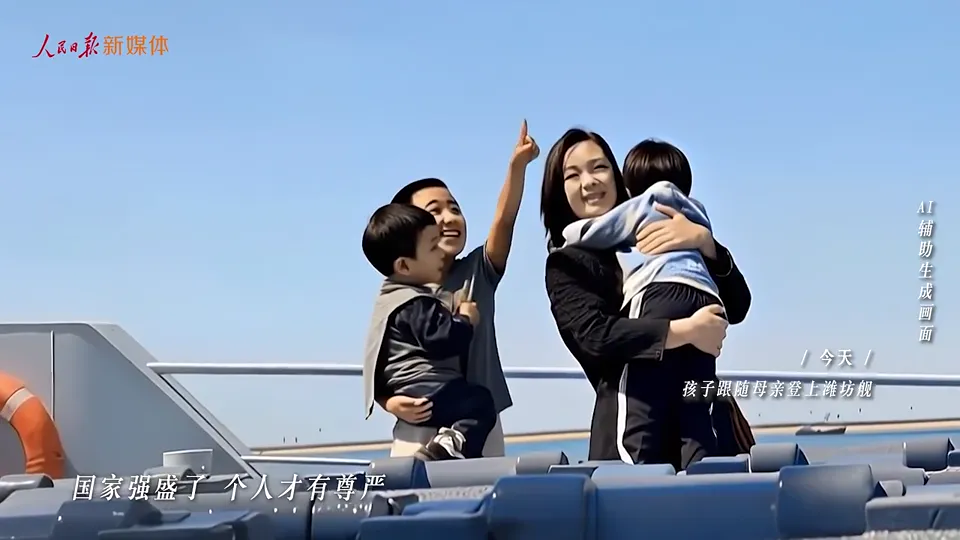
Once the figures meet, the blue sky and deck in full color slowly fill the frame and the ruins disappear. The four look toward the sky in the same direction, leading into the aircraft footage in the full film, so the effects segment connects back to the film's theme of peace.
03 / Scene Breakdown
In just over ten seconds, from the ruins of the past to the deck of today.
Film · 00:00–01:11
Context from the full film (not made by us)
This is People's Daily New Media's short film marking the 80th anniversary of victory in the War of Resistance Against Japanese Aggression. The first 70 seconds are color-restored historical footage and accounts from veterans; from 01:23 to the end come fighter jets, veterans and red flags. None of this was made by us; we were responsible only for the past-meets-present AI imagery in between.
Clip · 00:00–00:04
Opening: A Veteran's Medals
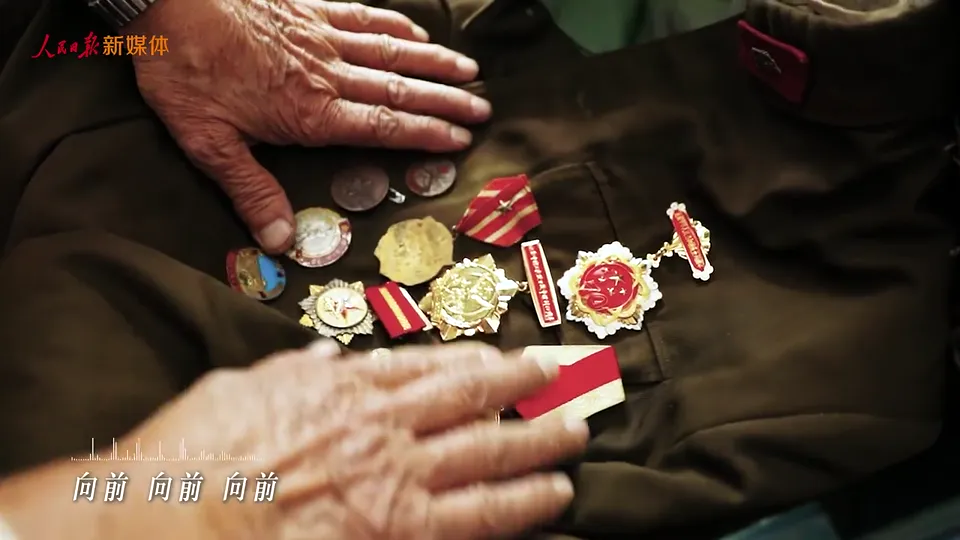
A pair of deeply wrinkled hands passes over the medals on a veteran's chest, and the film begins its story of the veterans of the war.
Clip · 01:04–01:11
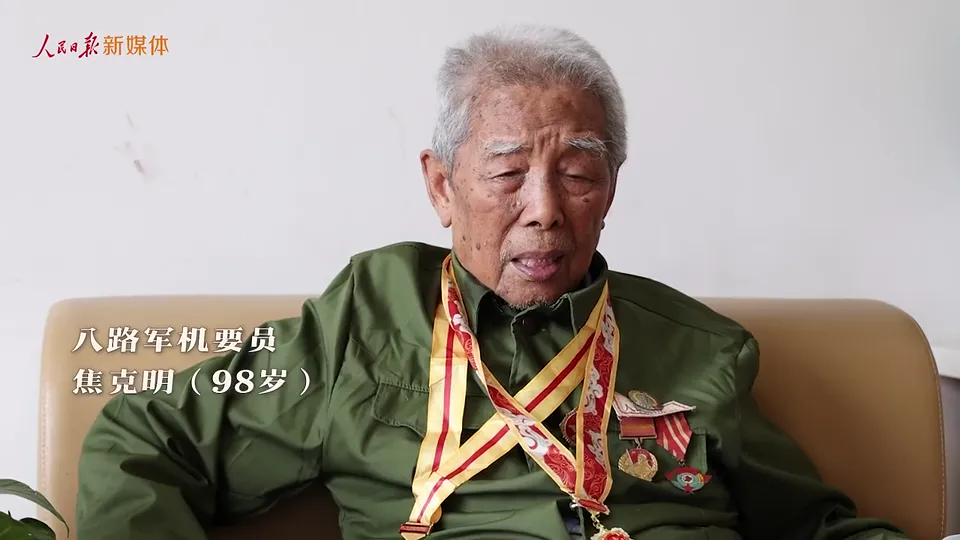
A Veteran's Account Leads to “the Children”
A veteran speaks to the camera about those years, then the image cuts to an old black-and-white photo, leading into the segment we made.
Film · 01:11–01:17
Then: The Brothers in the Ruins Stand Up
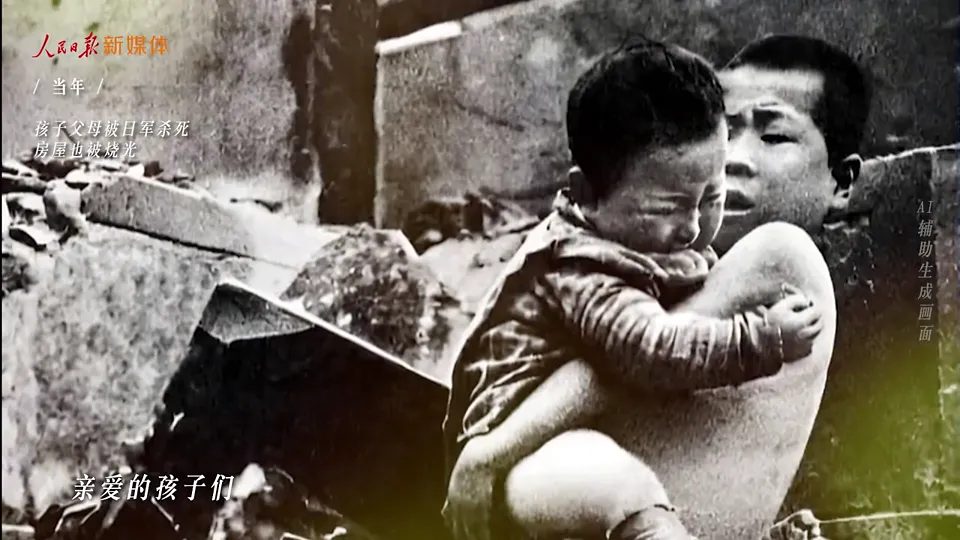
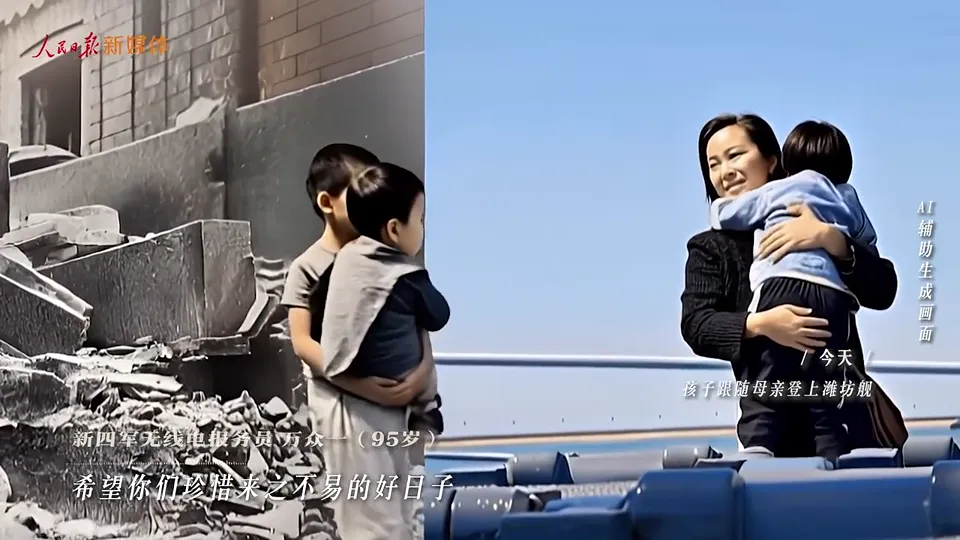
The camera stays close on a black-and-white historical photo: an older brother sits on the ruins holding his crying little brother. The photo comes to life and the older brother stands up with his brother in his arms; the image then pulls back, and a blue sky from today opens up on the right.
Clip · 01:11–01:14
The Older Brother in the Photo Stands Up
The caption reads, “Then: the children's parents were killed by Japanese troops, and their home was burned to the ground.” Holding his little brother tight, the older brother slowly rises from the rubble, his expression grave throughout.
Clip · 01:14–01:17
Today's Blue Sky Appears on the Right
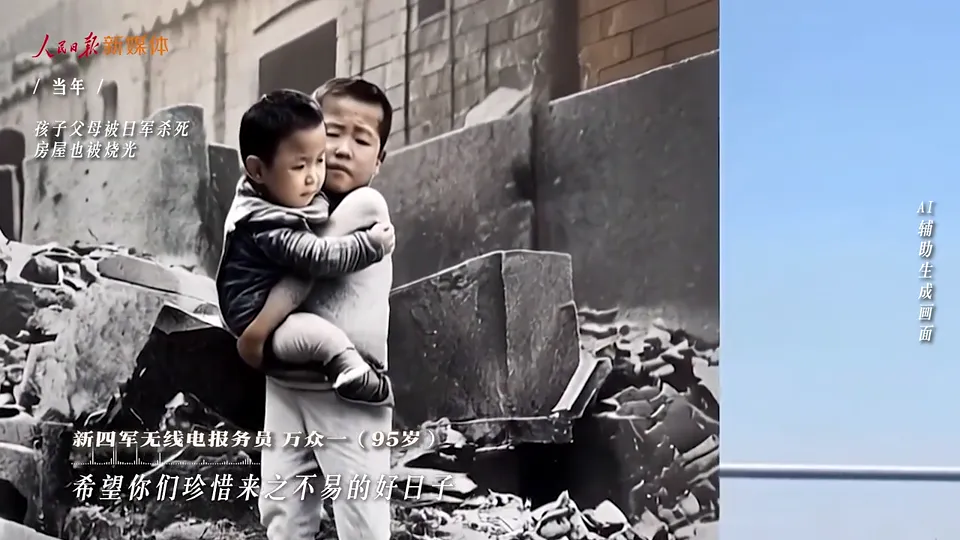
The black-and-white photo shrinks to the left of the frame; on the right are a blue sky and a warship's deck, and a mother holding her child walks into view. For the first time, the two eras sit side by side.
Film · 01:17–01:23
Today: Coming Together, Looking Up Together
The older brother walks to the right with his little brother in his arms, crossing the boundary between the two photos to reach the mother. The ruins fade, the deck in full color fills the frame, and the four of them look up and point at the sky together.
Clip · 01:17–01:20
Carrying His Brother Toward the Mother
The next caption reads, “Today: the child boards the frigate Weifang with his mother.” The older brother carries his little brother to the right as the mother turns to look at them; the way each holds a child echoes across the two eras.
Clip · 01:20–01:23
Pointing at the Sky Together
The ruins on the left disappear, the deck and life buoys fill the frame, and the older brother and the child in the mother's arms point at the sky together; the film then cuts to fighter jets flying overhead.
04 / Gallery
Frames worth a closer look.
The brothers from the historical photo side by side with today's blue sky · 01:15The older brother carries his little brother into the mother and child's space · 01:19All four look up at the sky together in the present-day scene · 01:22
05 / Results
The past-meets-present segment and the full film
We delivered the past-meets-present AI effects segment and an AE project ready for further compositing. The video above is the nearly two-minute full published film, showing where this effects segment sits within the commemorative film.
Case Study
Liandan AI Studio × Kuaishou Kling AI × People's Daily New Media | Bringing the Children in an Old Photo onto Today's Deck
An old black-and-white photo: on the ruins, an older brother holds his crying little brother.
Another photo from today: on a warship's deck, a mother holds her child, with blue sky behind them.
In summer 2025, People's Daily New Media made “Remember History, Honor the Fallen,” a short film marking the 80th anniversary of victory in the War of Resistance Against Japanese Aggression, with an end credit naming Kuaishou Kling AI for technical support. Commissioned by Kuaishou Kling AI, we made the past-meets-present AI imagery in the film.
The task was simple: make the older brother in the photo stand up, carry his little brother, and walk into today.
Client
快手可灵AI(订单由快手可灵AI委托)
Work
“Remember History, Honor the Fallen,” a People's Daily New Media short film marking the 80th anniversary of victory in the War of Resistance Against Japanese Aggression, with an end credit naming Kuaishou Kling AI for technical support
Project Type
Past-meets-present AI effects segment (one segment of the full film, provided as effects support)
Timeline
Kicked off July 2025; final version delivered August
Runtime & Specs
Our segment runs 01:12–01:23 in the finished film, about 11 seconds; delivered as a 15-second 1920 × 1080 composite video and an AE project. Full film: 01:55
Distribution
Published by People's Daily New Media
Produced by
Shenzhen Alchemy Technology Co., Ltd. (Liandan AI Studio)
01
One set of images to bring then and now together
Most of this short film is color-restored historical footage and accounts from veterans of the war. Toward the end, it needed a set of images to carry history into the present.
The brief was clear: a historical photo on the left and a photo from today on the right, with AI connecting the people on both sides. The captions in the film read, “Then: the children's parents were killed by Japanese troops, and their home was burned to the ground,” followed by “Today: the child boards the frigate Weifang with his mother.”
Film at 01:11: starting from the black-and-white historical photoFilm at 01:15: the photo shrinks to the left and today's blue sky opens up on the right
The two photos are first placed side by side, and the colors, clothing and setting make it obvious they belong to two eras. Viewers first see clearly where the story comes from and where it's going, so when the figures walk to the right, the direction is clear.
02
Having the figures walk across, not just swapping the background
The easiest approach would be a dissolve: the black-and-white photo fades out and the color photo fades in. But then the people in the two photos would never meet.
The client wanted a single continuous shot with crisp action. We broke these ten-odd seconds into four key images: the older brother sitting on the ruins holding his little brother → standing up with him → walking over to the mother on the right → all four pointing at the sky together. For each pair of adjacent key images, we generated the motion in between from first and last frames, then joined them in post into one continuous shot.
Clip · 01:17–01:20
Carrying His Brother Toward the Mother
The older brother walks out of the black-and-white ruins, crosses the boundary between the two photos, and steps onto today's deck.
The fewer key images, the fewer pauses in between. The whole segment uses only a few first-and-last-frame links, the older brother holds his little brother the same way from start to finish, and the viewer's eye follows him all the way across.
03
Details had to fit the era and the occasion
Commemorative films are watched closely, and every detail has to hold up. The client gave notes point by point, and we worked each one into the key images:
The children: the brothers in the historical photo wear plain, worn gray clothes; the older brother's build and arms were made smaller to match his age in the photo, and his fingers were redrawn; standing on the ruins of their home, his expression could not be cheerful.The mother: short hair, and her bag changed to a plain style with no pattern.The setting: the structure of the warship's deck had to be accurate, and the clothing appropriate.
Early key image: the mother's bag has a pattern, and the older brother looks too bigDelivered version: a plain bag, and the brothers' build and clothes adjusted as requested
The emotion follows the same order: on the ruins, the children are solemn; only after stepping into today do they look up together and point at the sky. The right tone for a commemorative theme rests on these expressions and gestures.
04
Final version, generated entirely with Kling
The order came from Kling AI, and the client wanted the footage generated with Kling. After Kling updated its first-and-last-frame feature in August, we regenerated the entire segment with the new version, making the figures' movement smoother and the transitions steadier.
We delivered the final version in late August: a 15-second 1920 × 1080 composite video, plus an AE project that can be edited further. People's Daily New Media's editing team cut it into the full film, added the two captions “Then” and “Today,” and followed it with fighter jets flying overhead.
Clip · 01:20–01:23
Pointing at the Sky Together
The ruins fade, the deck in full color fills the frame, the four of them look up and point at the sky together, and the film moves on to the fighter jets.
The last frame of the delivered version: the brothers and the mother and child stand on the same deck
05
What this project achieved
In many commemorative films, history and the present are two separate sets of images. This time, AI let the children in an old photo walk into today on their own, and viewers understand without narration: children who lost their home back then can now stand on their own country's warship and look at the sky.
For us, this was also a collaboration making an effects segment for a leading media outlet: we were responsible for just over ten seconds, but every figure's build, clothing and expression was checked point by point against the standards of a commemorative theme, and we delivered video and project files that could be cut straight into the full film.
FAQ
FAQ
Can AI bring the people in old historical photos to life?
Yes. In this project, we started from a black-and-white historical photo and generated the older brother standing up with his little brother and walking forward, keeping the original photo's composition and the relationship between the figures, then connected it to a color image from today.
How do two photos from different eras connect naturally in one frame?
First, place the two photos side by side, then set a few key images (sitting, standing up, walking over, looking at the sky together), generate the motion between them segment by segment from first and last frames, and composite them in post into one continuous shot. The figures walk over to meet; it's not just a dissolve to a new background.
How do you strike the right tone when using AI imagery for commemorative themes?
Start with the details: historical figures wear plain, old clothes and keep solemn expressions on the ruins; present-day figures are appropriately dressed, and the structure of the setting (such as a warship's deck) is accurate. The emotion moves from solemn to bright, and only once the figures step into today do they look up at the sky together.
What do you deliver when you make just one AI effects segment of a full film?
This project delivered a 15-second 1920 × 1080 composite video and an AE project. The client's editing team can cut it straight into the full film, or keep adjusting captions and transitions in the project.
Approach
Calibrating relationships, emotion and transitions
We broke the segment into steps (standing up, moving right, the present-day scene opening up, looking up together), generated and composited each separately, and compared the first and last frames, color transitions and joins segment by segment. For the action, we kept a close eye on the child being held, the walk forward and the direction of gaze, so the relationships between the figures stay clear throughout these ten-odd seconds.
Character details and motion transitions were handled separately: the original historical image, the clothing after entering the present, the mother's hairstyle and bag, as well as body build, fingers and fabric texture, were each checked one by one. Who each person is, how the child is held and where they all look in the end stay consistent from start to finish, so the emotional shift lands steadily.
The AI-generated segment was composited in post and delivered as a composite video and an AE project. The opening medals, the interviews and other content belong to the full film; our part was only the AI imagery that moves from the historical scene to the present-day mother and child.