From New Year lanterns and the three phenologies of Rain Water to returning home with gifts, moist landscapes and a family's concrete actions show how rain nourishes nature and life.
Project Type
The 24 Solar Terms
Client
National Development and Reform Commission (NDRC)
Year
2026
Our role
Solar-term film AI visuals & video, editing, posters
Original format
1072 × 1906 · 00:48
Film00:48 · Film
01 / Background
Rain Water at Spring Festival Had to Link Nature and Family
In 2026, Rain Water fell on February 18, the second day of the first lunar month, so the solar term had to be introduced amid the Spring Festival mood. The creative focus shifted from flowery descriptions of spring rain to seasonal signs, farming and ordinary people's lives: the film had to show “otters lay out fish, wild geese return, plants begin to sprout,” and also connect the solar term with family ties.
The opening uses the eaves of a historic building and red lanterns to show it's New Year, and then a misty, rainy lake, a canyon stream and terraced fields carry “water” across the landscape; the film then shows plowing preparations, cooking porridge and a visit to the wife's parents, grounding the changes in nature in scenes of daily life.
02 / Creative Highlights
Turning Seasonal Signs and Folk Customs Into Recognizable Actions
01
Lanterns Set the New Year Scene, Rain and Mist Link the Landscapes
The red lanterns in the opening stand out sharply against bluish-gray historic buildings and light rain. Boats on the lake, willow branches, streams and terraced fields follow one after another, all full of moisture, linking Spring Festival with Rain Water in just a few seconds.
02
Turning the Three Signs of Rain Water into a Chain of Visible Actions
An otter carries a fish ashore, leaves it on the bank and goes back into the water; a flock of geese flies past an ancient pagoda; up close, plants sprout and grow, each matching one of the three seasonal signs in the narration. The film teaches through animals' actions and plants' changes, giving the short a storyline you can see.
03
Expressing Family Ties Through a Clay Jar and a Welcome
The family segment shifts the eye from landscapes to a pot of porridge under the eaves and people heading home. The clay jar stays in hand the whole time and the characters walk slowly, so the act of bringing a gift home is easy to see; the family walks along the courtyard wall toward the gate and the elders come out to greet them, and the gift and the reunion give this custom a concrete form.
04
From Plowing Preparations to the Vitality of a New Year
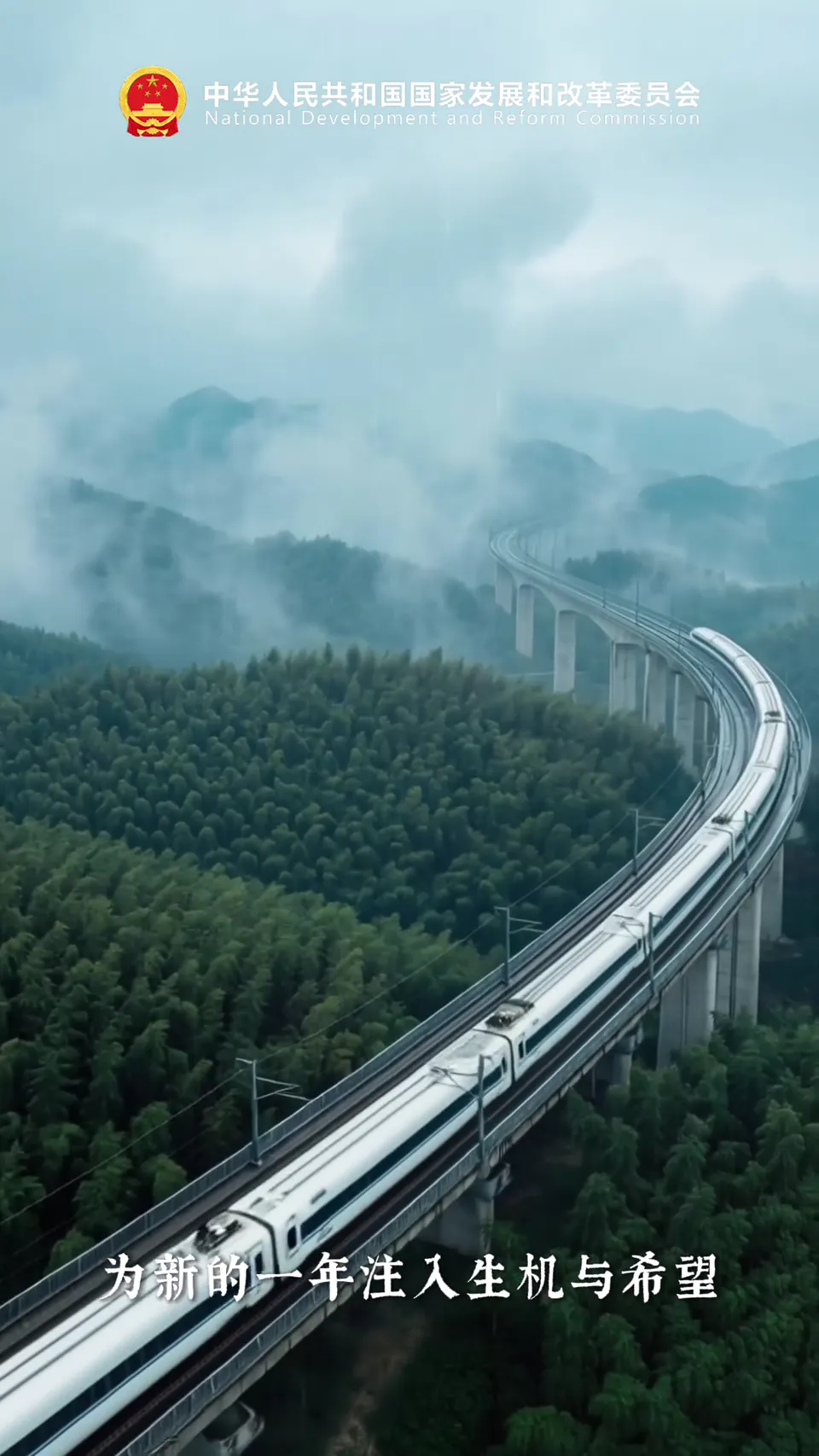
The farming shots focus on wheat seedlings turning green again and preparations for plowing, and crawler tractors in the fields carry more energy than talking about spring plowing in the abstract. The ending moves through a bamboo-forest village in rain and mist, wheat fields under sprinklers and a high-speed train crossing a sea of bamboo, linking nature stirring to life with a pace of life that keeps moving forward.
03 / Scene Breakdown
From a lantern under the eaves to the door of the wife's parents' home.
Film · 00:00–00:10
A Misty, Rainy Opening on the Second Day of the New Year
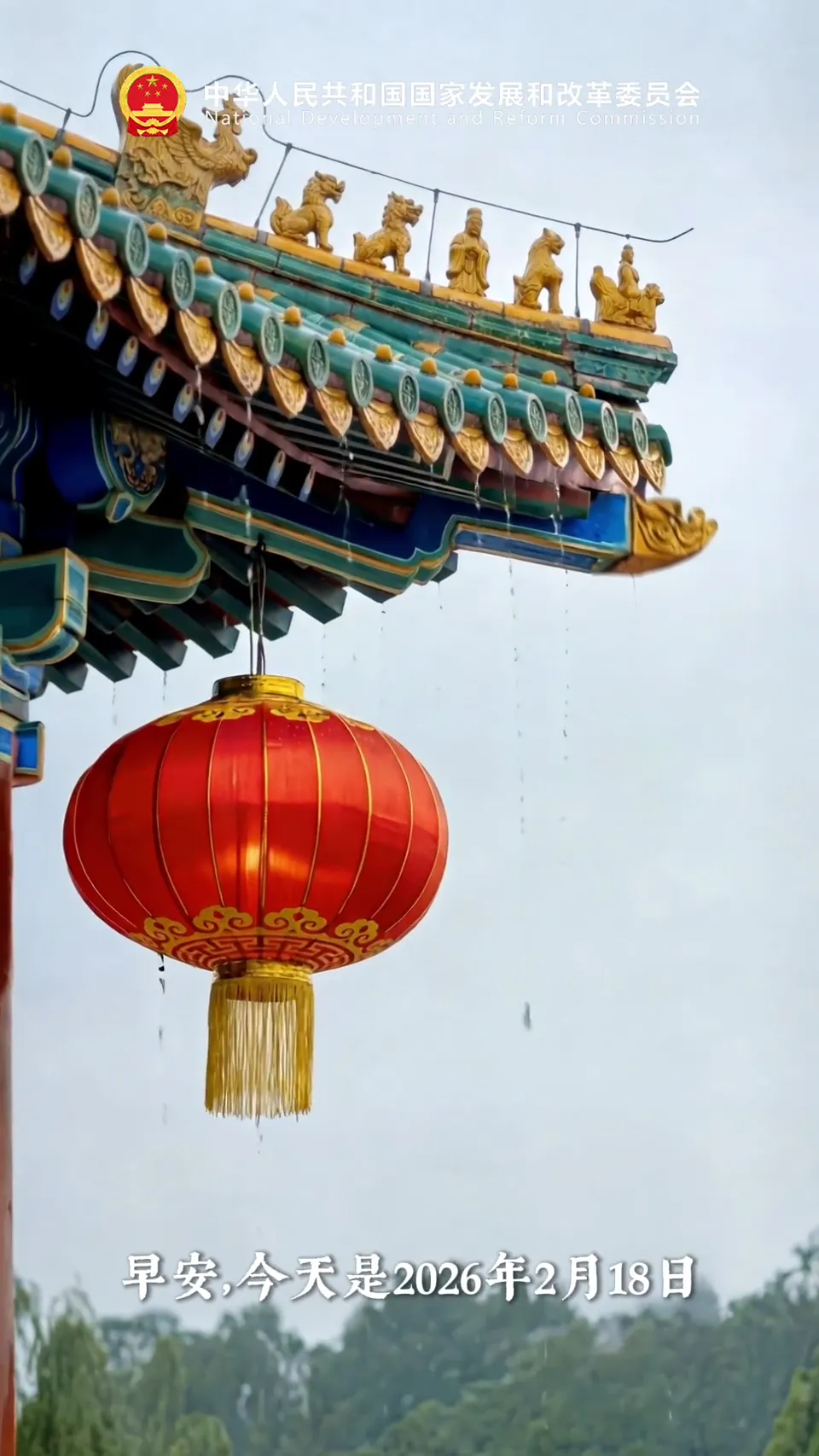
The narration announces the date, “the second day of the first lunar month,” and the images first deliver the New Year feeling: a red lantern under the eaves, then a lantern-hung boat on West Lake. The rain is fine, and the palette is bluish gray with a touch of red.
Clip · 00:00–00:06
From One Lantern Out to a Whole Pavilion
The camera pulls back from a red lantern under the eaves to reveal a row of pavilions hung with lanterns and white stone railings by the lake, the wet ground glistening.
Clip · 00:06–00:10
A West Lake Boat Beneath Willow Branches
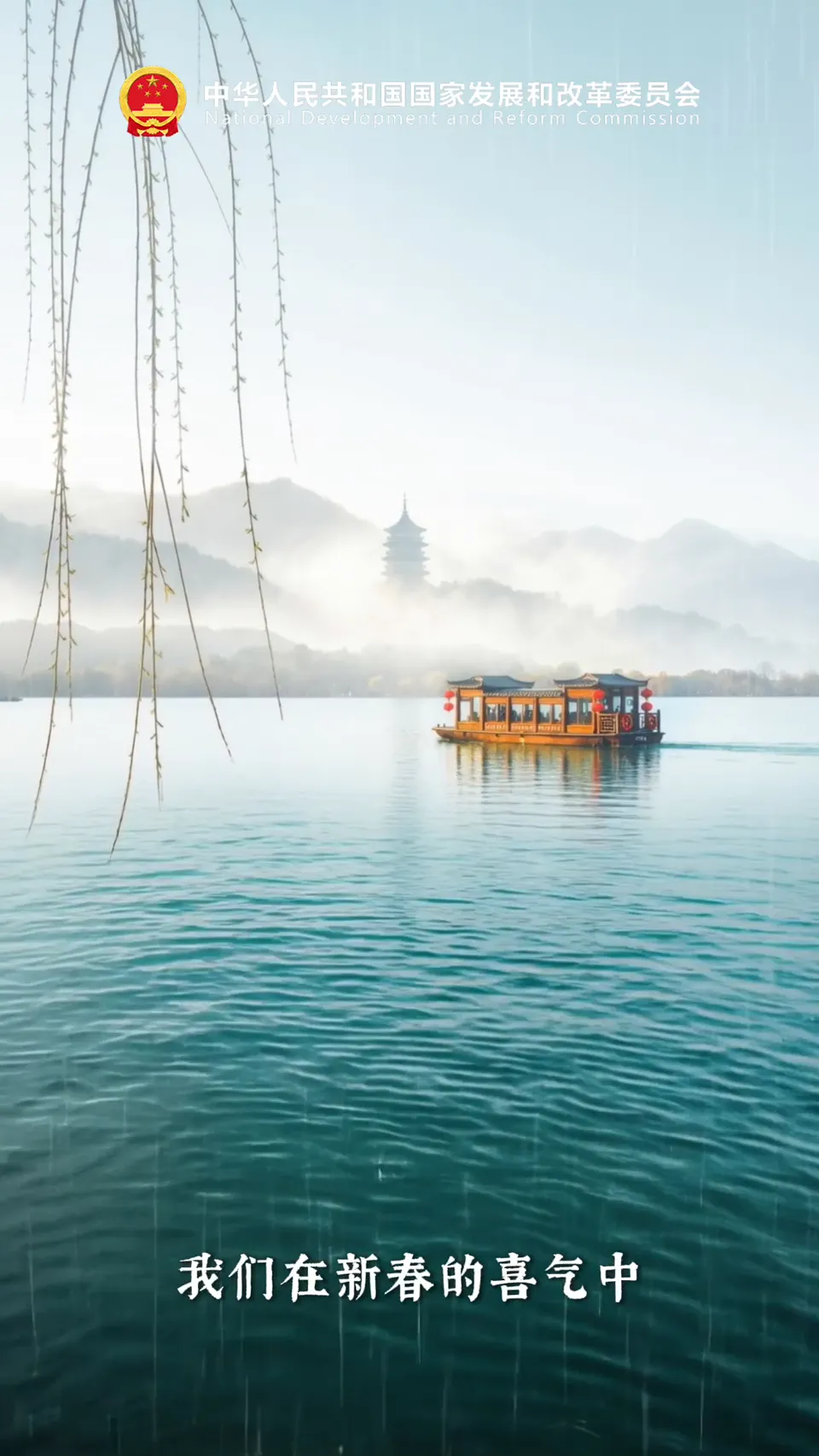
Willow branches hang in the foreground as a lantern-hung boat glides slowly across the lake, a pagoda faint in the misty rain behind it, while the narration speaks of “the joy of the New Year.”
Film · 00:10–00:16
Snow Melts, Rain Falls on the Land
The narration says “the weather warms, the snow melts, and fine rain becomes the moisture the land craves most,” and the images turn to wide views: a river in a canyon and wheat fields just turning green on the Loess Plateau.
Clip · 00:10–00:12
Jade-Green Water in a Canyon
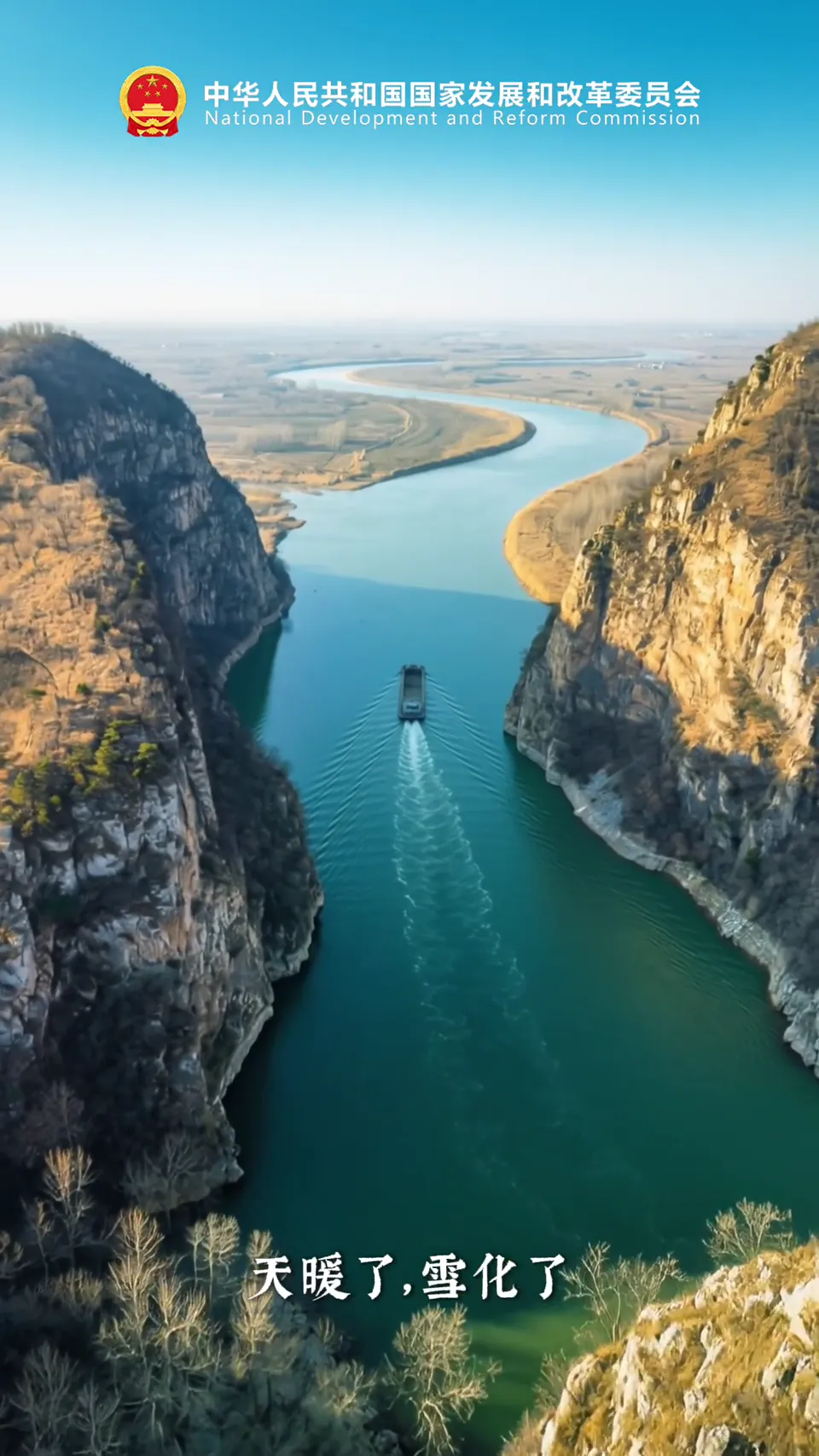
An aerial shot sweeps past the cliffs on both banks as a boat trails a white wake across the jade-green river, the water already risen.
Clip · 00:12–00:16
New Green on the Loess Terraces
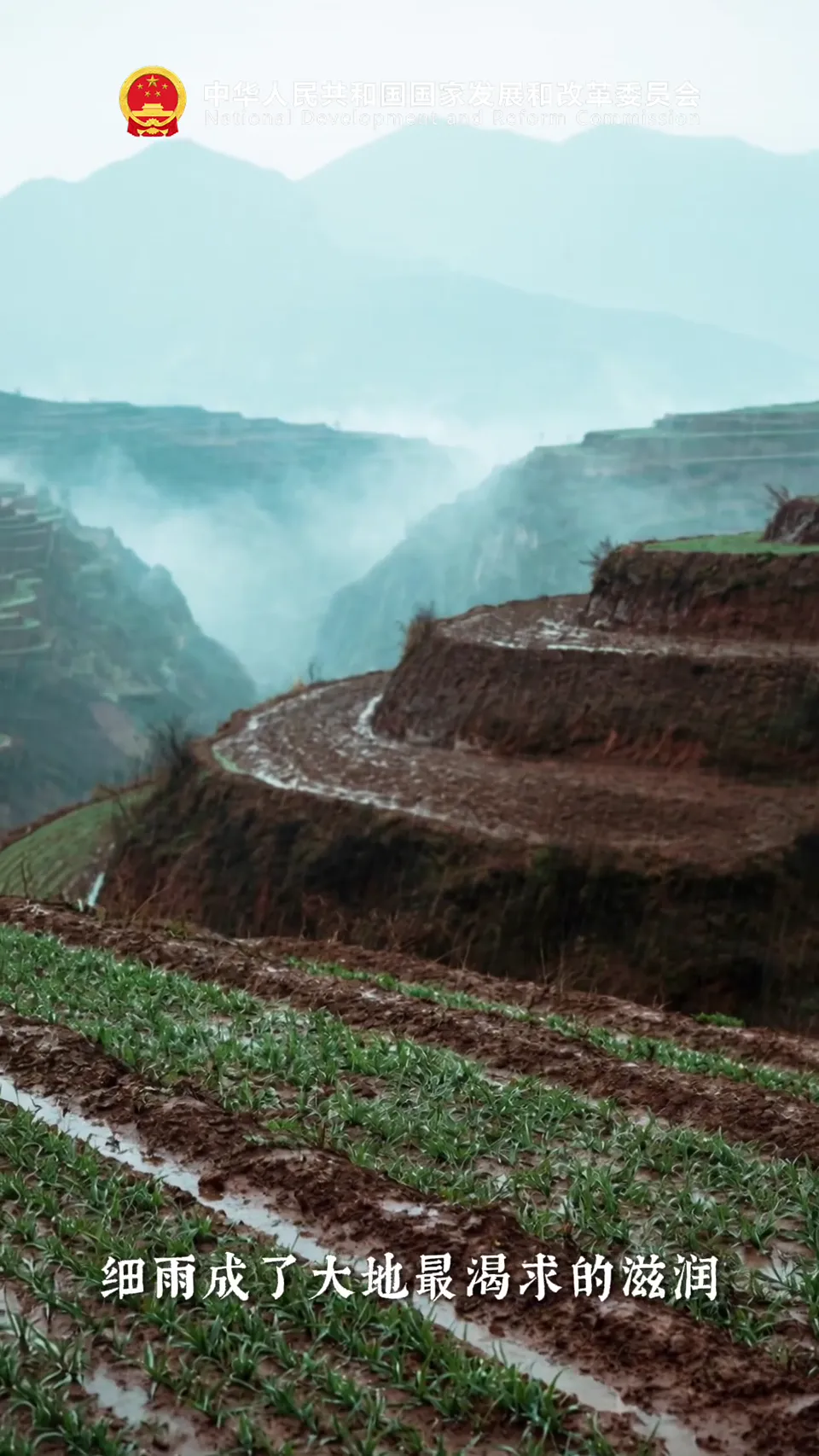
Rain and mist hang over the ridges, the terraced fields are soaked dark brown, and rows of winter wheat show a faint green.
Film · 00:16–00:25
The Three Signs of Rain Water: Otters, Geese, Plants
One line of narration per sign, one action per sign on screen: an otter lays a fish on the bank, a flock of geese flies past an ancient pagoda, and new shoots emerge from under the water.
Clip · 00:16–00:19
An Otter Lays a Fish on a Rock
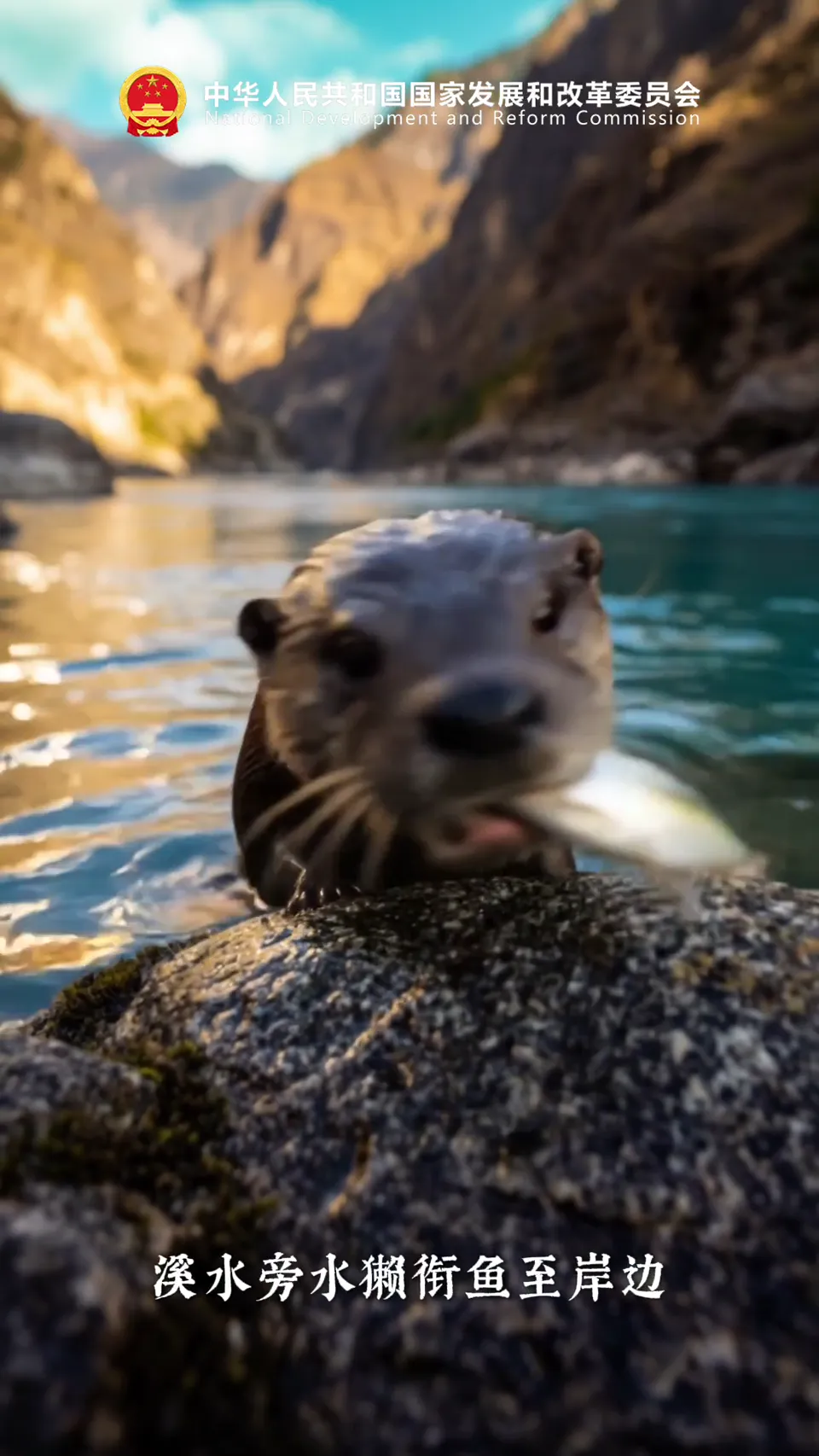
An otter rises from the water with a fish in its mouth and sets it on a rock, with the canyon and jade-green river behind it, matching the line “otters carry fish to the bank by the stream.”
Clip · 00:19–00:22
Geese Flying Past the Giant Wild Goose Pagoda
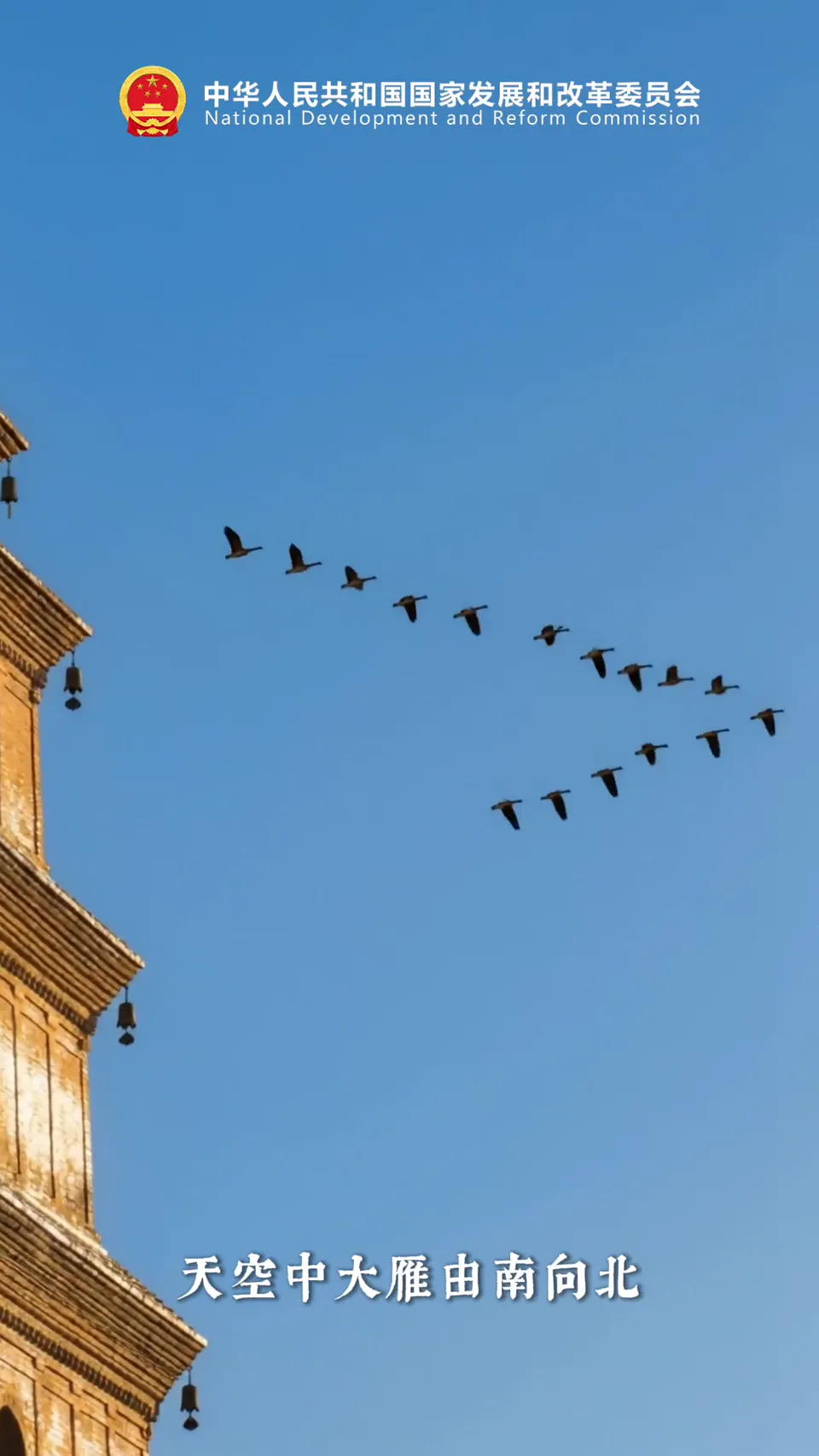
The camera glides away from the brick eaves of the Giant Wild Goose Pagoda, and a line of wild geese flies north across the blue sky in a V formation.
Clip · 00:22–00:25
New Shoots Break the Surface
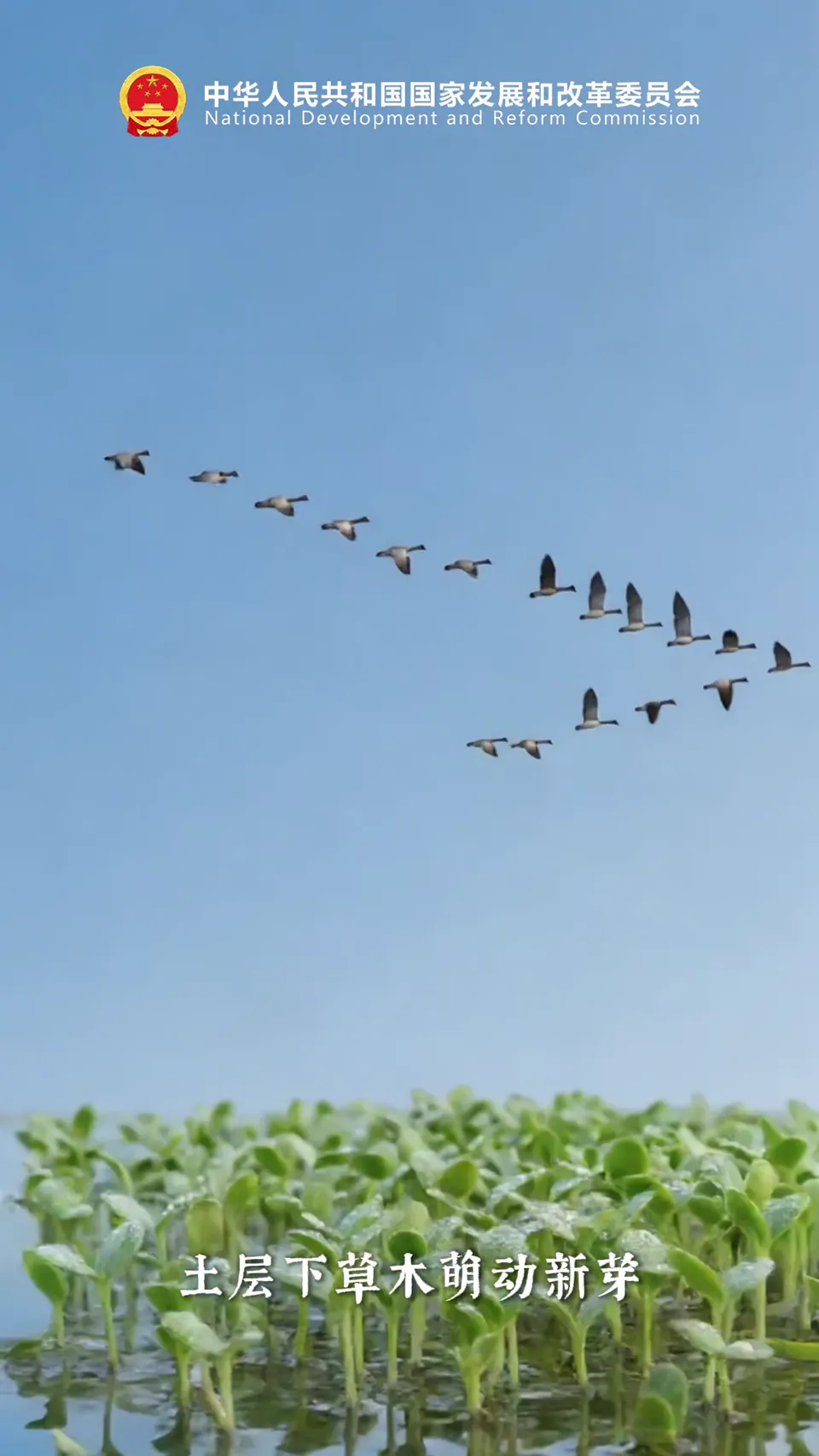
A patch of tender shoots emerges from the water and quickly grows into upright reeds as wild geese fly low overhead, bringing “wild geese return” and “plants begin to sprout” into a single shot.
Film · 00:25–00:37
Preparing Fields Outside, Celebrating New Year at Home
From the fields to beneath the eaves: tractors prepare paddy fields for plowing, porridge simmers on the stove, and a family carries jars of meat on a visit to the wife's parents, who come out to greet them.
Clip · 00:25–00:28
Plowing Preparations on the Jianghuai Plain
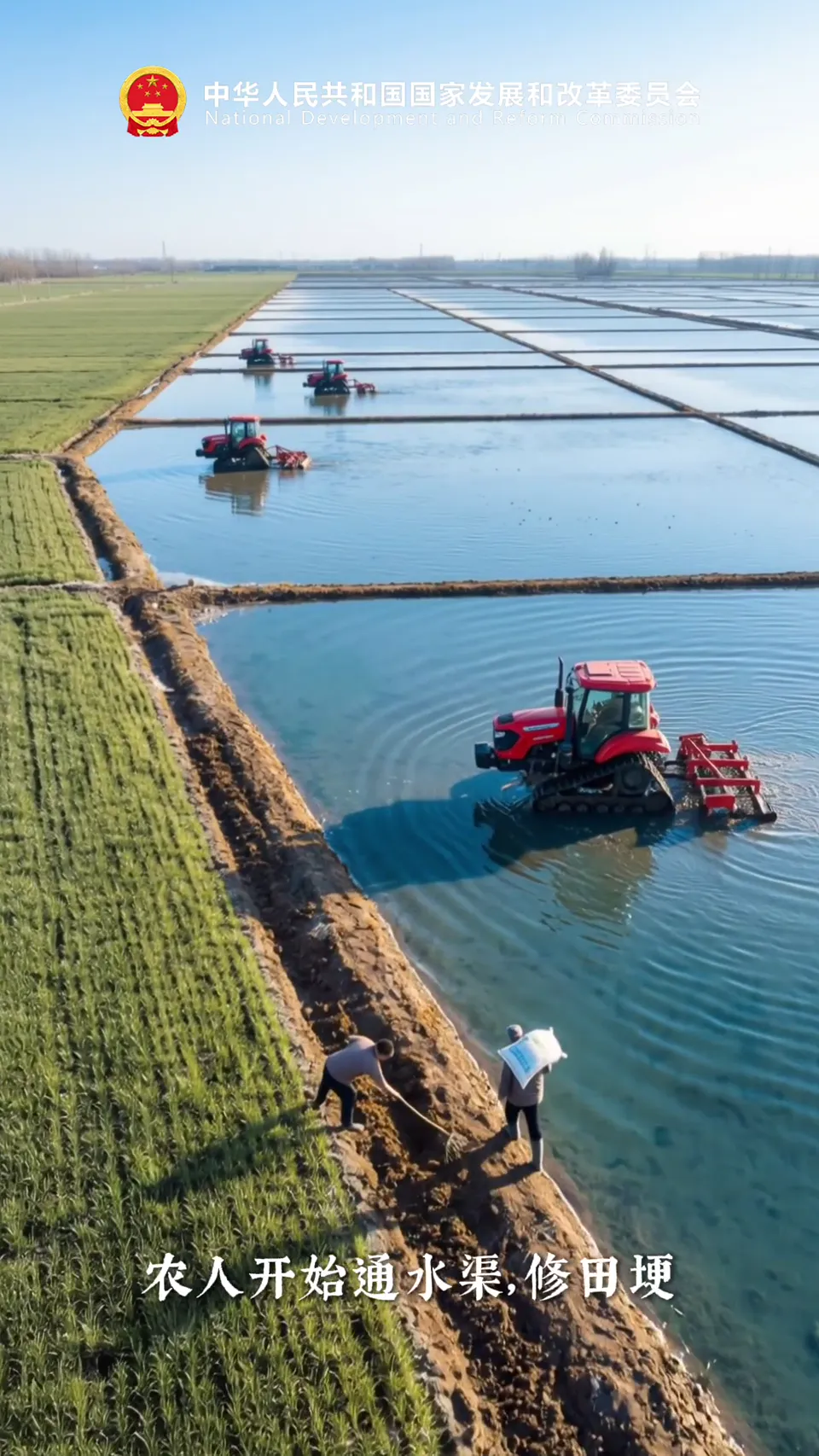
Wheat turning green on the left, flooded fields on the right; red crawler tractors turn the soil in the water while a farmer on the ridge walks ahead carrying a sack of fertilizer.
Clip · 00:28–00:33
Simmering Porridge Under the Eaves on a Rainy Day
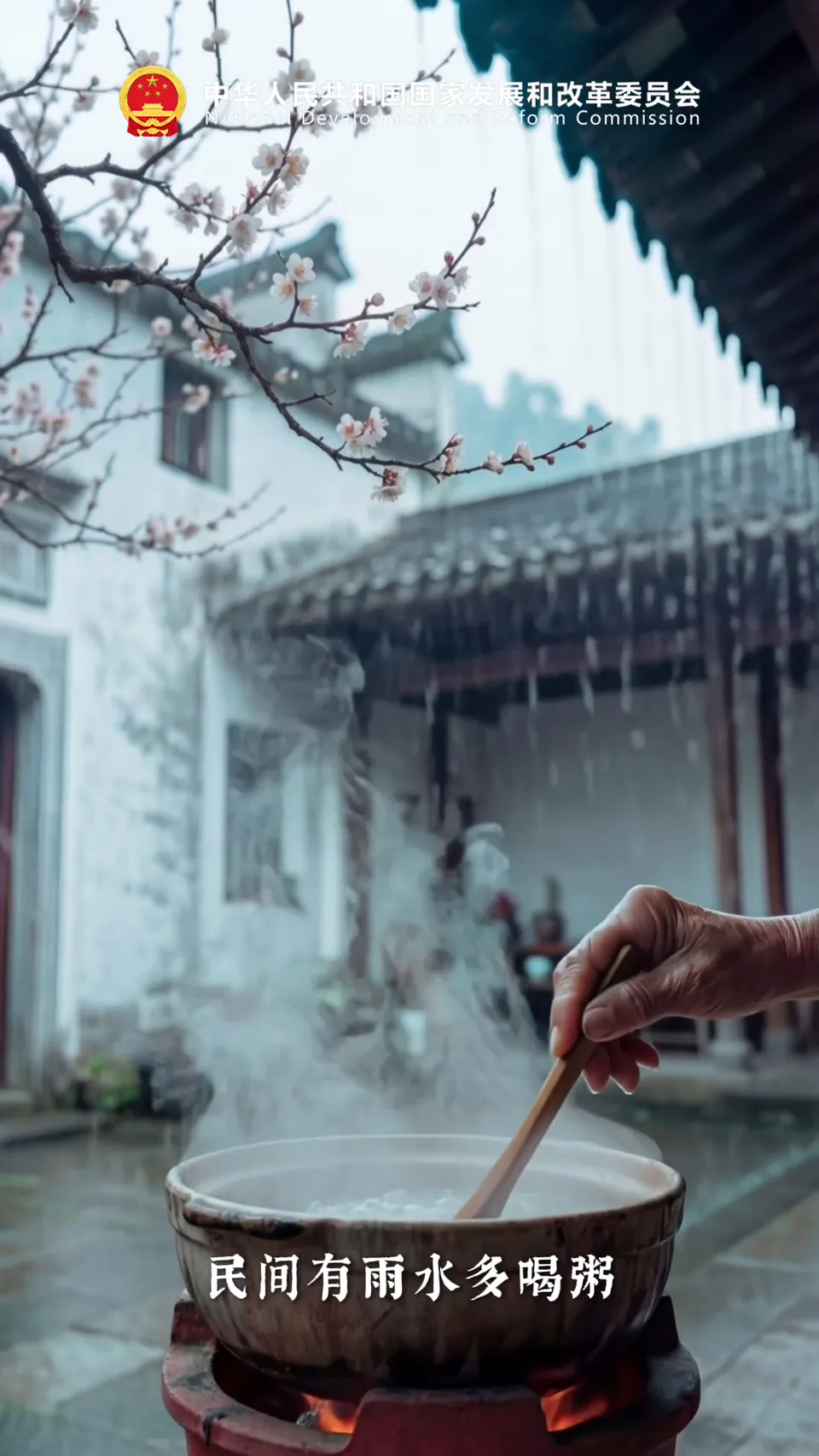
Under the eaves of a white-walled, dark-tiled house, a hand stirs steaming porridge in a clay pot with a wooden spoon; it's raining in the courtyard, and white blossoms are out on the branches.
Clip · 00:33–00:35
Carrying a Clay Jar Along the Courtyard Wall
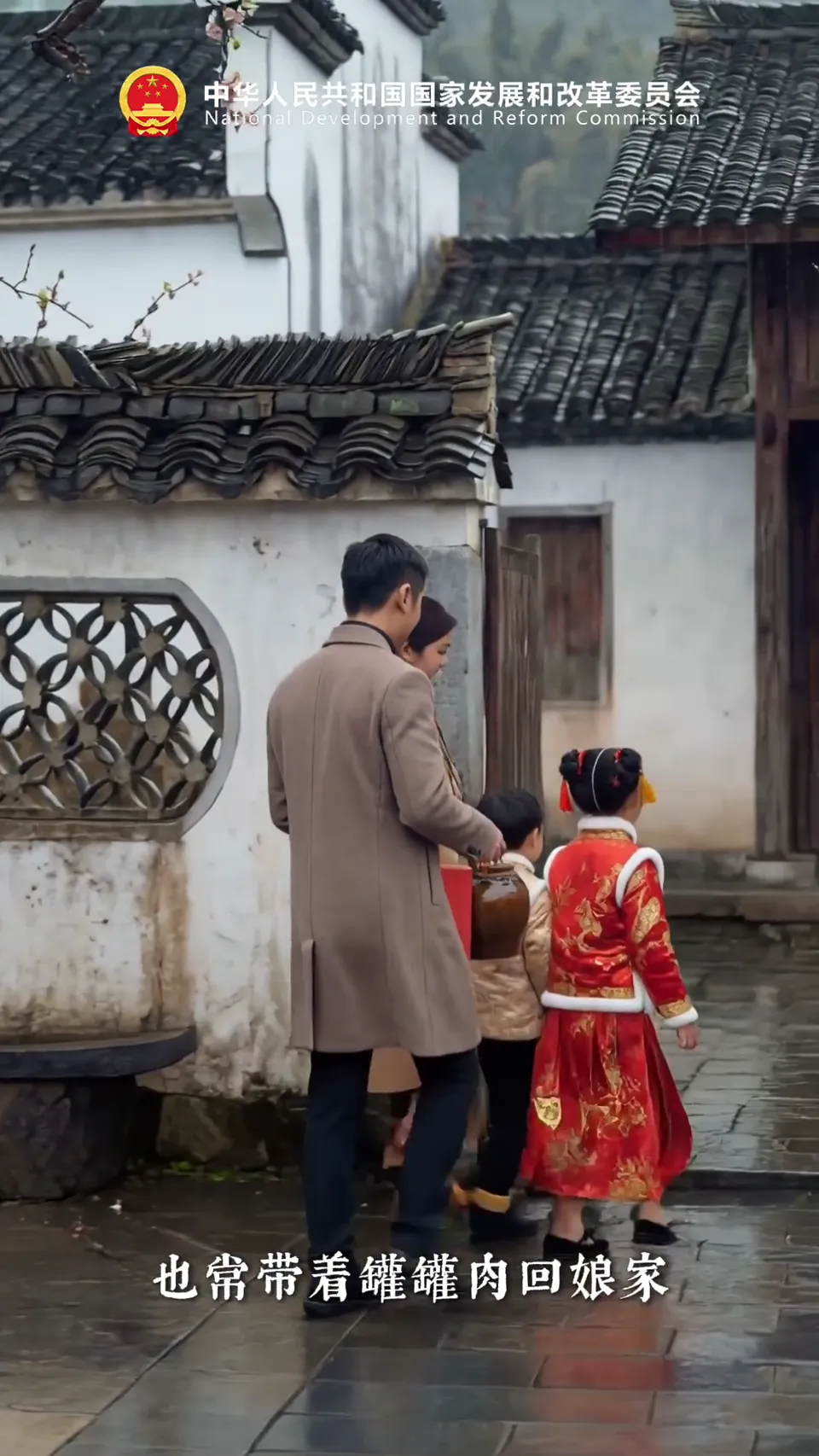
The father carries a clay jar, his daughter walks beside him in new red clothes, and the family heads along the rain-wet white wall toward the courtyard gate.
Clip · 00:35–00:37
The Grandparents Come Out to Greet Them
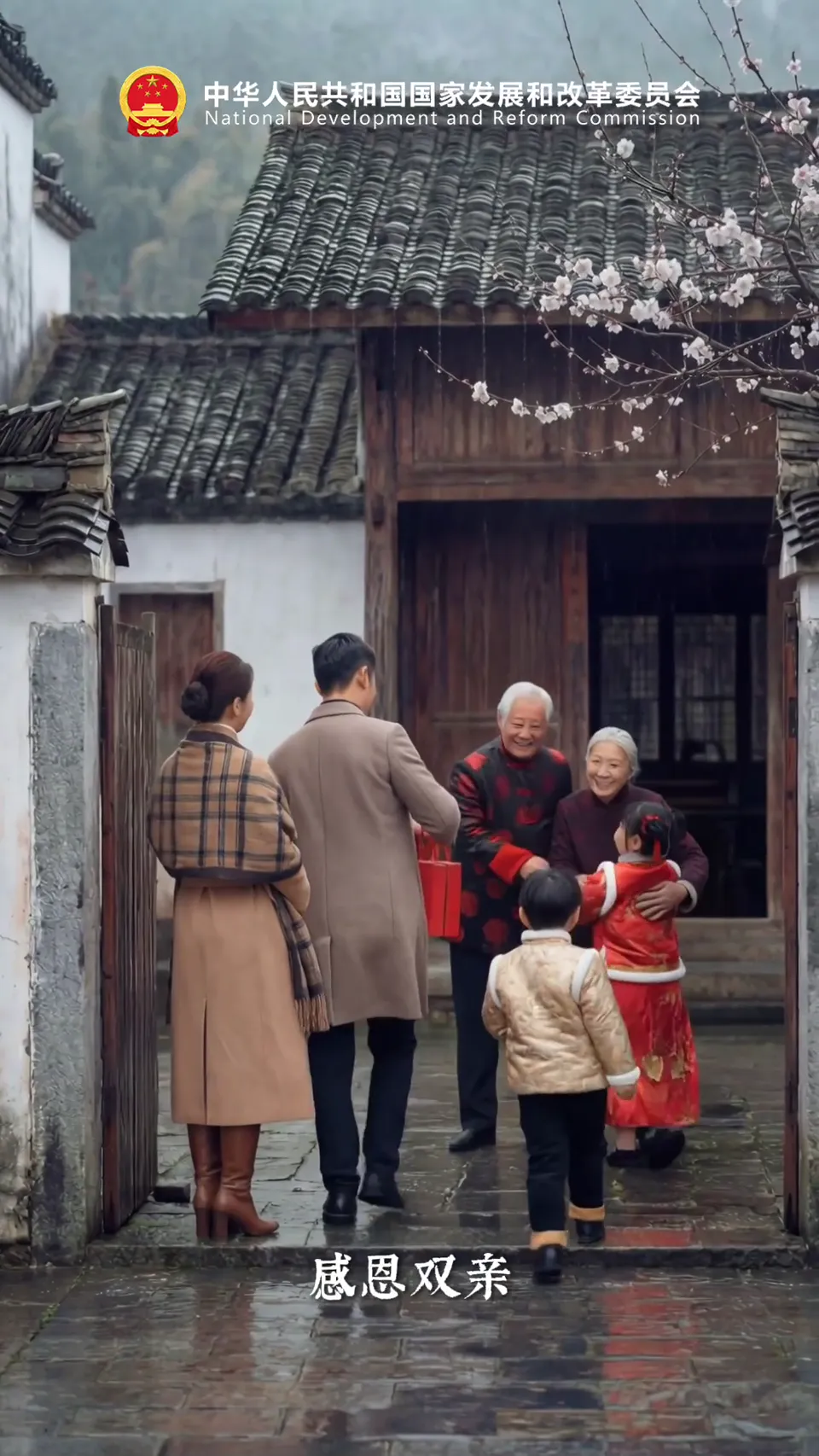
The elderly couple step out of the gate to welcome them and the children run up to them, as the caption lands on “gratitude to our parents.”
Film · 00:37–00:48
Good Rain Knows Its Season
The ending has three wide shots: a village in a bamboo forest, wheat fields under sprinklers and a high-speed train crossing a sea of bamboo, closing on the end card “Presented by the NDRC.”
Clip · 00:37–00:42
A Bamboo-Forest Village and Sprinkler-Watered Wheat
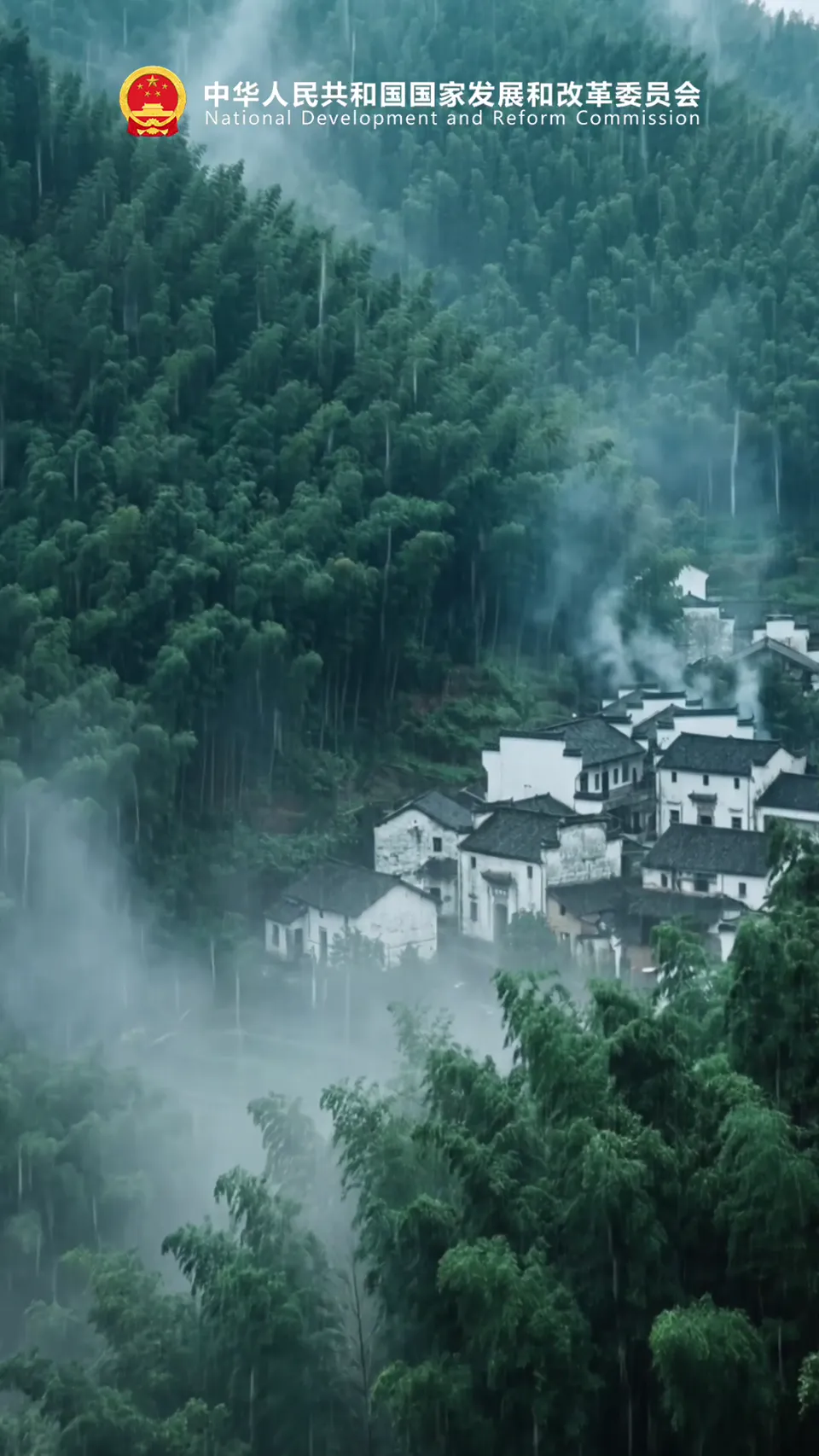
Mist drifts through the bamboo, revealing a white-walled village in a mountain hollow; then an overhead view of wheat fields as rows of sprinkler lines spray a fine mist.
Clip · 00:42–00:45
A High-Speed Train Through a Sea of Bamboo
A white high-speed train follows a curving viaduct through bamboo-covered hills in rain and mist, as the narration closes on “bringing vitality and hope to the new year.”
04 / Storyboards & Final Frames
Fifteen shots, each with its final frame.
Listed in the order of the finished film: each shot describes what it shows, followed by the final image used in the film. All stills were generated at 9:16 in 4K.
01
New Year Opening
In the film · 00:00–00:11
Shot 1.1
A Red Lantern Under the Eaves
A red lantern hangs under the eaves at the Summer Palace against a pale gray rainy sky, so it's instantly clear it's New Year.
A Red Lantern Under the Eaves · Final 1
Shot 1.2
Pulling Back to a Pavilion Hung With Lanterns
The camera pulls back to reveal the whole pavilion, white stone railings and the White Dagoba in the distance, with lanterns hanging one after another under the eaves.
Pulling Back to a Pavilion Hung With Lanterns · Final 1
Shot 1.3
A Boat on West Lake
Willow branches frame the foreground as a lantern-hung boat glides across the lake, a pagoda faint in the misty rain beyond; the fine rain makes the whole image feel wet.
A Boat on West Lake · Final 1
02
Landscapes and the Three Signs
In the film · 00:11–00:25
Shot 2.1
Spring Water in a Canyon
An aerial view of cliffs on both banks and a jade-green river with a boat passing, showing the water rising after the snowmelt.
Spring Water in a Canyon · Final 1
Shot 2.2
New Green on the Loess Plateau
After the rain, the loess terraces turn darker, the winter wheat has just begun to green, and rain and mist hang over the ridges.
New Green on the Loess Plateau · Final 1
Shot 2.3
An Otter With a Fish
With a canyon and snowy mountains behind it, an otter lies on a rock in the foreground with a fish in its mouth; in the film it puts the fish down and goes back into the water, matching the line “otters carry fish to the bank by the stream.”
An Otter With a Fish · Final 1
Shot 2.4
Wild Geese Over the Giant Wild Goose Pagoda
We used Xi'an's Giant Wild Goose Pagoda, whose name echoes “wild geese return”; the pagoda hugs the edge of the frame, leaving the sky to the geese flying north.
Wild Geese Over the Giant Wild Goose Pagoda · Final 1
Shot 2.5
Wild Geese Call In Spring, New Shoots Break the Water
The water of the Wei River wetlands, with wild geese flying low as tender shoots rise from the water and grow into reeds. Three final images strung together take the shoots from nothing to something, from small to tall.
Wild Geese Call In Spring, New Shoots Break the Water · Final 1Wild Geese Call In Spring, New Shoots Break the Water · Final 2Wild Geese Call In Spring, New Shoots Break the Water · Final 3
03
Spring Plowing and New Year Cheer
In the film · 00:25–00:38
Shot 3.1
Plowing Preparations on the Jianghuai Plain
Wheat fields and paddy fields side by side: red crawler tractors turn the soil in the paddies while people on the ridges repair the banks and carry fertilizer, as fields on the Jianghuai Plain are readied in early spring.
Plowing Preparations on the Jianghuai Plain · Final 1
Shot 3.2
Porridge Under the Eaves
Under the eaves of an old Huizhou-style house, porridge simmers over a low flame on a small red clay stove; it's raining outside, and the scene is very quiet.
Porridge Under the Eaves · Final 1
Shot 3.3
Bringing a Jar of Meat to the Wife's Parents
A family of four in festive red clothes, with the father carrying a clay jar sealed with red paper; the jar stays in frame throughout, so “bringing a jar of meat” is unmistakable.
Bringing a Jar of Meat to the Wife's Parents · Final 1
Shot 3.4
The Elders Come Out to Greet Them
Arriving at the courtyard gate, the grandparents come out to greet them and the children run ahead; one action makes it clear this is a visit to the wife's parents.
The Elders Come Out to Greet Them · Final 1
04
Good Rain Knows Its Season
In the film · 00:38–00:48
Shot 4.1
A Home Deep in the Bamboo
Rain and mist drift through the bamboo, revealing a white-walled village in a mountain hollow, returning to the wide view of “good rain knows its season.”
A Home Deep in the Bamboo · Final 1
Shot 4.2
Wheat Under Sprinklers
An overhead view of high-standard farmland, with rows of sprinkler lines spraying a fine mist over an even sheet of green wheat.
Wheat Under Sprinklers · Final 1
Shot 4.3
A High-Speed Train Through a Sea of Bamboo
A white high-speed train follows a curving viaduct through bamboo hills, adding a touch of development and construction to the solar-term film.
A High-Speed Train Through a Sea of Bamboo · Final 1
05 / Script Excerpts
A line from the film's script.
Copy
Good rain knows its season; in a timely rain, the land gathers its strength, bringing vitality and hope to the new year.Script
06 / Results
The Finished Rain Water Episode
We completed a vertical Rain Water short of about 48 seconds, with the institution's logo, narration and captions, released on WeChat Channels.
Case Study
Liandan AI Studio × NDRC | Rain Water Falls on the Second Day of the New Year: 48 Seconds From a Lantern to a Family Visit
In 2026, the Rain Water solar term fell on the second day of the first lunar month.
On one side, New Year; on the other, a solar term. On one side, spring rain across the land; on the other, a family visiting the wife's parents.
This is the Rain Water episode of the 24 Solar Terms vertical short series we made.
In 48 seconds, it had to hold solar-term knowledge, spring plowing and New Year cheer, without feeling cluttered.
Client
National Development and Reform Commission (NDRC)
Project Type
AI solar-term short · 24 Solar Terms series, Rain Water episode
Timeline
January–February 2026
Runtime & Specs
48 s · 9:16 vertical · 1072×1906
Deliverables
Vertical film with narration, captions and the presenter's logo, plus a matching vertical poster and banner
Distribution
WeChat Channels
Produced by
Shenzhen Alchemy Technology Co., Ltd. (Liandan AI Studio)
01
When a Solar Term Meets Spring Festival, the Opening Shows “It's New Year”
Every episode in the series has a fixed structure: it opens with “Good morning, today is…” announcing the date, then covers the solar term, its seasonal signs and customs, and ends with good wishes for daily life; it uses third-person narration throughout, with no dialogue between characters.
The Rain Water episode had one more condition: it fell on the second day of the first lunar month. The first line of narration is “Amid the joy of the New Year, we welcome Rain Water,” so the images had to show the New Year feeling first.
For the opening we tried apricot blossoms and small birds in the rain, then switched to a red lantern under the eaves at the Summer Palace: the camera pulls back to reveal a whole pavilion hung with lanterns; in the next shot, on West Lake, a lantern-hung boat glides through the misty rain. A touch of red against a bluish-gray rainy day makes both New Year and Rain Water clear at once.
First draft: apricot blossom branches in the rainFinal: a red lantern under the eaves
Clip · 00:00–00:06
From One Lantern Out to a Whole Pavilion
The rain is fine, and red lanterns appear in the frame one after another.
02
Instead of Reciting the Three Signs, Let Animals and Plants Act Them Out
Rain Water has three seasonal signs: otters lay out fish, wild geese return, and plants begin to sprout. The series script never recites “the three signs” directly; instead it says “otters carry fish to the bank, wild geese fly from south to north, plants put out new shoots.”
We gave each sign a visible action. On a rock beside the Yarlung Tsangpo canyon, an otter puts down its fish and goes back into the water; a flock of geese flies past Xi'an's Giant Wild Goose Pagoda, whose name is a perfect echo; and the last shot is in the Wei River wetlands, where geese fly low as tender shoots rise from under the water and grow into a clump of reeds.
The new-shoot shot used three final images as first and last frames, taking the shoots from nothing to something and from small to tall, so the geese and the shoots connect in a single shot.
Final: an otter with a fishFinal: geese flying past the Giant Wild Goose Pagoda
Clip · 00:22–00:25
New Shoots Break the Surface
Tender shoots break the surface and grow into reeds as wild geese fly low overhead.
03
Spring Plowing Shots Farmers Would Recognize
The line “farmers begin clearing irrigation ditches and repairing field banks” was first drawn as polder fields south of the Yangtze. But farming shots have to ring true to people who have worked the land: where the fields are in early spring and what machines are used must match real farm work.
We researched early-spring irrigation and plowing preparations and moved the scene to the Jianghuai Plain: winter wheat greening on the left, flooded fields on the right, and several red crawler tractors turning the soil in the water; on a ridge in the foreground, one person bends to repair the bank while another carries fertilizer.
With only paddies and wheat seedlings, the image felt monotonous; placing the land and paddies side by side and lining up tractors from near to far brought out depth and a sense of order. For color, the water leans cool blue and the seedlings fresh green, keeping the crisp chill of February sunlight.
The sprinkler-watered wheat at the end is a farming shot too. With only a first frame, the spray mist never appeared; once we added a last frame showing where the mist comes from and where it lands, the lines began spraying fine mist one by one.
First draft: clearing ditches in polder fields south of the YangtzeFinal: plowing preparations on the Jianghuai Plain
04
A Pot of Porridge and a Clay Jar Bring New Year Under the Eaves
For the customs, choices were made first in the script. Rain Water has many folk customs, and we chose two that today's viewers know and that can be shown clearly: eating more porridge during Rain Water to nourish the spleen and stomach, and bringing jars of meat on a visit to the wife's parents.
This year, the second day of the first lunar month was already the traditional day to visit the wife's parents, so the custom and the solar term coincided. On screen, porridge simmers on a small red clay stove under the eaves of an old Huizhou-style house; a family of four in new red clothes walks along the courtyard wall to the gate, the father carrying a clay jar sealed with red paper, and the grandparents come out to greet them.
To keep the clay jar in frame from start to finish, we switched which hands held the jar and the gift box and slowed the characters' walking pace, giving the act of “bringing a jar of meat” time to be seen.
The first version of the reunion shot showed the family eating around a table. With many people at the table and little movement, a few seconds weren't enough to tell it was “a visit to the wife's parents”; changing it to arriving at the courtyard gate, with the grandparents coming out to greet them, made the meaning clear in a single action.
First draft: eating around the tableFinal: the grandparents come out to greet them
Clip · 00:33–00:37
bringing jars of meat on a visit to the wife's parents
The family walks along the courtyard wall to the gate, and the elders come out to greet them.
05
What this project achieved
The final delivery for the Rain Water episode was a 48-second, 9:16 vertical short with narration, captions and the presenter's logo, ending on the card “Presented by the NDRC,” and released on WeChat Channels.
In February the northern landscape is still rather bare, so this episode was set mainly in the south, traveling from the Summer Palace to West Lake, the Loess Plateau, the Yarlung Tsangpo, the Wei River wetlands, the Jianghuai Plain, old houses in Wuyuan and bamboo forests in Anji, and closing with a high-speed train crossing a sea of bamboo to link the solar term with the country's development today.
For the client, it gave solar-term knowledge a visual form: the three signs are the actions of animals and plants, and the customs are things in a family's hands. For us, the key to a series is a unified structure for every episode, no repeated images, and details that hold up to scrutiny.
Clip · 00:42–00:45
A High-Speed Train Through a Sea of Bamboo
A white high-speed train follows a curving viaduct through bamboo hills in rain and mist.
FAQ
FAQ
How does an AI solar-term short make sure its seasonal knowledge and farming scenes are accurate?
Every shot is researched before images are generated. For this film's farming shots, we researched early-spring irrigation and plowing preparations and set the scene on the Jianghuai Plain, showing greening winter wheat, flooded fields and crawler tractors; we also checked flowering times for the opening: apricots don't bloom in Beijing in February, so lanterns and misty rain on West Lake were used to show the New Year rain instead.
How long did one solar-term episode take from script to delivery?
The Rain Water script was refined from late January and finalized on February 3; image generation began on February 4, the first cut was ready on February 5, the opening, plowing shots and voiceover were then adjusted, and revisions were finished on February 10, more than a week ahead of the solar term on February 18.
How do you keep every episode of a series consistent?
Every episode of the 24 Solar Terms series opens with “Good morning, today is…” and orders the narration as date, solar term, seasonal signs, customs and good wishes, all in the third person with no dialogue; the presenter's logo stays in the top-left corner, every film ends on the same presenter end card, and each episode delivers a vertical video, a vertical poster and a banner.
How sharp can the images in a vertical solar-term short be?
All stills for this film were generated at 9:16 in 4K, and the finished film is 1072×1906 vertical, suited to vertical playback on phones.
Approach
From Gathering References to Fine-Tuning Key Actions
The storyboard splits the narration into segments: the New Year setting, the three signs of Rain Water, farm work and family life. In pre-production we gathered references from books and on customs, then wrote the composition, camera movement and action for each shot; wide nature shots alternate with close family scenes, so viewers can learn about the solar term step by step as they follow the images.
Every image was first checked against the time and place the solar term belongs to: the opening uses lanterns to show New Year, and the farm work is set on the Jianghuai Plain in early spring. In the homecoming segment, the characters walk more slowly and the clay jar stays in hand, followed by the walk to the gate, giving the key customary actions enough time to be seen.