From an ancient grain measure and a granary to rice transplanting, irrigation and a cup of new tea, “rain brings forth all grains” becomes a late-spring scroll with real history and everyday warmth.
Project Type
The 24 Solar Terms
Client
National Development and Reform Commission (NDRC)
Year
2026
Our role
Voice-over script, solar-term AI visuals & editing, posters
Original format
2160 × 3838 · 00:45
Film00:45 · Film
01 / Background
From symbols of the harvest to a cup of new tea
Grain Rain is the last solar term of spring. This episode had to make clear how “grain” and “rain” are connected, and also let viewers feel the seasonal pleasures of tasting tea, admiring flowers and eating Chinese toon. Rather than a compilation of spring scenery, the film is built around grain, crops and water: first the cultural symbols tied to the harvest, then mechanized spring farming, and finally the growth of the land brought back into people’s daily lives.
The opening uses the Jialiang Pavilion and the Fengtu Granary, linking a vessel for measuring grain and a granary to the farmland that follows. Cloud shadows sweep over the jialiang, the camera flies above the granary, then turns to paddy fields laid out like a geometric puzzle; from object to building to fields, the view keeps widening, and “rain brings forth all grains” moves from the harvest back to planting.
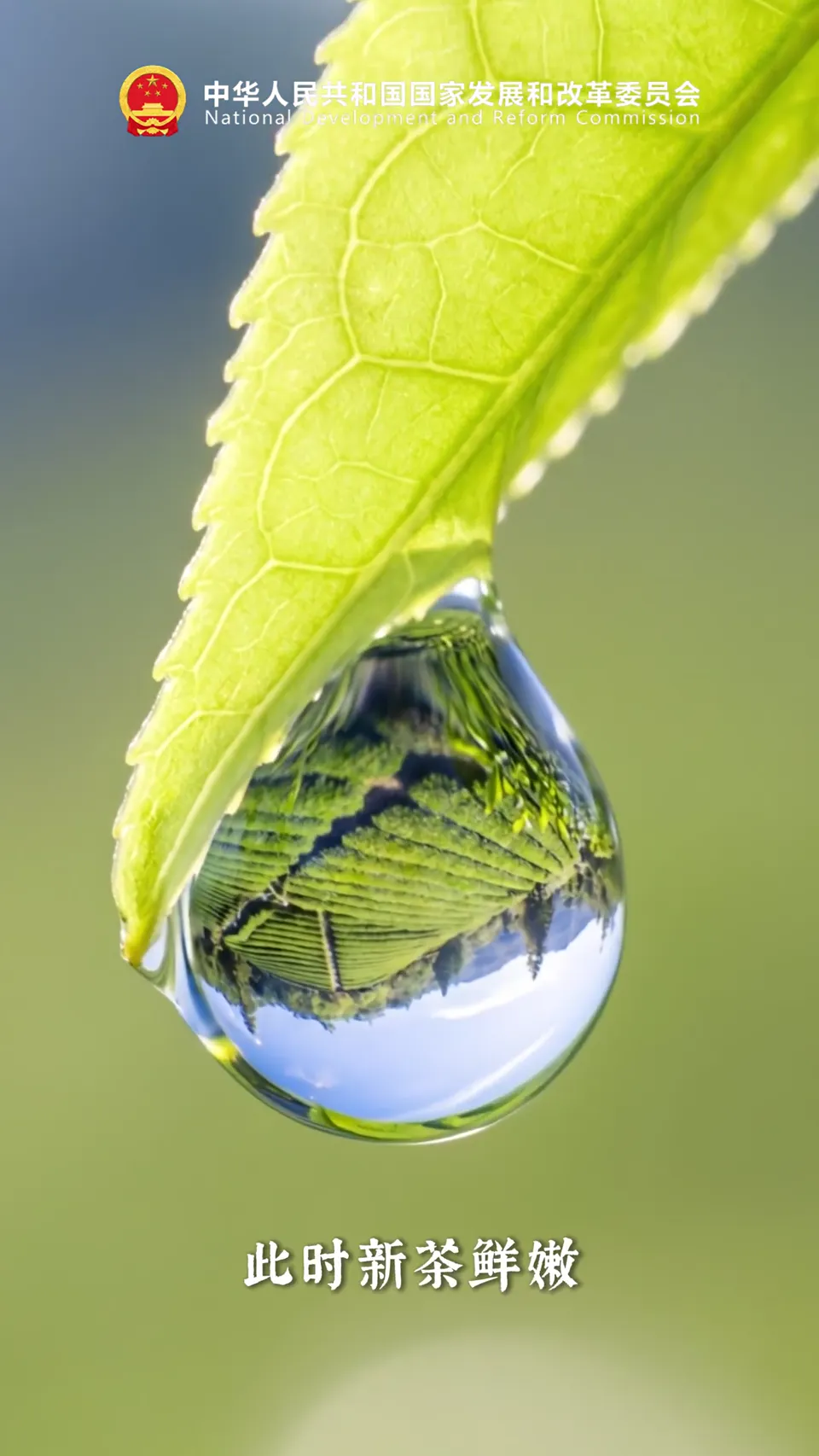
The second half has to move from farming knowledge to family life, and water is again the link. After the mist of the sprinklers, the camera settles on a water droplet on a tea bud; the tea hills are reflected in it, and as the droplet falls the camera spins and pushes in, opening onto a family drinking tea in front of the tea hills. Peony viewing, washing toon shoots and newly emerged lotus leaves follow, turning seasonal knowledge into warm, familiar spring life.
02 / Creative Highlights
Putting the link between rain and grain on screen
01
A grain measure, a granary and paddy fields show where the harvest comes from
A tight, low-angle composition first lets viewers see the jialiang clearly, while fast-moving cloud shadows bring a sense of coming rain. By the granary and the grid of paddy fields, the view opens up step by step; the opening carries cultural meaning and also sets up the farming that follows.
02
Viewing transplanting at water level and sprinklers from below makes the farm work instantly clear
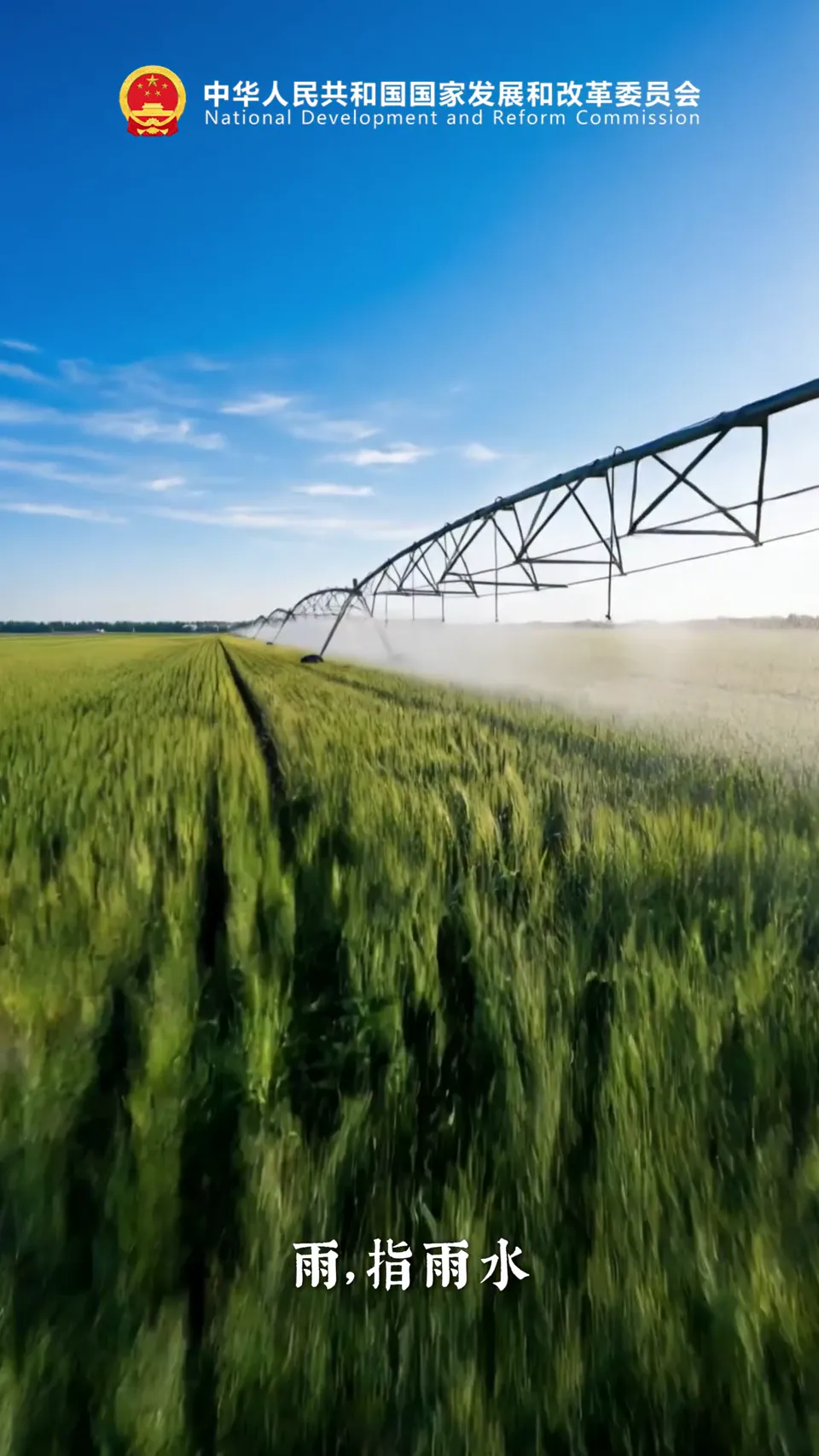
The camera pulls back ahead of a rice transplanter, revealing row after row of green seedlings left behind it; white plastic mulch and red farm machinery form clean patterns in the fields. In the wheat section, a push-in from above cuts to a low angle beneath a sprinkler boom, where the mist and a faint rainbow ground “rain nourishes all grains” in real work and real crops.
03
Following birds and passing through a water droplet: camera moves that tie the content together
The camera circles with a flock of birds over the fields and lands on ducks playing on the river; a macro close-up of a droplet on a tea bud then carries the image to a tea gathering in front of the tea hills. One transition links two signs of the season, the other moves from nature to family, so the content changes while the visual momentum never breaks.
04
Tasting tea, admiring flowers, washing toon: giving the solar term a human scale
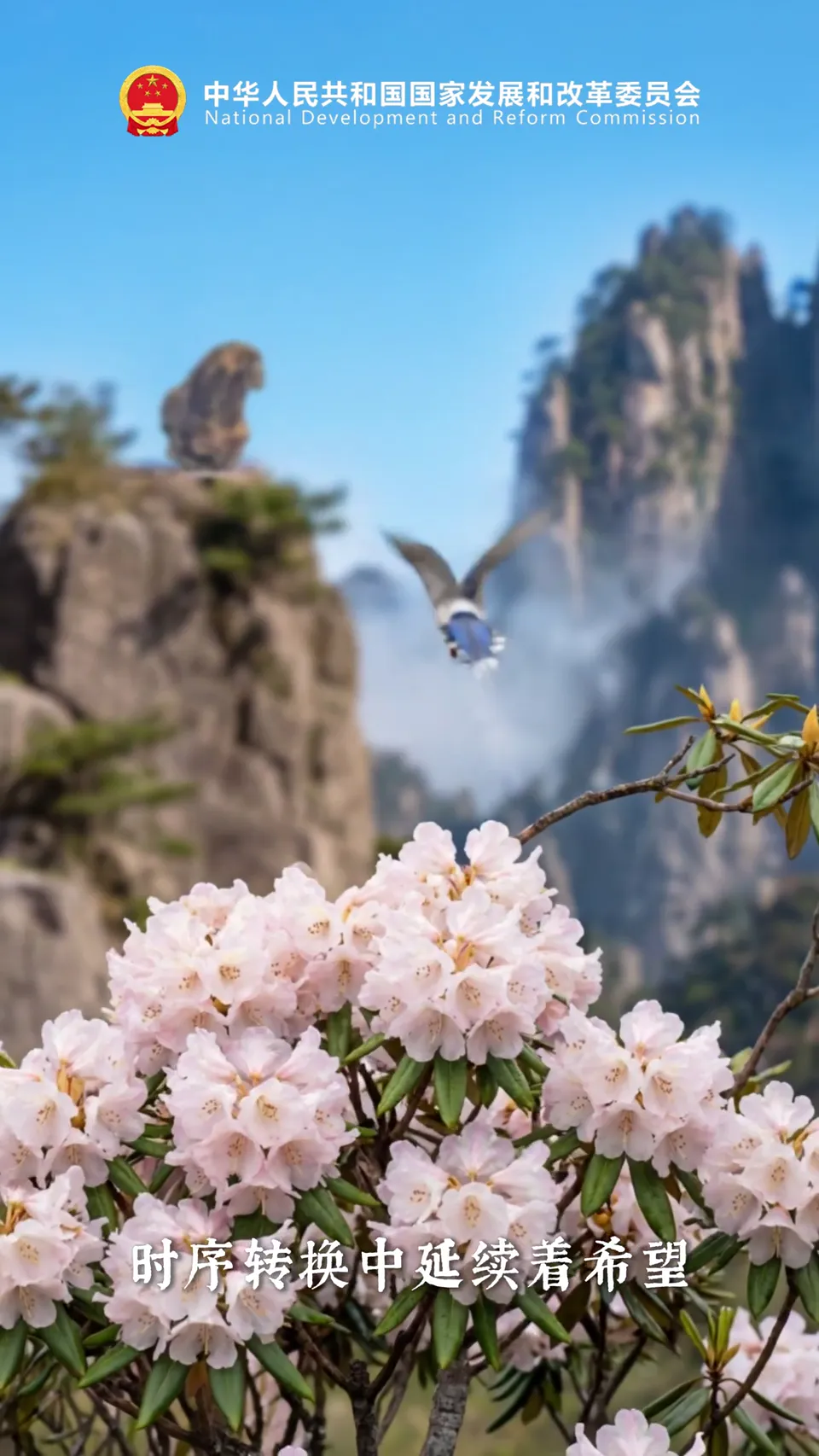
After a family tea gathering in front of the tea hills, visitors in hanfu walk among the peonies, and young people tip Chinese toon shoots into a stone basin to wash them together. The ending moves from young lotus leaves and swallows to azaleas, the peaks of Huangshan and a red-billed blue magpie flying into the distance, gently folding the feel of late-spring life into an open mountain view.
The film opens at the Jialiang Pavilion in the Forbidden City, flies through the clouds to the Fengtu Granary in Shaanxi, looks down on the paddy fields south of the Yangtze, and finally watches at water level as a transplanter sets seedlings into the field.
Clip · 00:00–00:04
Cloud shadows sweep over the Jialiang Pavilion
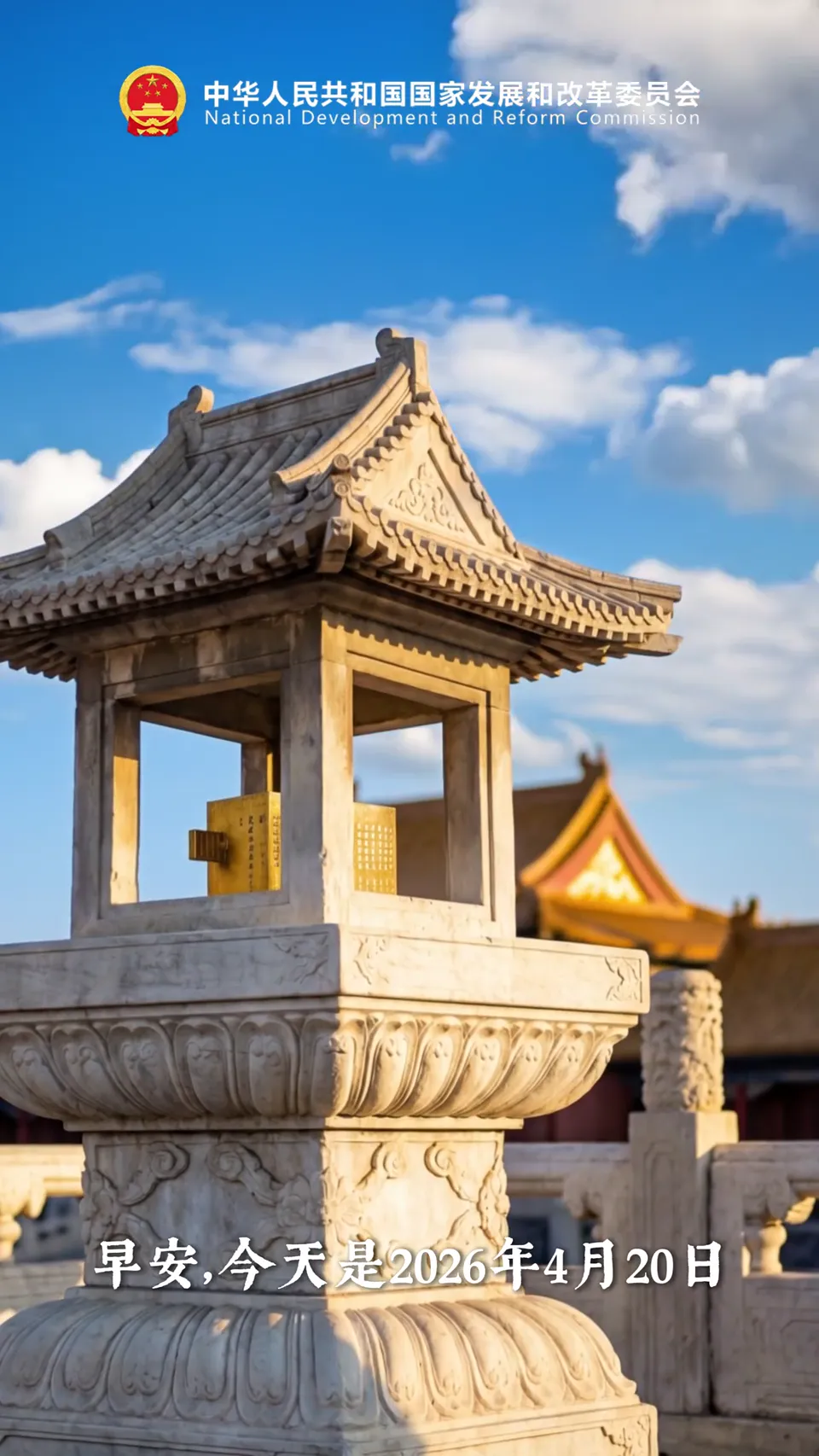
Inside a white marble pavilion stands the jialiang, an ancient vessel for measuring grain, with clouds racing past behind it as the narrator gives the date: April 20, 2026.
Clip · 00:04–00:07
The Fengtu Granary in misty rain
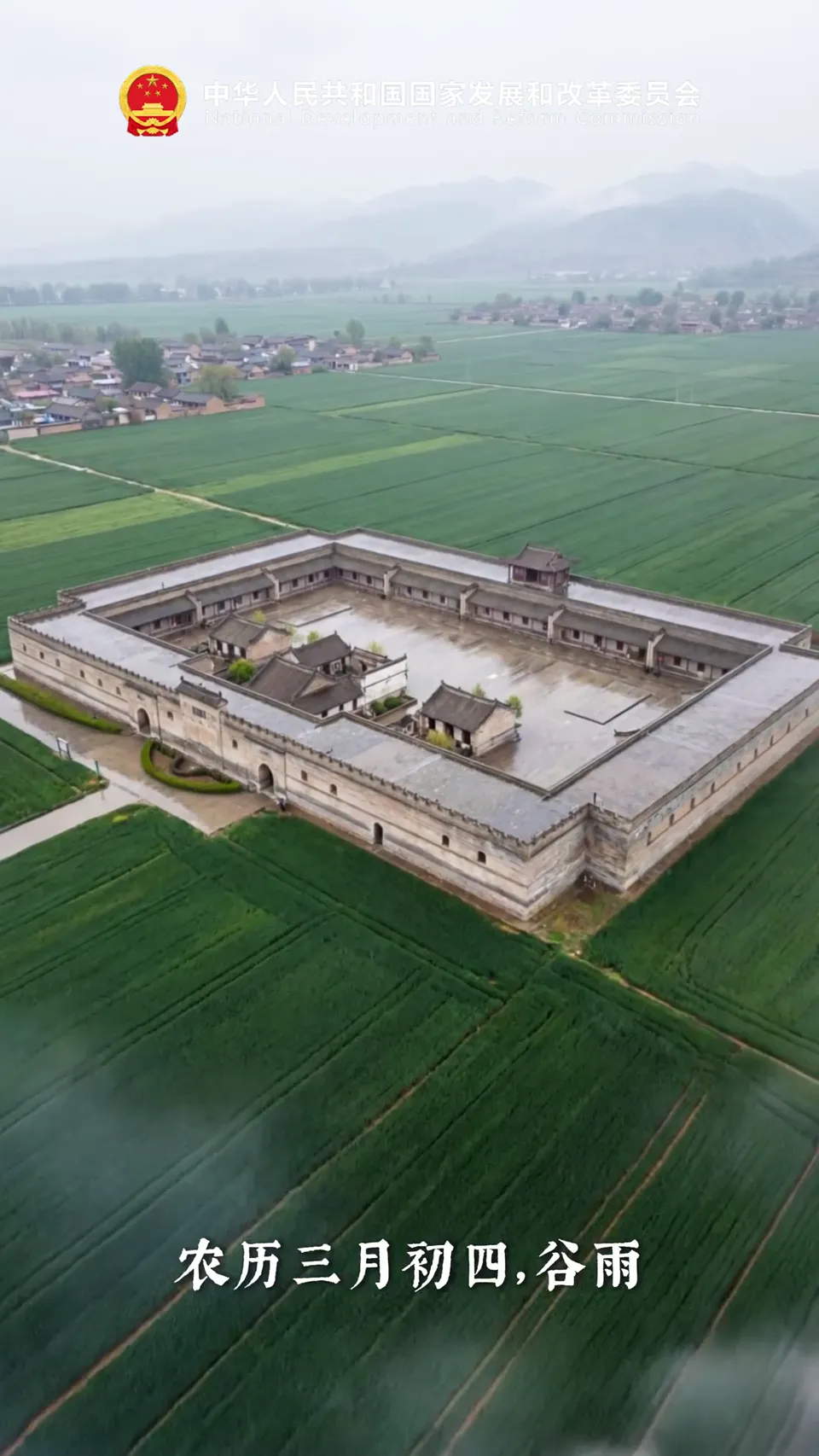
The camera passes through the clouds to the square-walled Fengtu Granary below, surrounded by endless wheat fields, with light rain falling on its roofs.
Clip · 00:07–00:10
Grid-like paddy fields
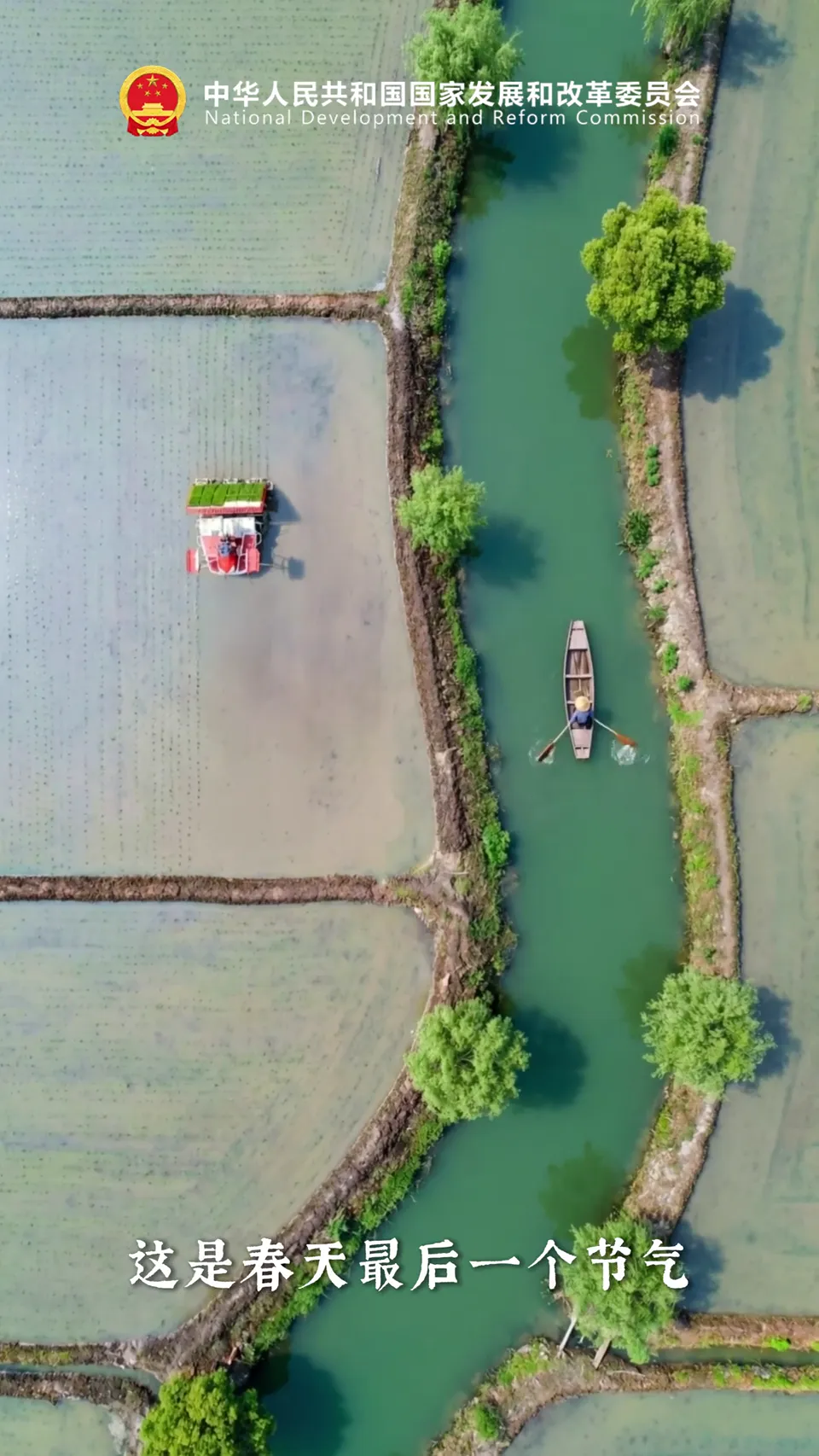
A top-down view of paddy fields south of the Yangtze, some freshly flooded and some already planted, with red farm machines working in the fields and small boats moving along the river.
Clip · 00:10–00:13
A transplanter skimming the water
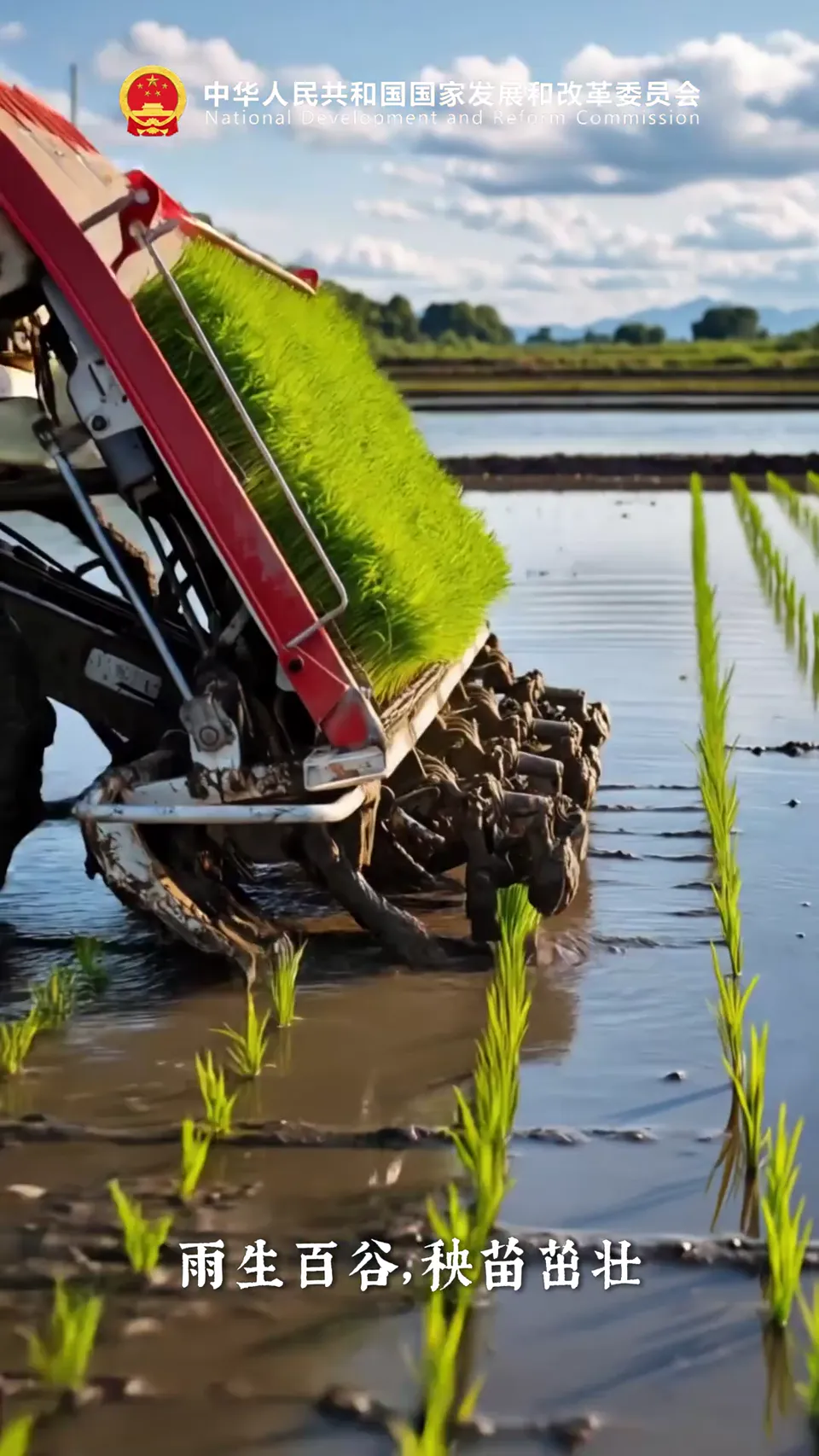
From a low angle just above the water, row after row of a transplanter’s mechanical arms press green seedlings into the mud, matching “rain brings forth all grains, and the seedlings grow strong.”
Film · 00:13–00:19
Signs of the season: duckweed, cuckoos, spring ducks
Three lines about the season, three shots: duckweed on an old-town canal, cuckoos over a rapeseed field, and ducks playing in the water under willows.
Clip · 00:13–00:15
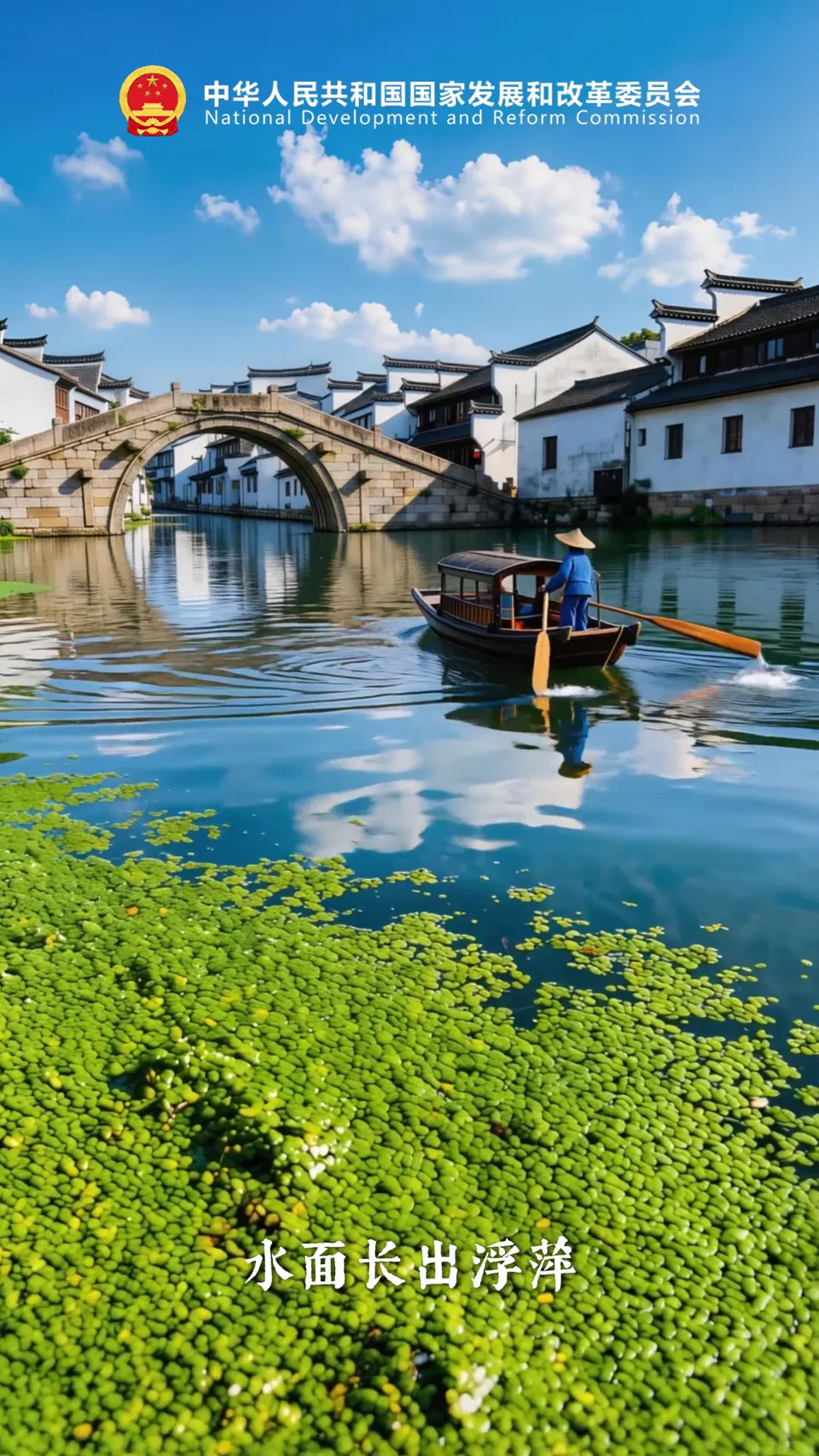
Duckweed on an old-town canal
A black-awning boat glides under a stone arch bridge, with the water in the foreground covered in bright green duckweed.
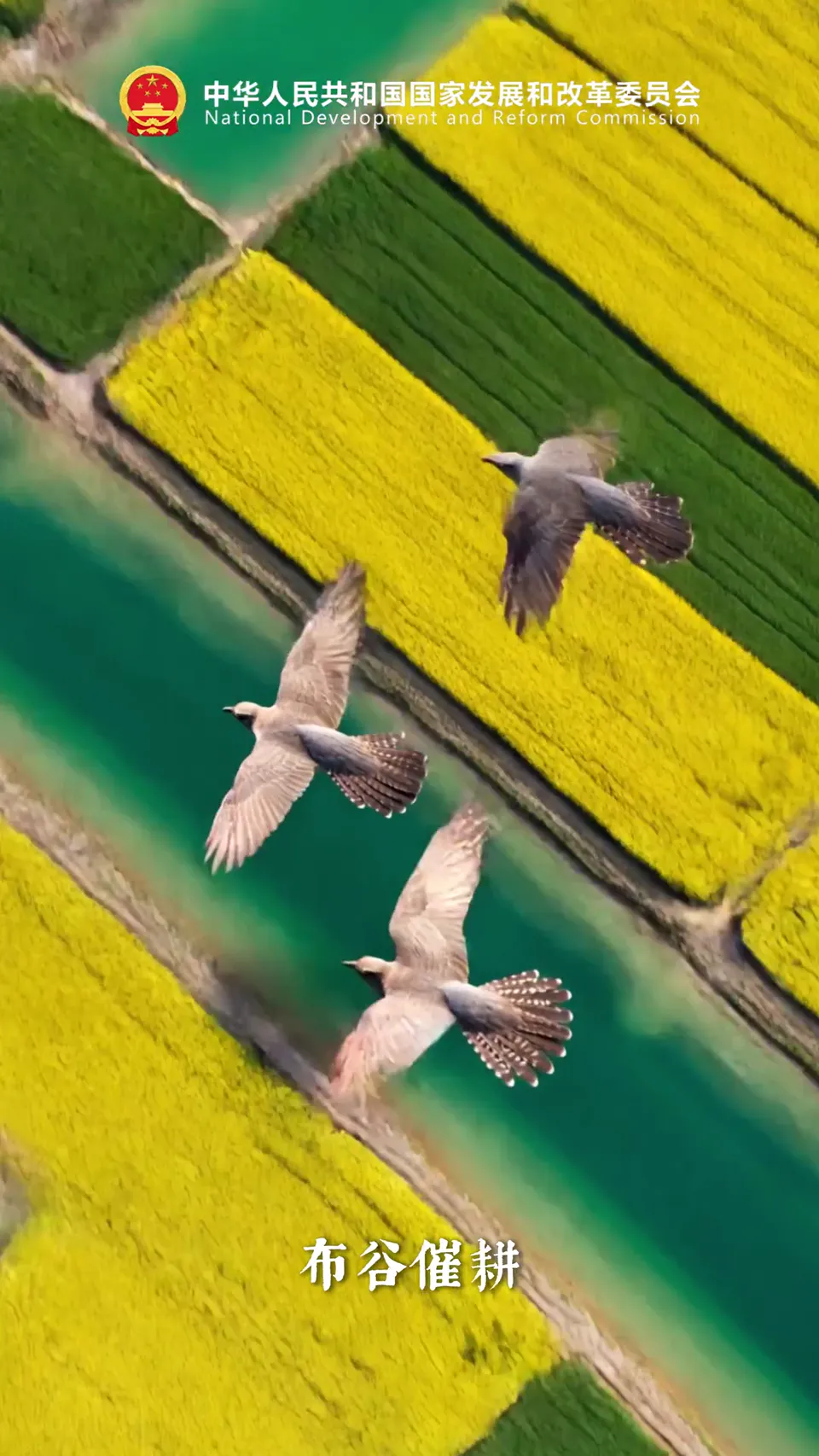
Clip · 00:15–00:19
Cuckoos fly past, landing on spring ducks
A few cuckoos skim over golden rapeseed fields, and the camera dives with them to the water, turning to a pair of ducks playing under willow branches.
As the narration explains that “grain means crops, rain means rainfall,” the images show both crops and water: plastic mulch being laid on cotton fields in Xinjiang, rolling wheat fields on the North China Plain, and sprinklers “raining” on the wheat.
Clip · 00:19–00:23
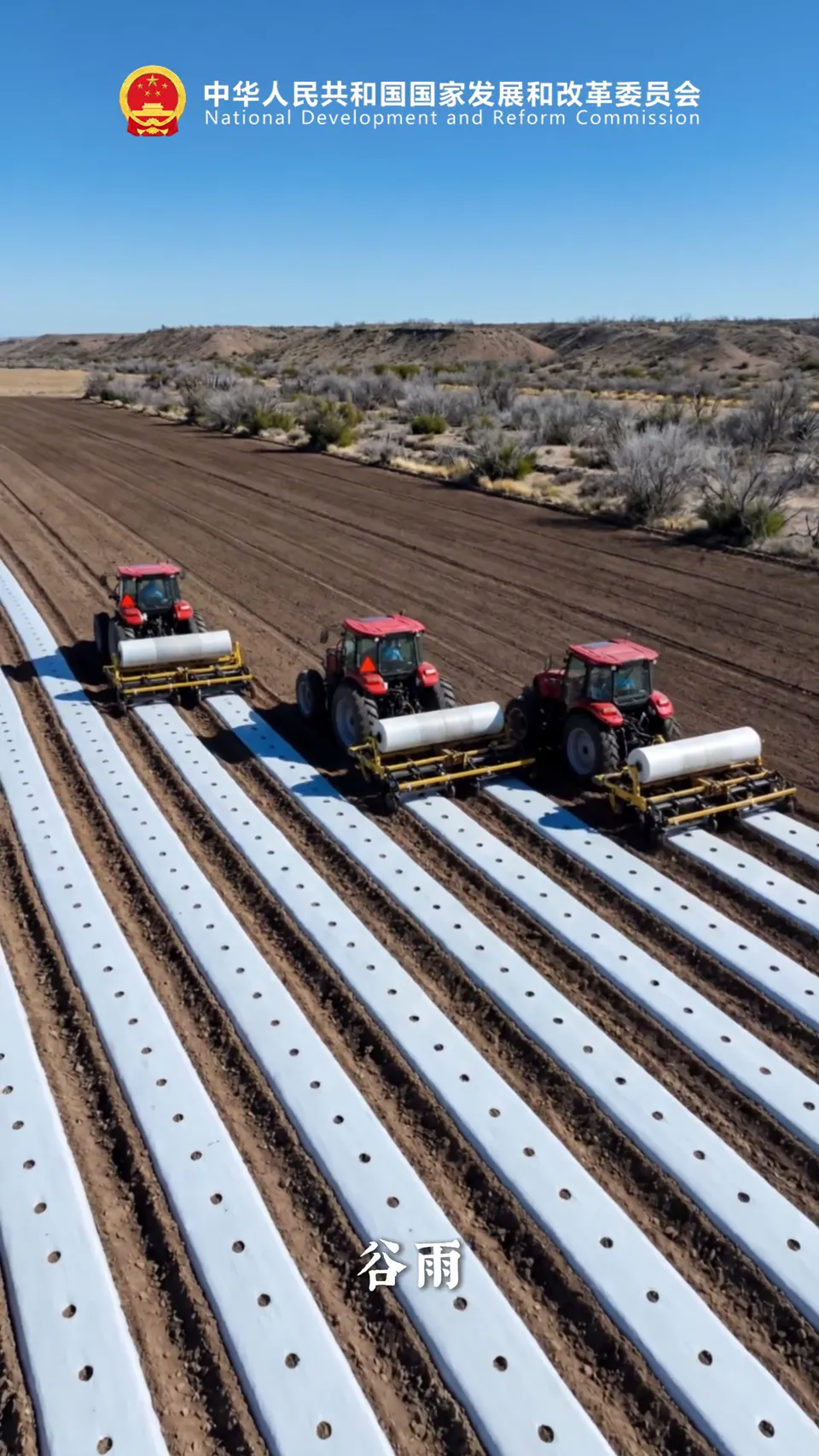
Red tractors laying white mulch
Three red tractors advance side by side across brown earth, leaving strips of perforated white plastic mulch behind them.
Clip · 00:23–00:25
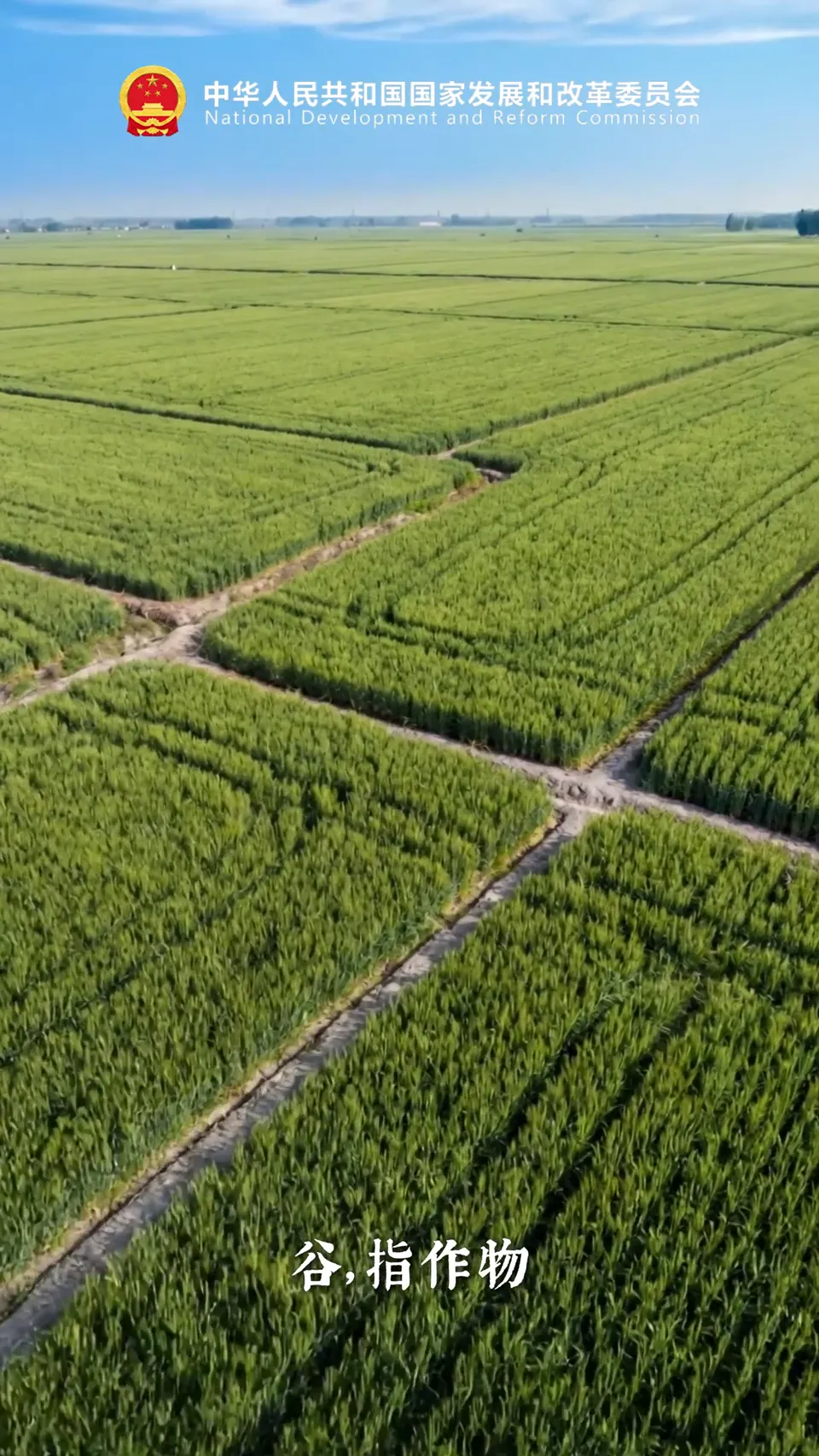
Endless wheat fields
An aerial view of the North China Plain, where lush green winter wheat stretches to the horizon, matching “grain means crops.”
Clip · 00:25–00:29
Mist beneath the sprinkler
From a low angle among the wheat ears looking up, the metal boom of a sprinkler sends out mist that catches a faint rainbow in the sunlight: “rain nourishes all grains.”
Film · 00:29–00:36
Daily life: new tea, peonies, Chinese toon
A single drop of water carries the image from the fields to the tea hills, followed by visitors admiring peonies and young people washing toon shoots in a courtyard.
Clip · 00:29–00:33
Tea hills in a water droplet
A droplet hangs from the tip of a tea bud with the tea hills reflected inside it; as it falls, the camera spins and pushes in, landing on a family of four drinking tea in front of the tea hills.
Clip · 00:33–00:36
Admiring peonies, washing toon
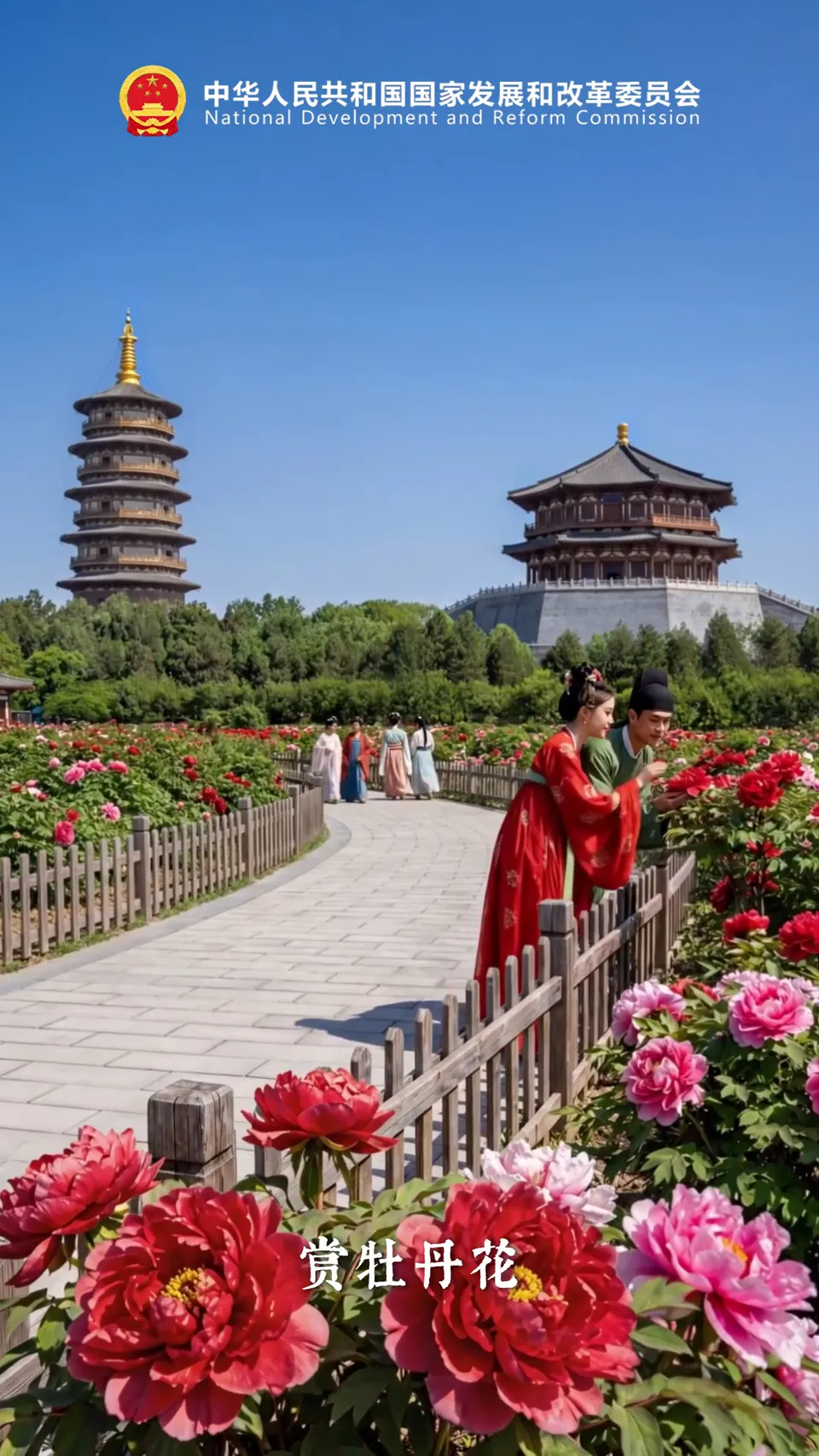
In the peony garden in front of the Tiantang and Mingtang in Luoyang, visitors in hanfu lean in to look at the flowers; in the next shot, three young people tip a tray of purple-red toon shoots into a stone basin to wash them.
Film · 00:36–00:42
Ending: new lotus leaves and Huangshan
“Spring is ending, summer is near” is paired with new lotus leaves rising on a lake and swallows flying in, before the film settles on azaleas and a red-billed blue magpie at Huangshan.
Clip · 00:36–00:39
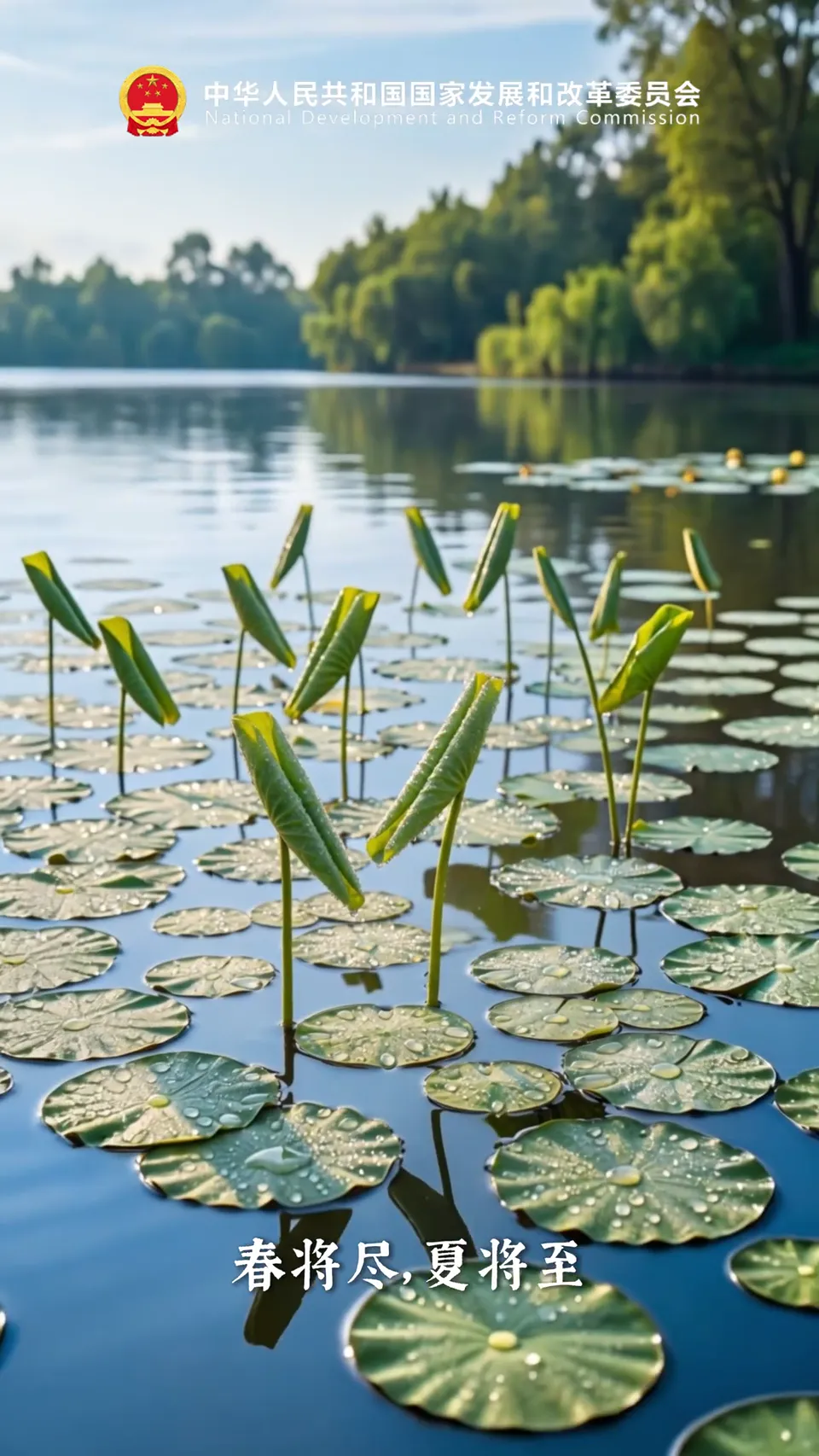
New lotus leaves and swallows
The camera slowly pulls back from young lotus leaves just out of the water to reveal the whole lake, as two swallows fly into frame from the left.
Clip · 00:39–00:42
Huangshan azaleas and a red-billed blue magpie
Azaleas in full bloom fill the foreground, with Huangshan’s striking peaks and sea of clouds behind, as a red-billed blue magpie flies from a flowering branch into the distance.
04 / Storyboards & Final Frames
Sixteen short lines of narration, sixteen shots.
In the order of the finished film: each shot describes what it shows, alongside the final still used in the film.
01
Grain measure, granary and paddy fields
In the film · 00:00–00:13
Shot 1.1
Jialiang Pavilion
A low-angle shot of the white marble Jialiang Pavilion outside the Hall of Supreme Harmony in the Forbidden City, holding a gilded bronze jialiang. Shot as a time-lapse, with clouds racing past behind it to hint at coming spring rain.
Jialiang Pavilion · Final 1
Shot 1.2
Fengtu Granary
Shaanxi’s Fengtu Granary, known as “the first granary under heaven,” stands like a square city of grey brick surrounded by farmland. The camera emerges from the clouds to see rain falling on its roofs.
Fengtu Granary · Final 1
Shot 1.3
Paddy-field puzzle
A top-down view of paddy fields south of the Yangtze: some freshly flooded, mirroring the sky; some already planted. Boats move along the waterways, and red farm machines work in the fields.
Paddy-field puzzle · Final 1
Shot 1.4
Transplanter close-up
With the camera almost touching the water, a rice transplanter drives to the left, leaving rows of green seedlings behind it.
Transplanter close-up · Final 1
02
Duckweed, cuckoos and spring ducks
In the film · 00:13–00:19
Shot 2.1
Old-town duckweed
Under a stone arch bridge in an old water town south of the Yangtze, a black-awning boat glides by, with bright green duckweed covering the water in the foreground.
Old-town duckweed · Final 1
Shot 2.2
Cuckoos over rapeseed fields
A top-down view of golden rapeseed and emerald wheat fields, with a canal cutting diagonally across the frame and a few cuckoos flying over.
Cuckoos over rapeseed fields · Final 1
Shot 2.3
Spring ducks under the willows
The camera follows the cuckoos as they dive toward the river, where a pair of ducks play under weeping willows.
Spring ducks under the willows · Final 1
03
Cotton fields, wheat fields and sprinklers
In the film · 00:19–00:30
Shot 3.1
Laying mulch in Xinjiang cotton fields
On the brown earth of Xinjiang, three red tractors advance side by side, leaving white plastic mulch behind them. Red machines, white mulch, brown soil and blue sky: modern agriculture at a glance.
Laying mulch in Xinjiang cotton fields · Final 1
Shot 3.2
North China wheat fields
Endless fields of winter wheat, with field ridges cutting the green into blocks, matching “grain means crops.”
North China wheat fields · Final 1
Shot 3.3
Sprinkler from below
The camera tilts up from among the wheat ears as the huge boom of a sprinkler passes overhead, a faint rainbow showing in the mist.
Sprinkler from below · Final 1
04
New tea, peonies and Chinese toon
In the film · 00:30–00:37
Shot 4.1
A water droplet on a tea bud
A macro shot of a tea tip with one bud and one leaf; the hanging droplet acts like a magnifying glass, reflecting the entire tea hill inside it.
A water droplet on a tea bud · Final 1
Shot 4.2
A family in front of the tea hills
After the droplet falls, the camera pushes in to a terrace facing the tea hills: a family of four drinks new tea from glass teaware, with terraced tea gardens and distant mountains behind them.
A family in front of the tea hills · Final 1
Shot 4.3
Admiring peonies
In the peony garden in front of the Tiantang and Mingtang in Luoyang, large red peonies fill the foreground as visitors in hanfu lean in among the flowers.
Admiring peonies · Final 1
Shot 4.4
Washing toon shoots
In a small white-walled courtyard, under an old tree, three young people tip purple-red toon shoots from a bamboo tray into a stone basin as water runs down from a bamboo pipe.
Washing toon shoots · Final 1
05
New lotus leaves and Huangshan
In the film · 00:37–00:43
Shot 5.1
New lotus leaves on the lake
The shot starts on young lotus leaves just out of the water, then slowly pulls back to reveal the whole lake as swallows fly in from the left of the frame.
New lotus leaves on the lake · Final 1New lotus leaves on the lake · Final 2
Shot 5.2
Huangshan azaleas and a red-billed blue magpie
The film ends at Huangshan: azaleas in the foreground, striking peaks and a sea of clouds behind, as a red-billed blue magpie takes off from a flowering branch and fades into the distance.
Huangshan azaleas and a red-billed blue magpie · Final 1
05 / Script Excerpts
A line from the film's script.
Copy
Spring is ending and summer is near; as the seasons turn, hope carries on.Script
06 / Results
The Grain Rain vertical short and its companion deliverables
Completed a roughly 46-second vertical short on Grain Rain that tells a continuous story of grain culture, modern farming, spring signs of the season and seasonal life. It was delivered with the video, copy, posters and banners, and can be used as a standalone episode of the 24 Solar Terms series.
Case Study
Liandan AI Studio × NDRC | Grain Rain: One Drop of Rain, from the Granary to a Teacup
Grain Rain is the last solar term of spring. Its Chinese name pairs “grain” with “rain,” and it is all about rainfall and crops.
This is one episode of the 24 Solar Terms series we produced: about 46 seconds, vertical, with matching posters, banners and copy.
The episode had to make “rain brings forth all grains” clear, and also capture the seasonal days of tasting tea, admiring peonies and eating Chinese toon.
Client
National Development and Reform Commission
Project Type
24 Solar Terms Series AI Short · Grain Rain
Timeline
April 2026 (Grain Rain: April 20)
Runtime & Specs
About 46 seconds, 9:16 vertical, 2160 × 3838
Deliverables
Finished film, copy, vertical poster, banner
Produced by
Shenzhen Alchemy Technology Co., Ltd. (Liandan AI Studio)
01
Before production, we checked every line of narration
The solar-term films are published on government accounts and deal with traditional knowledge, so any wrong claim would be noticed.
Before the script was locked, we traced a source for every line: duckweed and the hoopoe belong to the three pentads of Grain Rain; cuckoos urging on the plowing, drinking Grain Rain tea, admiring peonies and eating Chinese toon all have supporting references. Even the line of poetry adapted on the cover was traced back to the original by the Tang poet Qi Ji.
Once the checks were done, we split the final narration into 16 short lines, with one shot for each line, so whatever the narration mentions appears on screen.
02
“Rain brings forth all grains,” starting with a vessel for measuring grain
“Rain brings forth all grains” is an abstract phrase. We wanted viewers to first see how much grain has weighed in Chinese life.
We opened at the Jialiang Pavilion in the Forbidden City. The jialiang was an ancient standard measure, used precisely for measuring grain. Clouds race past behind the pavilion, as if rain were on its way. The camera then passes through the clouds to the Fengtu Granary in Shaanxi below, a square Qing-dynasty granary surrounded by farmland.
Jialiang Pavilion: cloud shadows sweep past as spring rain approachesFengtu Granary: a square granary surrounded by farmland
From measuring vessel to granary, then to grid-like paddy fields south of the Yangtze and a machine planting seedlings at water level, the camera moves step by step from history to today’s spring farming.
Clip · 00:00–00:07
From the Jialiang Pavilion to the Fengtu Granary
Cloud shadows sweep over the jialiang, and the camera passes through the clouds down to the granary in the rain.
03
Letting a sprinkler make the “rain”
“Grain means crops, rain means rainfall, and rain nourishes all grains” is the line most likely to end up as empty scenery shots. We found a concrete image for each half of it.
For agriculture, we chose Xinjiang cotton fields: three red tractors laying white mulch side by side, the red, white, brown and blue instantly reading as modern farming. For crops, the endless wheat fields of North China. For rain, instead of waiting for the weather, we had a sprinkler “rain” on the wheat: the camera looks up from among the wheat ears as the metal boom sprays mist, catching a faint rainbow in the sunlight.
Final still of the sprinkler from below: mist falling from the boom, wheat ears in the foreground
Clip · 00:23–00:29
Wheat fields and sprinklers
First the whole wheat field, then a view from among the wheat ears as the sprinkler waters the crop.
04
Two transitions that carry the fields into daily life
The first half of the Grain Rain narration is about farm work, the second half about daily life. A hard cut would feel like two films stitched together, so we designed two transitions in between.
The first comes in the signs-of-the-season section: cuckoos skim over a rapeseed field, the camera dives with them to the water, and the image arrives at spring ducks playing under the willows, carrying two lines about the season in one sweep.
Clip · 00:15–00:19
Cuckoos dive, landing on spring ducks
The camera follows the flock all the way down, from the rapeseed field to the river.
The second follows the sprinkler mist: a drop of water hangs on the tip of a tea bud with the whole tea hill reflected inside it; as the droplet falls, the camera spins and pushes in, landing on a family of four drinking new tea in front of the tea hills. The rain that waters the crops also waters this cup of tea, and the peony viewing and toon washing follow on naturally.
We also compared several endings, trying swallows over a lake and an ancient pagoda in a water town. The shot before already showed new lotus leaves and swallows on a lake, so more water would have been repetitive; in the end we moved the ending to Huangshan, with azaleas in front, striking peaks and a sea of clouds behind, and a red-billed blue magpie flying off, so the frame suddenly opens up.
Early version: an ancient pagoda in a water town, with swallowsFinal: Huangshan azaleas and a red-billed blue magpie
A droplet on a tea bud, reflecting the tea hillsAs the droplet falls, the camera pushes in to a family drinking tea in front of the tea hills
05
What this project achieved
In under a minute, this episode covers the origins of Grain Rain, three signs of the season, four kinds of farm work and three customs, with no line of narration left without an image.
Our method was to check the facts first, then match one shot to each line, and finally use transitions to string the different content into a single thread. The film keeps the series’ bright palette and sweeping aerial shots, so it sits naturally within the full set of solar-term films.
This process also works for other government and cultural shorts that need to explain knowledge clearly: accurate content, concrete images and a clear thread from start to finish.
FAQ
FAQ
How do you make sure the customs and signs of the season in a solar-term film are correct?
We check the script line by line before production: duckweed and the hoopoe belong to the three pentads of Grain Rain; cuckoos urging on the plowing, drinking Grain Rain tea, admiring peonies and eating Chinese toon were all traced to sources, and the line of poetry adapted on the cover was traced back to the original by the Tang poet Qi Ji. Only then do we split the narration into 16 short lines, each matched with one shot.
Are landmarks like the Jialiang Pavilion and the Fengtu Granary real footage?
No, the whole film is AI-generated. We first generated final stills shot by shot based on the real buildings, then turned them into motion shots: for example, the white marble pavilion and gilded bronze jialiang at the Jialiang Pavilion, and the square grey-brick walls of the Fengtu Granary.
How long does one solar-term episode take from script to delivery?
The Grain Rain episode took about 9 days from the locked script to delivery: a 16-shot script on day two, then images and animation shot by shot, voiceover and editing, a first cut around day 4, and delivery after fine-tuning the details.
What’s in the delivery package?
One finished 9:16 vertical film at 2160 × 3838, plus a vertical poster, a banner and the full copy, so the client can publish across platforms at the same time.
Approach
Linking seasonal knowledge through shifts in distance and camera movement
The storyboard splits the narration into three layers, farm work, signs of the season and customs, shot from different angles: top-down over paddy fields, close-ups of machinery, push-ins at water level and macro shots of tea buds. Each section shows something different, so the shot distances change with it, keeping the episode from becoming a parade of wide shots.
The move from a water droplet to the tea hills is a deliberately designed transition from macro to wide: first the tea bud and the reflection in the droplet come into focus, then the camera follows the falling drop and pushes in to the family tea gathering. The finished film keeps this surreal transition, so the link between tea and water is visible on screen rather than carried by the narration alone.
The Grain Rain script and images were checked against each other line by line: “spring ducks playing on the river” is matched with ducks on the river; the ending uses newly emerged lotus leaves, Huangshan azaleas and a red-billed blue magpie. The daily-life section also follows the final script with peony viewing and toon washing, so whatever the narration mentions appears on screen.