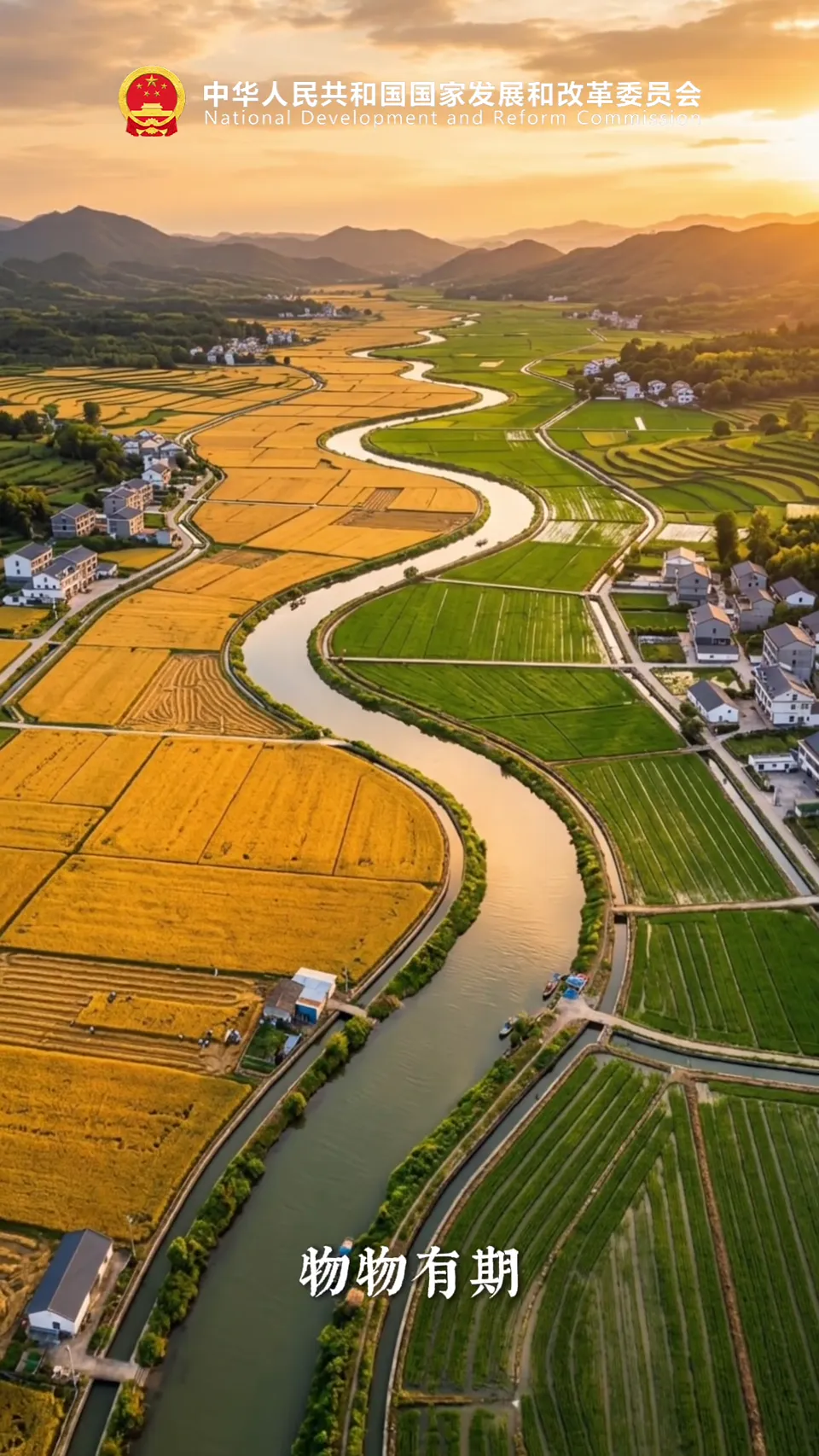
Golden wheat harvests contrast with fresh green rice transplanting, telling “one harvest, one planting” as a seasonal story full of natural detail, customs and modern agriculture.
Project Type
The 24 Solar Terms
Client
National Development and Reform Commission (NDRC)
Year
2026
Our role
Voice-over script, solar-term AI visuals & editing, posters
Original format
1080 × 1920 · 00:42
Film00:42 · Film
01 / Background
How to show the busiest season in an orderly way
The core message of the Grain in Ear episode: the awned wheat is ready to harvest, and the awned rice can be planted. The film had to explain both kinds of farm work at once, show that the season is busy but never chaotic, and connect traditional seasonal wisdom with today’s agriculture.
The opening pulls back from dewdrops on a lotus leaf to reveal a lotus bud, followed by a line of combine harvesters, farmers arranging wheat sheaves and rice being planted in paddy fields. The film first establishes a real, recognizable seasonal setting, then joins harvesting and sowing together; the second half continues the farming story with a family tasting new wheat, green plums warming in wine, grain going into storage and modern seedling nurseries, linking Grain in Ear with production and daily life today.
02 / Creative Highlights
Harvesting and sowing echo each other on screen
01
Making “harvest” and “sowing” match at a glance
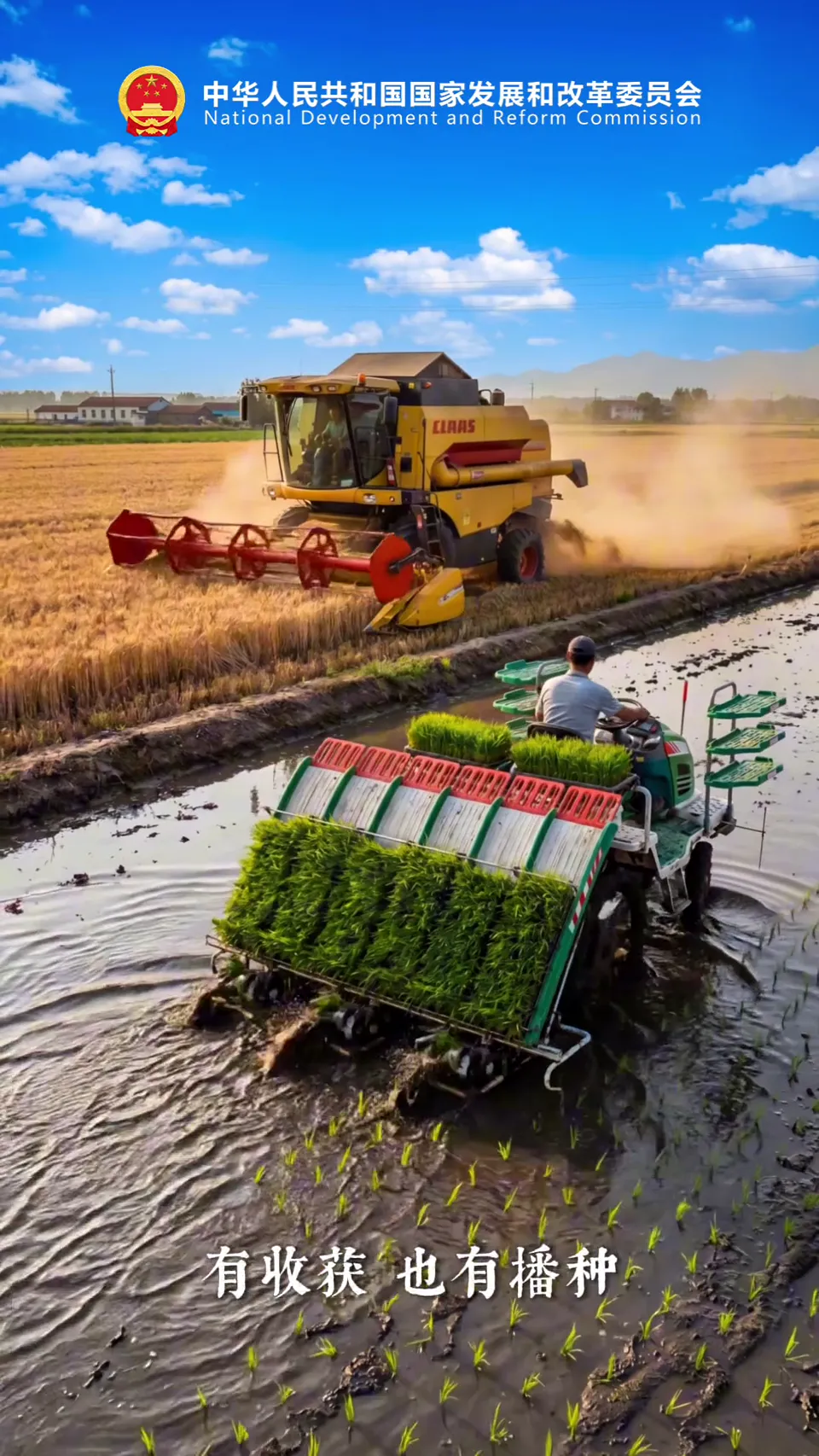
Harvesting and sowing happen at the same time, but simply cutting them one after the other can turn them into two unrelated segments. The film first sets golden wheat fields against fresh green paddies as a color contrast, then has a combine harvester and a rice transplanter advance in the same frame on either side of a field ridge: one raising dust, the other stirring ripples. Two kinds of work happening in the same place at the same moment make “one harvest, one planting” clear at a glance.
02
Small details lead into big scenes
A close-up of dewdrops pulls back to reveal a lotus bud, linking a single drop of water and the whole plant in one opening shot. The wheat-ear close-ups, farmers at work and lines of machinery that follow mix near and far: close shots show the summer signs of the season, wide shots show the scale of the busy work, and even the big scenes keep concrete details of the land in view.
03
From traditional life to modern agriculture
After the green plum wine, wheat grain pours from an unloading auger into a truck, and the next shot moves to vertical seedling racks where agricultural technicians are making their rounds. Folk custom, harvest storage and the next round of growth are joined by concrete actions into a farming cycle, connecting the ancient wisdom of the solar terms with modern places of production.
04
Using everyday wheat foods to show “tasting the new”
For “tasting new wheat and eating new grain,” viewers need to recognize what is being eaten. The family eats everyday wheat foods, noodles, steamed buns and egg pancakes, laid out on the table in the finished film. Clearly visible food and the act of eating ground the custom in real life, and leave a warm, relaxed moment between the many farming shots.
03 / Scene Breakdown
A viewing route through one harvest and one sowing
Film · 00:00–00:06
Opening: a single dewdrop opens onto a pond of lotus leaves
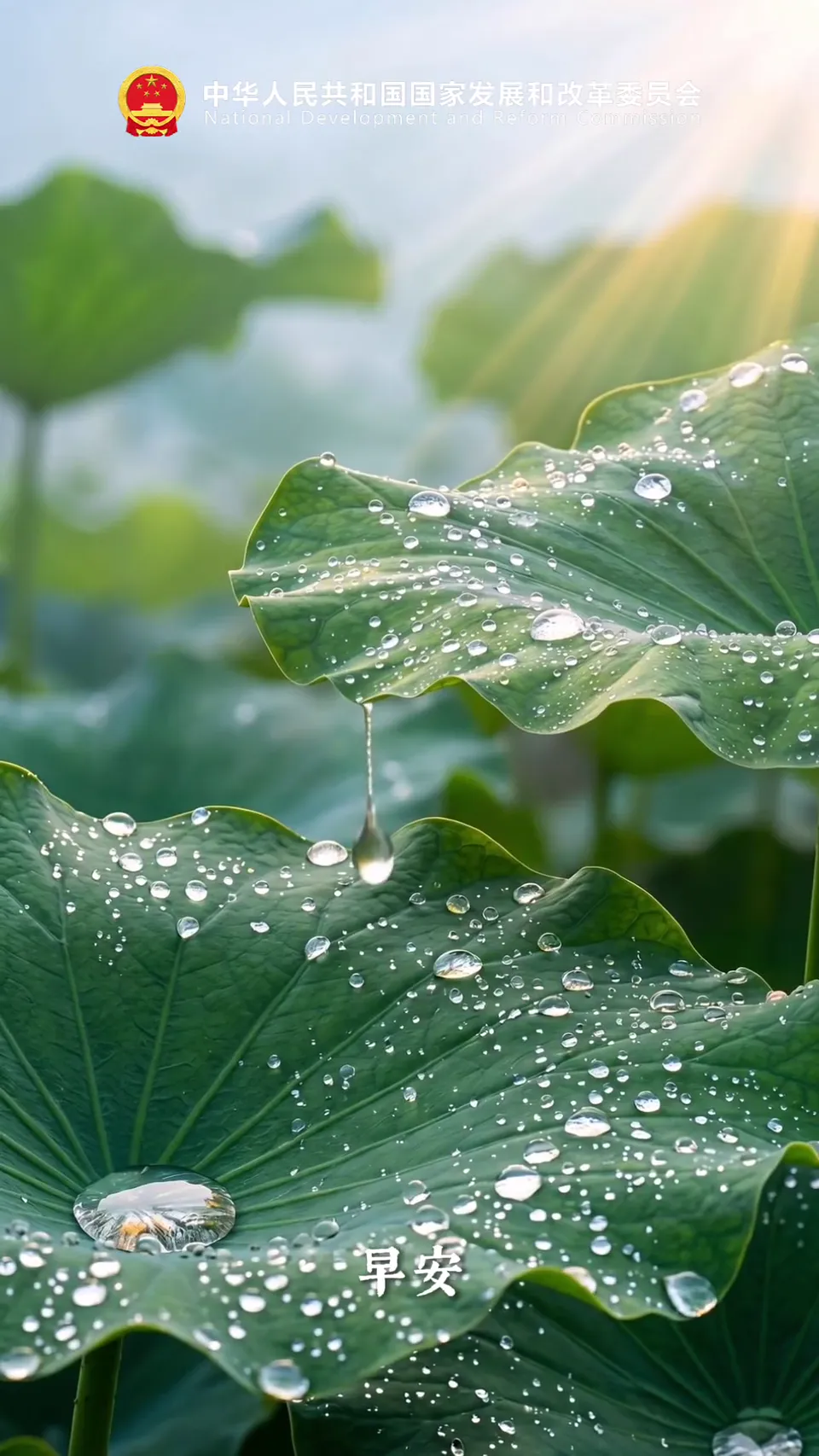
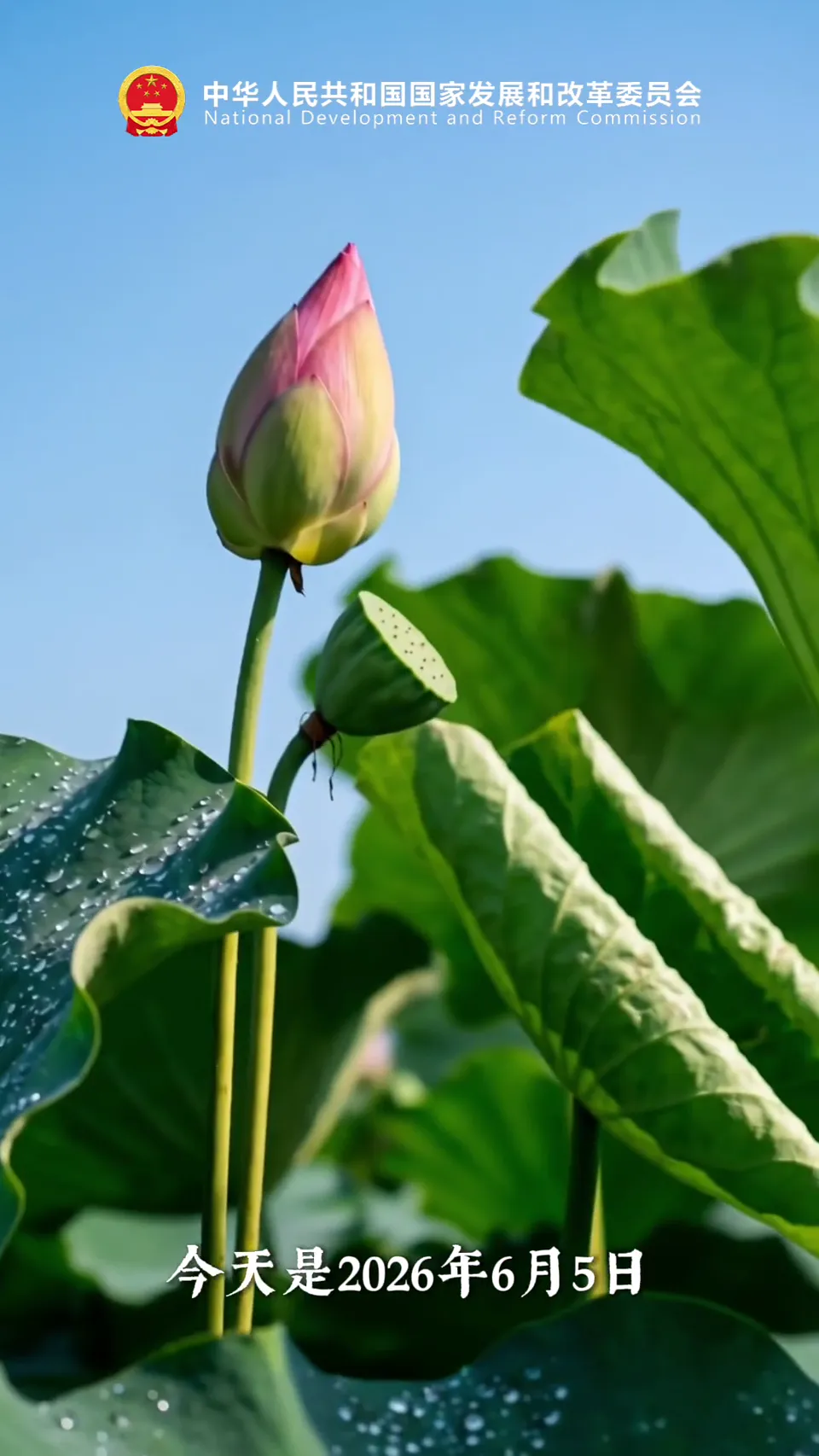
The narrator gives the date: June 5, 2026, the 20th day of the fourth lunar month. The image starts with a dewdrop on a lotus leaf and pulls all the way back to a lotus in bud.
Clip · 00:00–00:03
A dewdrop slides off
A lotus leaf is covered in tiny beads of water; a drop slides off the tip of an upper leaf and falls onto the leaf below, sending up a fine splash.
Clip · 00:03–00:06
Pulling back to a lotus bud
The camera pulls back to reveal a slender lotus stem, finally resting on a pink-and-green bud and a young seedpod beside it, against a clean blue sky.
Film · 00:06–00:14
The two characters of Grain in Ear: wheat ready to harvest, rice ready to plant
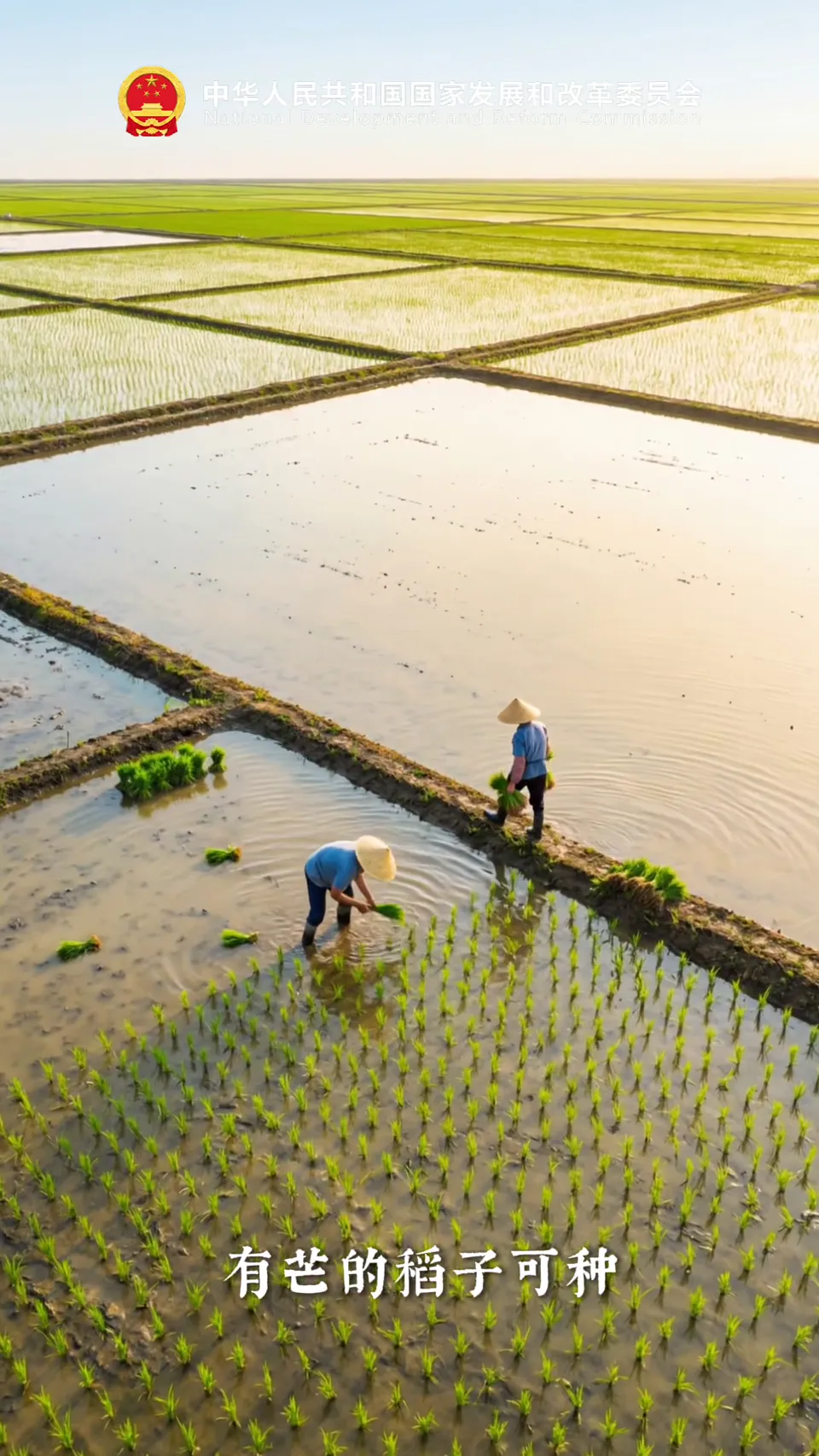
As the words “Grain in Ear” appear, the image cuts straight to fields of wheat; as the narration explains “the awned wheat is ready to harvest, the awned rice can be planted,” one line gets a wheat field and the next a paddy field.
Clip · 00:06–00:08
Three combine harvesters
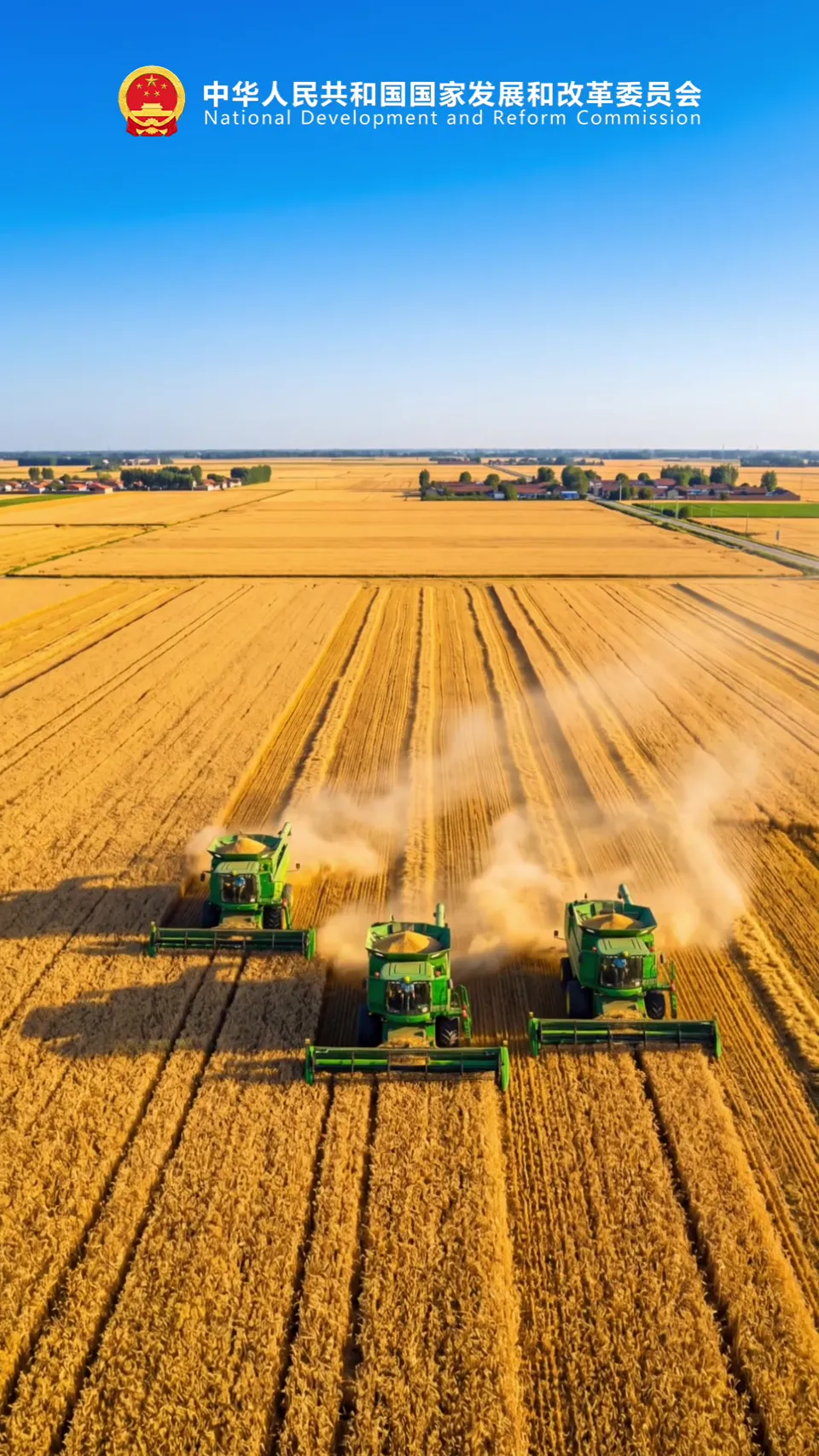
Looking down on golden wheat fields, three green combine harvesters advance in a staggered line, raising a trail of wheat dust behind them.
Clip · 00:08–00:11
Arranging wheat sheaves in the field
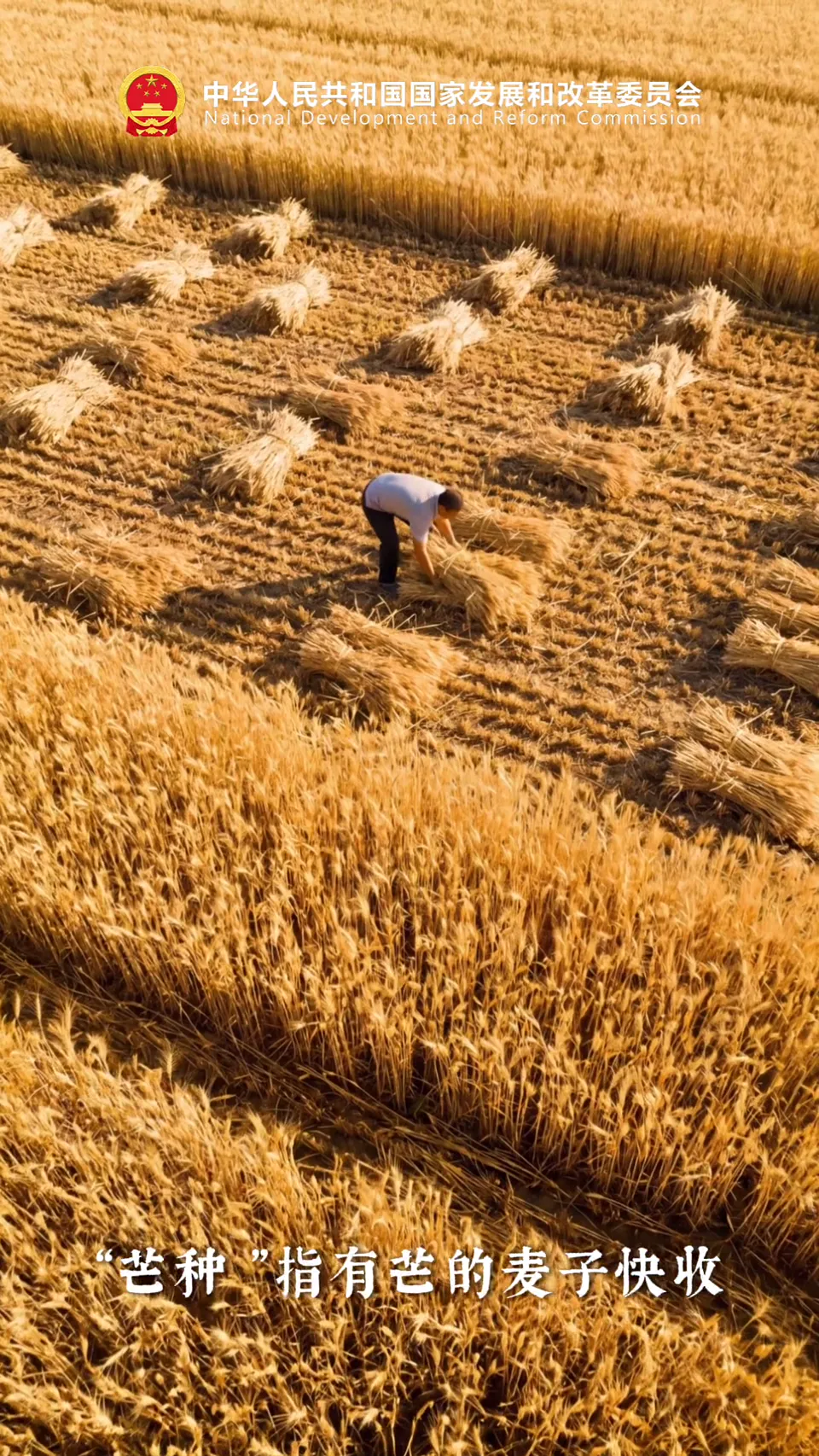
Bundles of wheat lie scattered across the harvested ground as a farmer bends to arrange them, with unharvested waves of wheat still below.
Clip · 00:11–00:14
Planting rice in the paddies
The image changes to paddy fields divided into squares by ridges: one person walks along a ridge carrying seedlings, another bends over to plant.
Film · 00:14–00:21
The busy season: harvesting, and sowing too
“In the countryside, farm work is especially busy around Grain in Ear, with both harvesting and sowing.” Three shots go from wheat ears to terraced fields, ending with a combine harvester and a rice transplanter in the same frame.
Clip · 00:14–00:16
Backlit wheat ears
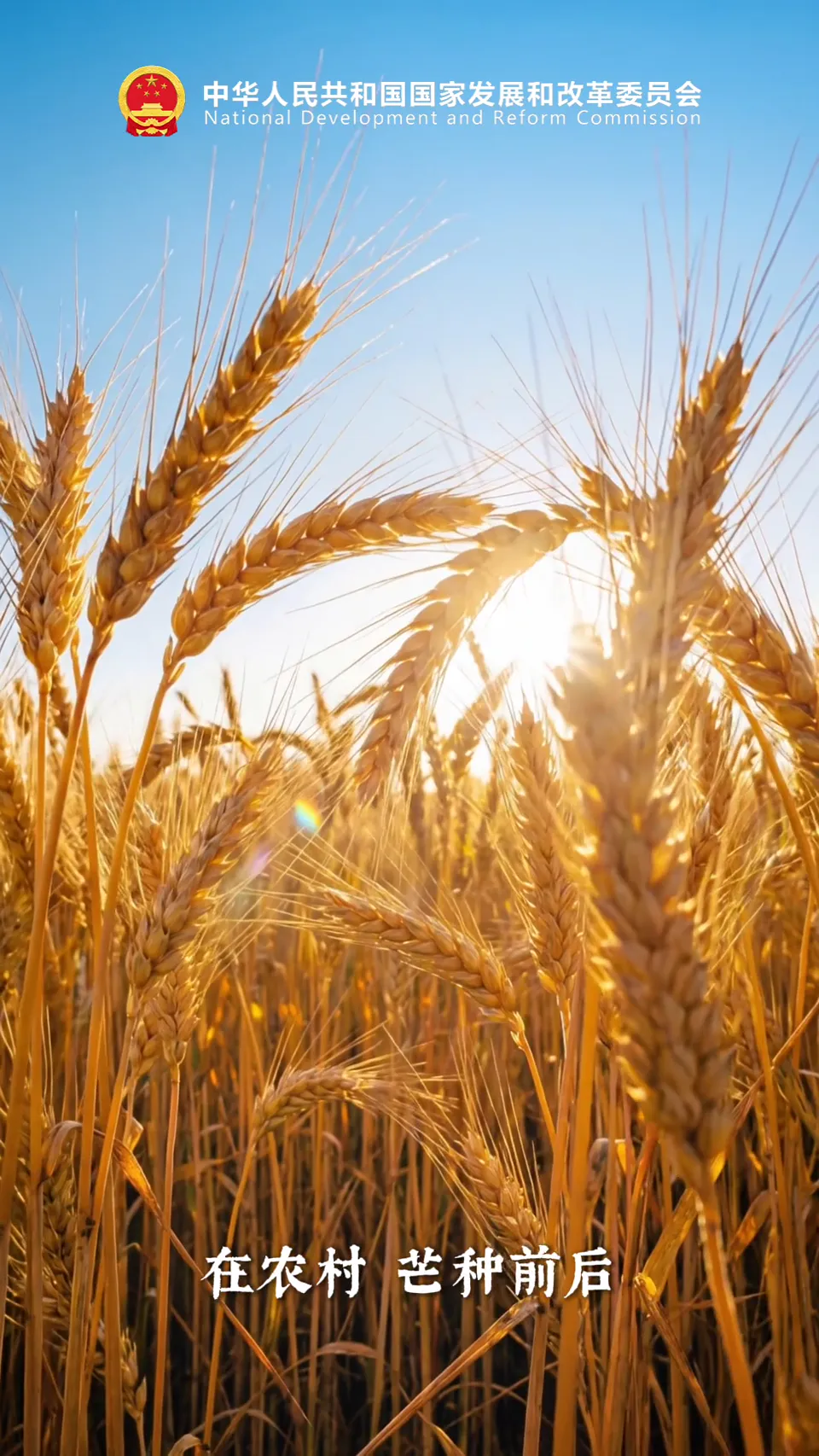
A low-angle shot looking up at wheat ears, with the sun shining through the awns as the camera slowly rises.
Clip · 00:16–00:19
Planting rice on terraces
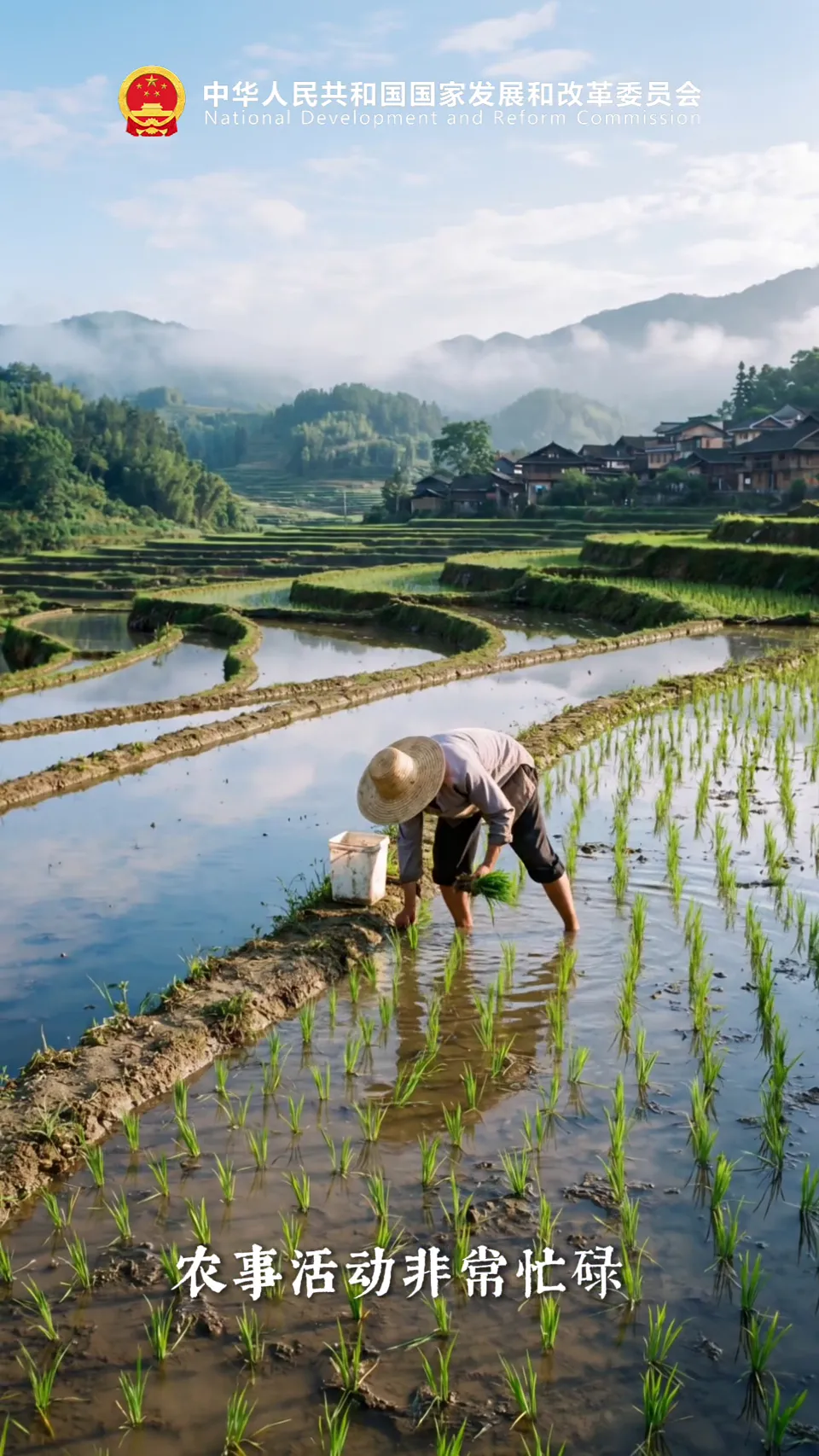
Mountain terraces are flooded with water that mirrors the sky; a farmer in a straw hat bends to plant rice, with a village and mountain mist in the distance.
Clip · 00:19–00:21
A harvester and a transplanter in the same frame
In the foreground, a rice transplanter moves forward through the paddy, churning up muddy water; across a field ridge, a yellow combine harvester raises wheat dust in the wheat field.
Film · 00:21–00:31
Signs of the season and customs: shrikes, deep shade, new wheat, green plum wine
A shrike and an ancient tree establish high summer, then the film moves to a courtyard meal made with new wheat and a pot of green plum wine warming on a stove, as the pace slows down.
Clip · 00:21–00:23
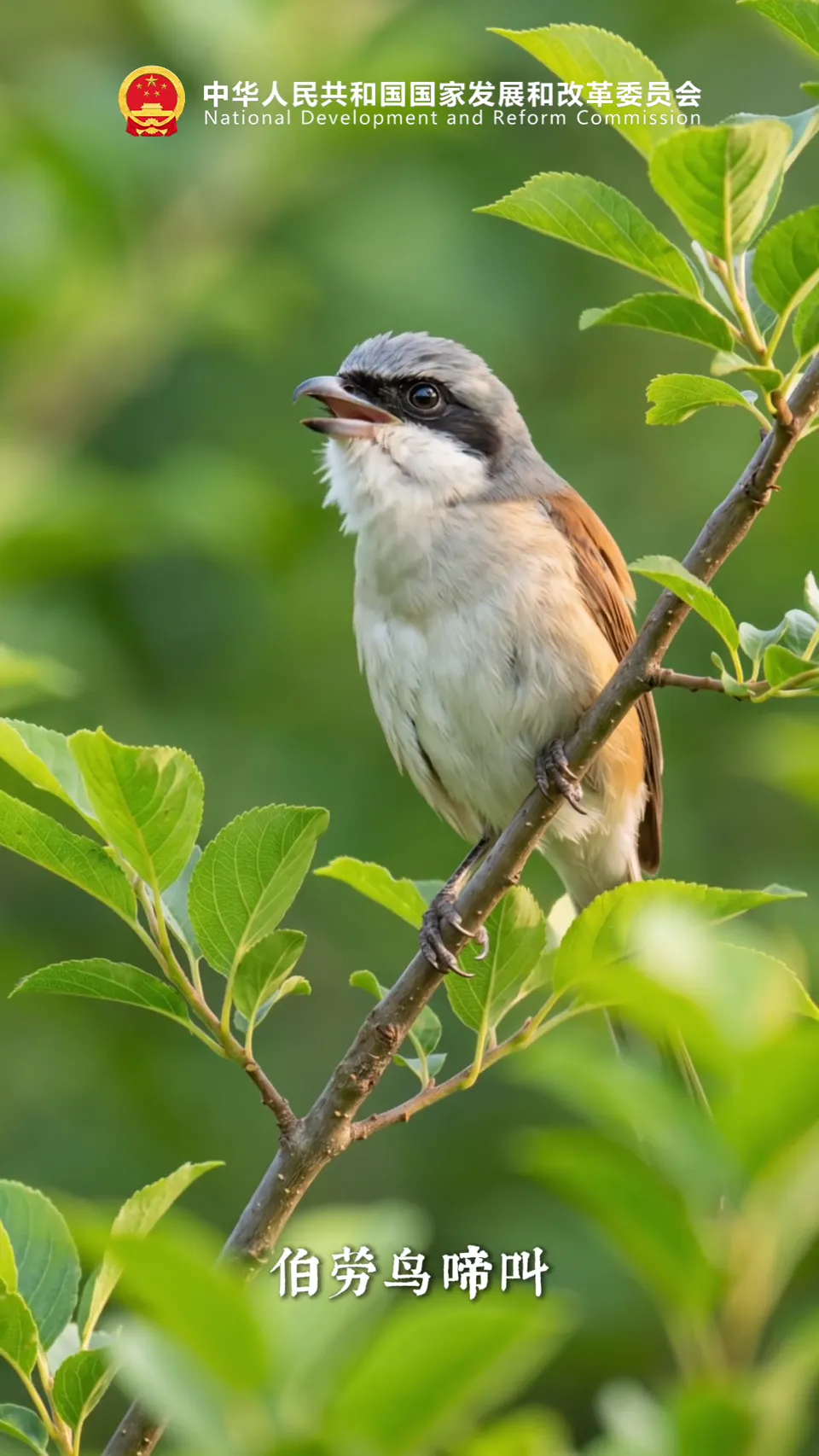
A shrike calling
A shrike perches on a fresh green branch, beak open as it calls.
Clip · 00:23–00:26
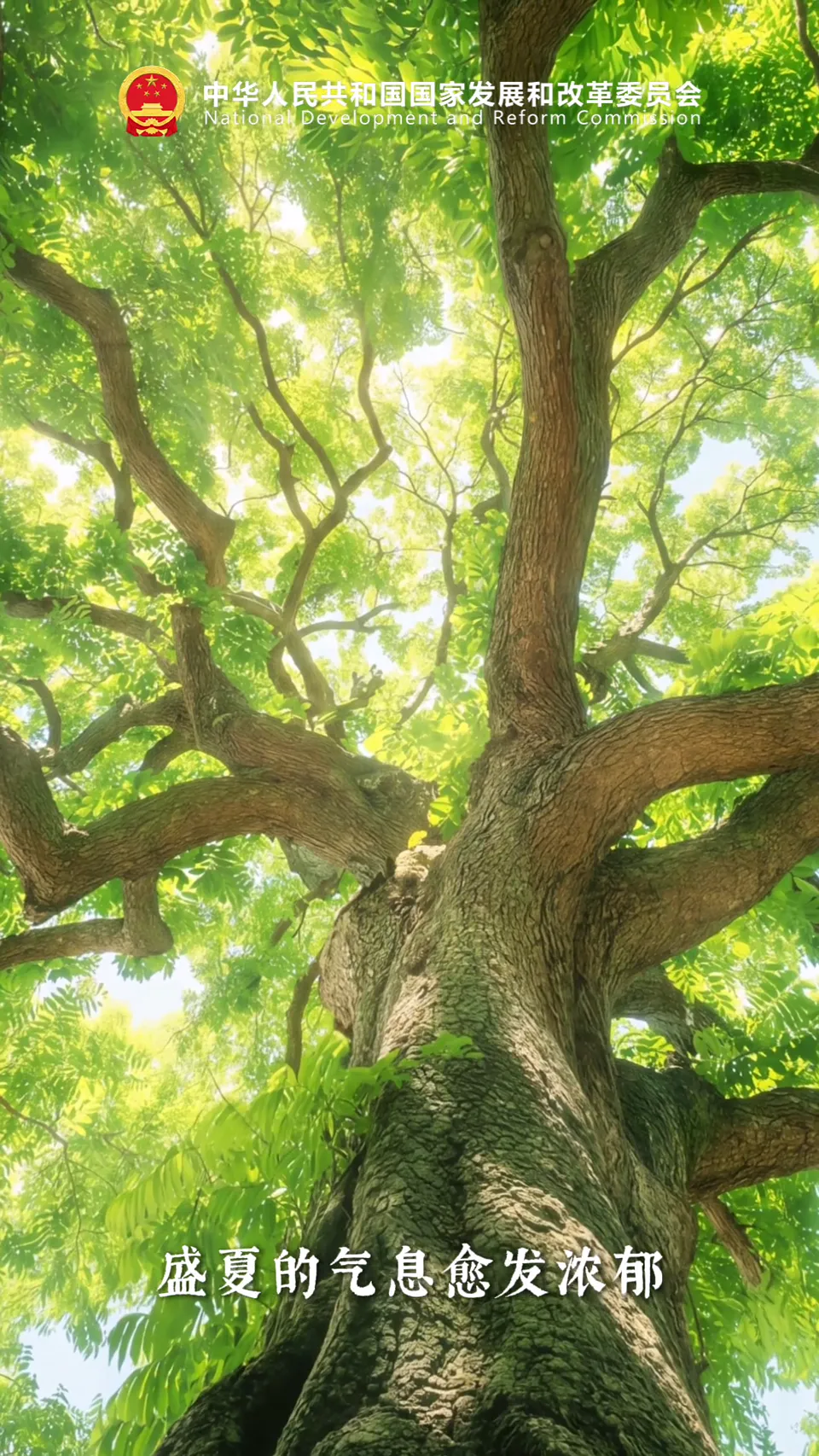
The deep shade of an ancient tree
Looking up at a great tree with branches spreading in every direction, sunlight filtering through layers of leaves, matching “the air of high summer grows ever stronger.”
Clip · 00:26–00:28
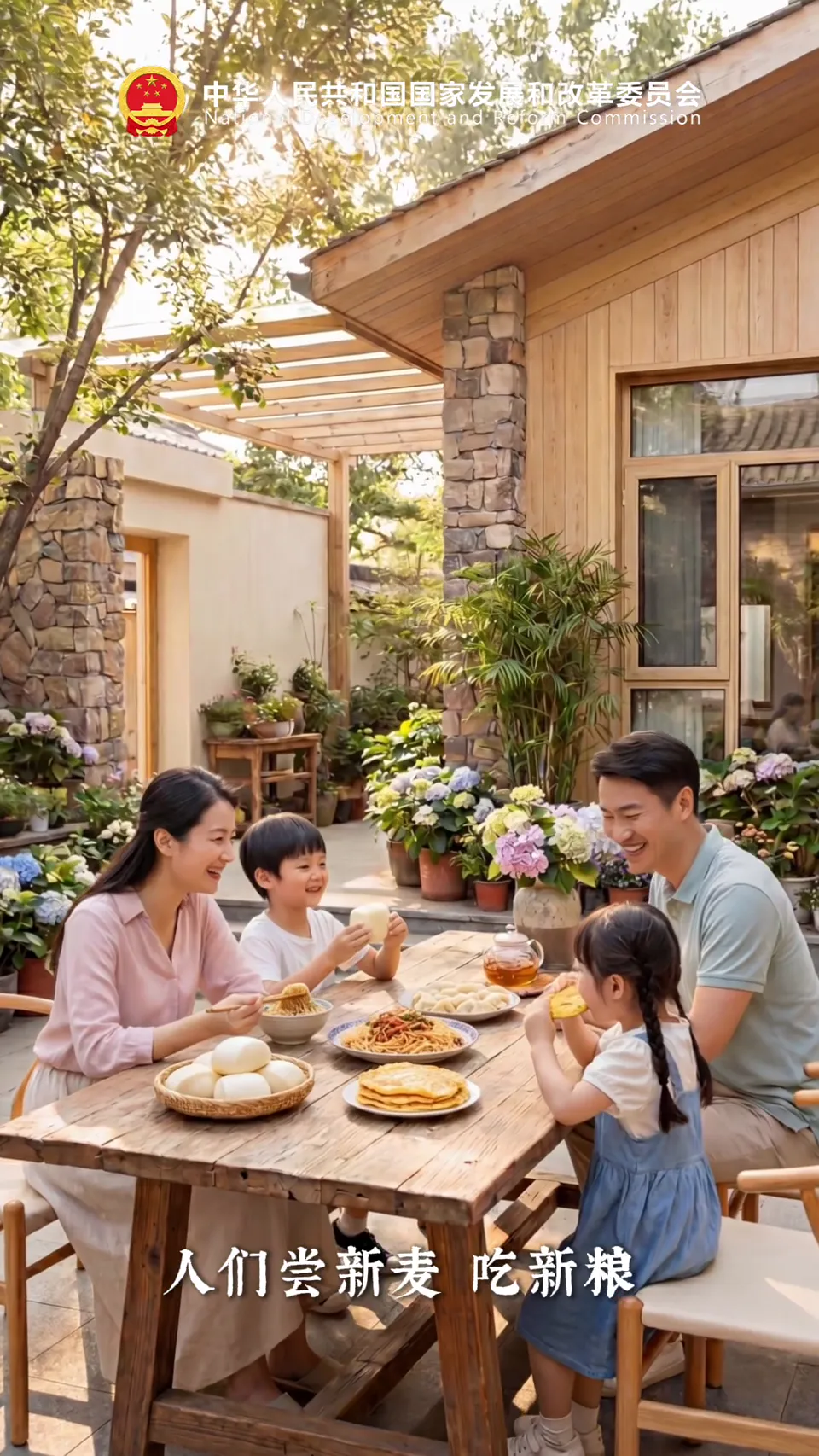
A family tastes new wheat
In a farmhouse courtyard, a family of four eats around a wooden table laid with steamed buns, noodles and egg pancakes, and a little girl takes a bite of a pancake held in both hands.
Clip · 00:28–00:31
Warming wine with green plums
A small candle burns in a clay stove beneath a glass pot of steeping green plums, with steam rising from its spout.
Film · 00:31–00:39
Ending: grain into storage, seedlings growing again, the land half gold, half green
“One harvest, one sowing, working with the season, busy yet orderly, everything in its time.” From unloading grain to raising seedlings, then pulling out to the fields on both banks of a river, the film ends on land where gold and green lie side by side.
Clip · 00:31–00:36
From unloading grain to raising seedlings
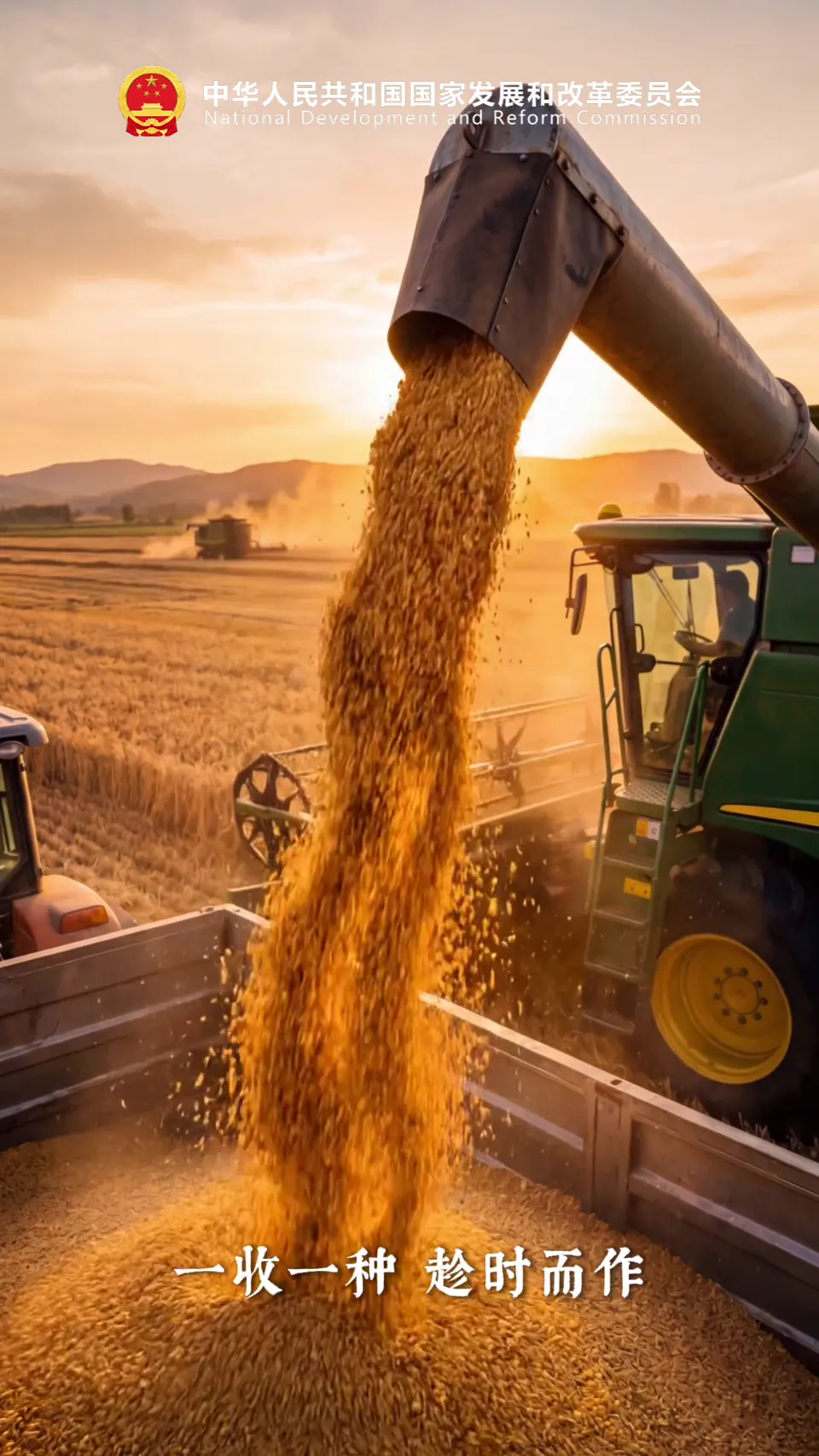
At sunset, an unloading auger pours wheat grain into a truck bed; the next shot moves into a glass greenhouse, where seedlings grow under mist on vertical racks as an agricultural technician checks a tablet.
Clip · 00:36–00:39
Gold and green on either bank
Looking down from high above on a winding river, with golden wheat fields on one side, emerald rice paddies on the other, and white-walled farmhouses scattered among the fields.
04 / Storyboards & Final Frames
From a single dewdrop to a river, fourteen shots.
In the order of the finished film: each shot describes what it shows, alongside the final still used in the film.
01
Opening
In the film · 00:00–00:06
Shot 1.1
From dewdrops on a lotus leaf to a lotus bud
One shot moves from the first frame to the last: the first frame is a lotus leaf covered in morning dew, the last is a lotus in bud with a young seedpod. In early June, lotuses in most places are not yet in full bloom, so we showed the bud.
From dewdrops on a lotus leaf to a lotus bud · Final 1From dewdrops on a lotus leaf to a lotus bud · Final 2
02
Wheat ready to harvest, rice ready to plant
In the film · 00:06–00:14
Shot 2.1
Three combine harvesters
A high drone shot looking down as three green combine harvesters advance in a staggered line across the wheat, leaving straight tracks where they have cut and raising wheat dust behind them.
Three combine harvesters · Final 1
Shot 2.2
Arranging wheat sheaves in the field
A high-angle shot: unharvested waves of wheat in the lower half, harvested ground in the upper half, with sheaves scattered across the field and a farmer bending to arrange them.
Arranging wheat sheaves in the field · Final 1
Shot 2.3
Planting rice in square paddies
Field ridges divide the paddies into neat squares; one person walks along a ridge carrying seedlings, another bends in the water to plant.
Planting rice in square paddies · Final 1
03
The busy season
In the film · 00:14–00:21
Shot 3.1
Backlit wheat ears
A low-angle shot looking up at ripe wheat ears, with sunlight shining through the awns against a blue sky.
Backlit wheat ears · Final 1
Shot 3.2
Planting rice on terraces
Mountain terraces in southern China are flooded with water that mirrors the sky; a farmer in a straw hat bends to plant rice, with rows of newly planted seedlings behind.
Planting rice on terraces · Final 1
Shot 3.3
Harvester and transplanter in one frame
In the foreground, a rice transplanter moves through the paddy; across a field ridge, a yellow combine harvester works the wheat field. One side throws up splashes of water, the other a cloud of wheat dust.
Harvester and transplanter in one frame · Final 1
04
Signs of the season and customs
In the film · 00:21–00:32
Shot 4.1
Shrike
A slightly low telephoto shot of a shrike perched on a fresh green branch, against soft-focus green leaves.
Shrike · Final 1
Shot 4.2
The deep shade of an ancient tree
An ultra-wide shot looking up at an ancient tree, its thick branches spreading in every direction, with sunlight streaming through the canopy.
The deep shade of an ancient tree · Final 1
Shot 4.3
A family tastes new wheat
In a farmhouse courtyard, a family of four sits around a wooden table laid with steamed buns, noodles and egg pancakes, everyday foods made from new wheat in northern China.
A family tastes new wheat · Final 1
Shot 4.4
Warming wine with green plums
Macro still life: a small candle in a clay stove warms a glass pot of green plums and pale golden wine, steam rising, with a few green leaves scattered on the wooden table.
Warming wine with green plums · Final 1
05
Closing
In the film · 00:32–00:40
Shot 5.1
Grain into storage
Backlit at dusk, a combine’s unloading auger pours wheat grain into a truck bed, with another harvester still working in the distance.
Grain into storage · Final 1
Shot 5.2
Greenhouse seedlings
In a glass greenhouse, red-framed vertical racks of seedlings rotate as sprinklers spray a fine mist, and a young agricultural technician checks a tablet.
Greenhouse seedlings · Final 1
Shot 5.3
Gold and green on either bank
A high aerial view before sunset: an S-shaped river winds across the plain, with golden wheat on one side and freshly planted green paddies on the other, and farmhouses with white walls and grey tiles scattered among the fields.
Gold and green on either bank · Final 1
05 / Script Excerpts
A line from the film's script.
Copy
One harvest, one sowing, working with the season, busy yet orderly, everything in its time.Script
06 / Results
Farming and daily life in the Grain in Ear episode
Delivered a roughly 42-second vertical Grain in Ear short (1080 × 1920) with a matching vertical poster and banner. The film covers the wheat harvest, rice planting, tasting new wheat and warming wine with green plums, then uses grain going into storage and greenhouse seedlings to link this season’s harvest with the next season’s planting.
Case Study
Liandan AI Studio × NDRC | Grain in Ear: On One Side of a Ridge They Harvest Wheat, on the Other They Plant Rice
In Chinese, the “awn” in Grain in Ear refers to the wheat waiting to be harvested; the “sowing” refers to the rice waiting to be planted.
This is one episode of the 24 Solar Terms series we produced: about 42 seconds, vertical, with matching posters and banners.
Within a single solar term there is both harvesting and sowing. This episode had to show at a glance that the two happen at the same time, and also capture how things look in early June.
Client
National Development and Reform Commission
Project Type
24 Solar Terms Series AI Short · Grain in Ear
Timeline
June 2026 (Grain in Ear: June 5)
Runtime & Specs
About 42 seconds, 9:16 vertical, 1080 × 1920
Deliverables
Finished film, copy, vertical poster, banner
Produced by
Shenzhen Alchemy Technology Co., Ltd. (Liandan AI Studio)
01
“Harvesting, and sowing too,” brought together in a single shot
If harvesting and sowing were each shot as a segment and cut together, they would look like two separate things. Our approach was to show them apart first, then bring them together.
When the narration explains the literal meaning, one line gets a wheat field: three combine harvesters advancing in a staggered line and a farmer arranging sheaves on harvested ground; the next line gets a paddy field: ridges dividing the water into squares, one person walking with seedlings and another bending to plant.
When we reached the line “there is harvesting, and sowing too,” we put both kinds of machine in the same frame: in the foreground a rice transplanter splashes muddy water in the paddy, and across a single ridge a combine harvester raises wheat dust in the wheat field. Green and gold, splashes and dust, all on the same piece of land.
Final still of the combine harvester and rice transplanter in the same frame
Clip · 00:19–00:21
Two sides of one field ridge
The transplanter in front, the harvester behind: two kinds of farm work happening at once.
Before this shot, we also tried another approach: two farm tricycles passing each other on a country lane, one loaded with wheat grain, the other with seedling trays. The finished film went with the version that puts both machines in one frame.
02
The lotus pond in early June: not yet in bloom, so we showed the bud
The few seconds when the date is announced at the opening had to make people feel that summer has begun. We chose a lotus pond: a dewdrop slides off a lotus leaf, and the camera pulls back to reveal the stems.
In the earliest version, this shot ended on a white waterbird swimming across the pond. But waterbirds can be seen in any season, so they could not say “summer has begun.” We changed the last frame to a lotus, first checking the flowering season: in early June, lotuses in most places have not yet bloomed widely, and some early-flowering varieties in the south are only just budding and starting to open. So the finished film shows a lotus in bud with a young seedpod beside it, rather than a pond in full bloom.
Early version: the last frame lands on a white waterbird in the lotus pondFinal: a lotus in bud and a young seedpod
We also sped up the dewdrop’s fall a little, so there is movement on screen within the first two seconds.
Clip · 00:00–00:06
From dewdrop to bud
A dewdrop slides off and splashes, and the camera pulls back to rest on a lotus bud.
This bud was later used on the matching poster and banner as well, so the film and the poster share the same image.
Vertical poster: a lotus bud with wheat earsBanner: dated 2026.06.05
03
“Tasting new wheat”: putting food northerners actually eat on the table
For the line “people taste new wheat and eat new grain,” the first version showed a family around a table eating whole-wheat bread and pastries. Bread and pastries don’t read as new wheat, and they aren’t a traditional way of eating it either.
We checked our sources: around Grain in Ear, people in northern China taste the new wheat as dumplings, noodles, steamed buns and egg pancakes. So we kept the courtyard, the wooden table and the family of four, and replaced the bread on the table with a steamer of buns, a plate of noodles and a dish of egg pancakes; the little girl now holds an egg pancake too.
Before: whole-wheat bread and pastries on the tableFinal: steamed buns, noodles and egg pancakes
Clip · 00:26–00:28
A family tastes new wheat
A family of four eats a meal made with new wheat in their courtyard, and the food on the table is recognizable at a glance.
04
The people in the nursery should look like they work there every day
We turned the closing lines, “one harvest, one planting, working with the season, busy yet orderly,” into one continuous thread: an unloading auger pours wheat into a truck bed, marking the end of this season’s harvest; the next shot moves into a greenhouse, where seedlings grow under mist on vertical racks, showing the next season has already begun.
In the nursery shot, the agricultural technician had to look like someone who works in the greenhouse every day. We left the setting alone and only changed the person: the clothes became ordinary work wear, the skin got realistic texture and blemishes, instead of a smooth, filtered “influencer face.”
BeforeFinal: same setting, new person and clothing
Clip · 00:31–00:36
From storage to seedlings
Grain goes into storage and seedlings grow again: harvesting and sowing join into one cycle.
The final shot looks down from high above on a winding river, golden wheat fields on one side and emerald rice paddies on the other. Harvesting and sowing, shown separately at the start, lie side by side again on the land at the end.
05
What this project achieved
This episode has just one main thread: harvesting and sowing happen at the same time. From the literal explanation and the two machines in one frame to the riverbanks at the end, every part tells this one story.
We based the seasonal and folk details on how things really are: lotuses in early June are still in bud, and northerners taste new wheat as steamed buns, noodles and egg pancakes. The film keeps the series’ bright palette and sweeping aerial shots, so it sits naturally within the full set of solar-term films.
For shorts that explain knowledge and are published on government accounts, every detail on screen has to stand up to an expert’s eye, and this episode was made to that standard.
FAQ
FAQ
How do you decide what people eat and use in the custom scenes of a solar-term film?
We go by the sources. For “tasting new wheat” in the Grain in Ear episode, we found that people in northern China often make the new wheat into dumplings, noodles, steamed buns and egg pancakes, so the table in the finished film has steamed buns, noodles and egg pancakes, replacing the whole-wheat bread of the first version.
How do you make sure AI-generated images match the season?
We check the real conditions for every seasonal element first. Take the lotus at the opening: in early June, lotuses in most places have not yet bloomed widely, and early varieties in the south are only just budding, so the finished film shows a lotus in bud with a young seedpod rather than a pond in full bloom.
How long does one solar-term episode take from script to delivery?
The Grain in Ear episode took about 11 days from creating the script document to delivery: a team split the work to generate images and animate shot by shot, the first edit came out on May 29, a few shots (the opening, the new-wheat meal and the nursery) were then refined, and the film, poster and banner were delivered on June 4.
What’s in the delivery package?
One finished 9:16 vertical film at 1080 × 1920, with a matching vertical poster and landscape banner. We prepared several cover options, including wheat fields and lotus flowers, and went with the lotus bud; the poster and banner use the same bud from the film’s opening.
Approach
Building the short on the contrast between harvest and sowing, and on shifts in distance
The script spells out the crops, fields, people’s actions and machinery shot by shot, and adds reference images of common wheat foods for “tasting the new.” The copy talks about harvesting and sowing together, while the images explain them separately through wheat ears, people bending to plant and the two machines in one frame, so no piece of farming information is repeated.
The finished film is built on the contrast between harvesting and sowing, switching between macro shots, wide views of the fields and shots of people at work; the shrike and the woods establish the summer signs of the season, the new-wheat meal and the warming wine slow the pace, and grain storage and seedling raising return to production. In the final section, fields of gold and green and the river gather all the earlier close-up actions into the whole landscape, ending on the series caption and the institution’s end card.