Midsummer leaves, farmland and families cooling off convey a season with fresh breezes even in the heat.
Project Type
The 24 Solar Terms
Client
National Development and Reform Commission (NDRC)
Year
2026
Our role
Voice-over script, solar-term AI visuals & editing, posters
Original format
2160 × 3840 · 00:47
Film00:47 · Film
01 / Background
How do you give a season of heat waves a real sense of life?
The Major Heat episode is about the natural world of high summer, water management in the fields and everyday ways of keeping cool. It had to show how hot the weather gets and also how people cope, so “heat” would not remain just an adjective in the script.
Mountain pastures, banana leaves, lotus flowers and rice ears create vivid midsummer scenery, farmers clearing field channels speak to production, and watermelon and fans in a courtyard bring in family life. The film shows midsummer in bright colors, while leaving moments of people relaxing and enjoying summer in the heat.
02 / Creative Highlights
From the plants of high summer to how people get through the summer.
01
Proving it’s Major Heat through details
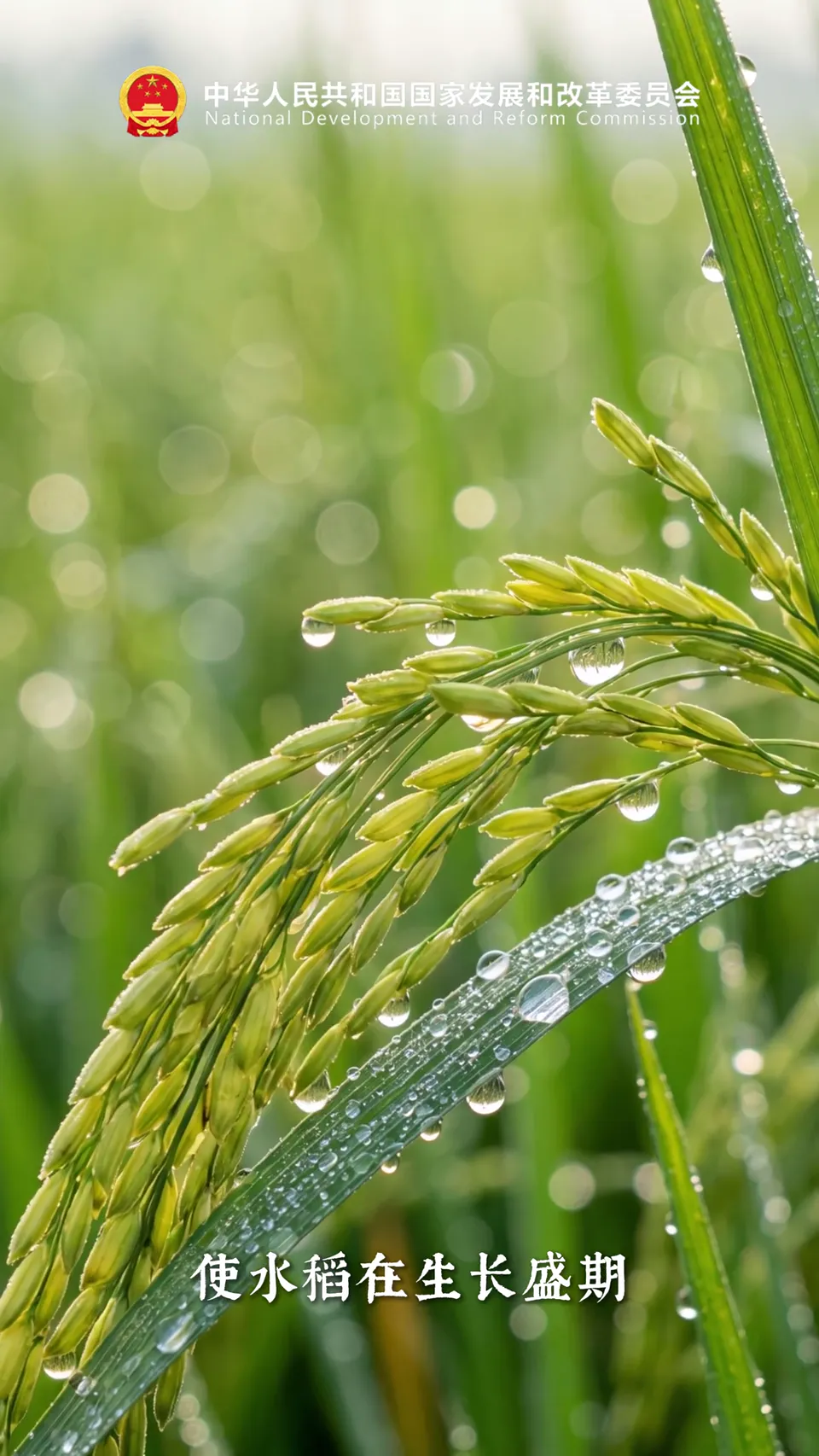
Banana leaves shot from below, lotus flowers, water droplets on rice ears and loofah vines follow one after another. Viewers can feel Major Heat in the plants, the light and the moisture; the narration talks about the season, and there is something concrete on screen to match it.
02
Two water tasks, explained by two actions
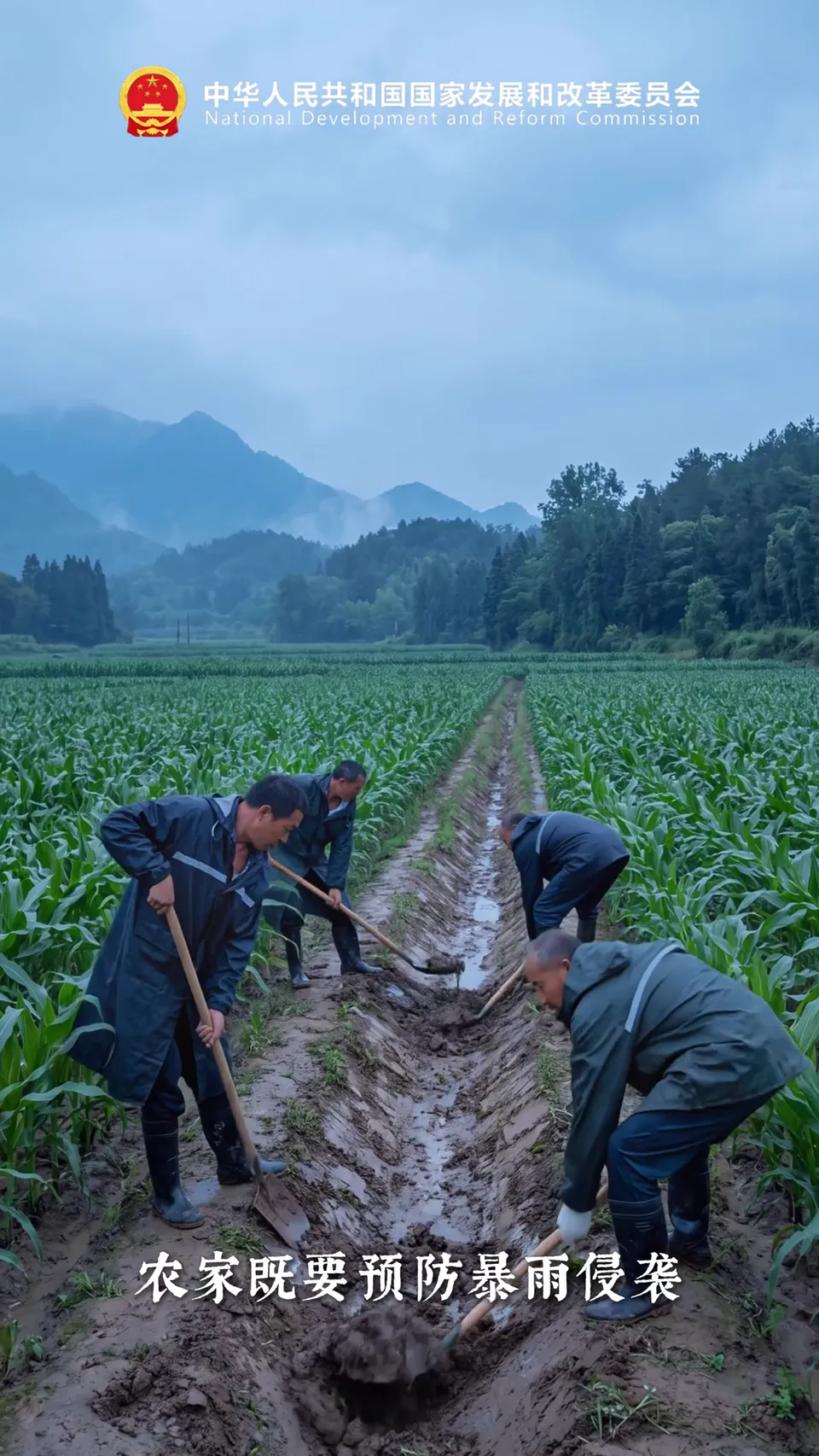
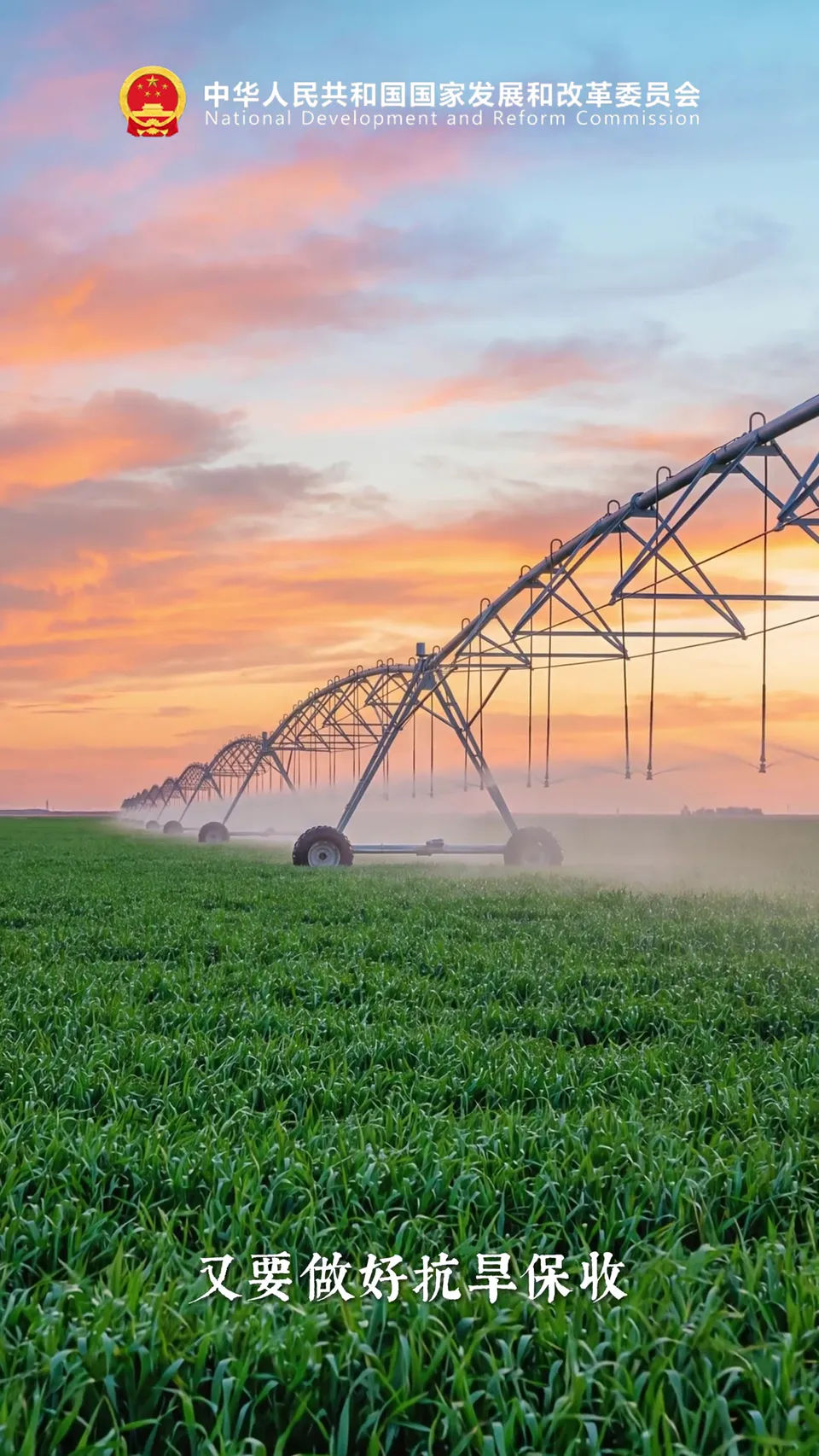
Farmers clearing field channels correspond to “guarding against rainstorms,” and large sprinkler rigs to “fighting drought to protect the harvest,” before droplets on the rice ears bring the film back to the crops themselves. Manual labor, mechanical spray and close-ups of plants each tell one thing, so the farming knowledge is easy to follow through the actions.
03
Connecting with viewers’ own experience through scenes of keeping cool
Eating watermelon, fanning and playing at the beach follow one another, and a family’s actions give the hot weather a flavor of everyday life. Moving between nature and daily life makes the solar-term explainer feel close to home.
04
Ending in a fresh breeze with a light, delicate detail
An overhead shot of the beach opens up the midsummer scenery, and a clear wind chime with its paper strip draws the eye back up close. Wind, leaves and dappled light keep moving gently, so the ending turns from heat wave to coolness and echoes the fanning earlier on.
03 / Scene Breakdown
From a pasture, banana leaves and a stream to field channels, a courtyard and a single wind chime.
Film · 00:00–00:17
Good morning: first, the plants of high summer
The first four shots announce the date and the solar term and establish “the hottest time of the year”: a pasture, banana leaves, lotus flowers and a woodland stream, each shot one sign of summer.
Clip · 00:00–00:05
A pasture by the river
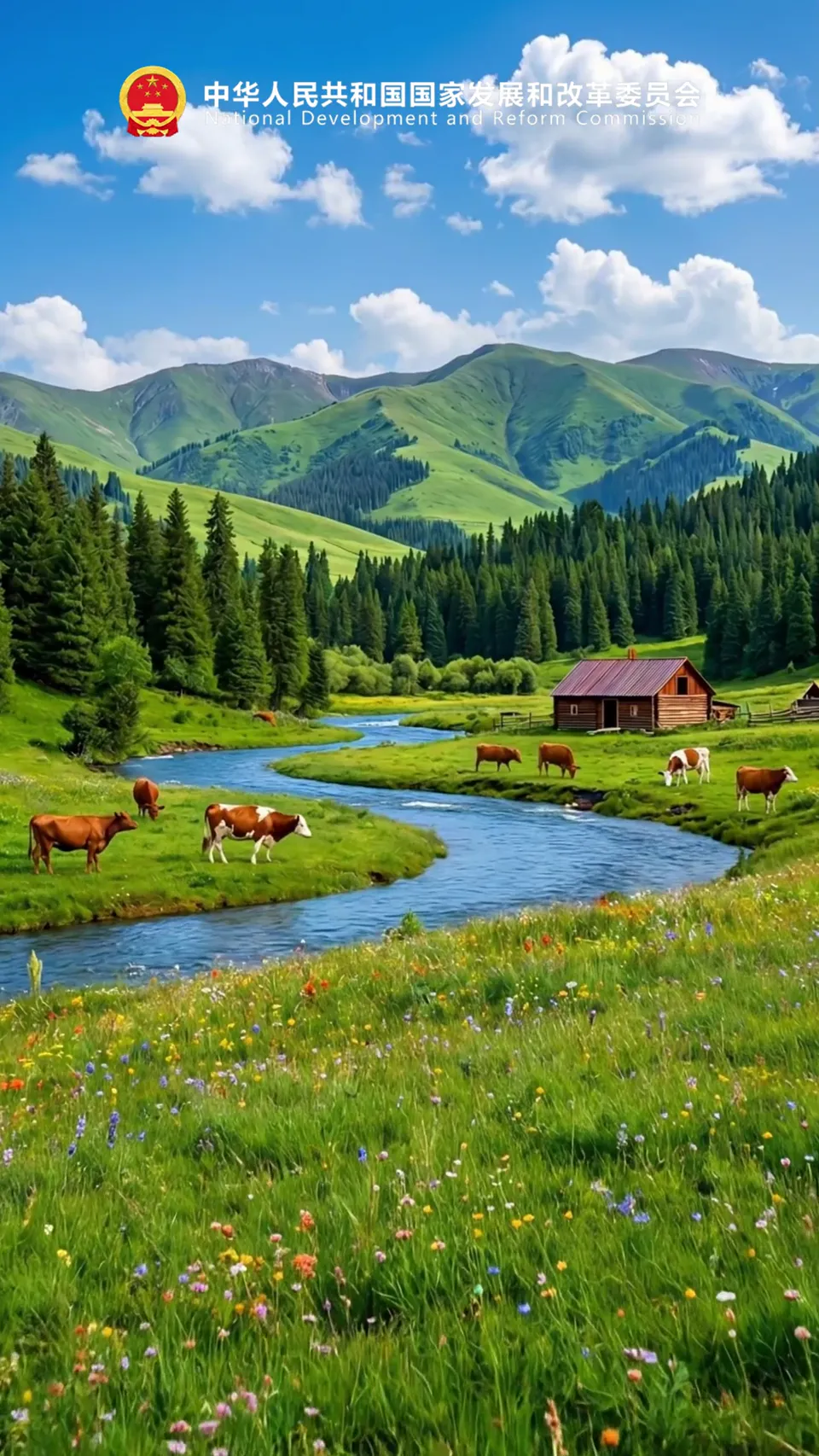
A small blue river winds across a meadow, a few cows grazing on its bank, with red-roofed cabins, pine forest and green mountains in the distance. The camera slowly rises as “today is July 23, 2026” appears over the grass.
Clip · 00:06–00:10
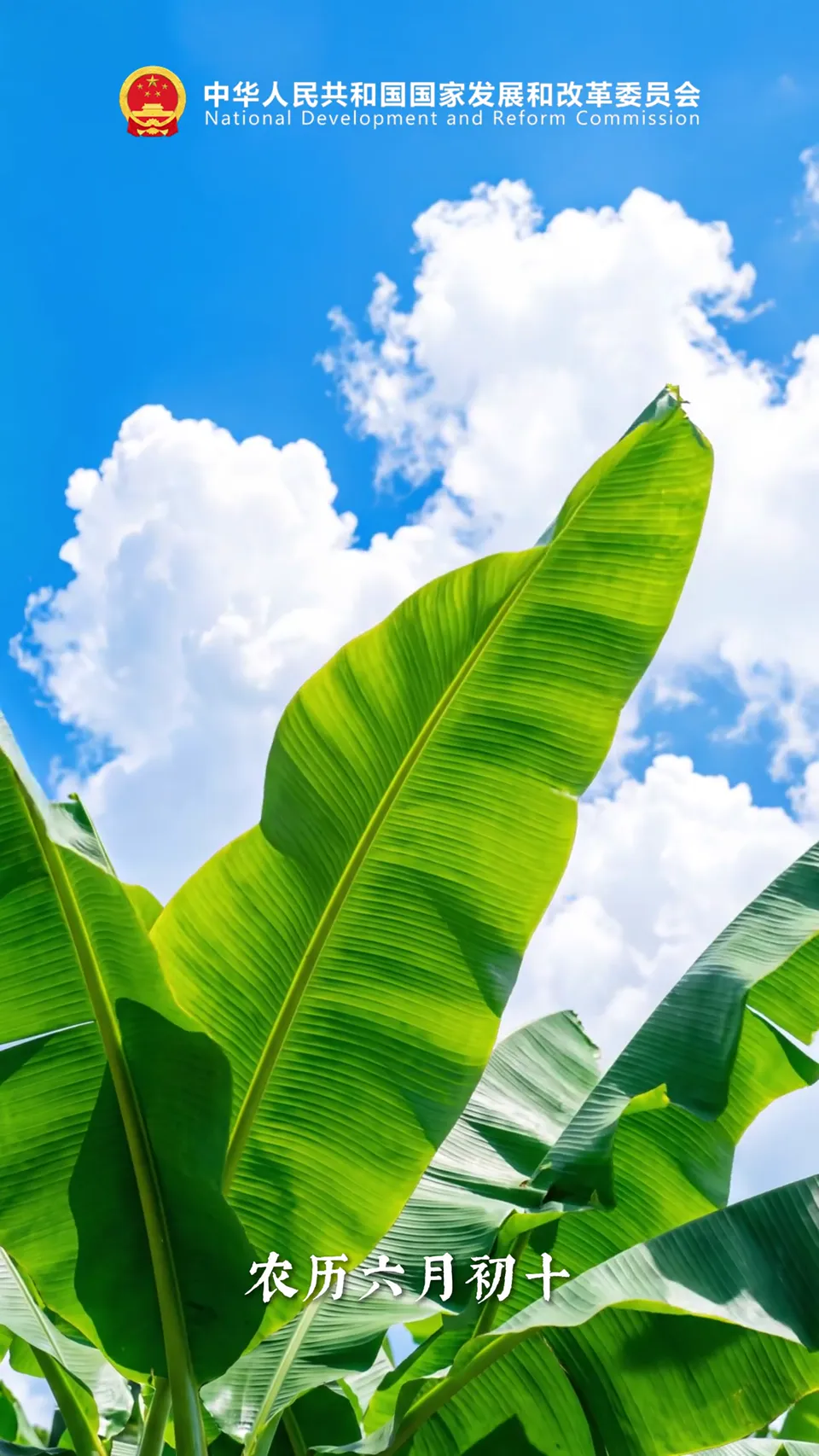
Banana leaves from below
Looking up from below, broad banana leaves reach into the blue sky, with big white clouds piled up behind. “The 10th day of the sixth lunar month, Major Heat” appears over the leaves.
Clip · 00:10–00:13
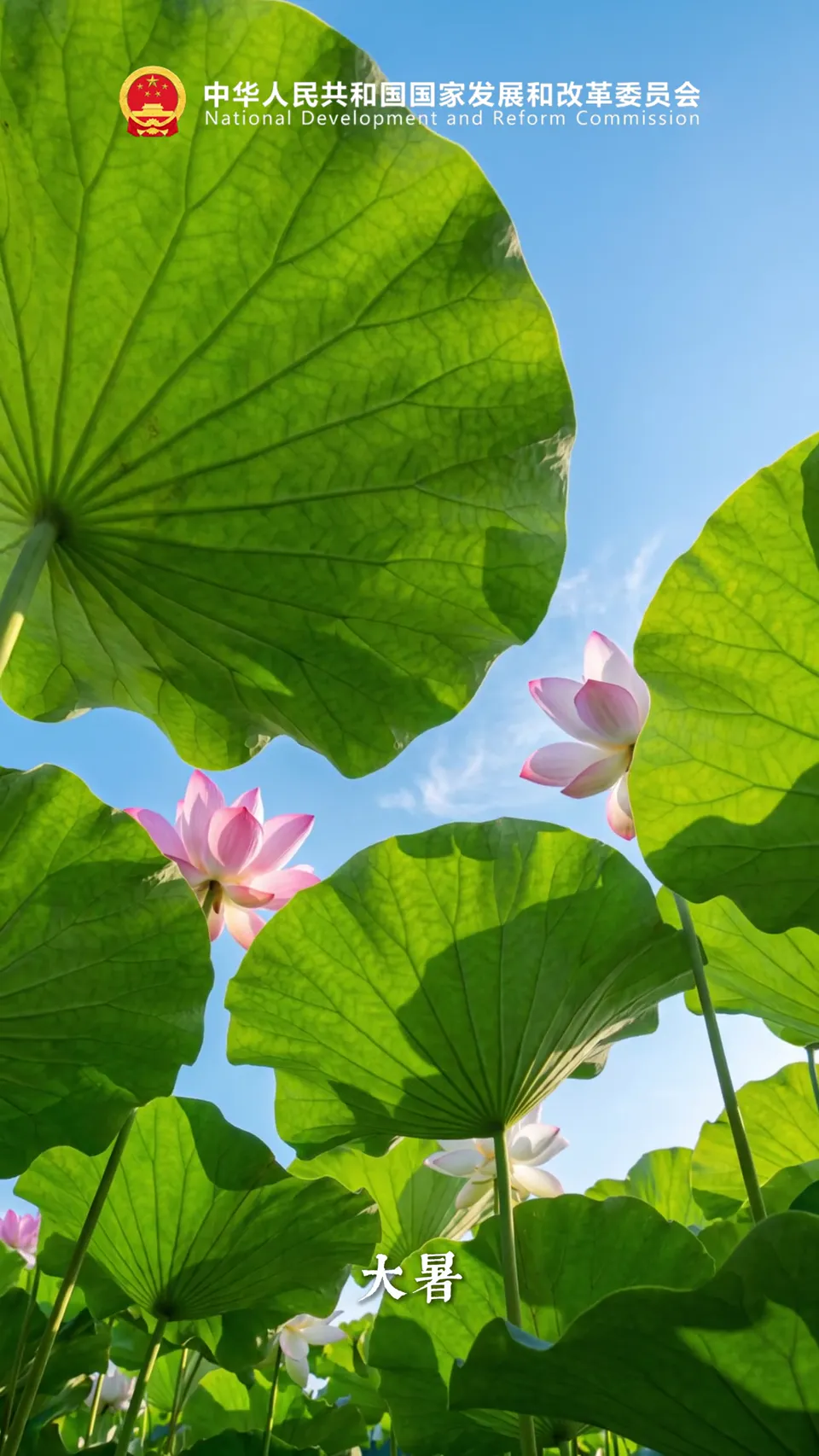
Lotus leaves and flowers
From a low angle just above the lotus pond, sunlight shines through the lotus leaves from behind as a few pink lotus flowers sway gently among them.
Clip · 00:13–00:17
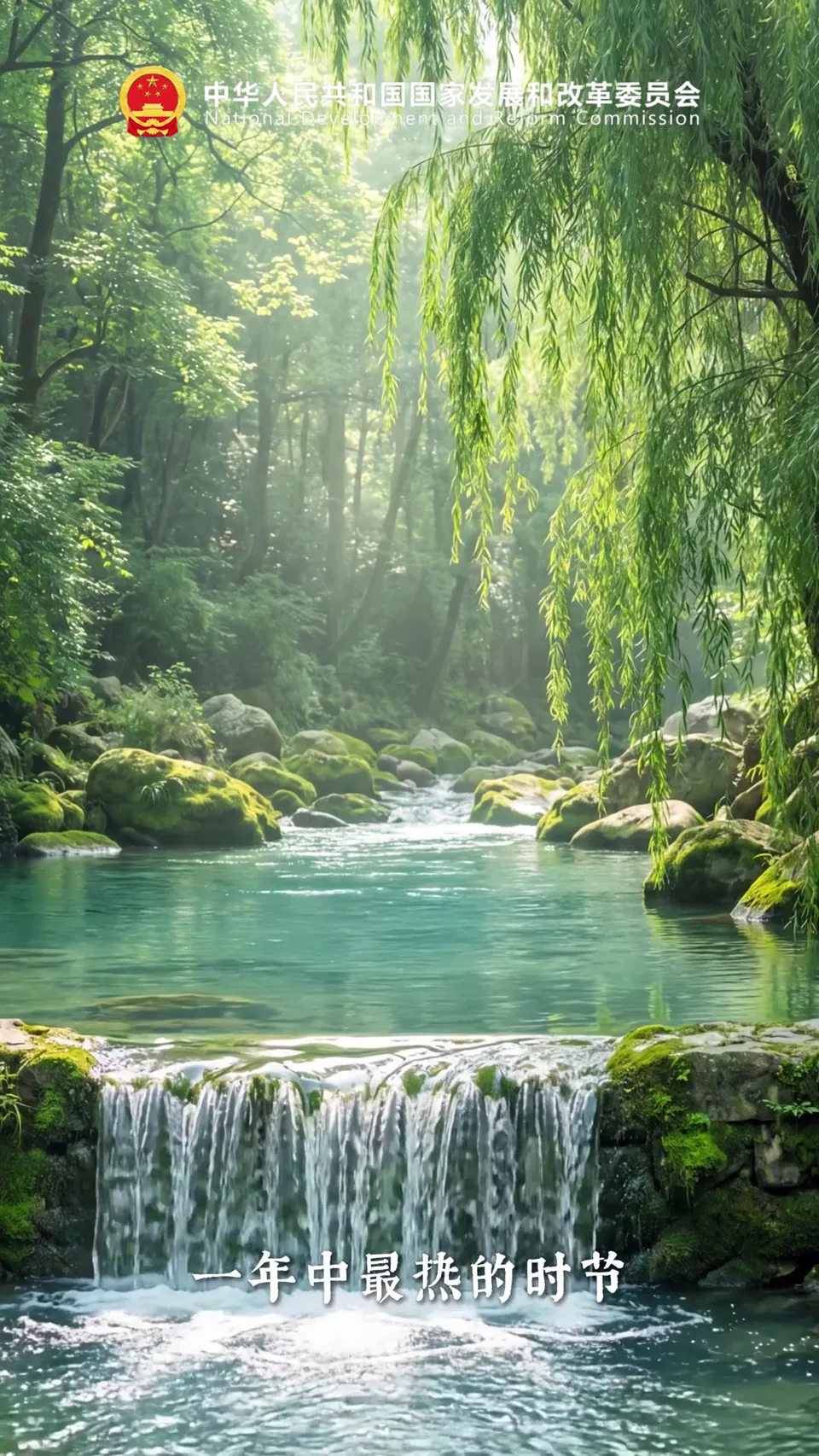
A small waterfall in the woods
A stream spills over a stone weir in a row of small falls, mossy rocks and drooping willow branches along the banks, with light filtering in from deep in the woods.
Film · 00:17–00:27
Water in the fields: draining it out and bringing it in
“Guarding against rainstorms while fighting drought to protect the harvest”: one line of narration covers two opposite tasks, so the image splits into two shots before landing on the rice ears.
Clip · 00:17–00:19
Clearing channels before the rain
On an overcast day, clouds weigh on the distant mountains as four farmers in raincoats stand in a drainage ditch running through a cornfield, shoveling silt onto the bank.
Clip · 00:19–00:23
Sprinklers at dusk
A long metal sprinkler rig stretches across lush green fields, spraying a fine mist against a pink-and-orange sunset.
Clip · 00:23–00:27
Dew on the rice ears
Pale yellow rice ears and leaves are covered in water droplets against a soft green blur, matching “the rice gets plenty of water in its peak growing season.”
Film · 00:27–00:37
In the courtyard: loofahs, gourds and a fan
The narration turns to a village courtyard, and three shots follow the order of the script: loofahs covering a wall, gourds hanging from the vine, and a family fanning themselves to keep cool.
Clip · 00:27–00:31
Loofahs covering the wall
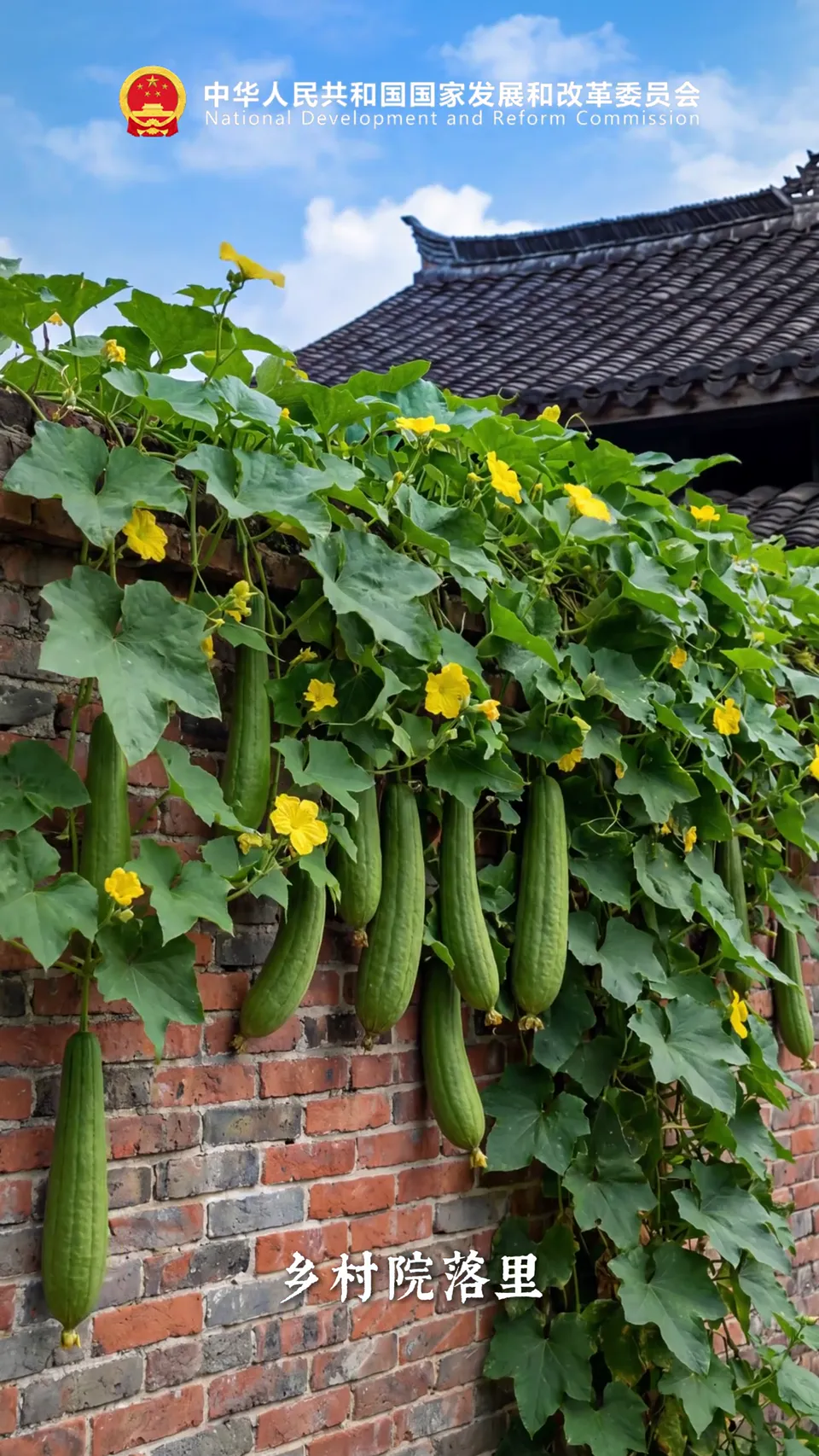
Under grey-tiled eaves, a red brick wall is covered in loofah vines, yellow flowers blooming and long slender loofahs hanging down. The camera rises slightly.
Clip · 00:31–00:33
Gourds on the vine
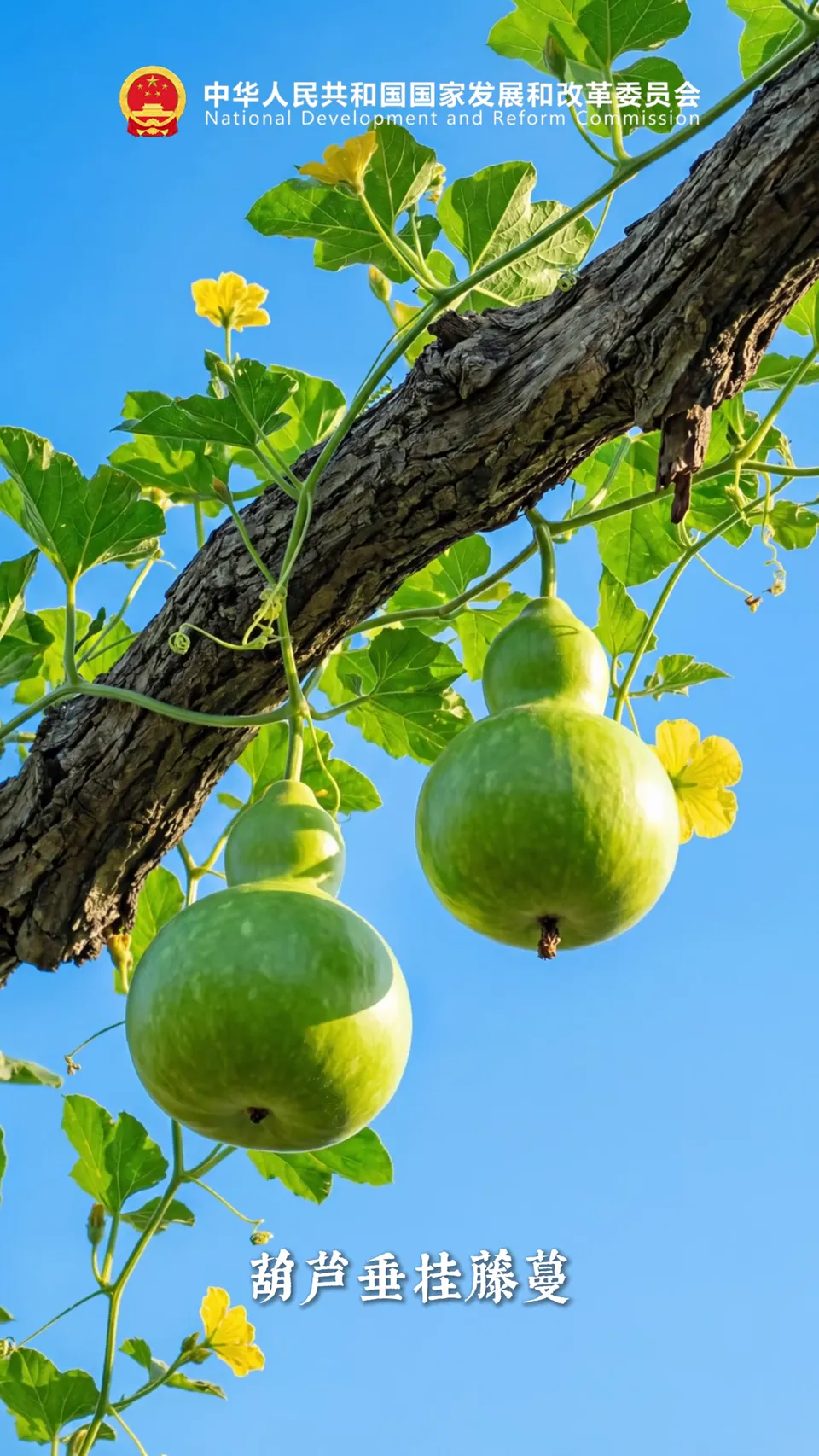
Two small green gourds hang beneath a thick branch against a clean blue sky, with a few small yellow flowers still blooming on the vine.
Clip · 00:33–00:37
Eating watermelon, waving fans
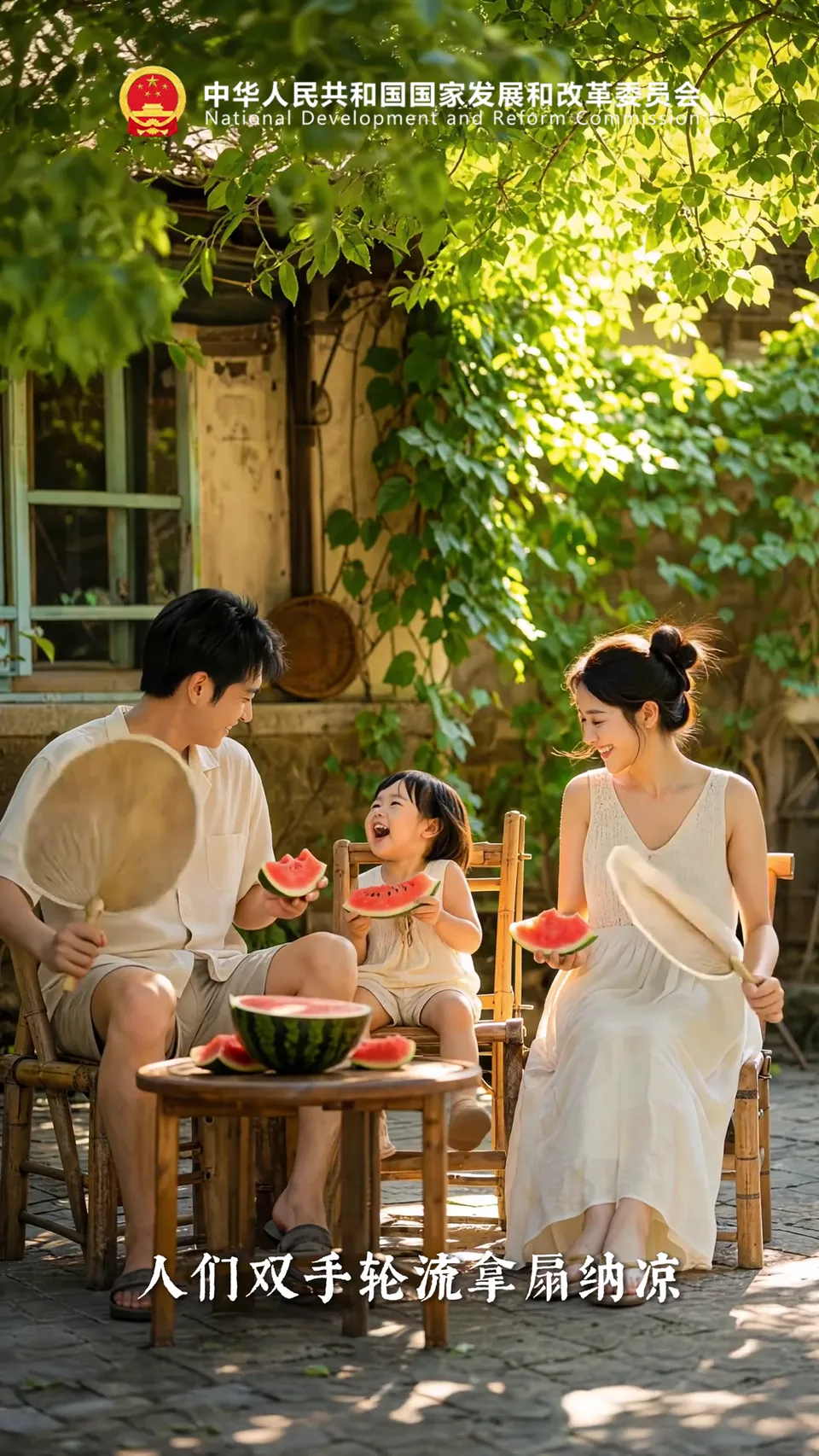
In a shaded courtyard, a father, mother and little daughter sit on bamboo chairs eating watermelon; each adult holds a fan, and the child laughs happily.
Film · 00:37–00:47
A breeze in the heat wave
For the last line, “Summer heat at its height; amid the fiercest heat, a cool breeze now and then brings relief to the world,” the first half gets a sun-drenched beach and the second half a wind chime stirring in the breeze, followed by the NDRC end card.
Clip · 00:37–00:40
The beach from above
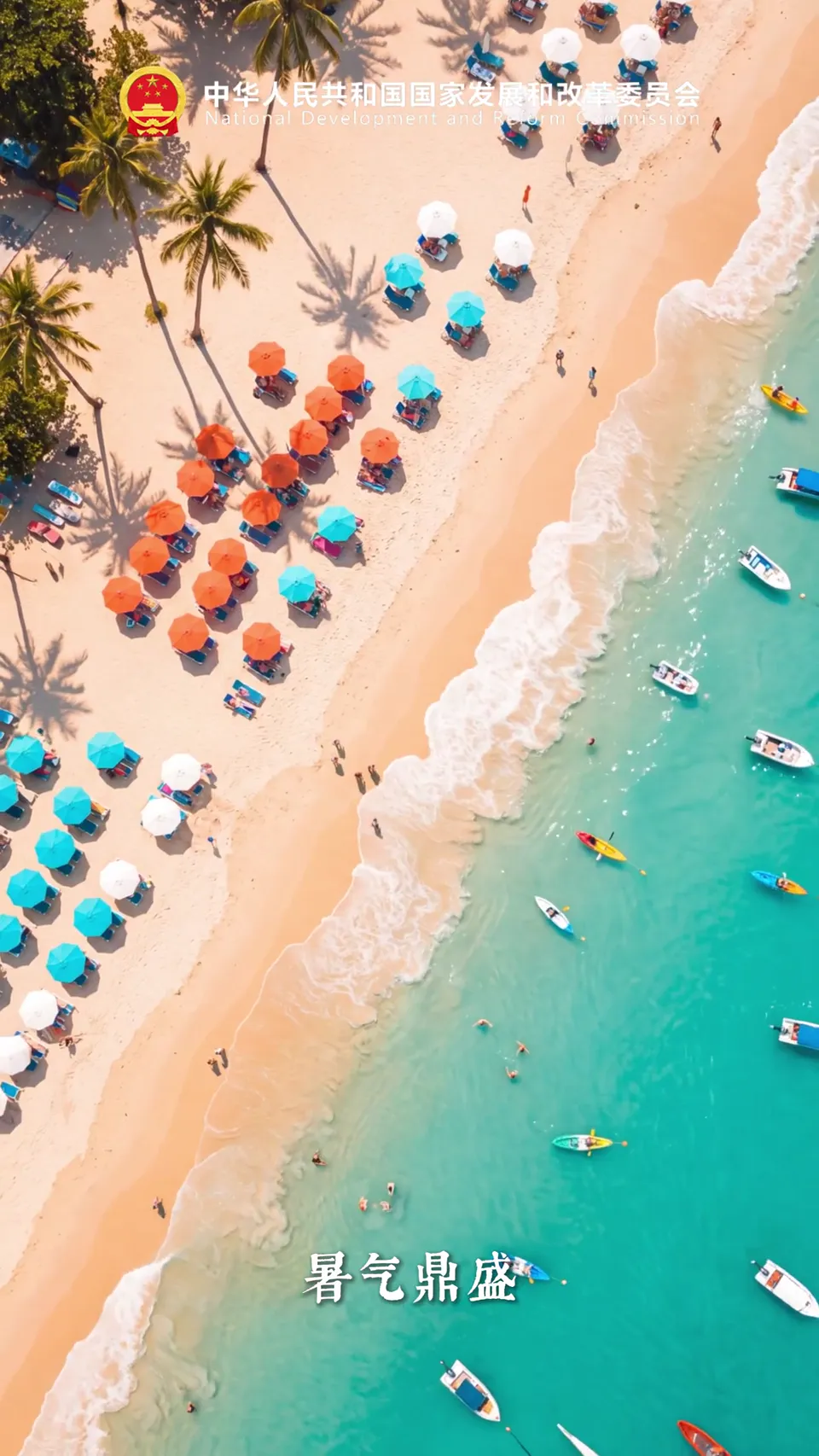
Looking down from high above: on one side, a beach dotted with colorful umbrellas; on the other, deep blue sea, with small boats and white surf lined up along the shore.
Clip · 00:40–00:44
Wind chimes and paper strips
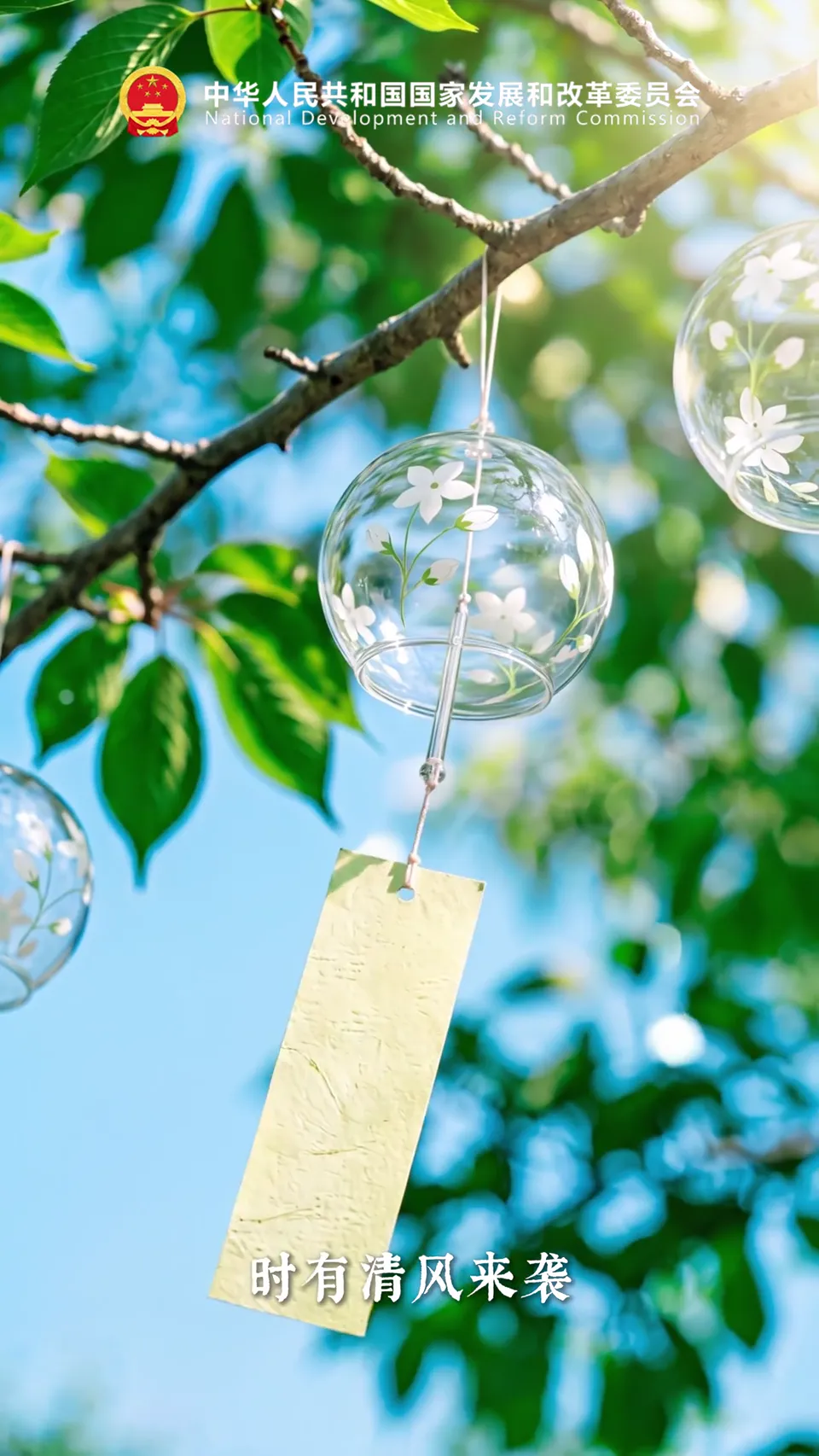
A few clear glass wind chimes painted with white jasmine flowers hang from a branch, their paper strips lifting in the wind as the camera slowly pulls back.
04 / Storyboards & Final Frames
Twelve shots, each in its final frame.
The Major Heat episode breaks the narration into twelve shots. Listed below in the order of the finished film: each shot describes what it shows, alongside the final image used in the film.
01
The plants of high summer
In the film · 00:00–00:17
Shot 1.1
Pasture by the river
A meadow, a small blue river, grazing cows and red-roofed cabins, with only a few wildflowers dotting the foreground and the grass mostly fresh green.
Pasture by the river · Final 1
Shot 1.2
Banana leaves from below
Looking up from below, broad banana leaves reach into the blue sky and white clouds: unmistakably a southern midsummer.
Banana leaves from below · Final 1
Shot 1.3
Lotus pond
A low-angle shot looking up as sunlight passes through the lotus leaves, with pink lotus flowers blooming between them.
Lotus pond · Final 1
Shot 1.4
Woodland stream
The stream spills over a stone weir in small falls, willow branches hang down, and light filters into the woods.
Woodland stream · Final 1
02
Managing water in the fields
In the film · 00:17–00:27
Shot 2.1
Clearing channels before the rain
Matching “guarding against rainstorms”: four farmers in raincoats stand in a drainage ditch in the middle of a cornfield shoveling silt; the rain hasn’t come yet, but the ditch is already cleared.
Clearing channels before the rain · Final 1
Shot 2.2
Sprinkler irrigation
Matching “fighting drought to protect the harvest”: in a field at dusk, a large sprinkler rig sprays mist, with a sunset on the horizon.
Sprinkler irrigation · Final 1
Shot 2.3
Dew on the rice ears
Rice ears and leaves covered in water droplets, matching “gets plenty of water.”
Dew on the rice ears · Final 1
03
Village courtyard
In the film · 00:27–00:37
Shot 3.1
Loofah-covered wall
A red brick wall covered in loofah vines, yellow flowers and green loofahs hanging down together.
Loofah-covered wall · Final 1
Shot 3.2
Gourds
Two small waisted gourds hang beneath a branch against a blue sky.
Gourds · Final 1
Shot 3.3
Fanning to keep cool
A family of three eats watermelon and waves fans in the shade, with an old window frame and bamboo trays behind them, keeping the background clean.
Fanning to keep cool · Final 1
04
Heat wave and cool breeze
In the film · 00:37–00:44
Shot 4.1
The beach from above
A high overhead shot of the beach, umbrellas and deep blue sea.
The beach from above · Final 1
Shot 4.2
Wind chime
A glass wind chime on a branch painted with summer-blooming jasmine, its paper strip lifted by the wind as the camera slowly pulls back.
Wind chime · Final 1
05 / Script Excerpts
A line from the film's script.
Copy
Summer heat at its height; amid the fiercest heat, a cool breeze now and then brings relief to the world.Script
06 / Results
A short with the scale of nature and the warmth of family.
Completed a roughly 47-second vertical Major Heat short with matching posters and banners. The film links midsummer scenery, water in the fields and a family keeping cool into one piece, ending by moving from the beach back to the wind chime; the posters and banners use the pasture key image, consistent in style with the other episodes in the series.
Case Study
Liandan AI Studio × NDRC | Major Heat: The Hottest Day of the Year, Ending on a Breeze
Major Heat is the last solar term of summer and the hottest time of the year.
Yet the narration of this episode ends on the line “a cool breeze now and then brings relief to the world.”
We produced the Major Heat episode for the 24 Solar Terms series: about 47 seconds, 12 shots, 4K vertical, moving from a riverside pasture all the way to watermelon in a courtyard and a single wind chime.
Client
National Development and Reform Commission (NDRC)
Project Type
24 Solar Terms Explainer Series · Major Heat
Timeline
Produced in July 2026, delivered July 22, ahead of Major Heat on July 23
Runtime & Specs
About 47 seconds · Vertical 2160×3840 · 12 shots
Deliverables
Major Heat short, cover poster, landscape graphic, narration script
Distribution
The series is published on WeChat Channels, Douyin, Kuaishou, Bilibili and other platforms
Produced by
Shenzhen Alchemy Technology Co., Ltd. (Liandan AI Studio)
01
For “the hottest,” we showed plants instead of the blazing sun
The first four shots had to announce the date and the solar term, and also convey “the hottest time of the year.” Instead of showing the blazing sun and heat waves, we picked four things that say midsummer at a glance: cows grazing by a river, banana leaves reaching into the blue sky, lotuses in bloom and a row of small waterfalls in the woods.
Once this group of shots was done, we compared it with the episodes before and after. The second shot was originally kayaking on a lake, with visual elements close to those in neighboring episodes. The solar-term films air one after another and viewers watch them in sequence, so similar images would feel repetitive; we replaced this shot with banana leaves seen from below.
First version: kayaking on a lakeFinal: banana leaves seen from below, big leaves reaching into the blue sky
The pasture in the first shot was also adjusted once: the first version had colorful wildflowers covering the foreground, and the final version thinned them out a bit so the grass is mostly fresh green.
02
Guarding against rainstorms and fighting drought: two farm tasks in one line of narration
“Farming families must guard against rainstorms while fighting drought to protect the harvest”: this line describes two tasks pulling in opposite directions. Too much rain means draining water out; too little means bringing water in.
The first version of “guarding against rainstorms” was a mountain landscape before a storm, with clouds and mist pressing down on the hills. The final version shows four farmers in raincoats standing in a drainage ditch in the middle of a cornfield, shoveling silt: the rain hasn’t come yet, but the ditch is already cleared, so “guarding against” becomes a concrete action.
First version: the sky over the mountains before a rainstormFinal: farmers clearing a drainage ditch before the rain
“Fighting drought to protect the harvest” is followed by a large sprinkler rig still spraying at dusk, and the line is rounded off with dew on the rice ears: water can be drained out and brought in, and the rice has had its fill.
Clip · 00:17–00:23
Clearing channels, then sprinkling
One shot drains water, one shot brings it in: each of the two tasks in a single line of narration has its own image.
03
A family in the courtyard, with every part of the background checked
The narration says, “In village courtyards, loofahs climb all over the fences, gourds hang from the vines, and people take turns fanning themselves to keep cool.” We made three shots in that order: loofahs on a red brick wall, gourds beneath a branch, and a family of three eating watermelon and waving fans in the shade.
Clip · 00:33–00:37
Eating watermelon, waving fans
Bamboo chairs, watermelon and two fans: what home looks like on a hot day.
In shots with people, the background is where problems most often appear. In the first version, a small wooden plaque hung on the wall with illegible writing that looked like miswritten characters. We erased the plaque entirely, leaving only the old window frame and bamboo trays on the wall. The same goes for subtitles: once the film was finished, we checked them against the script character by character before handing it to the client.
First version: a wooden plaque with illegible writing on the wallFinal: plaque erased, leaving only the old wall and bamboo trays
04
A wind chime, its pattern changed from cherry blossoms to jasmine
For the last line, “a cool breeze now and then brings relief to the world,” the wind itself is invisible. We showed it through a glass wind chime hanging from a branch: when the wind comes, the paper strip beneath the chime lifts and flutters.
The first version of the chime was painted with pink cherry blossoms, but cherry blossoms are a spring flower and wrong for Major Heat. The final version switched to white jasmine, which blooms in summer. We also prepared an alternative ending for this shot, but after comparing, the wind chime was still the lightest touch: the camera slowly pulls back as the paper strip keeps fluttering in the wind.
First version: cherry blossoms painted on the wind chimeFinal: switched to summer-blooming jasmine
Clip · 00:40–00:44
Wind chimes and paper strips
A breeze after the heat wave brings the film to a close.
The cover poster reuses the pasture from the first shot, paired with a cicada and the cover line “Fireflies head into the night to write the close of summer; sudden showers bring coolness, hiding the coming of autumn,” and a landscape graphic was made in the same style.
Major Heat poster: pasture key image with a cicada, cover line “Fireflies head into the night to write the close of summer; sudden showers bring coolness, hiding the coming of autumn”
05
What this project achieved
By Major Heat, the series had reached its twelfth episode. The further it went, the more we had to guard against two things: images repeating earlier episodes, and mistakes in seasonal details.
The Major Heat episode addressed both in specific shots: the lake scene became banana leaves, the cherry blossoms on the wind chime became jasmine, and the illegible writing in the background was erased. What viewers see is a clean midsummer short that moves from the hottest day to a cool breeze.
FAQ
FAQ
How do you keep seasonal elements in AI-generated solar-term images from going wrong?
The plants, patterns and clothing in every shot are checked against the solar term. In the first version of the Major Heat episode, the wind chime was painted with cherry blossoms, a spring flower, so the final version switched to jasmine, which blooms in summer.
With more than a dozen episodes in a series, how do you avoid repeating images?
Each finished episode is compared with the ones before and after it. The second shot of the Major Heat episode was originally kayaking on a lake, similar to lake scenes in neighboring episodes, so it was replaced with banana leaves seen from below. Elements not required by the script are kept from appearing in two consecutive episodes wherever possible.
How do you handle illegible text in the images?
Signs and wooden plaques in AI images often come out with illegible or miswritten characters. In the Major Heat episode, the small wooden plaque on the wall behind the family was erased entirely; subtitles were checked character by character against the script after the film was finished, before it went to the client.
Can solar-term shorts be delivered in 4K? What other materials are included?
The Major Heat episode was delivered as a 2160×3840 4K vertical film of about 47 seconds, together with a cover poster, a landscape graphic and the narration script, packaged for delivery on July 22 so it could be published on Major Heat itself, July 23.
Approach
Telling Major Heat through scenery, farm work and family.
Images were arranged line by line to match the script: guarding against rainstorms with clearing field channels, fighting drought with sprinkler irrigation, crop growth with water droplets on rice ears. Scenes, people’s actions and machinery work together to explain the farming content, rather than using the same wide field shots for everything.
Plants, people and props were each checked for seasonal accuracy. The wind chime’s pattern, the alternative ending and the subtitles were all reviewed again, and care was taken not to reuse the same elements as neighboring solar terms; the final version keeps the swaying wind chime, giving the “cool breeze” a concrete action.
The poster and banner both use the same pasture key image, with the mask, the color overlay on the mountains, the background gradient and the transparency adjusted. The series template keeps every episode consistent in style, while local color adjustments keep this key image clear and layered in both landscape and vertical formats.