A motorcycle's spinning rear wheel turns into a floor washer's roller brush and then assembles into the full machine, taking the picture from the racetrack into a home cleaning scene.
Project Type
Creative Exercise
Client
Self-initiated practice piece
Year
2026
Our role
Concept, AI visuals & video generation, editing
Original format
1920 × 1080 · 00:16
Film00:16 · Film
01 / Background
How a cleaning product can borrow a sense of speed
This creative AI exercise for a floor washer tries to lend the speed and power of a motorcycle racetrack to a cleaning appliance. The brief grew from a short tire transition into a complete mini film: first building the rider's tension before the start, then using a spinning part for the transformation, and finally having a person push the floor washer out of frame.
The key was a visible link between the two settings, the racetrack and the home. The film seizes on the fact that both the tire and the roller brush spin, letting the racetrack background slowly turn into a wooden floor, then assembling the whole machine outward from the brush. That way the sense of speed lands on the cleaning part, and the final scene of pushing it around the home brings the mechanical fantasy back to everyday life.
02 / Creative Highlights
Landing the mechanical association on the brush and the floor
01
First, draw attention to the rear wheel
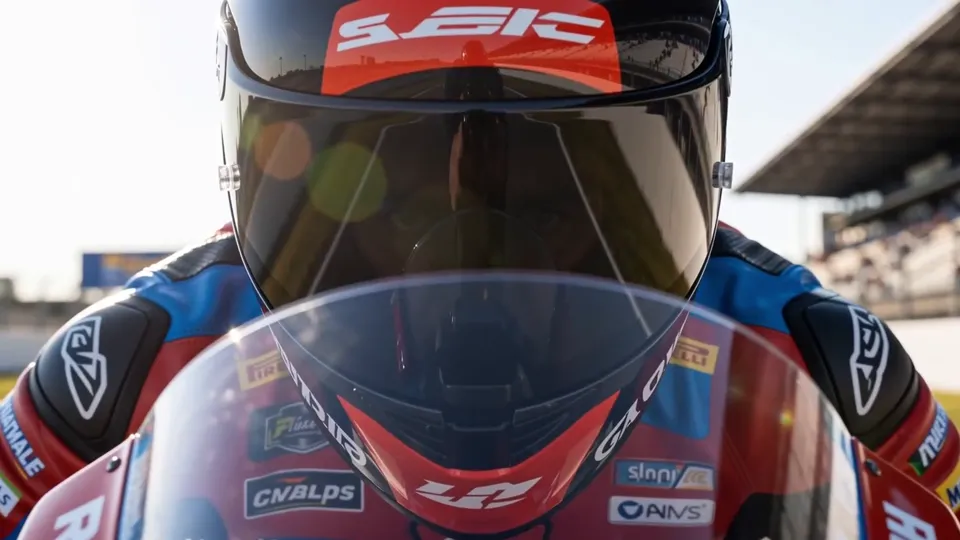
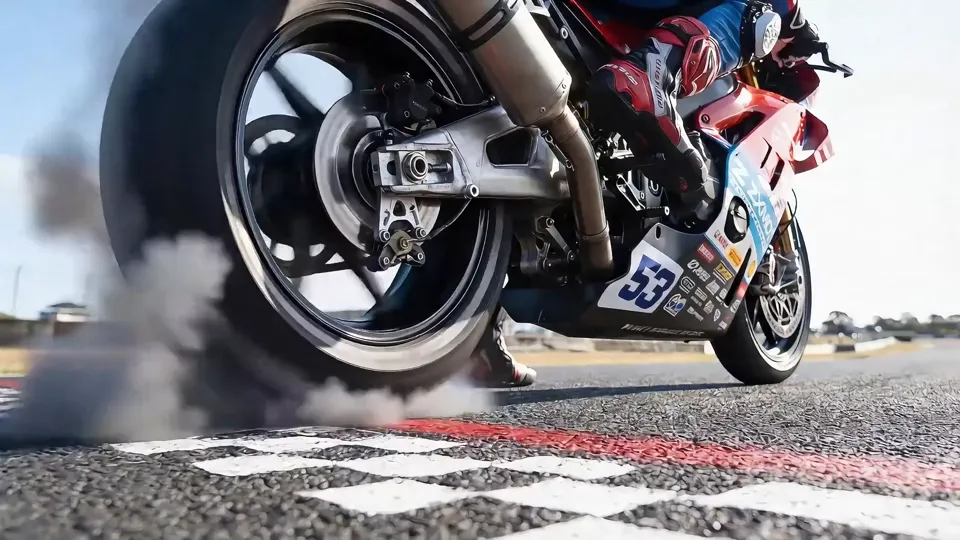
Close-ups of helmet and goggles and of a gloved hand twisting the throttle build tension before the start, then a low-angle close-up of the rear wheel fills the foreground. Attention shifts from the rider to the machine part, keeping the center of the frame ready for the tire's transformation.
02
One spinning motion changes the scene
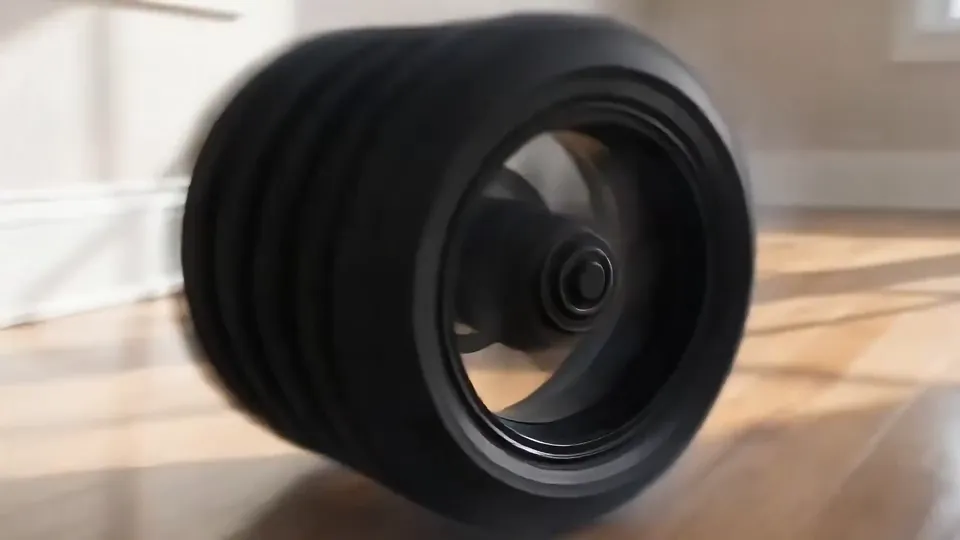
The camera nears the fast-spinning tire, which first enters a bright room with a wooden floor, then turns into a black roller brush with a red ring. The spinning motion and circular outline never break, so viewers can tell from this single motion that the scene has moved from the racetrack to the living room.
03
Parts gradually come together into the complete appliance
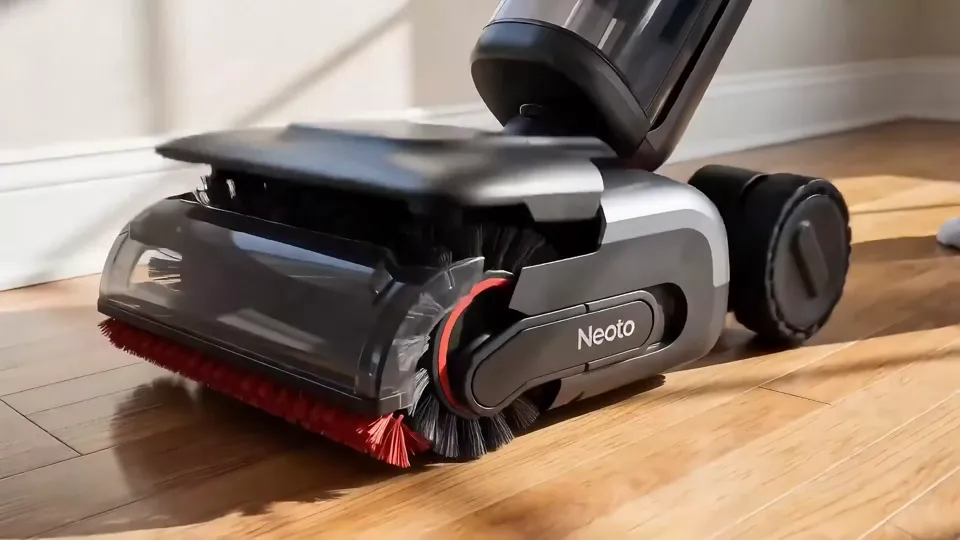
The roller brush stays at the front of the frame as the axle, brackets and housing come in one after another, finally forming a head with a blue light strip. As the parts appear one by one, the product is revealed from detail to whole, and the transition itself becomes a showcase of its design.
04
Ending the exercise with natural light and a forward push
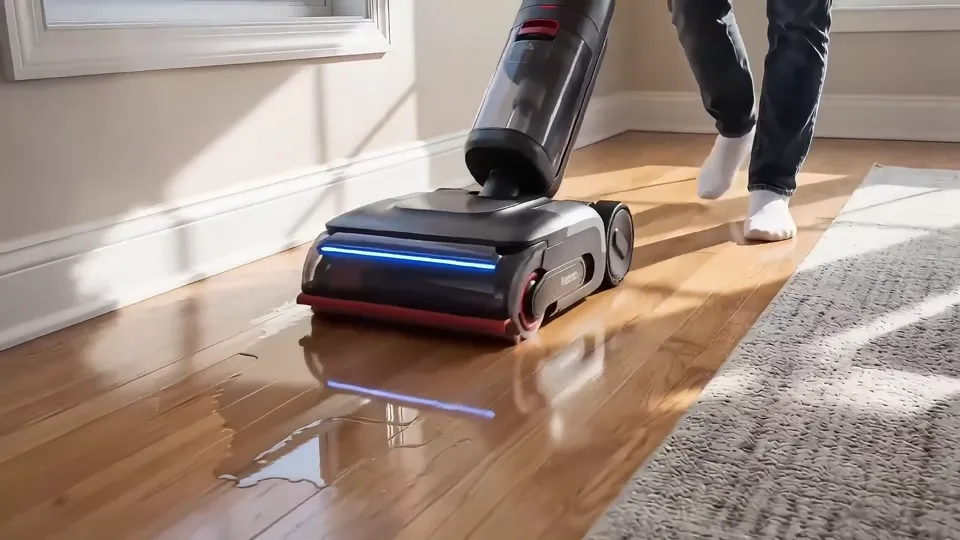
The appliance moves across a sunlit wooden floor, the reflections on the floor and the person's steps creating a soft, homey atmosphere. Once the person and appliance leave the frame, a white end card with the nbpro logo closes the film, moving from intense mechanical change to a simple, quiet ending.
03 / Scene Breakdown
How a wheel's speed enters a cleaning scene
Film · 00:00–00:05
On the racetrack: the seconds before the start
A few close-ups of the rider and motorcycle build tension, and the camera finally comes to rest on the rear wheel.
Clip · 00:00–00:02
Helmet and handlebar
The rider waits at the starting line in a helmet, the stands reflected in the goggles; then it cuts to a gloved hand gripping the handlebar, the bike not yet moving.
Clip · 00:02–00:05
A rear-wheel burnout
A low camera hugs the rear wheel over a checkered starting line. The tire spins hard in place, white smoke spreading low along the ground, as the camera pushes toward the center of the wheel.
Film · 00:05–00:09
One continuous take: the tire becomes a brush, parts assemble into the machine
This section has no cuts. The tire is still spinning when the background changes from the racetrack to a wooden floor at home; the tire becomes a roller brush, and the other parts fly in and snap into place.
Clip · 00:05–00:07
Tire to roller brush
The tire leaves the bike and drops onto the wooden floor; bristles slowly grow from its tread, and a red ring appears on its side, turning it into the floor washer's black roller brush.
Clip · 00:07–00:09
The housing closes and the blue light comes on
The axle, brackets and transparent housing fly in from off-screen and click into place around the brush one by one; the blue light strip on the head lights up, and a complete floor washer settles onto the floor.
Film · 00:09–00:13
Back at home: pushing the floor washer out of frame
From the mechanical transformation back to everyday life: a person pushes the floor washer across a sunlit wooden floor, followed by a white end card with the nbpro logo.
Clip · 00:09–00:11
Cleaning in motion
The camera drops low, showing only the person's legs and the floor washer. The blue light on the head stays on, leaving a reflective wet trail on the floor.
Clip · 00:11–00:13
Person and machine leave
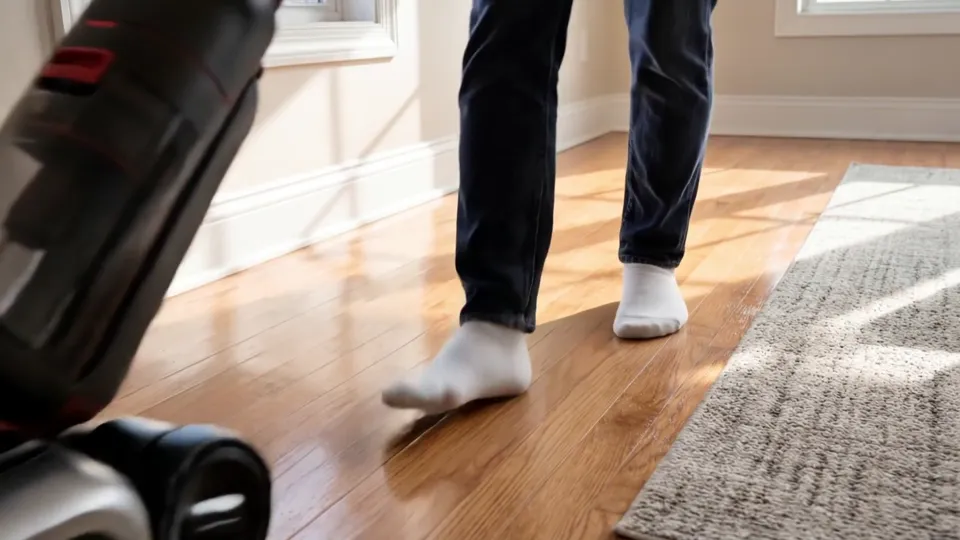
The floor washer turns out of frame and the person follows, leaving only the clean wooden floor and sunlight by the window.
04 / Gallery
Frames worth a closer look.
Key rear-wheel image for the exercise: a low-angle composition places the spinning axis at the visual center.Appliance design for the exercise: a black-and-red body, round sides and a blue light strip form a unified look.Home setting for the exercise: the wooden floor, daylight and a person pushing the machine carry the appliance's look forward.
05 / Results
A cleaning product commercial exercise
We completed a creative exercise of about 17 seconds, using a continuous mechanical transformation and a home cleaning scene to test a commercial approach that transfers a sense of speed onto the act of cleaning.
Case Study
A spinning tire that becomes a floor washer's roller brush
A race bike and a floor washer seem to have nothing in common.
But both have a part that is always spinning at high speed: one has a rear wheel, the other a roller brush.
This 17-second exercise starts from that single shared trait: carrying the speed of the racetrack, through one spinning motion, into a cleaning scene at home.
This was an internal creative exercise by the Liandan AI Studio team, not a client commission.
Nature of Project
Internal team creative exercise (not a client commission)
Project Type
AI product commercial creative transition exercise
Timeline
April 2026
Runtime & Specs
About 17 sec · 1920×1080 · 16:9
Results
1 complete exercise film with a logo end card
Produced by
Shenzhen Alchemy Technology Co., Ltd. (Liandan AI Studio)
01
A transformation transition has to make sense first
“The product transforms out of something else” is a very common commercial transition. We discussed several options: a car turning into a phone, into a drone... They all felt forced, and viewers could tell the change was contrived.
Then it clicked: a tire spins at high speed, and so does a roller brush. Turning a tire into a roller brush works because the shape is round and the motion is spinning, so the before and after connect and viewers get it at a glance.
So the exercise brief was set: shoot a close-up of a motorcycle's rear wheel, have it turn into a floor washer's roller brush as it spins, then assemble into a complete machine.
Clip · 00:02–00:05
A rear-wheel burnout
The camera stays on the rear wheel: the starting line, white smoke from the burnout, the wheel spinning faster and faster.
02
First, lock in three key images
If AI generates the whole video directly, it is hard to control what the product looks like. So we first made stills to lock in three things.
A floor washer of our own. Using the general structure of floor washers on the market as reference, we designed a new model that wouldn't resemble any existing product: a black body, a red ring on the side and a blue light strip on the head, shot in side close-up on a pure white background.
A home setting where it is used. A sunlit living room with a wooden floor; only the person's legs are visible, and the camera stays close to the floor washer's head.
A rear wheel on a racetrack. We first considered a race car, then switched to a motorcycle, shooting the rear wheel from a low angle with the tire on the starting line.
Final racetrack image: a low-angle rear wheel on a checkered starting lineFinal product image: black body, red-ringed roller brush, blue light stripFinal home image: wooden floor and daylight, showing only the person's legs
All the videos that followed used these three images as reference, so the product's color and look stay consistent from start to finish.
03
The hardest shot: describing the transformation clearly
The plot is simple: the rider waits for the start and twists the throttle; cut to the rear wheel, which turns into a roller brush as it spins; parts fly in and assemble, the scene becomes a living room, and a person pushes the floor washer away.
The real effort went into the continuous transformation in the middle. Over several rounds of generation, we made the description more and more specific:
At first we wrote “white roller brush,” but the machine we had designed was black. The AI couldn't decide, and what it produced didn't match. We changed it to “the side of a black roller brush, with a red ring around it” to match the final product image. We also replaced “roller” with “roller brush” throughout, so the AI wouldn't produce an ordinary wheel.
We also added a line to the opening rider shot: the motorcycle sits on the starting line, completely still. Without spelling this out, the AI tended to have the bike simply ride off, and the tension was lost. The burnout smoke also went from “no smoke” to “a little smoke,” keeping the feel of the racetrack without hiding the tire.
Clip · 00:05–00:09
The tire becomes a brush, the parts assemble into the machine
One spinning motion runs all the way through: the tire becomes a brush, the housing flies in and closes, and the blue light comes on.
04
What this exercise achieved
The final section slows the pace: a person pushes the floor washer across the wooden floor and out of frame, followed by a white logo end card. The more intense the earlier part, the quieter this one feels, bringing the film from “speed” to “easy to use every day.”
Clip · 00:09–00:13
Back at home
The floor washer glides across the wooden floor with its blue light on, and the person and machine leave the frame together.
For clients making product commercials, this exercise shows one way of thinking: a product doesn't have to push its specs; it can borrow a sense of power from another world, as long as you find what the two genuinely share: a shape, a motion.
For people learning AI video, there are three takeaways: a transformation needs a shared shape and motion; lock in the product with stills before making video; and be specific in prompts about colors, parts and what must not change.
FAQ
FAQ
In AI video, how do you make something turn naturally into a product?
The key is finding what they share. In this exercise, the motorcycle's rear wheel and the floor washer's roller brush are both round and both spin fast, so a continuous take turns the tire into the brush as it spins, and viewers can tell from this single motion that the scene has moved from the racetrack to the living room.
When making product commercials with AI, how do you keep the product looking the same throughout?
First produce final product stills (here a black body, red-ringed roller brush and blue light strip), then use them as reference for every later video, and spell out colors and parts in the prompts, such as “the side of a black roller brush, with a red ring around it.”
Could an AI-generated product end up resembling one already on the market?
The floor washer in this exercise was designed from scratch: it drew on the common structure of floor washers but was required to look clearly different from the references, and the brand is a fictional nbpro logo. Real projects are based on the actual product the client provides.
How long does a creative short of a dozen or so seconds like this take?
From settling the plot and making stills to editing the roughly 17-second final cut, this exercise took two days (April 8 to 9, 2026).
Approach
Passing the baton through similar shapes
We first settled the key parts and settings, then expanded them into complete shots. The film's attention stays on the motorcycle's rear wheel, with the shots running “rider close-up, throttle twist, spinning transformation, parts assembly, pushed out of frame.”
The transition links the two machines through motion and shape: a single spinning axis keeps the viewer's eye on track, the black brush and red ring tell viewers this is a floor washer part, and once the housing snaps on, the detail becomes the complete product. The home section slows the pace with natural light and a slow push, letting the ending move from a sense of power to a sense of everyday life.