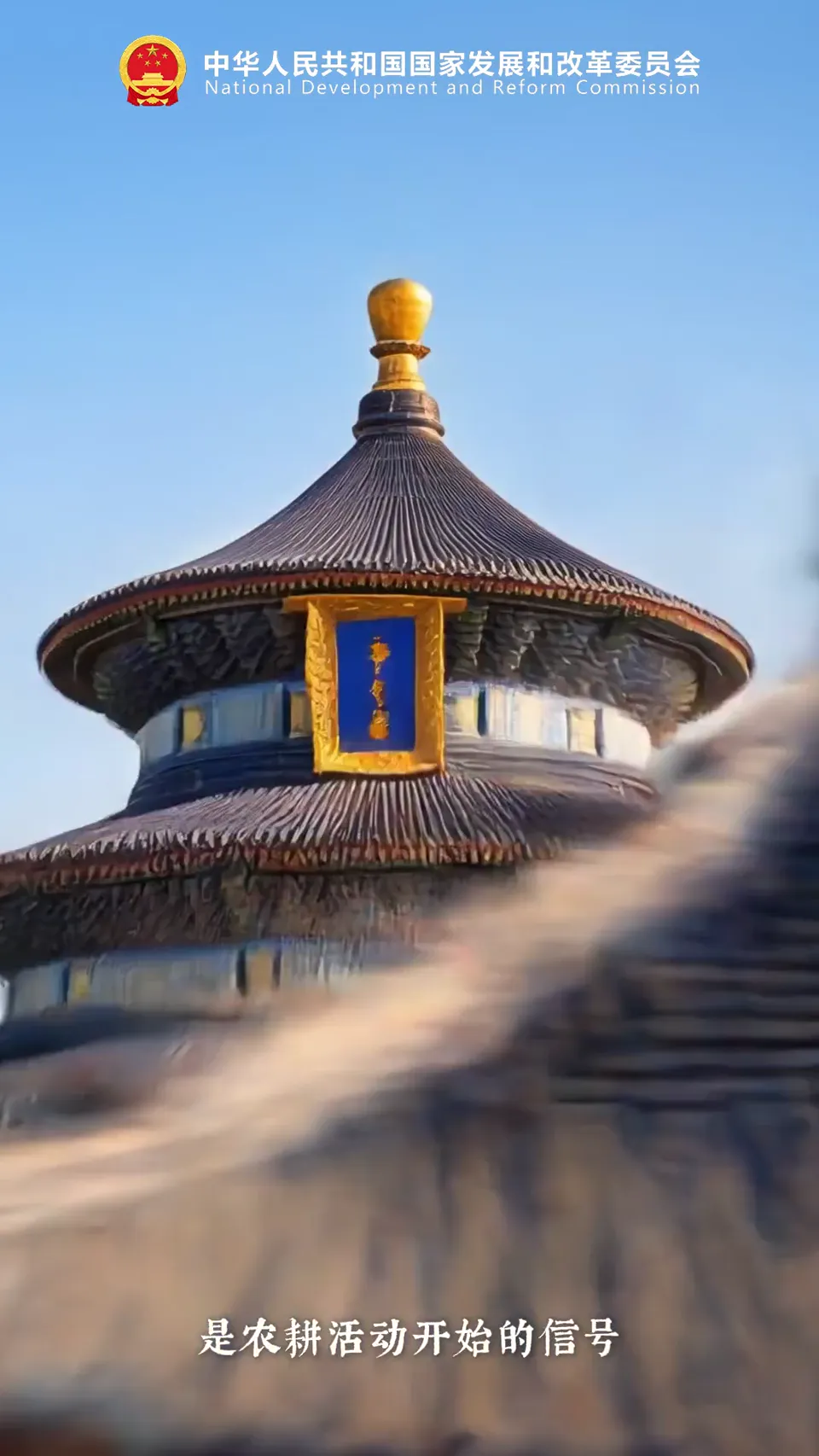
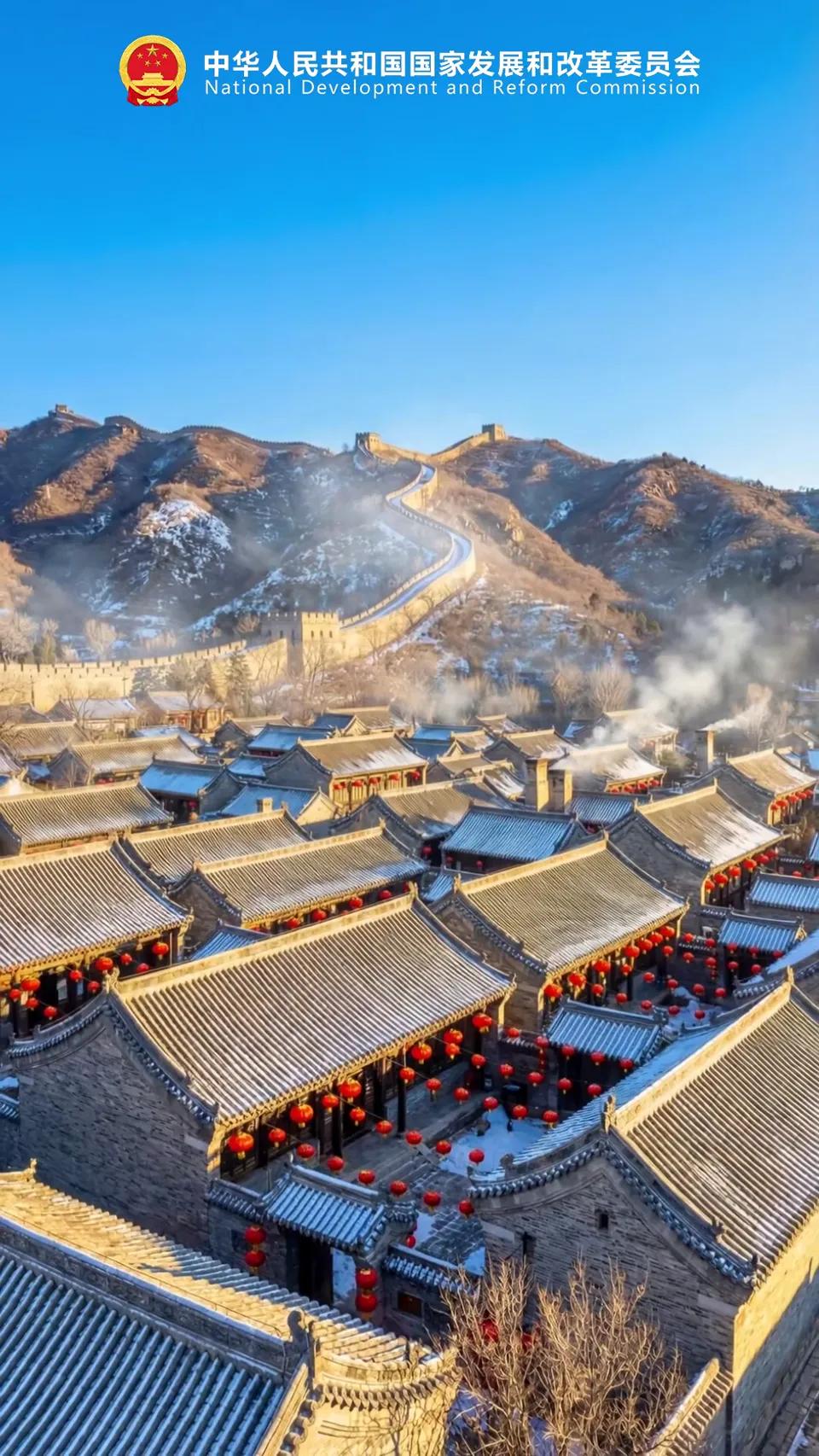
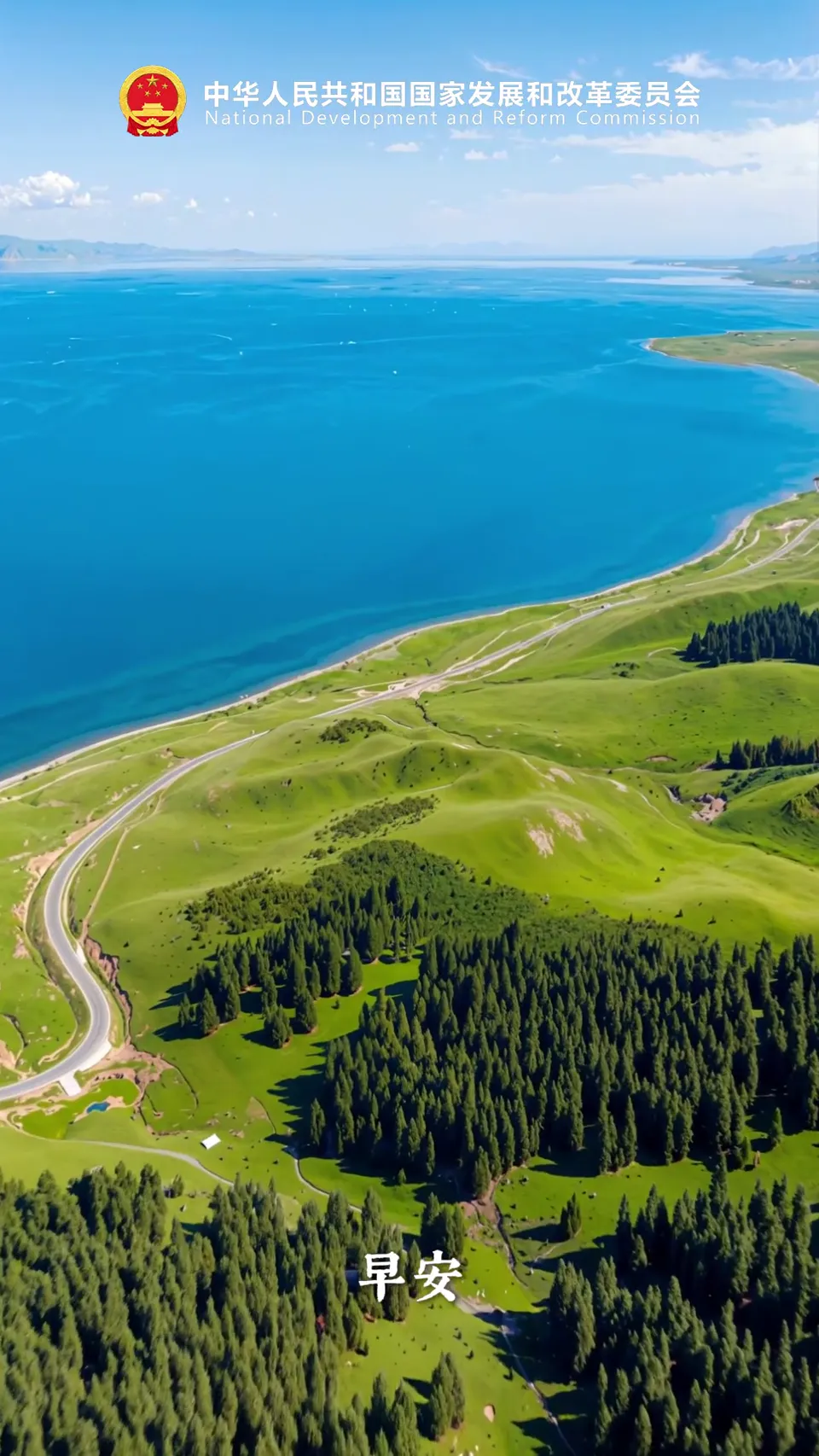
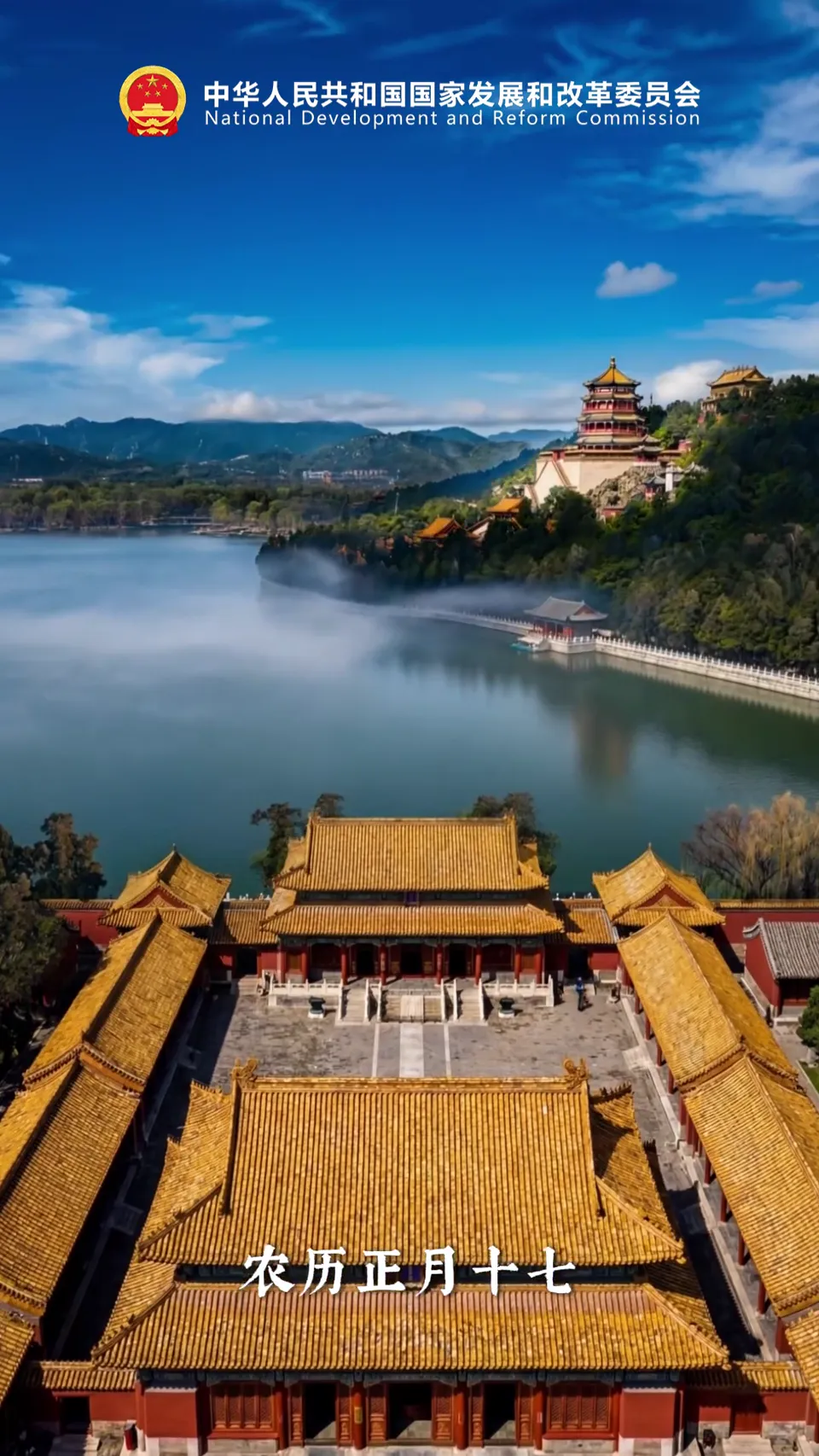
Each solar term's knowledge is paired with matching scenes of nature, farming and folk custom, so every episode shows how the change of seasons reaches everyday life.
Project Type
The 24 Solar Terms
Client
National Development and Reform Commission (NDRC)
Year
2026
Our role
Solar-term series AI visuals, editing, voice, posters
Original Format
1080 × 1920 · 01:09
Project Overview
Click an image to view it at full size
NDRC — 24 Solar Terms SeriesProject Overview Image · Click to Enlarge ↗Film01:09 · Video
01 / Background
Balancing grand landscapes and everyday detail in solar-term explainers
The NDRC 24 Solar Terms series turns traditional seasonal knowledge into public-education videos made for vertical viewing. Each solar term has its own phenology, farming activities and folk customs, so the work had to be instantly recognizable as one series while letting viewers tell apart the seasonal changes unique to each episode.
This page features “Start of Spring”: from plum blossoms against red walls and a sundial to a thawing river and terraced fields, then on to the spring ox, tea drinking and spring-welcoming festivities. Landscapes convey the change of season, people and everyday details explain the customs, and sweeping vistas work alongside specific actions to support the narration.
02 / Creative Highlights
A visual for every point of knowledge
01
Landscapes that explain
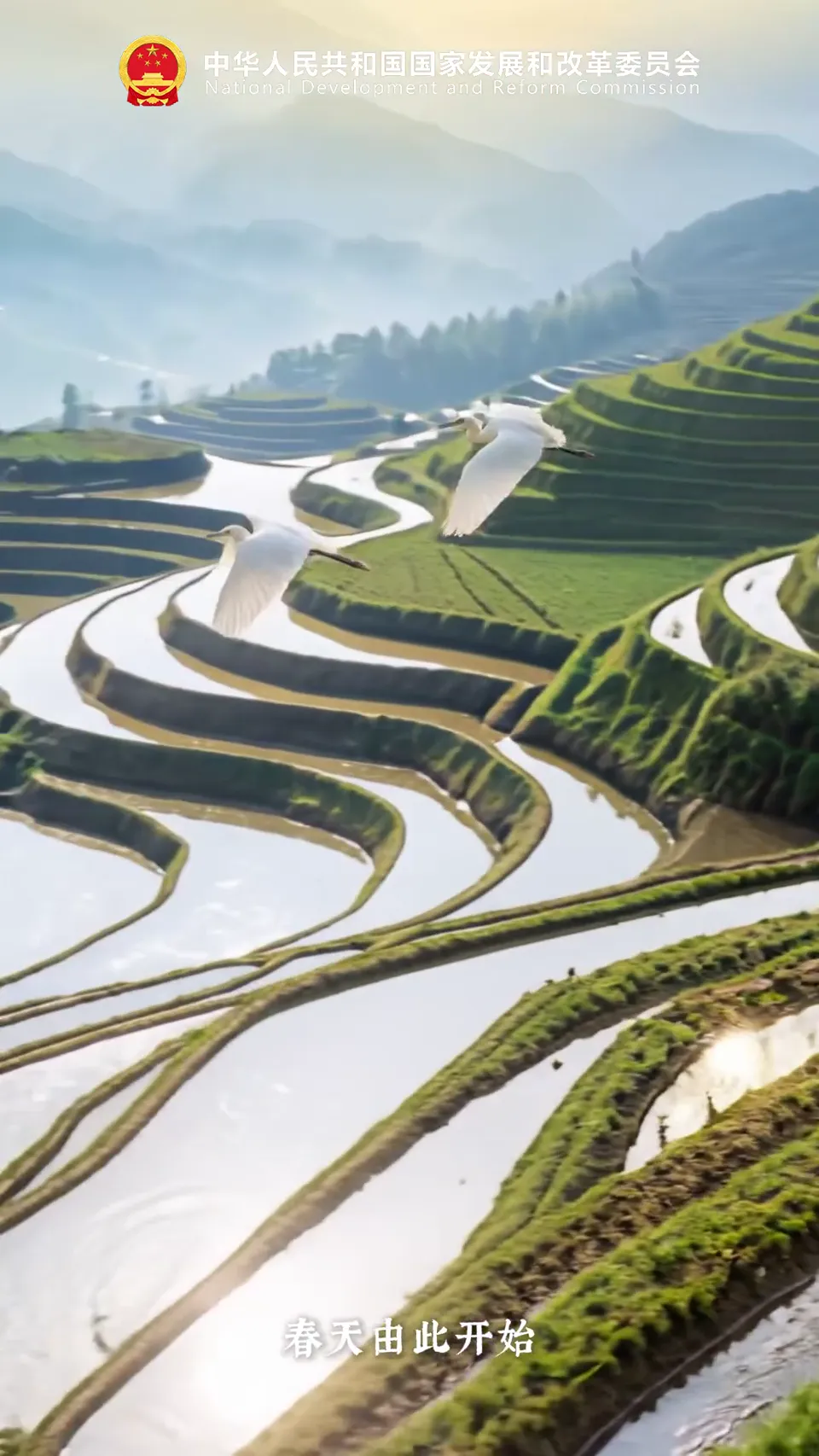
Observing the seasons, the first stirrings of life and farming customs each carry different content. The film matches them with a sundial, river ice breaking up, egrets over terraced fields and the spring ox, so whatever the narration mentions is on screen, avoiding near-identical empty landscape shots for every point.
02
One season's feel across many regions
Red-walled historic buildings, northern ice and southern terraced fields are far apart. “Start of Spring” connects them with azure skies, bright sunlight and clear warm-cool contrast: the places change, but the story is always that spring has arrived, keeping the series' clear, bright visual style.
03
Shifts in scale link landscapes and daily life
After the open ice and terraced fields, the film moves to the spring ox, a teapot and a family table, then back to spring-welcoming festivities. Moving from wide views to close-up actions helps viewers see how the solar terms relate to work, food and prayers for the year ahead.
04
Layering signs of the season in a single shot
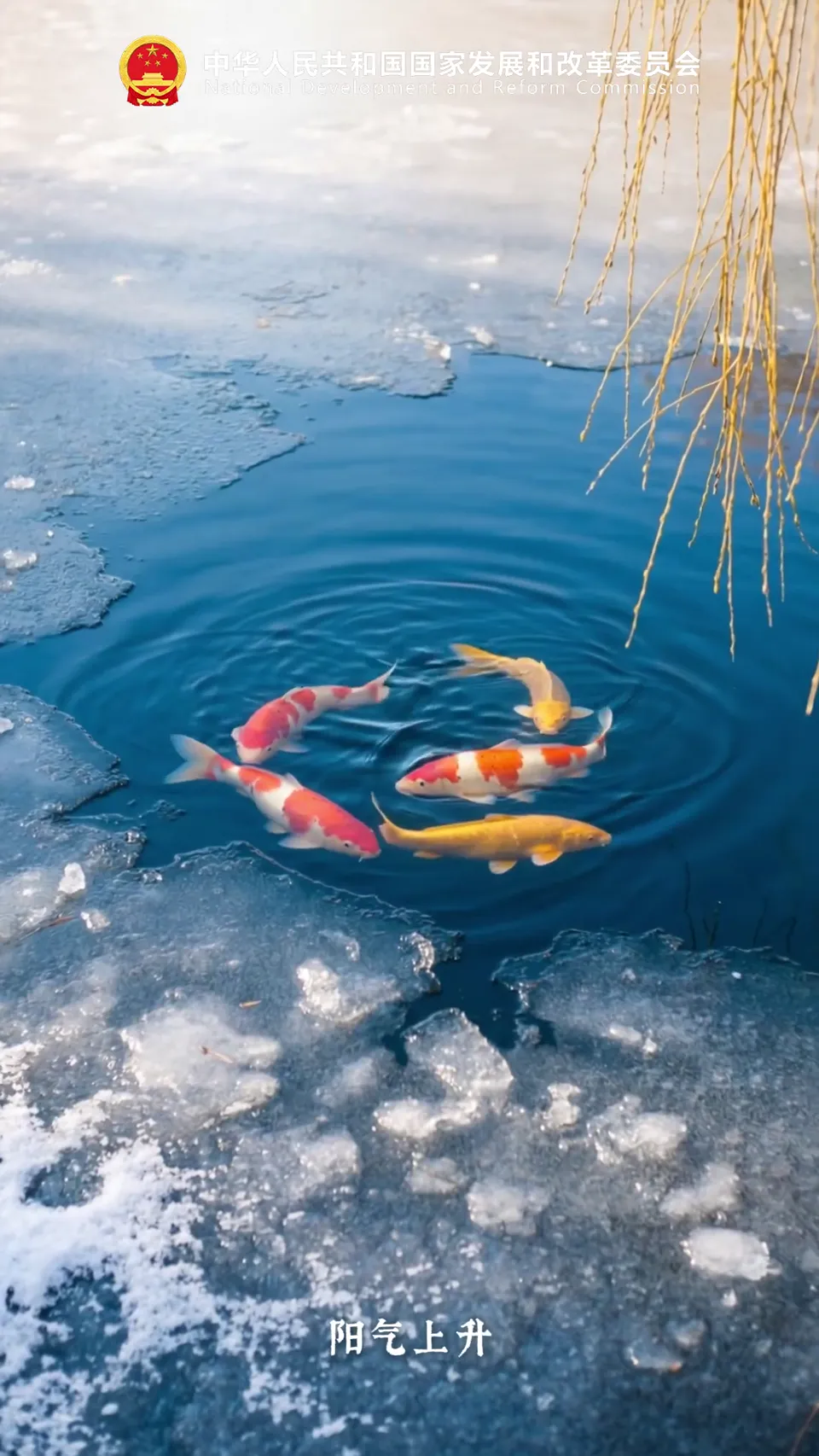
Willow branches in the foreground and koi swimming between thin ice put two signs of spring in one frame, showing both winter's end and life awakening. Then a dragon-shaped diabolo welcoming spring in front of the Temple of Heaven shifts from natural change to seasonal human activity, carrying landscape and folk custom along one theme.
03 / Scene Breakdown
Using Episode 1, “Start of Spring,” to show the series’ fixed structure.
Film · 00:00–00:14
How Each Episode Opens: Good Morning, the Date and an Object
Every episode in the series starts here: the institution’s logo sits in the top-left corner, and the narrator opens with “Good morning, today is…”, announcing the Gregorian date, the lunar date and the name of the solar term. Start of Spring is the first episode, and every episode after it uses this same opening. For a full breakdown of the Start of Spring episode, open the Start of Spring episode page below.
Clip · 00:00–00:07
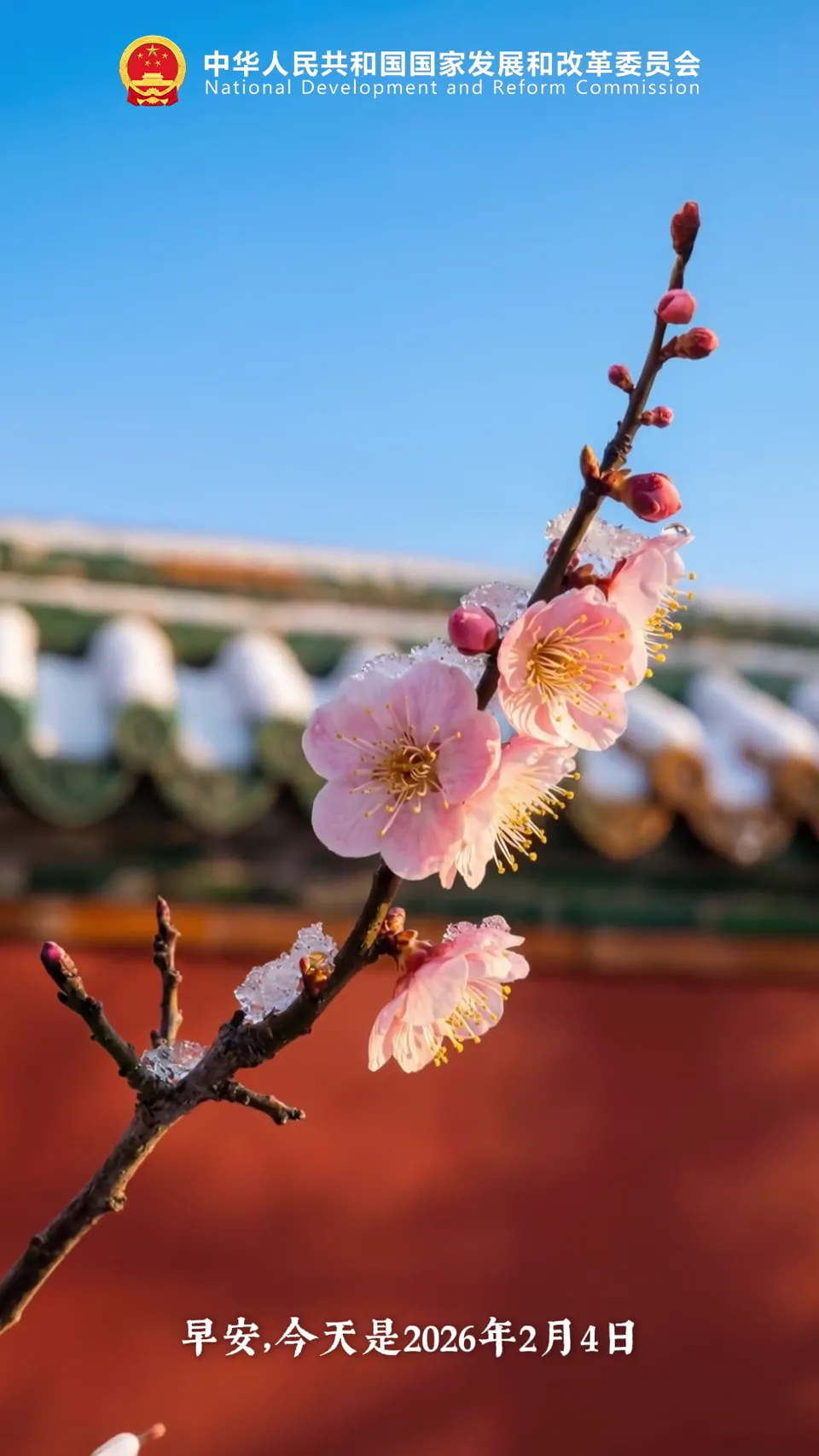
Magpies, plum branches and the date
A magpie flies past snow-covered plum branches, with a red wall and snowy rooftops behind, as the caption reads “Good morning, today is February 4, 2026.” Deep blue, true red and snow white later became the base palette for the whole series.
Clip · 00:07–00:11
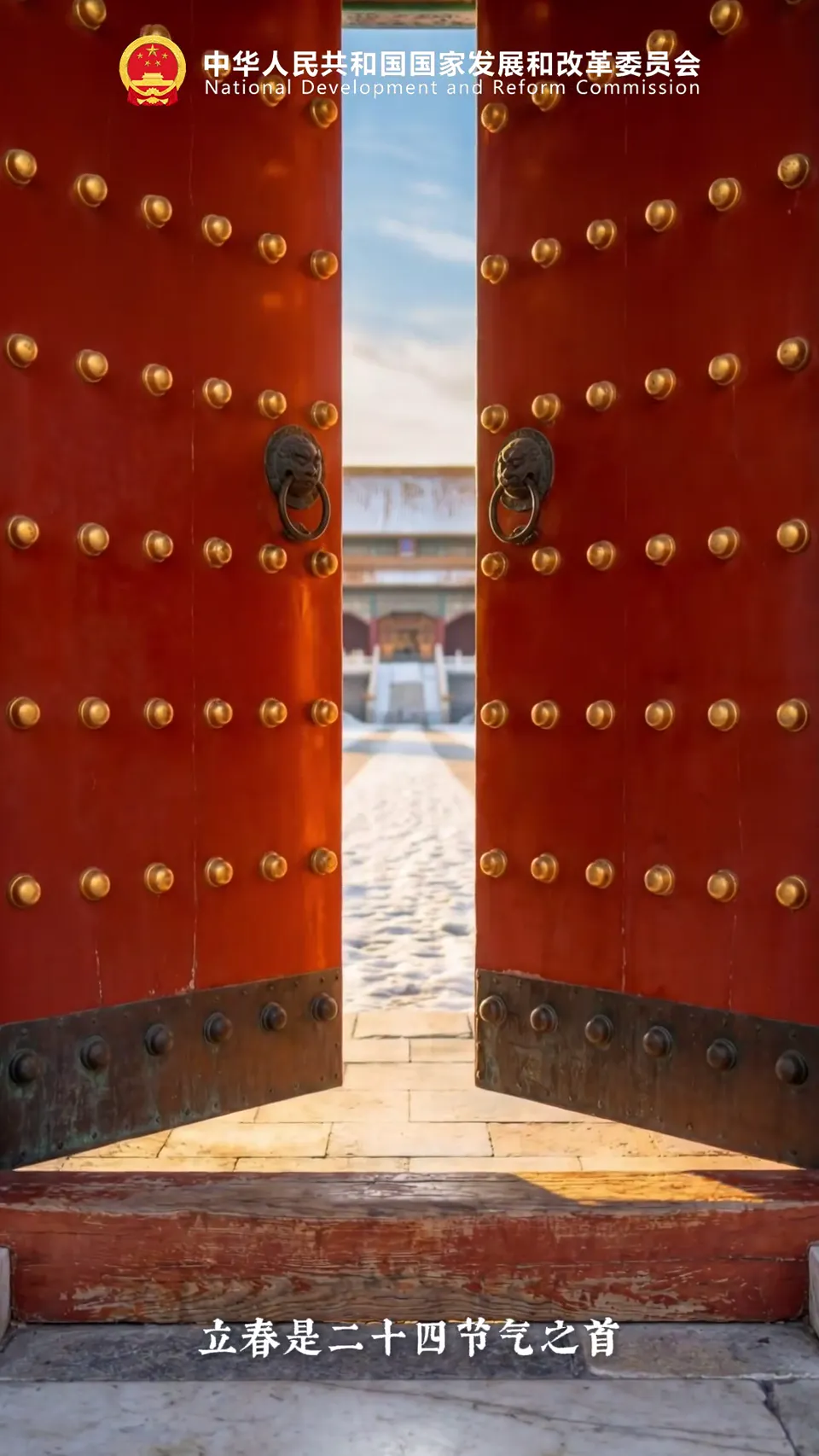
The palace gates open
Vermilion gates swing open onto a snowfield. As the voiceover mentions “the first of the 24 solar terms,” the whole series begins at this door.
Clip · 00:11–00:14
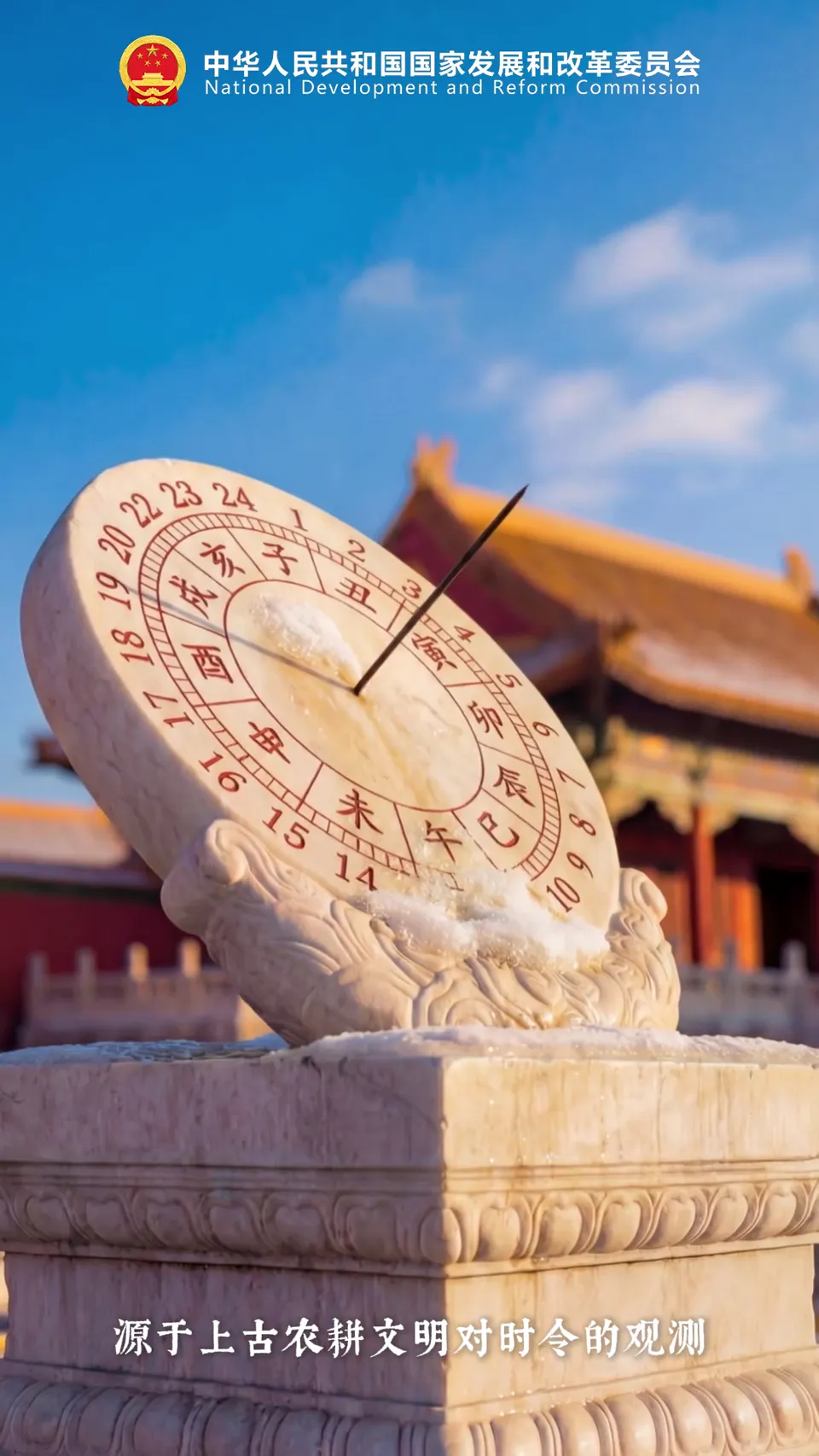
A sundial to explain “observing the seasons”
An abstract line paired with an object you can see. Every later episode follows this rule: whatever the voiceover says, the frame finds something concrete to show it.
Film · 00:14–00:31
Grand Landscapes: First, See How Heaven and Earth Change
Next comes the series’ most important type of shot: sweeping aerial landscapes. Northern ice rivers, southern terraced fields, farm machinery on the plains: in a dozen or so seconds the film crosses much of China, covering both the season and the farming.
Clip · 00:14–00:20
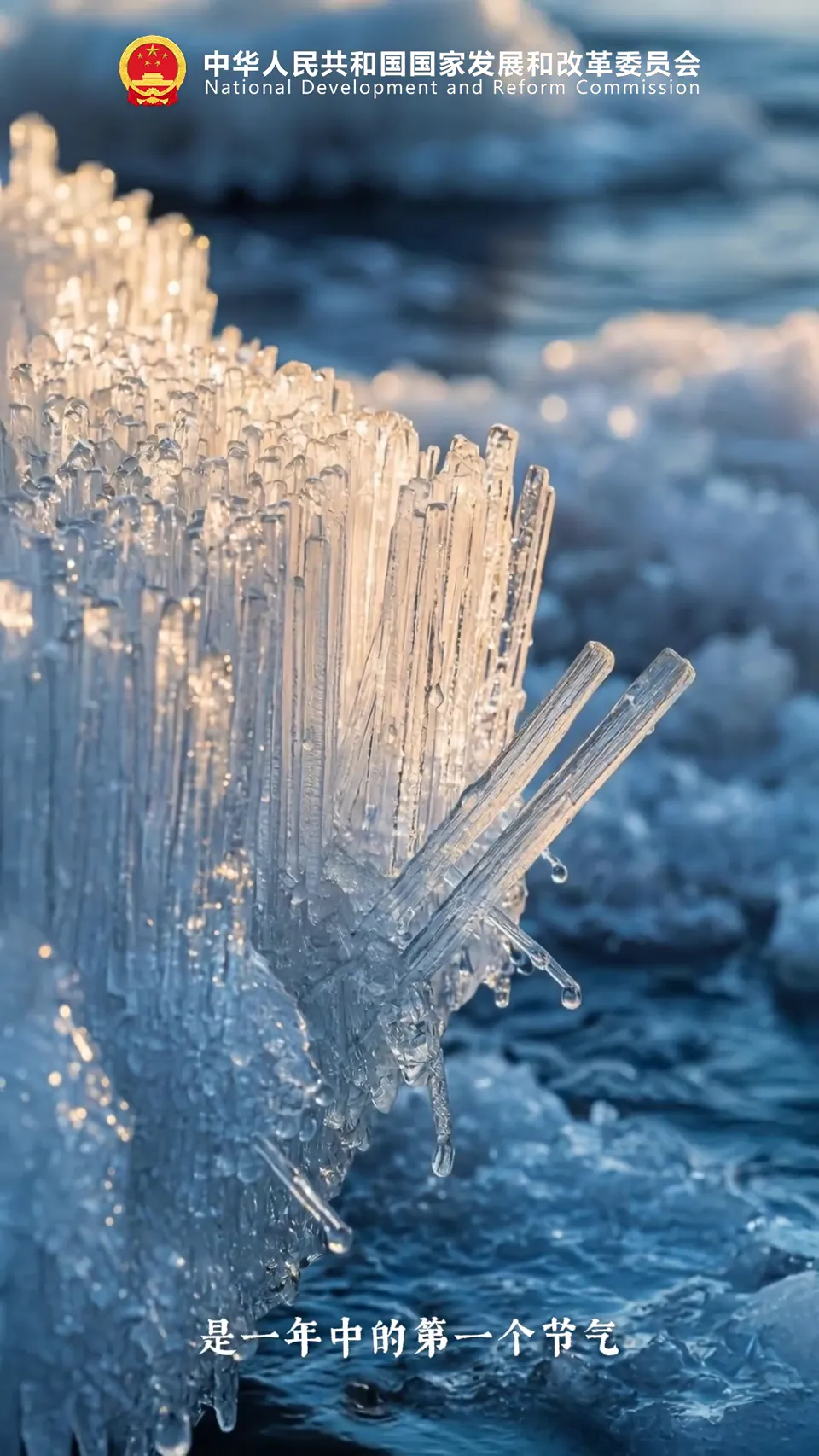
The ice river cracks
Pulling back from a cluster of ice crystals reveals a river surface full of cracks as the sun has just risen. In early February the north still has ice; from the first episode, the series shows each season as it really looks.
Clip · 00:20–00:27
Terraced fields and egrets
The terraced fields in the south are already flooded, a few people are working in them, and egrets fly overhead. For the same solar term, we chose one scene in the north and one in the south.
Clip · 00:27–00:31
An overhead shot of tractors
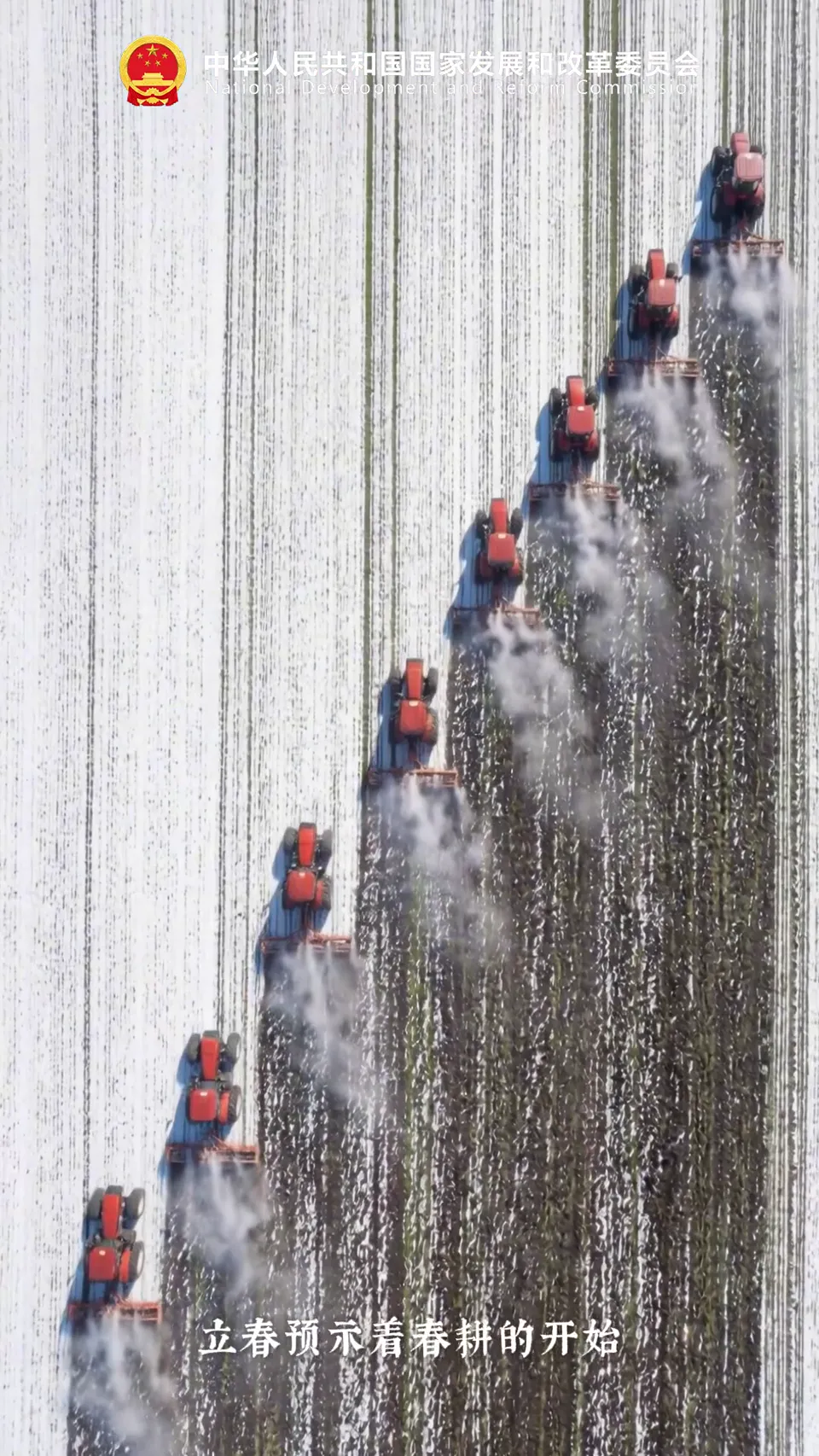
A row of red tractors spread out diagonally, driving forward together through a wheat field. Farming in the series is shown as it looks today wherever possible: with machinery, and at scale.
Film · 00:31–00:44
Customs: Brought Down to People’s Hands
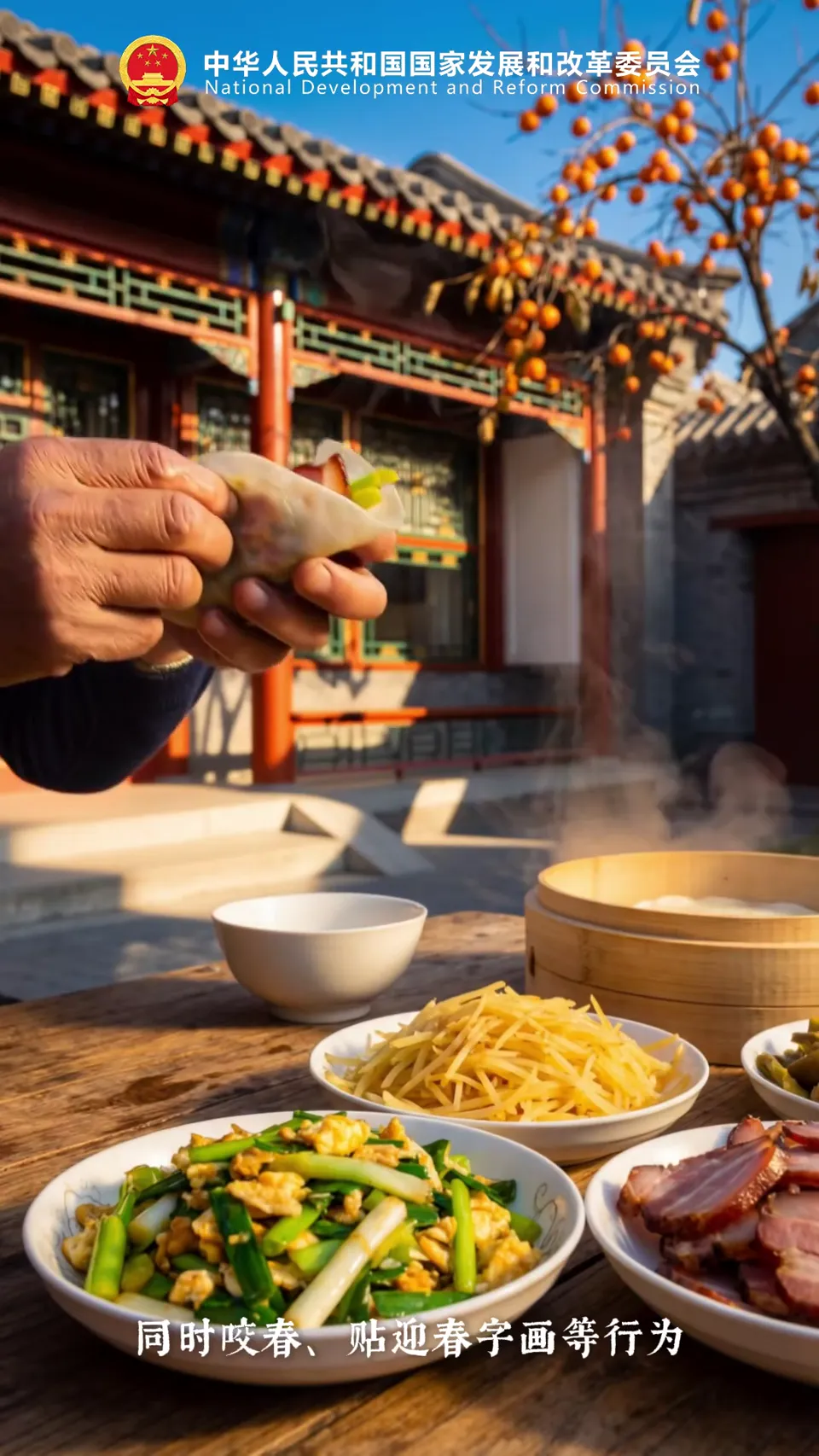
When the voiceover turns to customs, the camera pulls back from the wide shots to people and hands up close. Whipping the spring ox, scattering grain, “biting spring,” putting up the character for spring: one line of voiceover, one action. The folk-custom segments in later episodes are all shot this way: a custom is what people are doing with their hands.
Clip · 00:31–00:34
Drums and the spring ox
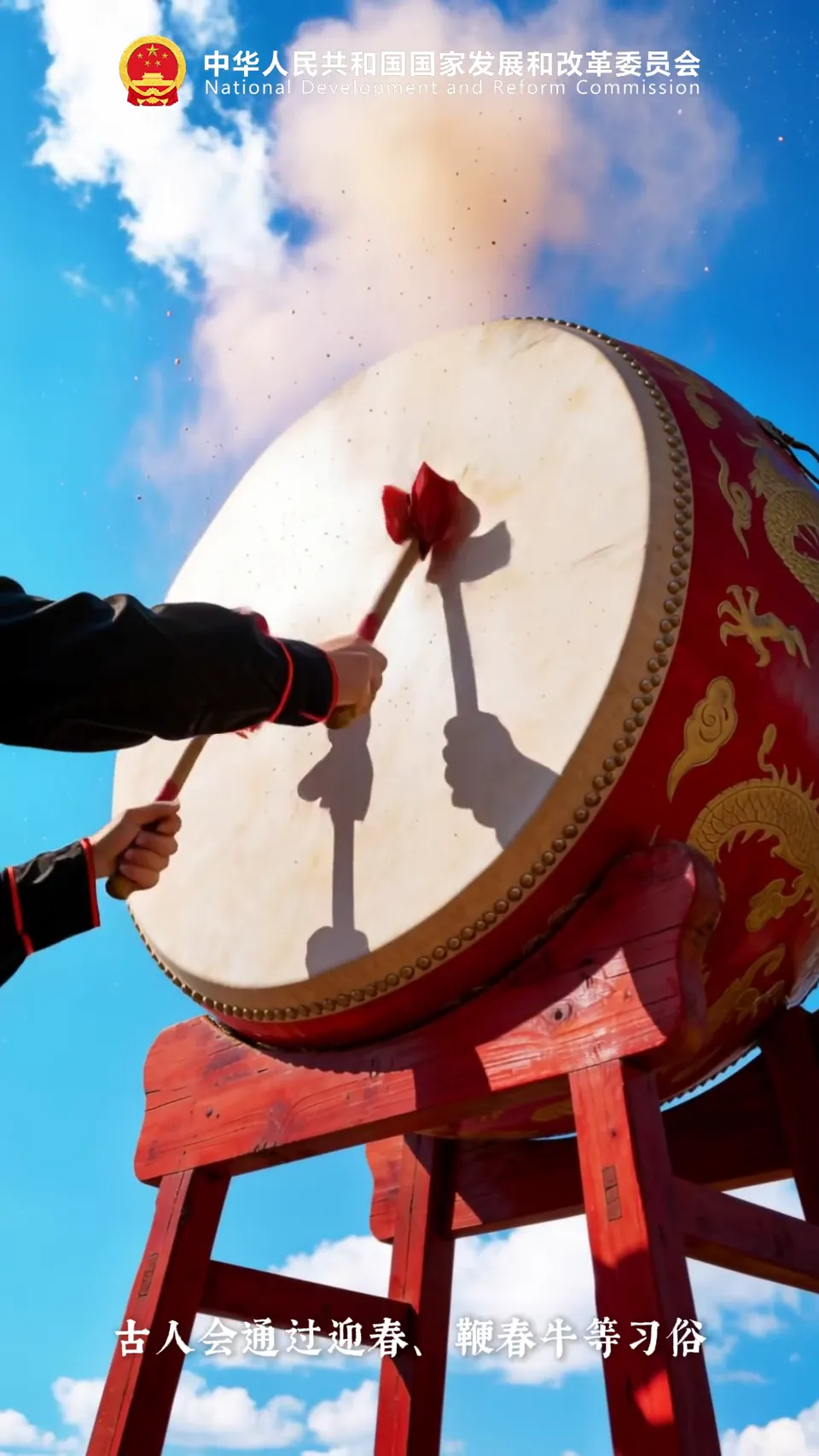
A drumstick strikes a red drum; in the next shot, a child in red swings a whip and walks toward a clay spring ox as dust rises from the ground.
Clip · 00:34–00:37
Grain tossed in the air
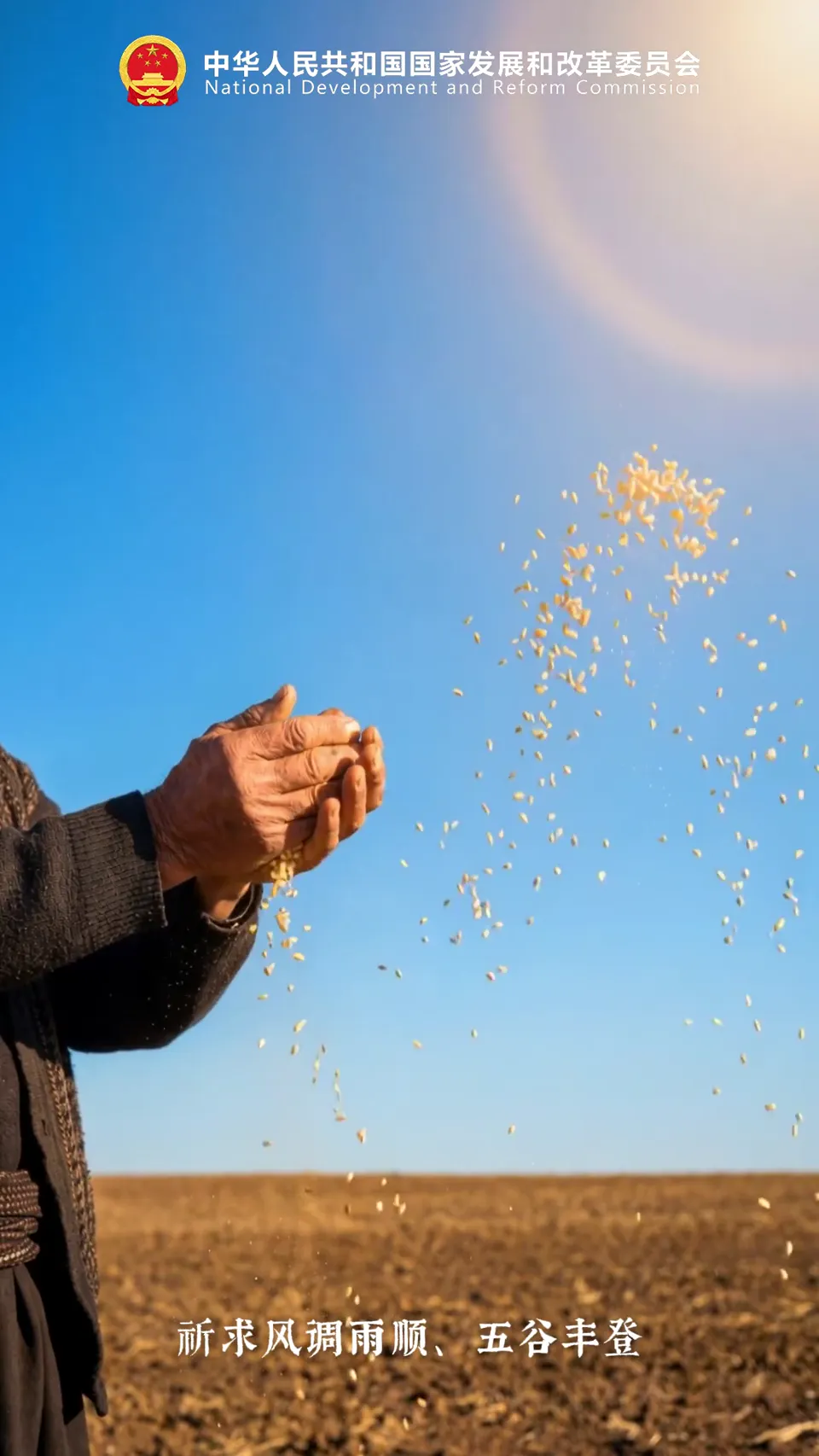
A pair of hands tosses grain into the sky, the kernels scattering against the light, matching “a bountiful harvest of all grains.”
Clip · 00:37–00:42
Spring pancakes and the character for spring
First hands roll a spring pancake, then a family puts up a big red character for “spring” on their door as a child stands under the ladder looking up.
Clip · 00:42–00:44
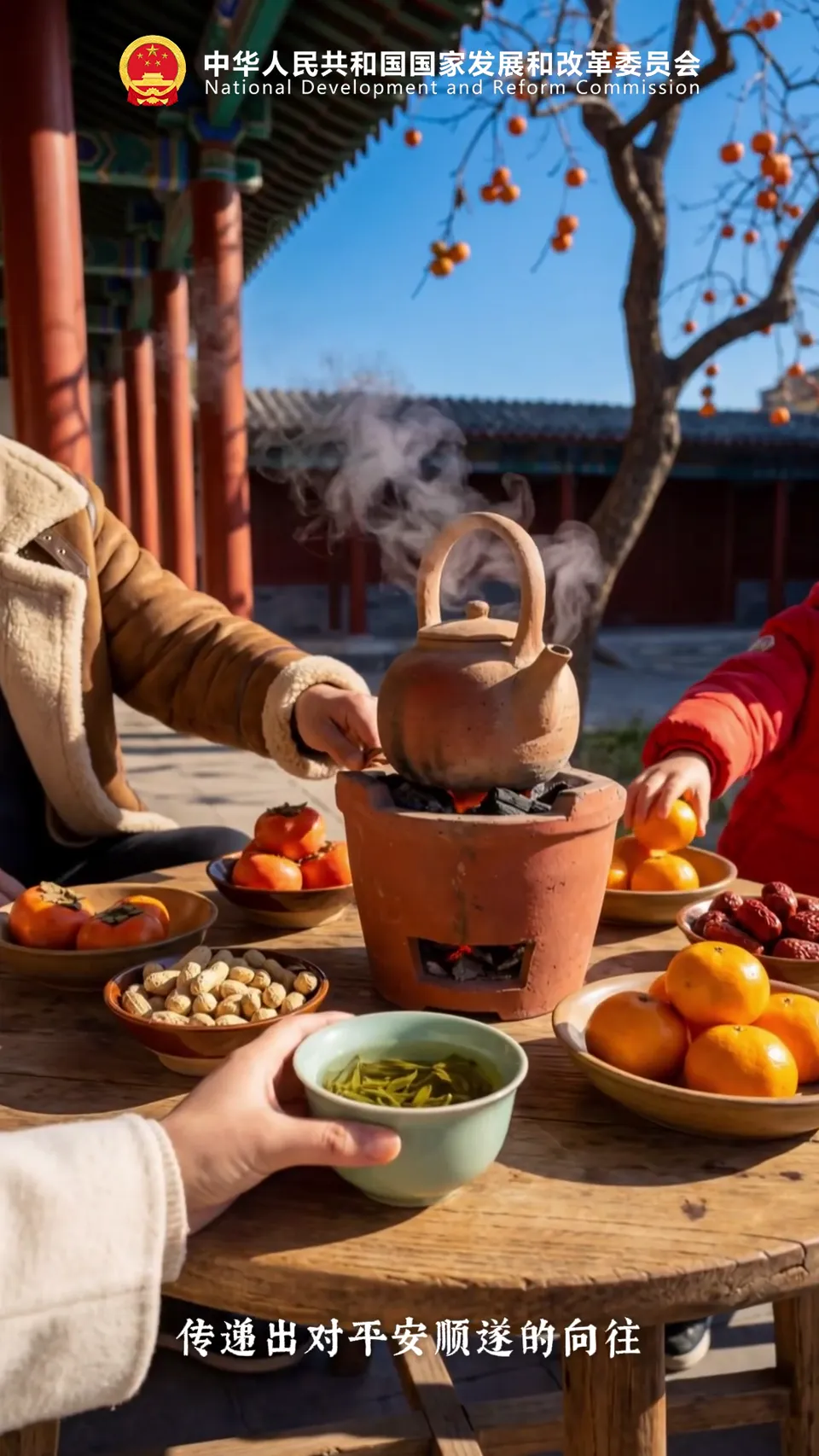
Brewing tea under the persimmon tree
In a courtyard, a clay teapot steams on a charcoal stove, and someone hands over a cup of tea.
Film · 00:44–01:09
Signs of the Season, Wishes and a Unified Ending
The final segment moves from tea hills and koi under the ice to the Temple of Heaven and an old town at New Year, landing on “hopes for a good life in the year ahead.” The film ends on the institution’s “Presented by” end card, and every episode after it uses the same ending.
Clip · 00:44–00:49
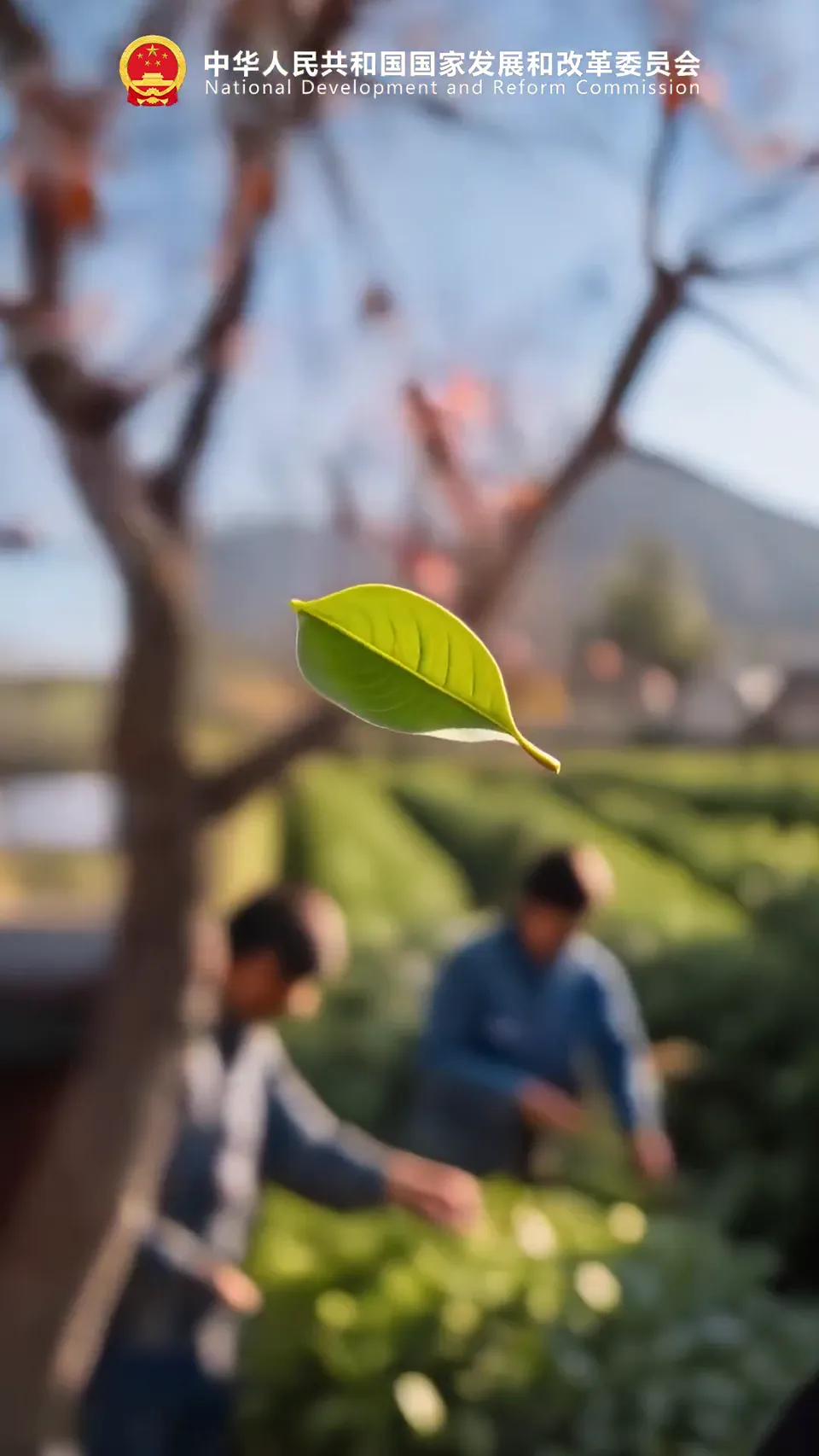
From a new leaf to a whole tea hill
Tender leaves on a tea branch cut to rows of tea bushes in the mist, with people picking tea between the rows.
Clip · 00:49–00:53
Koi beneath the ice
A patch of ice has melted, koi swim in the water and willow branches hang from above, illustrating “all things begin to grow.”
Clip · 00:53–00:58
Spinning a diabolo before the Hall of Prayer for Good Harvests
Under a blue sky at the Hall of Prayer for Good Harvests, a group in white spin a golden dragon-shaped diabolo in sweeping arcs.
Clip · 00:59–01:04
An old town beneath the Great Wall
The rooftops of an old town are hung with red lanterns, the Great Wall and lingering snow run along the ridge, and the film comes to rest in the bustle of the New Year.
From Start of Spring to Autumn Equinox: 16 Episodes, One per Solar Term
From Start of Spring to Autumn Equinox in 2026, we have delivered 16 vertical solar-term shorts, each with a matching vertical poster and landscape graphic; some episodes also include a video cover, voiceover script and animated poster. The series is published on WeChat Channels and also shared on Douyin, Kuaishou, Bilibili and other platforms.
This page uses Episode 1, “Start of Spring,” to show how the series is made; each episode’s own page is linked below.
Case Study
Liandan AI Studio × NDRC | 24 Solar Terms Series: From Start of Spring to Autumn Equinox, One Film per Solar Term
On February 4, 2026, the Start of Spring, the first vertical short in the 24 Solar Terms series was released.
Since then, each solar term has brought a new episode: it opens with “Good morning, today is…”, most run just over forty seconds, and each covers that solar term’s signs of nature, farming and customs.
We produce this series. From Start of Spring to Autumn Equinox, 16 episodes have been delivered, each with a set of posters and a landscape graphic.
Making a dozen or so episodes a year, the hard part isn’t any single episode; it’s making every episode feel like the same series without looking the same.
Client
National Development and Reform Commission (NDRC)
Project Type
24 Solar Terms Explainer Short Series (AI Public-Sector Promo)
Timeline
Production began January 2026; 16 episodes from Start of Spring (February 4) to Autumn Equinox (September 23)
Runtime & Specs
Start of Spring about 69 seconds, other episodes 41–49 seconds · 9:16 vertical · 1080×1920 to 2160×3840 (4K)
Deliverables
For each episode: a vertical film, a vertical poster and a landscape graphic; some episodes also include a video cover, voiceover script, animated poster and GIF
Distribution
WeChat Channels; the series is also published on Douyin, Kuaishou, Bilibili and other platforms
Produced by
Shenzhen Alchemy Technology Co., Ltd. (Liandan AI Studio)
01
A series that runs through a full year of solar terms
This is a solar-term explainer series in an official voice: vertical, made for watching on a phone, it explains traditional seasonal knowledge clearly while showing viewers the country’s landscapes and how it is being built today.
Each episode’s structure was fixed from the start: first the date and solar term, then its meaning, signs of nature and customs, and a closing wish. A third-person voiceover runs throughout, with no dialogue between characters. The voiceover is usually just four or five sentences, which we break into 10 to 16 shots, one line per image.
These images jump from the Forbidden City to Qinghai Lake, from the Yarlung Tsangpo River to the Wenchang launch site; live-action filming could hardly cover all that within one solar term. So every film is AI-generated: we first produce approved stills shot by shot, then turn them into moving shots, checking locations and details against real photos.
Clip · 00:00–00:08
The opening of “Minor Heat”
Diving from high above Qinghai Lake all the way down to a white yak on a grassy slope, the “good morning” and date are delivered within this single shot. Each episode opens somewhere new.
02
What the Series Shares: Rules Set in the Start of Spring Episode
Start of Spring is the first episode, and it set the tone for the whole series: an official solar-term explainer, so the light had to be clean and bright, with no heavy, dark tones. We tried a round in cold blue, but it felt too somber, and settled on a clear azure sky, true palace-wall red and the gold of morning light. Every episode since has followed this direction: blue skies, bright images, and plenty of sweeping aerial landscapes.
The packaging is unified too: the institution’s logo stays in the top-left corner, the caption style is the same, and every film ends with the same “Presented by” end card from the institution. The posters share one layout as well: the episode’s key image sits in a round window, the solar term’s name is written in calligraphy, a line drawing of the office building runs along the bottom, and a couplet sits below.
Start of Spring poster: plum blossoms in a round windowAwakening of Insects poster: the same layout, now with a small insect on mossMinor Heat poster: the same layout, now with a lakeshore and grassy slope
One rule matters even more: every shot is checked for season and location first, and only then for how good it looks. A solar term film is an explainer for everyone, and if the season is wrong, viewers will spot it at once. Start of Autumn, for example, falls in early August; the first version had leaves by the lake that were too red, so we kept the composition and only shifted the leaves back to yellow-green.
Start of Autumn, first version: red and orange autumn leaves all along the lakeStart of Autumn, final: leaves adjusted to yellow-green, staying in late summer
03
How the Episodes Stay Distinct: First Find Where They’d Look Alike
With unified rules, the images also tend to look more and more alike. By the fifth episode, Pure Brightness, we listed every location and image used in the first four episodes and identified the similarities: too many aerial wide shots, every farm field was winter wheat, every group shot was a family of four, and animals only made brief appearances.
From then on, every episode followed this method: first find a theme unique to that episode, then avoid the neighboring episodes point by point in signs of nature, camera positions, farming and settings. Awakening of Insects is about “stillness and motion,” so lightning strikes from a clear sky and then cuts to a small insect crawling out of moss; Grain in Ear is about “harvesting and planting at once,” so a combine harvester and a rice transplanter appear on either side of the same field ridge; Summer Solstice is about “the longest day,” so the camera bursts from a dark canyon into a sunlit sea of flowers.
Clip · 00:04–00:12
Awakening of Insects: from thunder to a small insect
Clouds gather over the Summer Palace; in the next shot lightning strikes the surging Yellow River, then cuts to a small insect on moss. One grand scene and one tiny life, back to back, tell the story of “spring thunder rolls, and the insects wake.”
Clip · 00:08–00:16
Summer Solstice: bursting from darkness into light
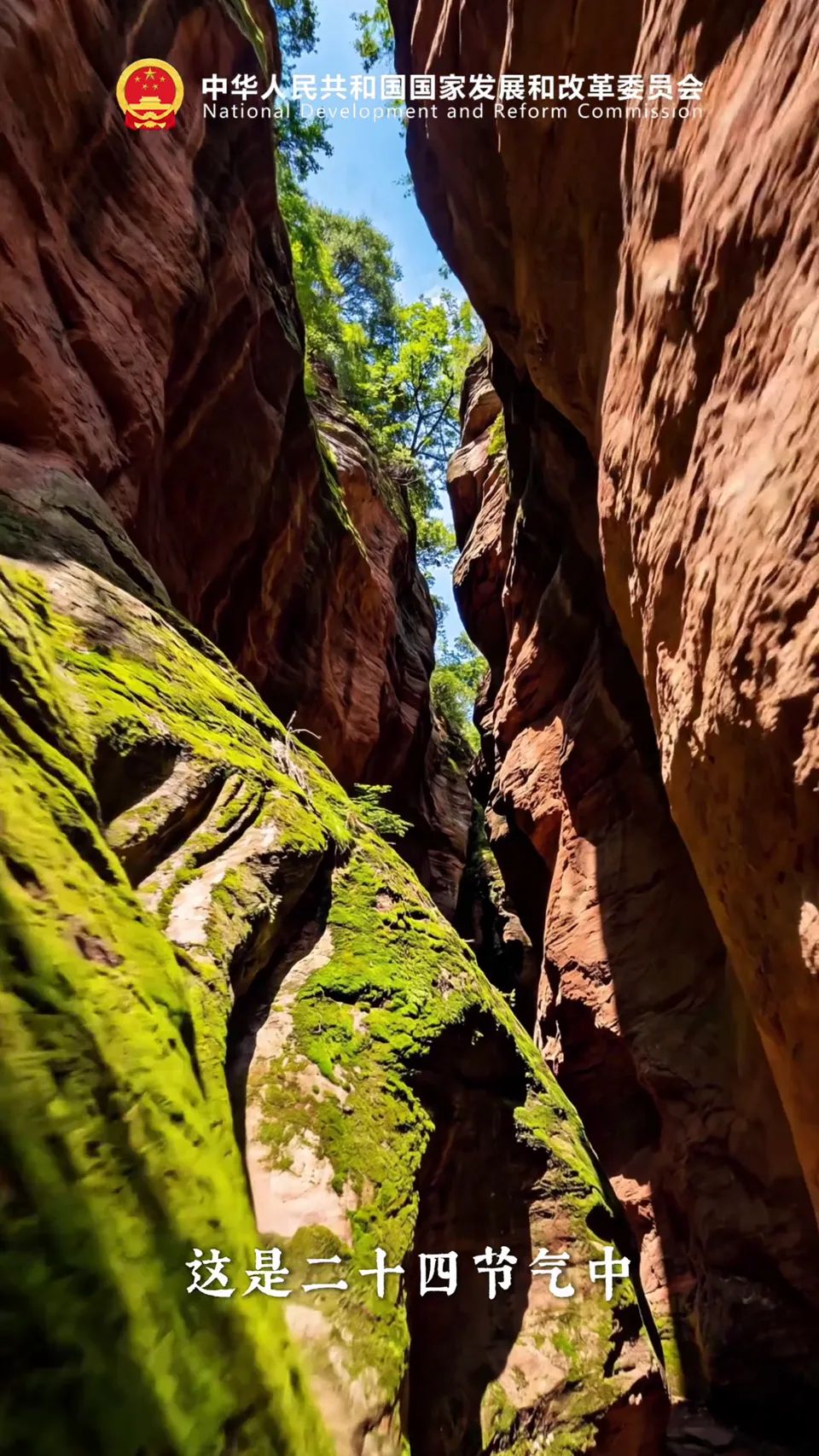
The camera races forward through a narrow canyon and bursts out into a bright sea of lavender, using the shift from dark to light to show “the longest day.”
The further the series went, the more each episode had to be checked against its neighbors. In “Major Heat,” kayaks on a lake that clashed with nearby episodes were replaced with a low-angle shot of banana leaves; for “End of Heat,” we lined up the meal shots from earlier episodes and redesigned the courtyard, the people and the dishes on the table.
04
From Realism to Gongbi: A New Painting Style for the Second Half of the Series
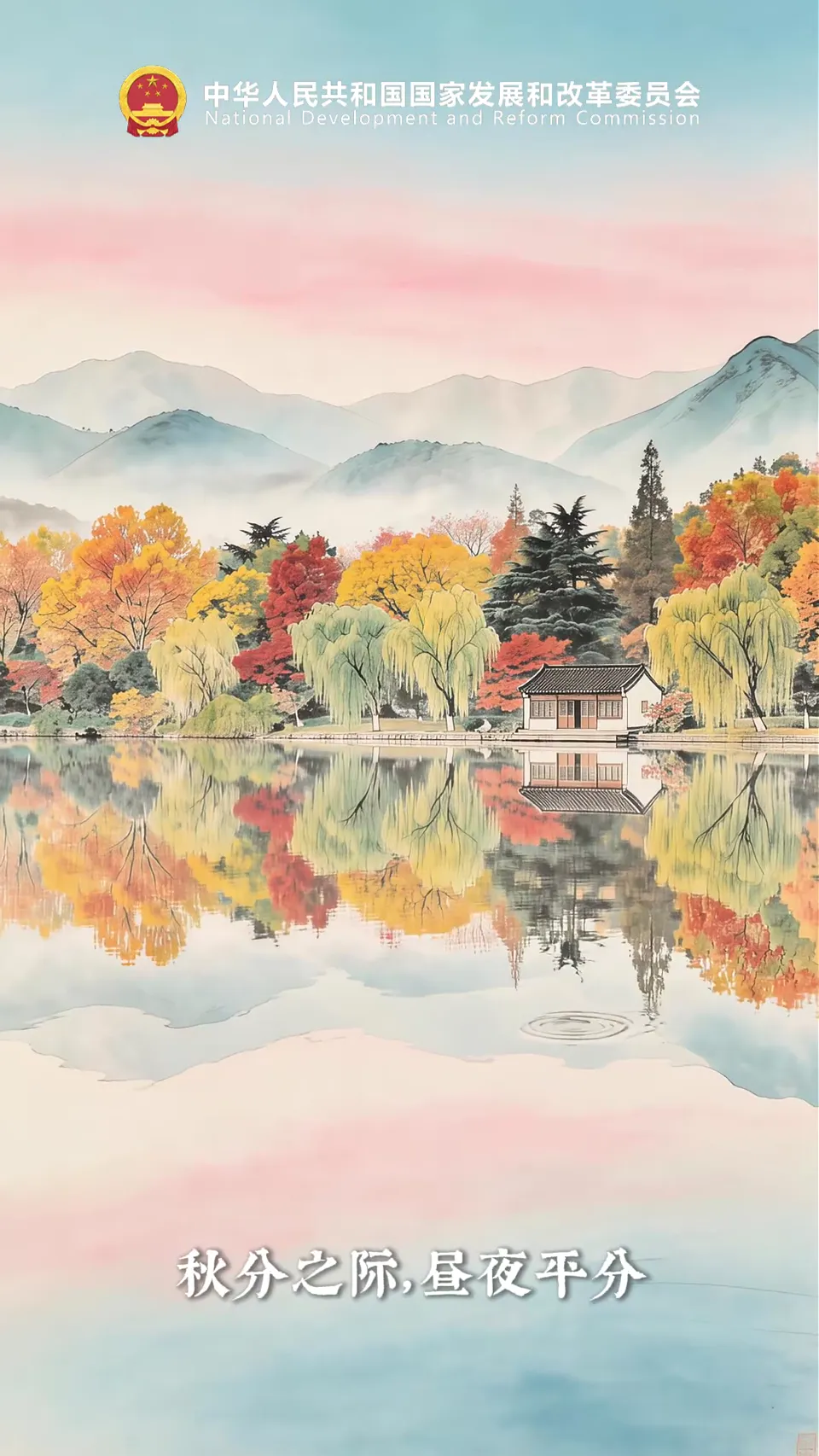
The shorts in the first fourteen episodes were all realistic. Starting with Episode 13, Start of Autumn, we first tried a new style on the poster: repainting one shot from the film entirely in the gongbi style, with a calligraphy title and a cover line. The End of Heat poster was done the same way; the gongbi style suits the poetry of the solar terms well.
Start of Autumn poster: wetland and red-crowned cranes painted in gongbiEnd of Heat poster: a stone bridge in the sunset glow painted in gongbiAutumn Equinox poster: canyon river and citrus
So from White Dew onward, the entire short switched to gongbi with light color. The process has two steps: for each shot we first produce a realistic image to lock the composition, season and objects, then repaint the whole image in gongbi and generate motion from the repainted image. All ten shots need to look as if painted by one hand, so any lines that are too hard or colors that don’t match are fixed shot by shot.
White Dew, step 1: a realistic image to set the tea hills and sea of cloudsWhite Dew, step 2: repainted in gongbi with light color
Clip · 00:09–00:12
Autumn Equinox: a mirror-like lake
The second episode in gongbi with light color. The colorful trees on the shore and their reflection in the water each fill half the frame, matching “day and night of equal length.”
05
Pace and Schedule: Delivering Ahead of Every Solar Term
Solar term dates are fixed, so a film can be early but never late. From locking the script or copy to delivery, most episodes took 5 to 11 days: Summer Solstice about 5 days, Awakening of Insects about 8, Grain Rain about 9, Pure Brightness around 10, and Grain in Ear about 11.
The fastest were even tighter: for Grain Buds, the visuals were produced in one concentrated push on May 18, the finished film went out for review on the 19th, posters and banners were completed on the 20th, and it was released on Grain Buds itself, the 21st. The work was split across several people, generating images and animating shot by shot in parallel, then edited and voiced together. Revisions after review were made shot by shot; for Start of Summer, the revised cut was delivered the same day.
Each episode’s delivery package is largely the same: one vertical film, one vertical poster and one landscape graphic. Later episodes added a voiceover script, an animated poster and a GIF version, making it easier to release across platforms at once.
06
What this project achieved
For the client, this is content that can be released continuously along with the solar terms: every episode shares the same structure and packaging, so together they form one series; yet each episode’s scenery, farming and customs are different, so viewers see something new every time. The series is published on WeChat Channels and syndicated to Douyin, Kuaishou, Bilibili and other platforms.
For us, the series built a method for making series films: the first episode sets the colors, opening, ending and poster layout; each later episode first checks the season, then finds its theme, then compares against neighboring episodes to avoid repetition; and in the second half, a new painting style adds something fresh to the series.
From Start of Spring to Autumn Equinox, 16 episodes have been delivered. Each episode’s page is linked below, showing how that episode was made.
FAQ
FAQ
For a series of solar term shorts, how do you keep every episode consistent without repeating yourself?
What stays the same was set in the first episode: bright blue-sky tones, mostly sweeping aerial shots, the “Good morning, today is…” opening, a unified caption style and institution logo, the same “Presented by” ending, and one shared poster layout. Keeping episodes from repeating comes from checking them against each other: by Pure Brightness, we listed the locations and images of the first four episodes to spot similarities, and since then each episode starts by finding the signs of the season and themes unique to it, then steers clear of scenes used in nearby episodes.
How long does one solar term short take from script to delivery?
Most take 5 to 11 days: Summer Solstice about 5 days, Awakening of Insects about 8, Grain Rain about 9, Pure Brightness around 10, and Grain in Ear about 11. In the tightest case, Grain Buds, the visuals were produced in a single day, the film went for review the next day, posters and banners came on the third, and it was published on the fourth, the day of the solar term itself.
Are the landscapes, animals and rockets in the films real footage? How do you make sure the season is right?
They’re not real footage; every film is AI-generated: we first produce approved stills shot by shot, then turn them into moving shots. Each shot is checked for season and location first. For example, northern scenes in Start of Spring keep lingering snow and thin ice, the leaves in Start of Autumn are yellow-green rather than hillsides of red, and the lotuses in Grain in Ear are shown as buds rather than a pond in full bloom.
What is delivered for each solar term? Can you deliver 4K?
Each episode includes one 9:16 vertical film, one vertical poster and one landscape graphic; some episodes also include a video cover, voiceover script, animated poster and GIF version. Films range from 1080×1920 to 2160×3840 (4K), and episodes such as Start of Summer, Pure Brightness, Major Heat, End of Heat, Start of Autumn and White Dew were delivered in 4K vertical.
Approach
Episode-by-episode scripts, seasonal scenes and a unified look
For “Start of Spring”, we refined the storyboard and color grade from the script: the sky is a bright azure, a white marble sundial was chosen with reference to real-world sources, and the lingering northern snow and thin ice were kept true to how the season actually looks. The sundial and the farm work are grounded in sources, while the ice, terraced fields and everyday scenes were reordered to flow from one shot to the next.
Shot transitions follow the unhurried narration, alternating push-ins, pull-outs and static shots to avoid repeating the same camera move; hand close-ups were adjusted to the action and editing rhythm. Each episode then sets its visual theme by its own phenology, farming and customs, while unified subtitles and the institutional logo keep even very different scenes recognizably part of one series.